SZTUKA
Piękno i dobre samopoczucie
RZEMIOSŁO
KULTURA I HISTORIA
ROZRYWKA
ŚRODOWISKO
JEDZENIE I NAPOJE
ZIELONA PRZYSZŁOŚĆ
INŻYNIERIA ODWROTNA
PROJEKTY SZKOLNE
NAUKI
LEKKOATLETYKA
TECHNOLOGIA
URZĄDZENIA DO NOSZENIA
Understanding Thorium from Monazite — The Nuclear Fuel That Could Replace Uranium
Średniozaawansowany
Instrukcje
1
1
Understand Thorium's Discovery
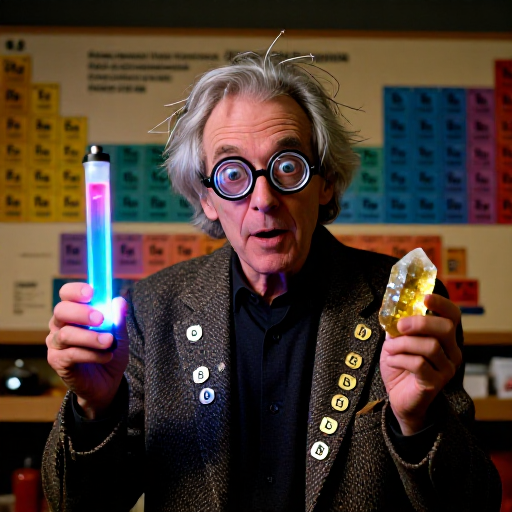
Jöns Jacob Berzelius discovered thorium in 1828 in a black mineral sent to him by Reverend Hans Morten Thrane Esmark, who found it on the island of Løvøya, Norway. Berzelius named it after Thor, the Norse god of thunder. The mineral was later named thorite (ThSiO₄). Thorium's radioactivity was discovered independently by Gerhard Carl Schmidt and Marie Curie in 1898, making it the second radioactive element identified after uranium.
2
2
Identify Thorium in Monazite Sands
Thorium occurs at 9.6 ppm in Earth's crust — three to four times more abundant than uranium. Monazite (Ce,La,Nd,Th)PO₄ contains 5-12% thorium oxide, making it the primary thorium mineral. Heavy mineral sands in India, Brazil, Australia, and the United States contain monazite as a byproduct of titanium and zirconium mining. India holds the world's largest thorium reserves — estimated at 846,000 tonnes — concentrated in beach sands along the Kerala coast.
Tools needed:
Hand Lens (10x Magnification)
3
3
Examine the Gas Mantle Revolution
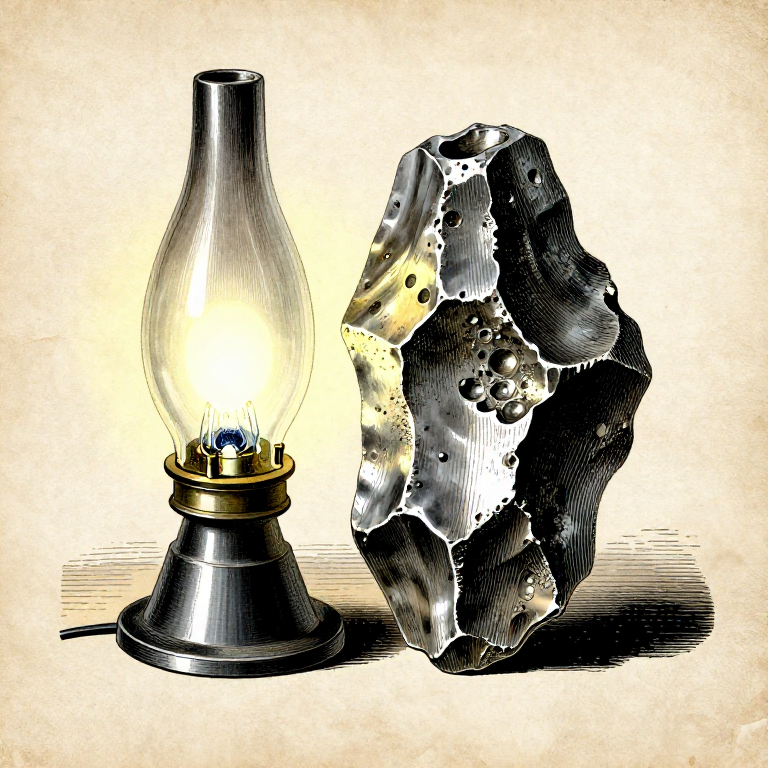
Thorium's first major application was the Welsbach gas mantle, invented by Carl Auer von Welsbach in 1891. A cotton mesh soaked in 99% thorium oxide and 1% cerium oxide produces brilliant white light when heated by a gas flame. Gas mantles illuminated the world before electric lighting became widespread. Billions were manufactured between 1890 and 1930. Thorium mantles are still used today in camping lanterns, where they produce bright light from propane or kerosene.
4
4
Understand the Thorium Fuel Cycle
Thorium-232 itself is not fissile — it cannot sustain a chain reaction. However, when bombarded with neutrons, Th-232 absorbs a neutron and transforms through protactinium-233 to uranium-233, which IS fissile. This breeding process means thorium can serve as nuclear fuel: a thorium reactor uses a small amount of fissile material (U-235 or Pu-239) to start the reaction, then breeds U-233 from thorium to sustain it indefinitely.
5
5
Compare Thorium and Uranium Nuclear Cycles
The thorium fuel cycle has several advantages over uranium: thorium is 3-4 times more abundant, the thorium cycle produces far less plutonium (reducing weapons proliferation risk), and it generates fewer long-lived radioactive waste products. Molten salt thorium reactors (MSRs) operate at atmospheric pressure — eliminating the risk of pressure-driven explosions like Fukushima. India's three-stage nuclear program plans to use thorium as its primary fuel to leverage enormous domestic reserves.
6
6
Examine Thorium's Radioactivity
Thorium-232 has a half-life of 14.05 billion years — three times the age of the Earth — making it only weakly radioactive. Its activity is 4,000 Bq per gram, compared to 12,400 Bq/g for natural uranium. Thorium decays through a chain of 10 radioactive daughters before reaching stable lead-208. The intermediate products include radium-228 and the gaseous radon-220 (thoron), which has a half-life of only 55.6 seconds — too short to accumulate like radon-222 from uranium decay.
7
7
Survey Industrial Applications
Thoriated tungsten (W-2%ThO₂) electrodes are the preferred choice for TIG welding because thorium oxide improves electron emission, arc starting, and arc stability. Thorium oxide has the highest melting point of any oxide (3,300°C) and is used in high-temperature crucibles and furnace linings. Thorium-doped glass has a high refractive index and low dispersion, making it valuable for camera lenses — Canon's legendary 50mm f/1.2 lens used thoriated glass elements.
8
8
Examine Metal Properties
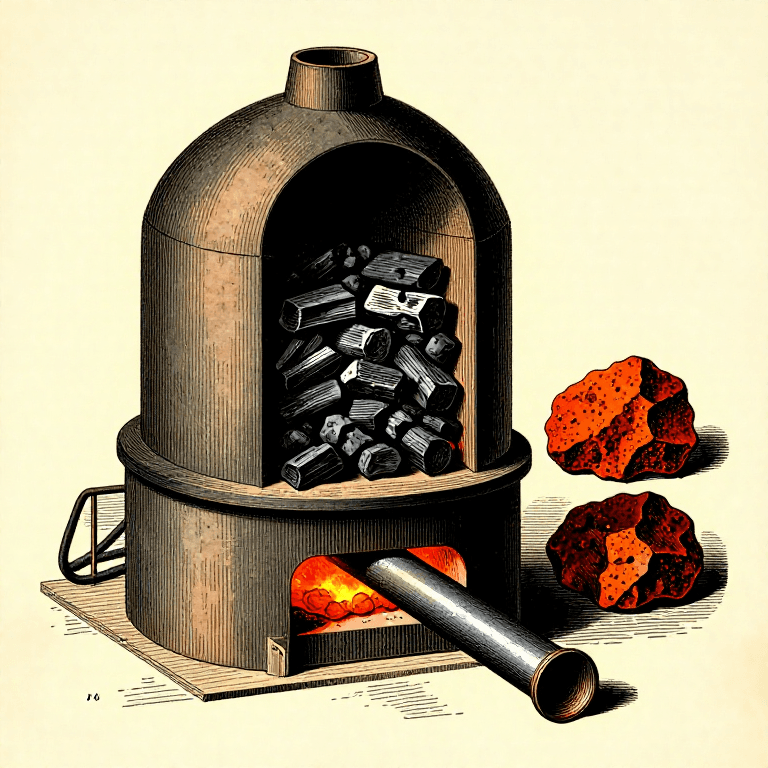
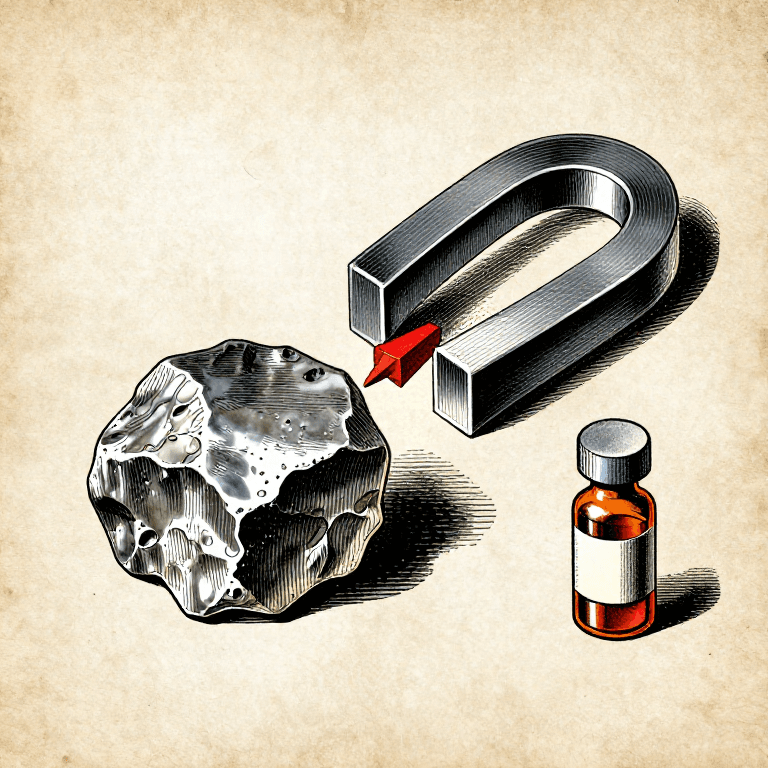
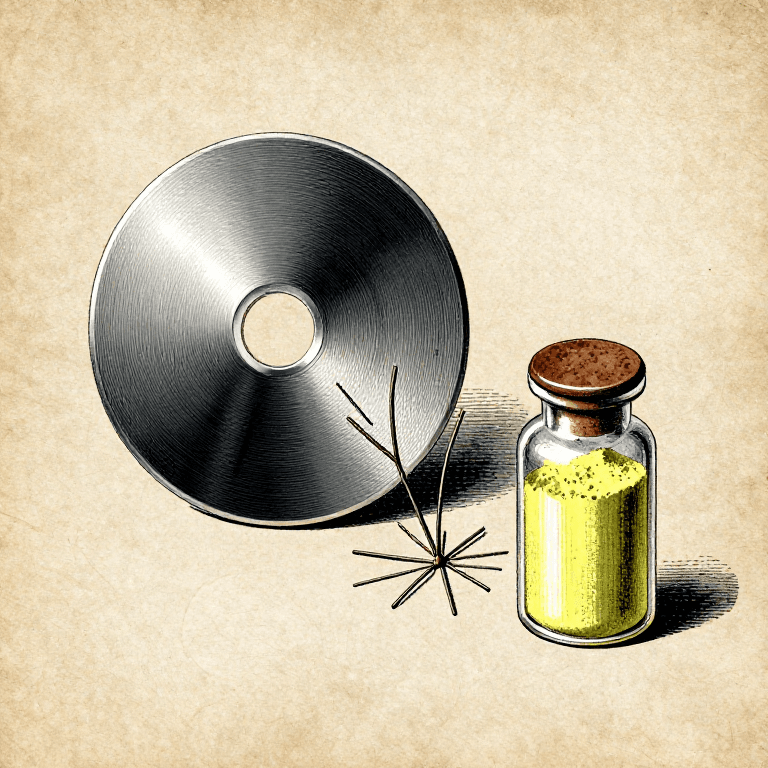
Thorium is a soft, silvery-white metal that is paramagnetic and moderately dense (11.7 g/cm³). Melting point is 1,750°C. It is relatively reactive — slowly tarnishing in air and dissolving in hydrochloric acid. Thorium is dimorphic: face-centered cubic below 1,360°C and body-centered cubic above. The metal is obtained by calcium reduction of thorium tetrafluoride (ThF₄). Thorium powder is pyrophoric and was once used in magnesium alloys for aircraft applications.
9
9
Understand Thorium Dating Methods
Uranium-thorium dating uses the decay of U-234 to Th-230 (half-life 75,380 years) to date calcium carbonate materials from 1,000 to 500,000 years old — filling the gap between radiocarbon (50,000 years) and potassium-argon (100,000+ years) dating. It is the primary method for dating cave stalagmites, coral reefs, and travertine deposits. U-Th dating of cave art at Altamira and Chauvet has revealed paintings up to 65,000 years old.
Tools needed:
Precision Scale (0.01g)10
10
Document Findings and Future Energy Potential
Record thorium's key data: atomic number 90, density 11.7 g/cm³, melting point 1,750°C, soft silvery metal. Thorium represents perhaps the most promising untapped energy resource on Earth. India, China, and several startup companies are actively developing thorium molten salt reactors. If successful, thorium could provide clean energy for thousands of years using fuel far more abundant than uranium. The element named after the god of thunder may yet power civilization's future.
Wymagane narzędzia
2- Placeholder
Required Equipment
Equipment this kind of build typically needs — buy from any maker below.
- CriticalNitrile Lab Gloves·
Boxing Gloves (Training)
Leather Gauntlet Gloves
Cotton Gloves
Welding Gloves
Heavy-Duty Gloves
Leather Work Gloves - CriticalChemical Splash Goggles·
Splash-Proof Safety Goggles
Chemical Splash Goggles
Safety Goggles
Welding Goggles
Laser Safety Goggles Set
Anti-Fog Safety Goggles - RecommendedBeaker·
Borosilicate Beaker
Heat-Resistant Glass Beaker (1 liter)
Glass Beaker (Borosilicate, 500ml)
Beaker Set
Volumetric Beaker
Borosilicate Glass Beaker - RecommendedDust Mask / Respirator·
Full-Face Gas Mask (ABEK multi-gas cartridge)
Dust Mask
Venetian Mask Blank (Papier-Mache)
Full-Face Respirator
Respirator Fit Test Kit
Respirator with Acid Gas Cartridge - RecommendedGraduated Cylinder·
Graduated Cylinder (100 ml)
Cast Iron Cylinder
Graduated Mixing Cups (50-Pack)
Measuring Cylinder
Hydraulic Cylinder
Graduated Cylinder (10ml) - RecommendedSafety Glasses·
Safety Sign (Caution/Warning)
Splash-Proof Safety Goggles
Reflective Safety Vest Kit (DIY)
Chemical Splash Goggles
Safety Netting for Rockfall
Steel-Toed Safety Boots - RecommendedPrecision Scale·
Iron Scale
Livestock Scale
Architectural Model Kit (Scale 1:100)
Weighing Scale
Precision Scale
Platform Weighing Scale - RecommendedWork Gloves·
Boxing Gloves (Training)
Leather Gauntlet Gloves
Cotton Gloves
Welding Gloves
Heavy-Duty Gloves
Leather Work Gloves - OptionalFire Extinguisher·
ABC Fire Extinguisher
Fire Extinguisher - OptionalFirst Aid Kit·
First Aid Kit
Mountain First Aid Kit (Altitude)
Workshop First Aid Kit
Bow Release Aid
You can swap these in
Can't get one of the materials? Swap it for an equivalent — these work just as well.
Recommended for this build
Products makers often use with builds like this one.
Safety GogglesUsed together and in similar builds
Geological HammerFrequently used with this build's materials
Chemical-Resistant GlovesUsed together and in similar builds
Streak Plate (unglazed porcelain)Used together and in similar builds
Leather Gauntlet GlovesFrequently used with this build's materials
CharcoalFrequently used with this build's materials
Glass Sample Vial (50ml)Frequently used with this build's materials
BellowsFrequently used with this build's materialsRelated blueprints
Other builds that share materials, tools, or techniques with this one.

Understanding Europium from Monazite — The Red Phosphor That Colored Televisionchemistry

Understanding Hafnium from Zircon — The Nuclear Fuel Rod Guardianchemistry

Understanding Praseodymium from Monazite — The Green Twin That Colors Glasschemistry

Understanding Uranium from Uraninite — The Element That Changed Everythingchemistry

Understanding Cesium from Pollucite — The Element That Defines the Secondchemistry

Understanding Yttrium from Xenotime — The Rare Earth That Lights Red Screenschemistry
CC0 Domena publiczna
Ten plan jest udostępniany na licencji CC0. Możesz go swobodnie kopiować, modyfikować, rozpowszechniać i wykorzystywać do dowolnych celów, bez konieczności uzyskiwania zgody.
Wesprzyj Makera kupując produkty przez jego plan, za co zarabia Prowizja Makera ustalony przez sprzedawców, lub stwórz nową iterację tego planu i dołącz go jako połączenie w swoim własnym planie, aby dzielić się przychodami.