SZTUKA
Piękno i dobre samopoczucie
RZEMIOSŁO
KULTURA I HISTORIA
ROZRYWKA
ŚRODOWISKO
JEDZENIE I NAPOJE
INŻYNIERIA ODWROTNA
NAUKI
LEKKOATLETYKA
TECHNOLOGIA
URZĄDZENIA DO NOSZENIA
Understanding Xenon from Air Separation — The Strangest Noble Gas
Średniozaawansowany
Instrukcje
1
1
Understand Xenon's Discovery
Understand Xenon's Discovery
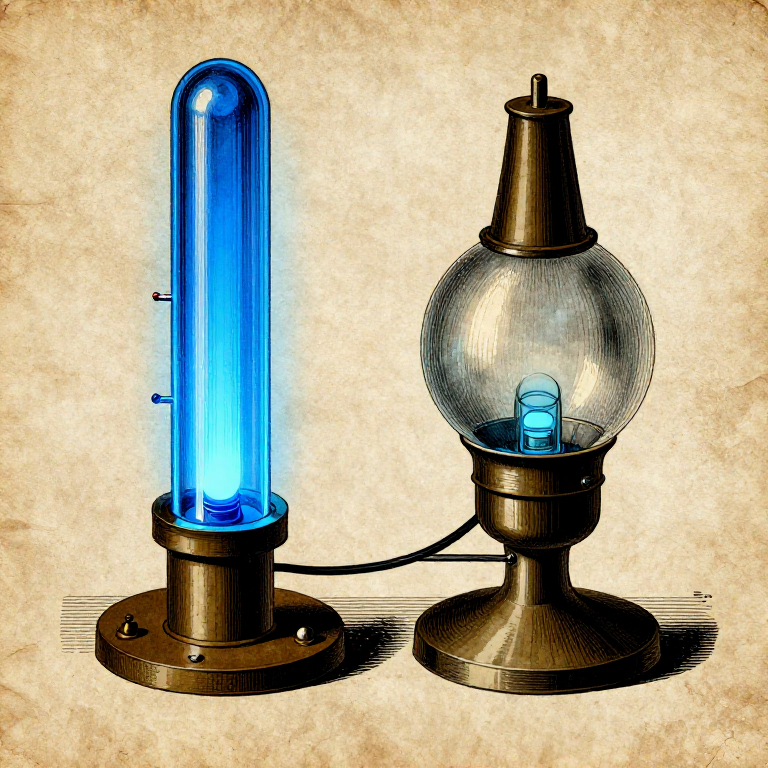
William Ramsay and Morris Travers discovered xenon on July 12, 1898, by fractional distillation of liquid krypton — the last noble gas they found in their systematic exploration of air. The residue left after evaporating krypton produced a beautiful blue glow in a discharge tube. They named it xenon from the Greek 'xenos' (strange or foreign). Xenon was the fifth noble gas discovered that year, capping an extraordinary period of elemental discovery.
2
2
Identify Xenon in Earth's Atmosphere
Identify Xenon in Earth's Atmosphere
Xenon is the rarest stable noble gas in Earth's atmosphere at just 87 parts per billion — approximately 1 part in 11.5 million. Earth has a 'missing xenon' problem: our planet contains far less xenon relative to other noble gases than expected from solar system abundances. Scientists believe primordial xenon was incorporated into minerals deep in Earth's core under extreme pressure during planetary formation. All commercial xenon comes from cryogenic air separation.
Materiały do tego kroku:
 Gas Discharge Tube
3
3
Discover Xenon as an Anesthetic
Discover Xenon as an Anesthetic
Xenon is a nearly ideal general anesthetic — it induces unconsciousness rapidly, wears off in minutes, has minimal side effects, and does not harm the liver, kidneys, or cardiovascular system. Xenon anesthesia is neuroprotective, potentially reducing brain damage during surgery. Stuart Cullen first demonstrated xenon anesthesia in 1951. Despite its superb pharmacological profile, xenon costs $10-20 per liter, making routine use prohibitively expensive compared to conventional anesthetics.
4
4
Examine Ion Propulsion Systems
Examine Ion Propulsion Systems
Xenon is the preferred propellant for ion engines in spacecraft. Its high atomic mass (131 atomic mass units) provides efficient thrust, it is easily ionized, non-corrosive, and storable as a dense supercritical fluid. NASA's Dawn mission used 425 kg of xenon to visit asteroid Vesta and dwarf planet Ceres. ESA's SMART-1 Moon mission and numerous geostationary satellites use xenon ion engines. The global satellite industry consumes approximately 6 tonnes of xenon annually for propulsion.
5
5
Understand Xenon Headlights and Lighting
Understand Xenon Headlights and Lighting
Xenon high-intensity discharge (HID) headlights produce light by creating an electrical arc through xenon gas between tungsten electrodes. They produce 3,000 lumens — three times brighter than halogen bulbs — with a color temperature of 4,100-6,000 K that closely matches daylight. Introduced by BMW in 1991, xenon headlights became standard on luxury vehicles. Xenon flash tubes in camera flashes and strobe lights use the gas's ability to produce intense white light pulses.
6
6
Explore Noble Gas Chemistry
Explore Noble Gas Chemistry
Neil Bartlett shattered the dogma that noble gases were completely unreactive in 1962 by synthesizing xenon hexafluoroplatinate (XePtF₆) — the first noble gas compound. Xenon difluoride (XeF₂), tetrafluoride (XeF₄), and hexafluoride (XeF₆) were synthesized shortly after. Xenon oxide compounds including XeO₃ (explosive) and XeO₄ are known. Bartlett's discovery earned him the Wolf Prize and fundamentally changed the understanding of chemical bonding.
7
7
Survey Dark Matter and Neutrino Detection
Survey Dark Matter and Neutrino Detection
Liquid xenon is the leading detector medium for dark matter direct detection experiments. The XENON1T detector at Gran Sasso contained 3.2 tonnes of liquid xenon, and its successor XENONnT uses 8.6 tonnes. Xenon's high atomic number, self-shielding capability, and excellent scintillation make it ideal for detecting the feeble energy deposits expected from dark matter particles. The EXO-200 experiment uses xenon enriched in Xe-136 to search for neutrinoless double beta decay.
8
8
Examine Medical Imaging and Diagnostics
Examine Medical Imaging and Diagnostics
Hyperpolarized xenon-129 MRI provides detailed functional images of the lungs. Unlike conventional MRI which images water in tissue, xenon MRI images the gas-filled airspaces directly, revealing ventilation defects in asthma, COPD, and cystic fibrosis. Xenon-133 (half-life 5.2 days) is used in nuclear medicine for lung ventilation studies and cerebral blood flow measurement. Xenon-enhanced CT imaging measures tissue perfusion after traumatic brain injury.
9
9
Understand Supply Constraints and Anti-Doping
Understand Supply Constraints and Anti-Doping
Global xenon production is approximately 40 tonnes per year at a cost of $10,000-30,000 per cubic meter — the most expensive commonly traded gas. Growing demand from satellite propulsion and semiconductor etching competes with medical and scientific uses. Notably, xenon inhalation was reportedly used by Russian athletes as a performance enhancer because it stimulates erythropoietin (EPO) production. The World Anti-Doping Agency banned xenon in 2014.
Potrzebne narzędzia:
 Precision Scale (0.01g)
10
10
Document Findings and Scientific Legacy
Document Findings and Scientific Legacy
Record xenon's key data: atomic number 54, density 5.894 g/L (heaviest stable noble gas), boiling point -108.1°C, colorless gas with blue glow. Xenon defied two great scientific certainties — that noble gases were permanently inert (Bartlett, 1962) and that the fundamental nature of matter was understood (dark matter searches). From lighting roads to probing the universe's missing mass, xenon is the noble gas that proved nothing in science is truly settled.
11
11
Half-life: what is left, and when
Half-life: what is left, and when
Wczytywanie notatnika Jupyter…
Materiały
1- Zastępnik
Wymagane narzędzia
1- Zastępnik
Materiały z połączonych planów
10% atrybucji
Understanding Krypton from Air Separation — The Hidden Gas That Once Defined the Meter
autor: Peter
Górnictwo
17
0
0
0
2
0
10% atrybucji
Understanding Argon from Air Separation — The Invisible Shield Gas
autor: Peter
Górnictwo
13
0
0
0
2
0
10% atrybucji
Understanding Neon from Air Separation — The Gas That Lit the Modern City
autor: Peter
Górnictwo
22
0
0
0
3
0
10% atrybucji
Understanding Helium from Natural Gas — The Element That Escapes Earth Forever
autor: Peter
Górnictwo
17
0
0
0
4
0

Niebezpieczne
10% atrybucji
Extracting Iodine from Seaweed Ash — The Violet Vapor That Prevents Goiter
autor: Peter
Morze
48
0
0
0
4
0
Powiązane blueprinty
Te blueprinty dzielą się wiedzą — technikami, materiałami lub zasadami

Niebezpieczne
Understanding Fluorine from Fluorite — The Most Reactive Element on Earth
autor: Peter
Górnictwo
39
0
0
0
4
0

Understanding Barium from Baryte — The Heavy Earth That Glows in the Dark
autor: Peter
Górnictwo
43
0
0
0
3
0
Extracting Iron from Hematite — Bloomery Smelting from Ore to Bloom
autor: Peter
Obróbka metali
133
0
0
0
12
0
CC0 Domena publiczna
Ten plan jest udostępniany na licencji CC0. Możesz go swobodnie kopiować, modyfikować, rozpowszechniać i wykorzystywać do dowolnych celów, bez konieczności uzyskiwania zgody.
Wesprzyj Makera kupując produkty przez jego plan, za co zarabia Prowizja Makera ustalony przez sprzedawców, lub stwórz nową iterację tego planu i dołącz go jako połączenie w swoim własnym planie, aby dzielić się przychodami.