SZTUKA
Piękno i dobre samopoczucie
RZEMIOSŁO
KULTURA I HISTORIA
ROZRYWKA
ŚRODOWISKO
JEDZENIE I NAPOJE
INŻYNIERIA ODWROTNA
NAUKI
LEKKOATLETYKA
TECHNOLOGIA
URZĄDZENIA DO NOSZENIA
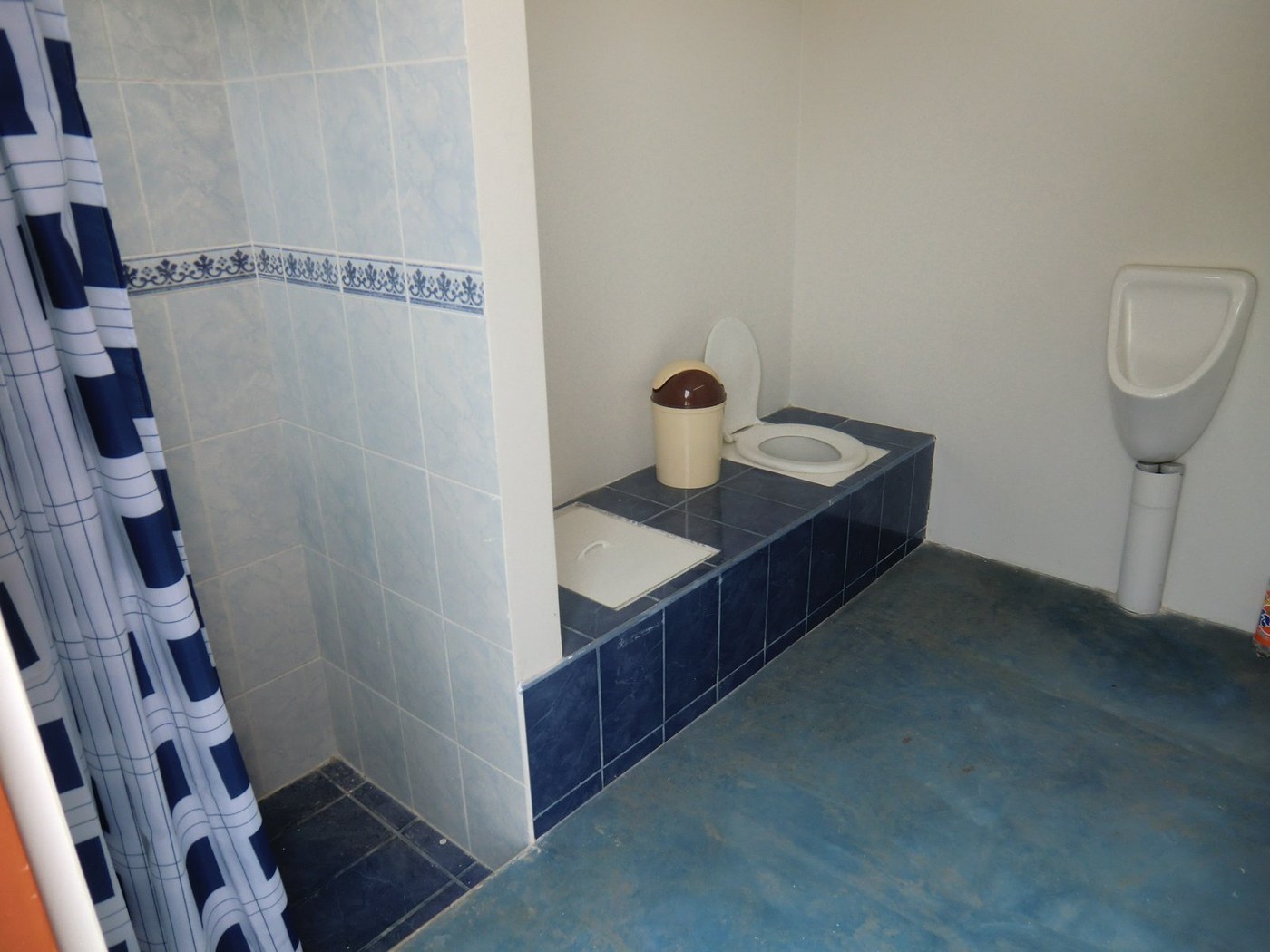


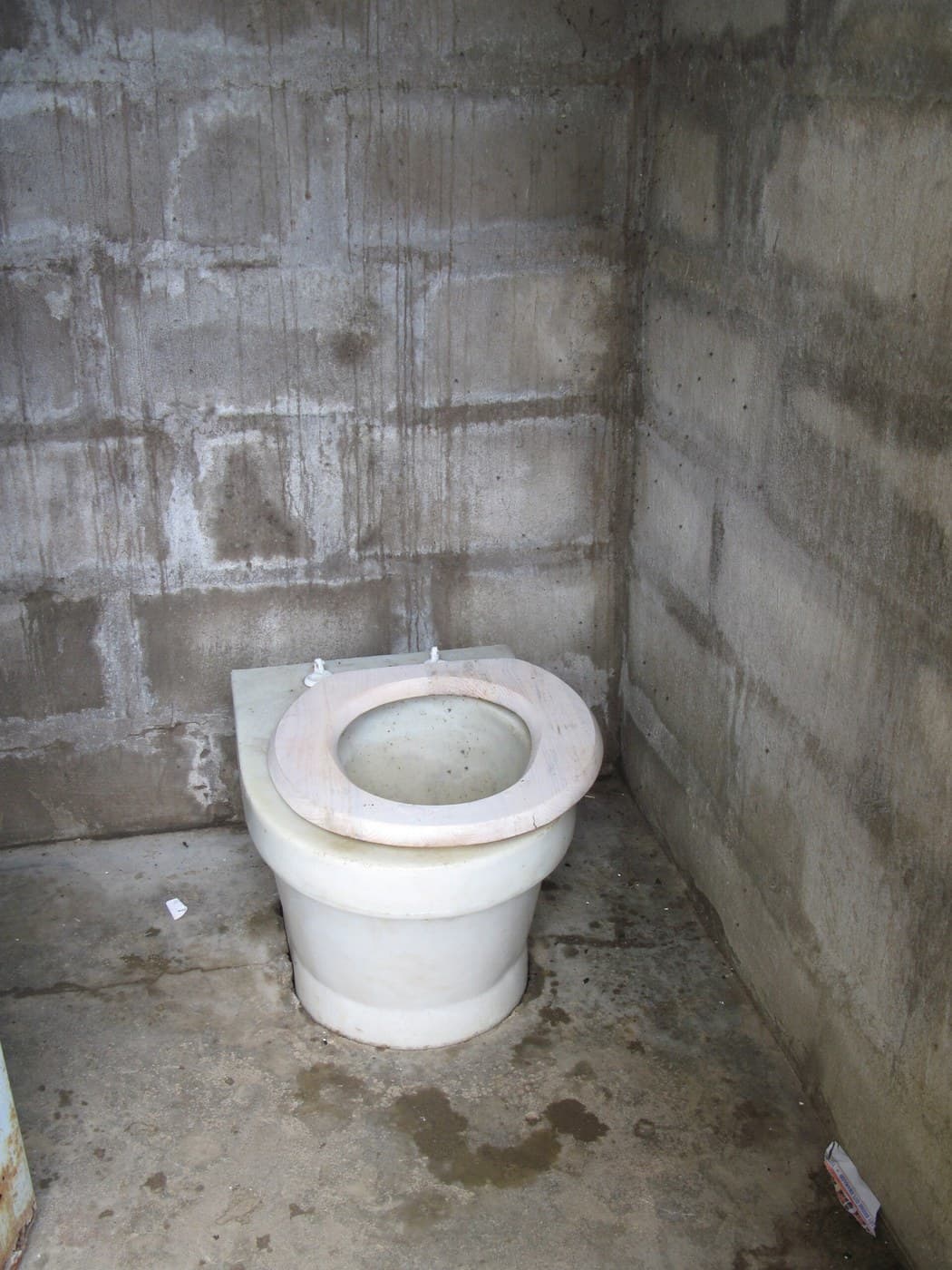
The Urine-Diverting Dry Toilet
This is a sibling of `vip-latrine`. Both give a household a toilet with no water, no sewer and no power. They control the same two problems — smell and flies — by opposite means, and the difference decides which one belongs where.
The VIP latrine accepts that a pit will be wet and anaerobic and therefore will smell, and manages the CONSEQUENCES with airflow. A dark vent pipe warmed by the sun draws air up out of the pit, so odour leaves through the pipe rather than through the squat hole, and a fly screen on the pipe top traps flies that head for the light. It is a beautifully economical piece of engineering, it needs no user cooperation whatsoever, and it works.
The urine-diverting dry toilet removes the CAUSE instead. Faeces are about 75 percent water; urine is essentially all water, and there is roughly ten times as much of it by volume. Keep the two apart from the moment they are produced and the faeces fraction, given a handful of dry cover material after each use, dries out rather than putrefying. Dry material does not smell, because the anaerobic bacteria that make the odour compounds need water to work. Flies do not breed in it, because larvae need moisture too.
So one device manages odour and the other prevents it, and the prevention has consequences the management does not. There is no pit, so no groundwater risk and no pit to empty by vacuum tanker — which matters enormously in high water tables, rocky ground and flood zones where a pit cannot legally or physically be dug. There is no vent stack. The vault can be above ground. And the two outputs are separately usable: urine is a near-sterile, nitrogen-rich fertiliser available immediately, and the dried faeces fraction becomes a soil conditioner after storage.
What it costs is that it only works if people use it correctly. A urine-diverting pedestal separates by POSITION, so it depends on the user sitting properly and on cover material actually being added. The VIP latrine asks nothing of anyone. That dependence is the honest reason UDDTs fail in practice when they fail, and it is not a technical problem.
You will build one, measure the drying, and find out how fast it goes wrong when the diversion is defeated.
Średniozaawansowany
8 hours to build, 6 months to first harvest
Instrukcje
1
1
Build the pedestal and the two vaults
Build the pedestal and the two vaults
The device is a separating seat over two chambers, and the separation is the only clever part.
THE PEDESTAL. The critical component is a bowl divided into two zones: a small forward chamber, roughly 200 millimetres wide, draining to a urine outlet, and a large rear opening dropping straight into the vault. The divider between them must be a smooth, forward-sloping ridge — a sharp step catches material and a flat divider lets urine wash backwards.
At bench scale, mould one from fibreglass over a plaster former, or cut and bond it from 3 millimetre HDPE. Commercial units are single mouldings and cost little, and there is no shame in buying one and building everything else.
GET THE GEOMETRY RIGHT, because this is where the design succeeds or fails. The urine collection zone must be far enough forward that it catches urine from a seated adult and far enough back that it does not catch faeces. The divider crest typically sits 180 to 220 millimetres from the front of the seat. Too far forward and urine misses it, which floods the vault and ruins everything. Too far back and faeces land in the urine channel, which blocks it and smells.
THE URINE LINE. From the front outlet, a 32 millimetre pipe falling continuously at 2 percent or more to a sealed jerrycan. Two rules: no dips, and no long horizontal runs. Urine deposits struvite — magnesium ammonium phosphate — as a hard scale on any surface it sits on, and a low spot becomes a solid plug of it within months. Design so the pipe can be rodded, and expect to do it.
Do NOT fit a water trap on the urine line. A trap will scale up solid, and there is nothing to trap anyway: fresh urine is almost odourless. The smell of urine is ammonia from urea breaking down, which happens over hours to days, so a sealed container and a short pipe give you nothing to seal against.
THE TWO VAULTS. Two chambers below the pedestal, each about 400 litres, with a movable chute or a repositionable pedestal so one is in use while the other rests. This alternating pair is the core of the safety case: material in the resting vault sits undisturbed for six to twelve months while the other fills, and time plus dryness is what kills the pathogens.
Each vault needs a door for emptying and a small passive vent — 50 millimetre pipe to outside. This vent is NOT doing the VIP's job. In a VIP the vent is the odour control. Here it just removes water vapour, which is a much smaller duty, and the vault is not relying on it.
Raise the vaults above ground or in a shallow plinth. Not needing an excavation is one of the design's real advantages and burying it discards that.
COVER MATERIAL. A bucket of dry, carbon-rich, absorbent material beside the seat with a scoop: wood ash, sawdust, dry soil, rice husk, coir. Ash is best where it exists — it is dry, absorbent, and strongly alkaline, and the high pH is itself a pathogen kill. A scoop after every use, no exceptions.
Materiały do tego kroku:
 Płyta HDPE2 square metre
 Przezroczysta rura PVC6 metre
 Zestaw złączek do rur PVC1 zestaw
 Kanister (szczelny)2 sztuk
 Sklejka z drewna twardego3 square metre
 Popiół z drewna liściastego25 kilogram
 Siatka drobnooczkowa1 sztuka
 Uszczelniacz silikonowy1 sztuka
Potrzebne narzędzia:
 Wiertarko-wkrętarka akumulatorowa
 Piła do metalu
 Zestaw otwornic
 Poziomica
 Linijka stalowa
 Digital Calipers - 152.4 mm
2
2
Measure the drying, then defeat the diversion on purpose
Measure the drying, then defeat the diversion on purpose
The entire claim is that separated faeces dry instead of rotting. Test it with a surrogate rather than the real thing — this is a bench experiment, and you do not need pathogens to measure moisture.
THE SURROGATE. A mixture that matches fresh faeces closely enough for the physics: roughly 75 percent water by mass, with a solid fraction of bran, sawdust and a little vegetable matter. Make up 200 gram portions.
SET UP FOUR IDENTICAL VESSELS, each with a small vent, kept in the same place:
VESSEL A, the UDDT as designed. One portion of surrogate, one scoop of ash on top.
VESSEL B, no cover material. Surrogate alone, vented, dry.
VESSEL C, the diversion defeated. One portion plus 1.2 litres of water, which is a realistic daily urine volume for one person, plus a scoop of ash.
VESSEL D, a pit latrine analogue. Surrogate plus urine volume, sealed except for a small vent, no cover.
WEIGH ALL FOUR DAILY for three weeks and plot mass against time. Also record the smell on a simple scale of nothing, faint, obvious, bad — subjective, but consistent if one person does it.
WHAT YOU SHOULD FIND. Vessel A loses mass steadily and is dry and friable within two to three weeks. It stops smelling within a day or two, because the cover material both absorbs surface moisture and physically blocks the release of what is produced.
Vessel B also dries, more slowly, and smells for longer at the start. Cover material accelerates drying and suppresses odour immediately; it is not doing the whole job but it makes the difference between acceptable and not on day one.
Vessel C does not dry at all. The added water swamps the evaporative capacity, the mixture stays saturated, it goes anaerobic within days and smells strongly. One scoop of ash does nothing against 1.2 litres of liquid.
Vessel D is the same as C, worse, and is what a simple pit latrine is: wet, anaerobic, odorous.
THE CONCLUSION IS SHARPER THAN PEOPLE EXPECT. The difference between a UDDT that works and a pit latrine is not the ash, and it is not the vault, and it is not the vent. It is the urine. Vessel C has every feature of the design except the diversion, and it behaves exactly like the thing the design was meant to replace.
That is why the pedestal geometry matters so much, why a UDDT used by someone who will not sit properly fails, and why every failed UDDT project reported in the literature reports the same failure: the diversion stopped working, or was never used correctly, and the vault turned into a pit.
Do the arithmetic on your own numbers. Compute the drying rate from vessel A in grams of water per day and compare it against the 1.2 litres per person per day that a defeated diversion adds. The evaporative capacity of a passively vented vault is on the order of a few hundred grams a day. It cannot possibly keep up, and no amount of ventilation will make it.
Materiały do tego kroku:
 Otręby pszenne5 kilogramPopiół z drewna liściastego10 kilogram
 Trociny5 kilogram
 Wiadro 20-litrowe4 sztuk
 Woda destylowana10 litrów
Potrzebne narzędzia:
 Precyzyjna waga cyfrowa
 Termometr laboratoryjny
 Miernik pH, cyfrowy przenośny
3
3
Drying rates, storage time and what the two outputs are worth
Drying rates, storage time and what the two outputs are worth
Wczytywanie notatnika Jupyter…
Potrzebne narzędzia:
 Komputer stacjonarny
Materiały
12- 2 square metreZastępnik
- 6 metreZastępnik
- 1 zestawZastępnik
- 2 sztukZastępnik
- 3 square metreZastępnik
- 35 kilogramZastępnik
- 1 sztukaZastępnik
- 1 sztukaZastępnik
- 5 kilogramZastępnik
- 5 kilogramZastępnik
- 4 sztukZastępnik
- 10 litrówZastępnik
Wymagane narzędzia
10- Zastępnik
- Zastępnik
- Zastępnik
- Zastępnik
- Zastępnik
- Digital Calipers - 152.4 mm10% prowizji$14.25
- Zastępnik
- Zastępnik
- Zastępnik
- Zastępnik
Powiązane blueprinty
Te blueprinty dzielą się wiedzą — technikami, materiałami lub zasadami

CC0 Domena publiczna
Ten plan jest udostępniany na licencji CC0. Możesz go swobodnie kopiować, modyfikować, rozpowszechniać i wykorzystywać do dowolnych celów, bez konieczności uzyskiwania zgody.
Wesprzyj Makera kupując produkty przez jego plan, za co zarabia Prowizja Makera ustalony przez sprzedawców, lub stwórz nową iterację tego planu i dołącz go jako połączenie w swoim własnym planie, aby dzielić się przychodami.