Współpraca
SZTUKA
Piękno i dobre samopoczucie
RZEMIOSŁO
KULTURA I HISTORIA
ROZRYWKA
ŚRODOWISKO
JEDZENIE I NAPOJE
INŻYNIERIA ODWROTNA
NAUKI
LEKKOATLETYKA
TECHNOLOGIA
URZĄDZENIA DO NOSZENIA
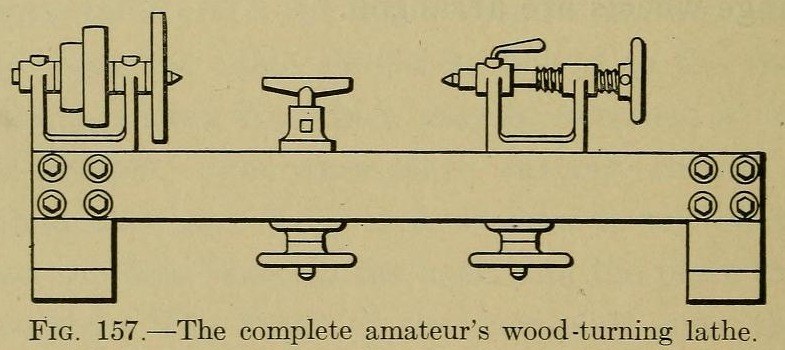

Wood Lathe: Simple Amateur's Lathe with a Maple Bed, 7 in Swing (Lathe Work for Beginners, 1922)
A wood-turning lathe an amateur can build: two strips of hard maple bolted to maple legs make the 3 ft bed, and cast-iron head-stock, tail-stock, hand-rest body, hand wheels and cone pulleys are cast from home-made patterns. Steel spindles turn in the cast-iron bearings, and a cone pulley drives the head-stock from a countershaft.
Result: a wood lathe with a 7 in swing and a 3 ft bed.
Source: R. F. Yates, Lathe Work for Beginners (1922), Chapter XII, pp. 208-216. Unknown: the pattern sizes (on the book's drawings) and the drive. Picture: Fig. 157 of the book.
Zaawansowany
Unknown
Instrukcje
1
1
Make the patterns and get castings
Make the patterns and get castings
Make patterns from any handy wood: one for both head-stock and tail-stock, with a web joining the two bearings so the casting does not spring; one for the hand wheels (three castings); one for the washers (two); the cone pulley (two: lathe and countershaft); and the hand-rest body. Give them a slight draw taper. Have them cast in iron at a foundry. Not given: pattern sizes (on the book's drawings).
Materiały do tego kroku:
 Odlewy żeliwne1 head-stock, tail-stock, wheels, washers, pulleys, rest body
Potrzebne narzędzia:
 Deska tarta
 Żeliwiak
 Nieznane wymiary
2
2
Build the maple bed
Build the maple bed
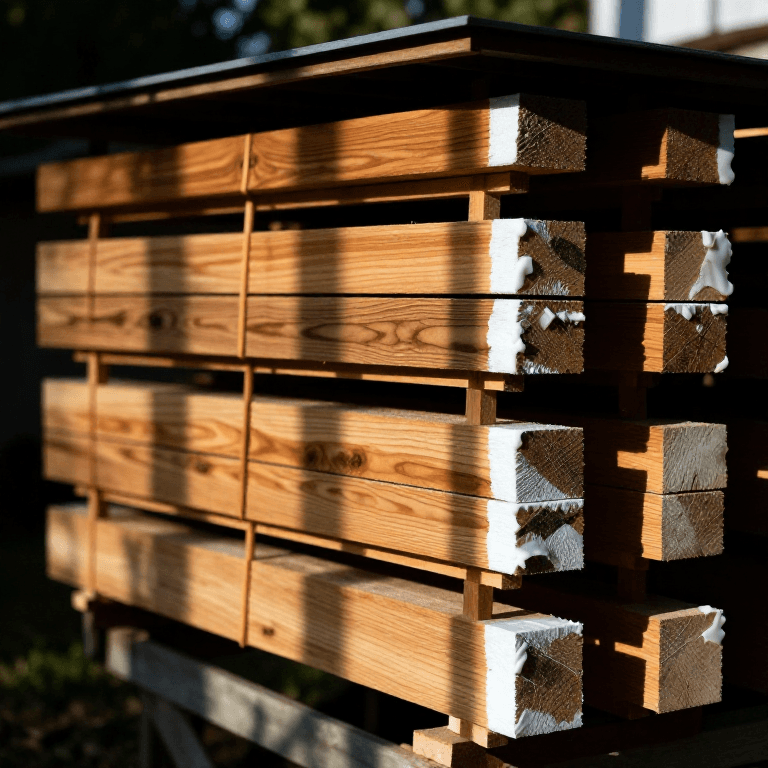
Make the bed of two strips of clear hard maple 1 in thick, 4 in wide and about 36 in long (about 1 1/2 in thick for a longer bed), and two maple legs, the part between the ways cut exactly square. Bore a 5/8 in hole through the head-stock leg in line with the head-stock's 1/2 in tapped hole, recessed below for a nut and washers. Bolt bed to legs with eight 3/8 in carriage bolts. Sand it and give it a coat of clear shellac against warping. White oak will do if there is no maple.
Materiały do tego kroku:
 Deska z drewna twardego1 ways and legs
 Śruba zamkowa8 3/8 in carriage bolts
 Szelak1 finish
Potrzebne narzędzia:
 Wiertarka stołowa
 Papier ścierny
3
3
Machine the stocks
Machine the stocks
Face the outside ends of the head-stock and tail-stock bearings on a shaper or milling machine. Drill the bearings between centres in a lathe with a 47/64 in drill, saw off the joining web, face the inner ends and ream to 3/4 in. Line both castings up on a 3/4 in shaft and machine their bottoms. Drill oil holes in the head-stock lugs. Tap the tail-stock front lug 3/16 in for a clamp turned, heated and bent to shape, with soft copper or brass under it; tap the tail-stock rear bearing 7/8 in, 9 threads.
Materiały do tego kroku:
 Nieznany metal1 clamp and copper pad
Potrzebne narzędzia:
 Frezarka
 Tokarka do metalu
 Zestaw do gwintowania
 Palenisko kowalskie
4
4
Turn the spindles and pulley
Turn the spindles and pulley
Turn the head-stock spindle from 1 3/8 in machine steel: 3/4 in diameter, a 7/8 in nose threaded 9 to the inch, a 3/8 in hole right through and a No. 1 Morse taper in the nose. Turn the tail-stock spindle from 7/8 in stock, 3/4 in diameter with a 7/8 in, 9-thread part. Centre each piece, drill halfway from each end with a 3/8 in drill, ream, then finish between centres. Turn the cone pulley with crowned faces, wide enough to run easily between the bearings, and fix it to the spindle with a 3/8 in headless set screw.
Materiały do tego kroku:
 Pręt okrągły ze stali niskowęglowej1 spindlesNieznany metal1 set screws
Potrzebne narzędzia:
Tokarka do metaluWiertarka stołowa5
5
Fit the wheels and hand rest, and assemble
Fit the wheels and hand rest, and assemble
Drill hand wheel N 3/4 in for the tail-stock spindle and hold it with a 1/4 in set screw; tap the other two wheels 1/2 in. Drill the washers 9/16 in. Bolt the head-stock down with a stud through the leg, and fit a 1/2 in stud about 7 in long for the tail-stock and a 1/2 in square-headed bolt for the hand-rest body. Plane the hand rest's bottom, drill it 3/4 in, and fit tee-rests of 1/4 x 1 in flat steel welded to 3/4 in shafting, held by a 1/4 in set screw; make several lengths. The cast iron serves as bearing metal, or the bearings can be bushed or babbitted.
Materiały do tego kroku:
 Płaskownik ze stali miękkiej1 tee-restsNieznany metal1 studs, bolts, set screws, shafting
Potrzebne narzędzia:
Wiertarka stołowaZestaw do gwintowaniaPalenisko kowalskieMateriały
7- 1 head-stock, tail-stock, wheels, washers, pulleys, rest bodyZastępnik
- 1 ways and legsZastępnik
- 8 3/8 in carriage boltsZastępnik
- 1 finishZastępnik
- 1 studs, bolts, set screws, shaftingZastępnik
- 1 spindlesZastępnik
- 1 tee-restsZastępnik
Materiały z połączonych planów

10% atrybucji
Casting Iron in a Cupola Furnace — Re-Melting Pig Iron into Finished Castings
autor: Piett
Obróbka metali
53
0
0
0
6
0
10% atrybucji
Oak Boards and Blocks, Milled and Air-Dried
autor: Woody
Obróbka drewna
46
0
0
0
3
0
10% atrybucji
Mild Steel Bar Stock Forged from an Ingot
autor: Forge
Nowoczesny
45
0
0
0
5
0

10% atrybucji
Shellac Flakes from Stick Lac
autor: Mary
Obróbka drewna
37
0
0
0
1
0
10% atrybucji
Screws: Cold Headed and Thread Rolled
autor: Emma
Obróbka metali
54
0
0
0
1
0
Według tego planu powstaje

CC0 Domena publiczna
Ten plan jest udostępniany na licencji CC0. Możesz go swobodnie kopiować, modyfikować, rozpowszechniać i wykorzystywać do dowolnych celów, bez konieczności uzyskiwania zgody.
Wesprzyj Makera kupując produkty przez jego plan, za co zarabia Prowizja Makera ustalony przez sprzedawców, lub stwórz nową iterację tego planu i dołącz go jako połączenie w swoim własnym planie, aby dzielić się przychodami.