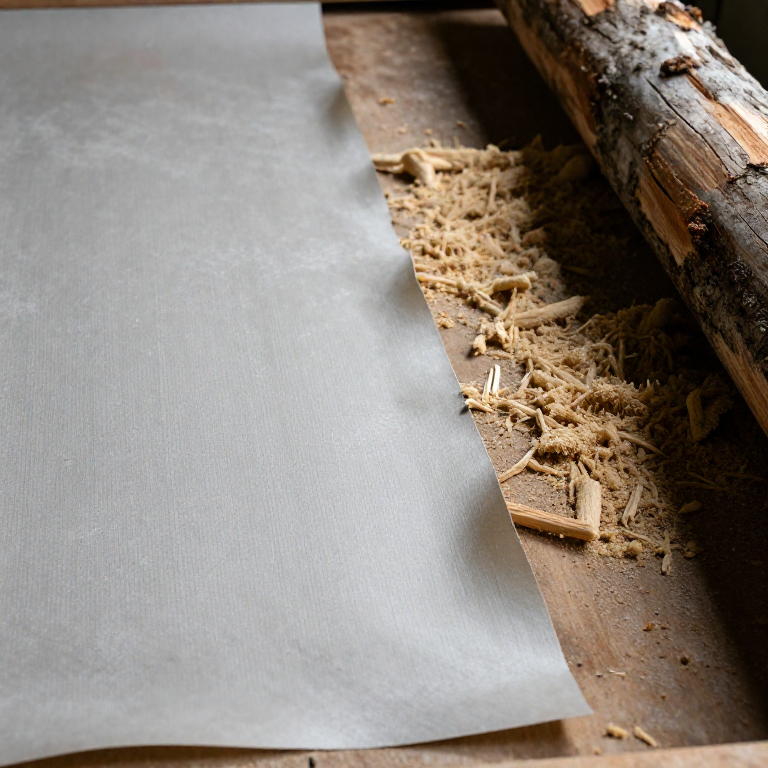


Making Paper from Wood Pulp — The Groundwood Process That Made Paper Cheap
For nearly two thousand years, paper was made from rags — worn-out linen and cotton beaten to pulp. It was good paper, but rags were scarce, and as literacy spread the world simply ran out of them. The answer, found in the 1840s, was to make paper from the most abundant fibre on Earth: wood.
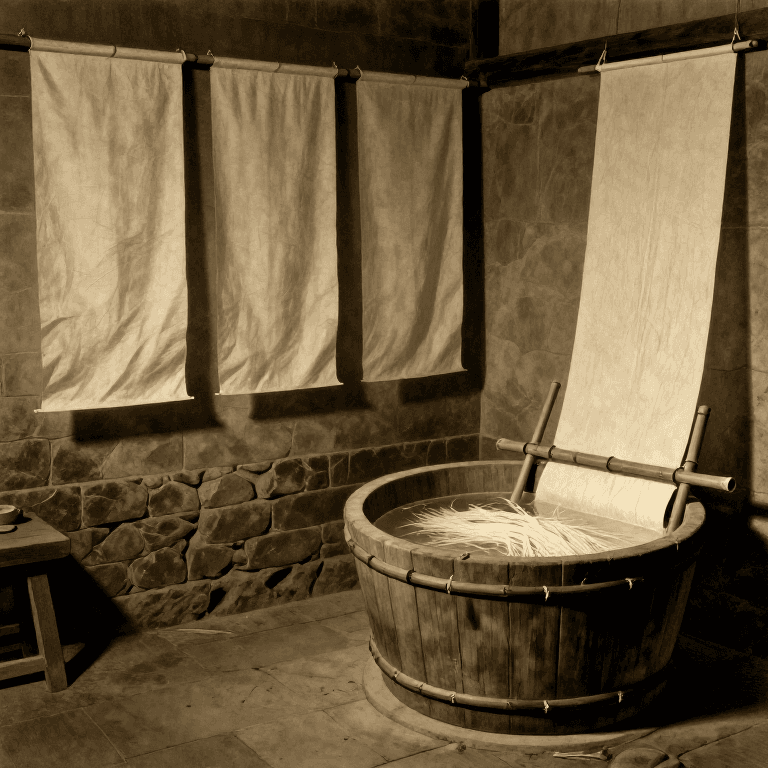
The simplest method is mechanical groundwood pulp. A log is pressed against a wet, spinning grindstone, which tears the wood into a slush of short fibres. Screened, refined, and matted on a wire, those fibres dry into paper. It is fast and cheap and turns a forest into newsprint — which is exactly what put a daily newspaper into every household.
Groundwood pulp keeps the wood's lignin, so the paper is weak and yellows with age, as old newspapers show. Removing the lignin by chemical pulping gives the white, durable paper of books — a more advanced step that built on this one. But it was cheap wood paper that truly democratised the printed word.
Instrukcje
Understand the shift to wood
Understand the shift to wood
Select softwood
Select softwood
Materiały do tego kroku:
 Kłody z drewna iglastego5 kg
Debark the logs
Debark the logs
Potrzebne narzędzia:
 Ośnik
OśnikGrind the wood to pulp
Grind the wood to pulp
Materiały do tego kroku:
 Woda40 litrów
Potrzebne narzędzia:
 Koło toczne do ostrzenia
Screen the pulp
Screen the pulp
Potrzebne narzędzia:
 Sito 60 mesh
Refine the stock
Refine the stock
Add sizing and filler
Add sizing and filler
Materiały do tego kroku:
 Kalafonia skrzypcowa (premium, ciemna)50 g
 Ałun (ałun potasowy)30 g
Form the sheet
Form the sheet
Potrzebne narzędzia:
 Sito papiernicze
Couch and press
Couch and press
Materiały do tego kroku:
 Filc wełniany2 sztuk
Potrzebne narzędzia:
 Prasa
PrasaDry the sheets
Dry the sheets
Finish the paper
Finish the paper
Potrzebne narzędzia:
PrasaKnow its strength and weakness
Know its strength and weakness
Materiały
5- Zastępnik
- 40 litrówZastępnik
- Zastępnik
- Zastępnik
- 2 sztukZastępnik
Powiązane blueprinty
Te blueprinty dzielą się wiedzą — technikami, materiałami lub zasadami
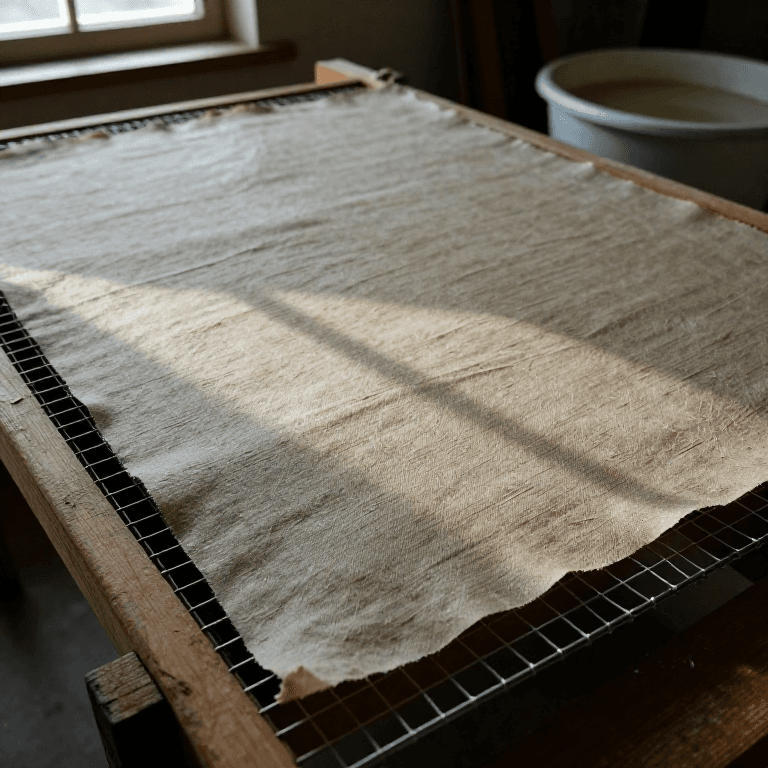


CC0 Domena publiczna
Ten plan jest udostępniany na licencji CC0. Możesz go swobodnie kopiować, modyfikować, rozpowszechniać i wykorzystywać do dowolnych celów, bez konieczności uzyskiwania zgody.
Wesprzyj Makera kupując produkty przez jego plan, za co zarabia Prowizja Makera ustalony przez sprzedawców, lub stwórz nową iterację tego planu i dołącz go jako połączenie w swoim własnym planie, aby dzielić się przychodami.