ИСКУССТВО
КРАСОТА И ЗДОРОВЬЕ
РЕМЕСЛО
КУЛЬТУРА И ИСТОРИЯ
РАЗВЛЕЧЕНИЯ
ЭКОЛОГИЯ
ЕДА И НАПИТКИ
ОБРАТНАЯ ИНЖЕНЕРИЯ
НАУКИ
СПОРТ
ТЕХНОЛОГИИ
НОСИМЫЕ УСТРОЙСТВА
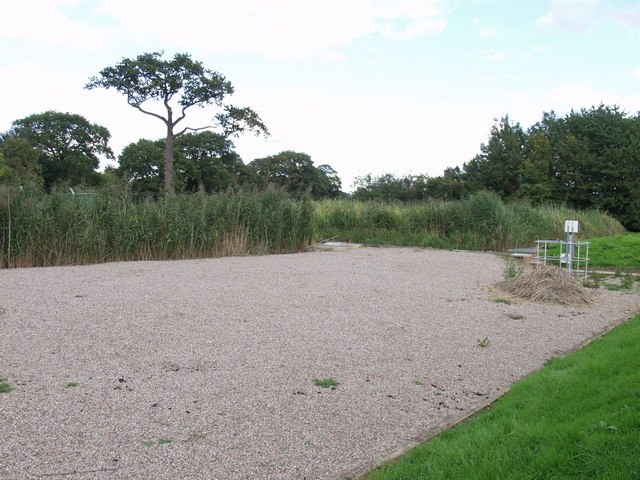


The Constructed Wetland
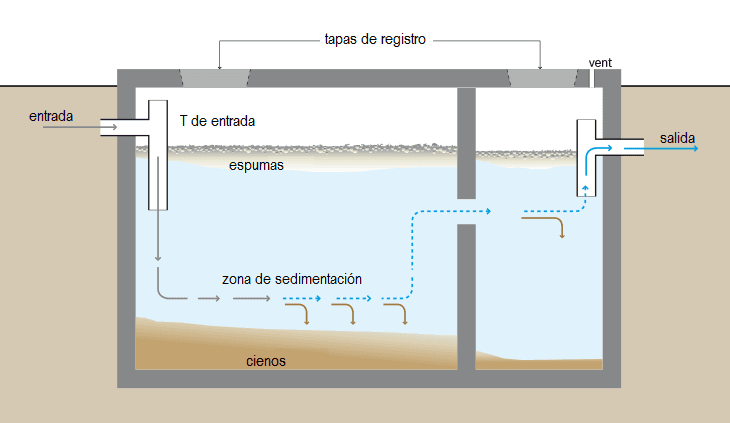
This is a sibling of `septic-tank`. Both treat household sewage where there is no sewer and no reliable power. They do it by opposite means, and the honest position is that they are usually used TOGETHER rather than instead of one another — which is itself worth understanding, because it is a common shape for sibling technologies.
The septic tank's method is to seal the sewage away from air and let it sit. Solids settle, scum floats, and anaerobic organisms slowly digest what is retained. It is compact, it is completely passive, it works in any climate, and its effluent — while much better than raw sewage — is still anaerobic, still high in dissolved organic matter and ammonia, and still needs somewhere to go.
A constructed wetland does the opposite. There is no seal and no tank. Sewage flows slowly, horizontally, through a bed of gravel planted with reeds, below the surface so nothing is exposed. Treatment happens in the biofilm on the gravel, in a zone that is mostly anoxic but with oxygen leaking from the plant roots, so both aerobic and anaerobic processes run side by side in millimetres. The effluent is aerobic, low in organic matter and, given the right zones, low in nitrogen.
The trade is stark. A septic tank for one household is about 3 cubic metres of tank in a hole. A horizontal-flow reed bed for the same household is 5 to 10 square metres of surface PER PERSON — perhaps 40 square metres of garden, which many properties simply do not have. The wetland needs a climate that supports plant growth and slows markedly in a cold winter. The septic tank does not care.
One more honest point, because it is widely got wrong: the reeds are not doing most of the treatment. The microbes on the gravel are. The plants supply some root-zone oxygen, keep the bed permeable, insulate it in winter and look like a garden instead of a works — all real, none of them the main mechanism. Anyone who tells you the plants eat the sewage has skipped the part that matters.
Средний
12 hours to build, 2 growing seasons to mature
Инструкции
1
1
Build a horizontal subsurface flow bed
Build a horizontal subsurface flow bed
Build a bench-scale bed that reproduces the real hydraulics, because the hydraulics are what fail in practice.
THE BOX. A container 1200 millimetres long, 400 wide and 500 deep — a builder's mixing trough or a plywood box lined with pond liner. Length matters far more than width: treatment is a function of contact time along the flow path, and a short wide bed short-circuits.
THE LINER IS NOT OPTIONAL at full scale. A wetland treating sewage must not leak into groundwater, so the real thing is lined with 1 millimetre HDPE or a clay layer. Here it also stops you losing the flow you are trying to measure.
THE MEDIA. Washed gravel, 8 to 16 millimetres, filling the box to 400 millimetres deep. Wash it until the water runs clear — fines are the enemy of this device for reasons the next step will demonstrate. At the inlet and outlet ends, put a 150 millimetre band of coarser 40 to 60 millimetre stone across the full width. Those bands are distribution zones: their job is to spread the flow across the whole width instantly and to collect it again, and without them water enters at a point, cuts a channel, and treats a fraction of the bed.
THE HYDRAULIC CONTROL, which is the part most home-built beds get wrong. The inlet is a perforated pipe lying in the inlet stone band, fed from your source. The outlet is a perforated pipe in the outlet band connected to a SWIVELLING OR ADJUSTABLE STANDPIPE outside the box.
That adjustable outlet is what sets the water level inside the bed, and the water level must sit 50 to 100 millimetres BELOW the gravel surface. This is subsurface flow, and the reason is not aesthetic: water on the surface means mosquitoes breed, odour escapes, and people and animals contact sewage. Set the standpipe so the level is buried, and check it after the bed settles.
Slope the floor about 1 percent from inlet to outlet to help it drain for maintenance. The flow itself is driven by the head difference across the bed, not by the floor slope.
THE PLANTS. Common reed, Phragmites australis, is the standard. Bulrush or reedmace also work. Plant at about four rhizomes per square metre into the gravel — at this scale, two or three plants. They will look miserable for a season and then take over.
FEED IT SETTLED SEWAGE, NEVER RAW. This is the single most important operating rule and it is why septic tank and reed bed are usually partners rather than rivals: a wetland fed raw sewage clogs with solids at the inlet within months and cannot be unclogged without digging the gravel out. The septic tank in front of it removes the settleable solids and the grease; the wetland treats what remains dissolved. Use the same defined synthetic wastewater as the rest of this domain — per 10 litres, 1.5 g glucose, 1.5 g peptone, 0.5 g ammonium chloride, 0.5 g sodium bicarbonate — and dose it continuously with a small peristaltic pump at about 4 litres per day.
Материалы для этого шага:
 Плёнка для пруда (ПЭВП)4 square metre
 Крупный гравий120 kilogram
 Щебень30 kilogram
 Корневища тростника обыкновенного4 штук
 Прозрачная ПВХ-труба4 metre
 Набор фитингов для ПВХ-трубы1 набор
 Лабораторный перистальтический насос1 штука
 Глюкоза (декстроза)200 gram
 Пептон (бактериологический)200 gram
 Хлорид аммония (NH₄Cl)100 gram
Необходимые инструменты:
 Аккумуляторная дрель
 Набор свёрл
 Ножовка по металлу
 Строительный уровень
 Ведро на 20 литров
 Прецизионные цифровые весы
2
2
Prove where the water actually goes, and watch it clog
Prove where the water actually goes, and watch it clog
A reed bed's design assumes plug flow — that every parcel of water spends the same time crossing the bed. Real beds short-circuit and dead-zone, and the difference between the assumed retention time and the actual one is the difference between a bed that works and one that does not.
THE TRACER TEST. Inject a slug of salt solution or food colouring at the inlet, all at once, and sample the outlet at regular intervals — every ten minutes for the first few hours, then hourly. Measure conductivity with your multimeter across two fixed probes, or read colour against a white card.
Plot concentration at the outlet against time. That curve is the residence time distribution and it tells you everything.
A bed approaching plug flow gives a late, narrow, symmetrical peak: the tracer arrives all together at close to the theoretical retention time. A short-circuiting bed gives an early peak — tracer appearing far sooner than theory says it should — followed by a long tail as the rest dribbles out of the dead zones. Compute the mean residence time from your curve and compare it with the theoretical value the notebook gives. Getting 60 to 70 percent of theory is normal for a real bed. Getting 30 percent means most of your gravel is doing nothing.
CAUSE A CLOG, because clogging is how these beds actually die and it is worth seeing.
Feed the bed deliberately badly for a fortnight: raise the organic loading sharply and add fine solids — a little flour or fine silt in the feed, which is what unsettled sewage would deliver. Then look at the inlet zone.
What you will find is that the first 200 millimetres of gravel has filled with a gelatinous mixture of biofilm and trapped solids, the porosity there has collapsed, and water can no longer get into the bed at the inlet. It backs up and appears on the SURFACE, flowing over the top of the gravel to the outlet. The bed has become an open channel with a gravel bottom, and it now treats almost nothing while breeding mosquitoes and smelling.
That is inlet clogging, it is the dominant failure mode of horizontal-flow wetlands worldwide, and it is essentially irreversible: you cannot backwash a planted gravel bed. The repair is to dig out the inlet zone gravel and replace it.
Which is precisely why the septic tank in front is not optional, and why these two blueprints are partners. The septic tank's job in the pair is to protect the wetland from the solids that would kill it. Read the two together and the system makes sense; read either alone and it looks like a complete answer, which neither is.
Материалы для этого шага:
 Хлорид натрия (соль)1 kilogram
 Пищевой краситель, концентрат1 штука
Необходимые инструменты:
 Цифровой мультиметр лабораторного класса
 Мутномер
 Секундомер
 Мерный цилиндр
 Фильтровальная бумага из стекловолокна
3
3
Sizing it — Darcy, Kickuth, and the land it costs
Sizing it — Darcy, Kickuth, and the land it costs
Загрузка блокнота Jupyter…
Необходимые инструменты:
 Настольный компьютер
Материалы
12- 4 square metreЗаполнитель
- 120 kilogramЗаполнитель
- 30 kilogramЗаполнитель
- Заполнитель
- 4 metreЗаполнитель
- 1 наборЗаполнитель
- Заполнитель
- 200 gramЗаполнитель
- 200 gramЗаполнитель
- 100 gramЗаполнитель
- 1 kilogramЗаполнитель
- Заполнитель
Требуемые инструменты
12- 1 vendor sell this, none ship to you yetЗаполнитель
- Заполнитель
- Заполнитель
- Заполнитель
- Заполнитель
- Заполнитель
- Заполнитель
- Заполнитель
- Заполнитель
- Заполнитель
- Заполнитель
- Заполнитель
Связанные чертежи
Эти чертежи делятся знаниями — техники, материалы или принципы

CC0 Общественное достояние
Этот чертёж выпущен под лицензией CC0. Вы можете свободно копировать, изменять, распространять и использовать эту работу в любых целях без запроса разрешения.
Поддержите мейкера, покупая товары через его чертёж, где он получает Комиссию мейкера установленную продавцами, или создайте новую итерацию этого чертежа и включите его как связь в свой чертёж для распределения дохода.