ИСКУССТВО
КРАСОТА И ЗДОРОВЬЕ
РЕМЕСЛО
КУЛЬТУРА И ИСТОРИЯ
РАЗВЛЕЧЕНИЯ
ЭКОЛОГИЯ
ЕДА И НАПИТКИ
ОБРАТНАЯ ИНЖЕНЕРИЯ
НАУКИ
СПОРТ
ТЕХНОЛОГИИ
НОСИМЫЕ УСТРОЙСТВА



Current Density: Edges Plate Thick and Recesses Do Not Plate At All
Faraday's law says how much metal is deposited. It says nothing about where it goes, and the answer is: not evenly.
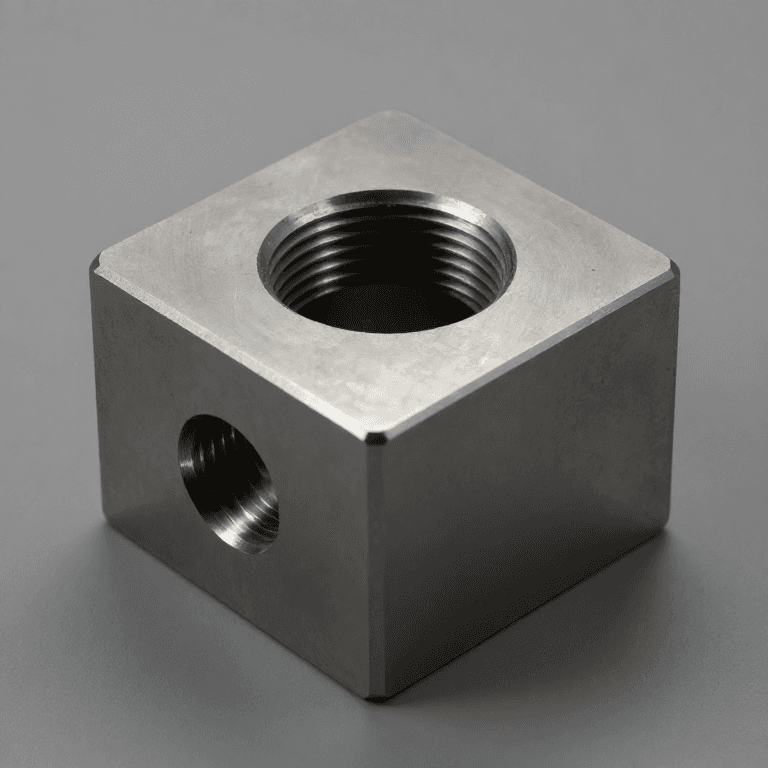
Current takes the shortest path through the solution, so the parts of the work nearest the anode get more of it, and edges, corners and points — which current can reach from several directions at once — get the most. Recesses and the insides of tubes may get almost none.
**Throwing power** is how well a particular bath evens this out, and it varies enormously between chemistries. Understanding it is the difference between a part that is plated and a part that is plated on the side that faced the anode.
Продвинутый
4 hours
Инструкции
1
1
Current density is the specification, not current
Current density is the specification, not current
Every plating bath is specified in **amps per square decimetre** of cathode area, and 1 dm² is 100 cm², which is a convenient size of part.
**So the area must be calculated before the current is set.** Both faces, the edges, and the inside of any hole. A part whose area is underestimated is plated at a higher current density than intended, and the symptom is burning at the edges.
**Below the window:** a dull, thin, sometimes non-existent deposit. Some baths will not deposit at all below a threshold current density, so a part with a deep recess can be plated everywhere except inside it — not thinly, but not at all.
**Above the window:** **burning**. A dark grey, rough, powdery deposit with little adhesion, always worst at edges and points. It cannot be polished out; the part is stripped and started again.
**The window moves with temperature and agitation.** Both allow higher current density, because both bring fresh solution to the cathode faster. A bath run cold at its normal current burns; the same bath hot and stirred does not.
**Start low.** A part plated slowly at the bottom of the window is right; one plated fast at the top is a gamble on the area calculation.
Материалы для этого шага:
 Лист малоуглеродистой стали2 штук
 Гексагидрат сульфата никеля1 штука
Необходимые инструменты:
 Регулируемый лабораторный источник питания
 Цифровой мультиметр — автовыбор предела, True RMS
 Цифровой штангенциркуль 6 дюймов
2
2
Where the metal goes, and which baths spread it
Where the metal goes, and which baths spread it
Загрузка блокнота Jupyter…
Необходимые инструменты:
 Настольный компьютер
3
3
Racking, thieves and shields
Racking, thieves and shields
How the work hangs in the tank is a real part of the process, and there are four standard tools.
**Racking.** Every part hangs from a rack that carries current to it. The contact must be firm and must be somewhere that does not matter, because the contact point does not plate and often leaves a mark. Hang parts so that air cannot be trapped in a recess — a trapped bubble is an unplated patch with a sharp edge.
**Orientation.** Present the important face to the anode. A part hung edge-on to the anode plates its edges and starves its faces.
**Thieves** (robbers). A sacrificial piece of metal placed near an edge or a corner, which takes the excess current instead of the part. It is the standard answer to burning at one specific feature, and it costs a scrap of metal.
**Shields.** A non-conducting barrier — plastic sheet — placed between the anode and a part of the work that would otherwise get too much current. The opposite of a thief, and used where a thief would be in the way.
**Conforming and auxiliary anodes.** For an awkward shape, an anode shaped to follow the part, or a small anode placed inside a recess. This is how the inside of a tube or the bore of a cylinder is hard-chromed, and it is essentially the only way.
**Barrel plating** tumbles many small parts in a perforated barrel, so each one spends time at every position. The distribution problem is solved by moving the parts rather than the current.
Материалы для этого шага:
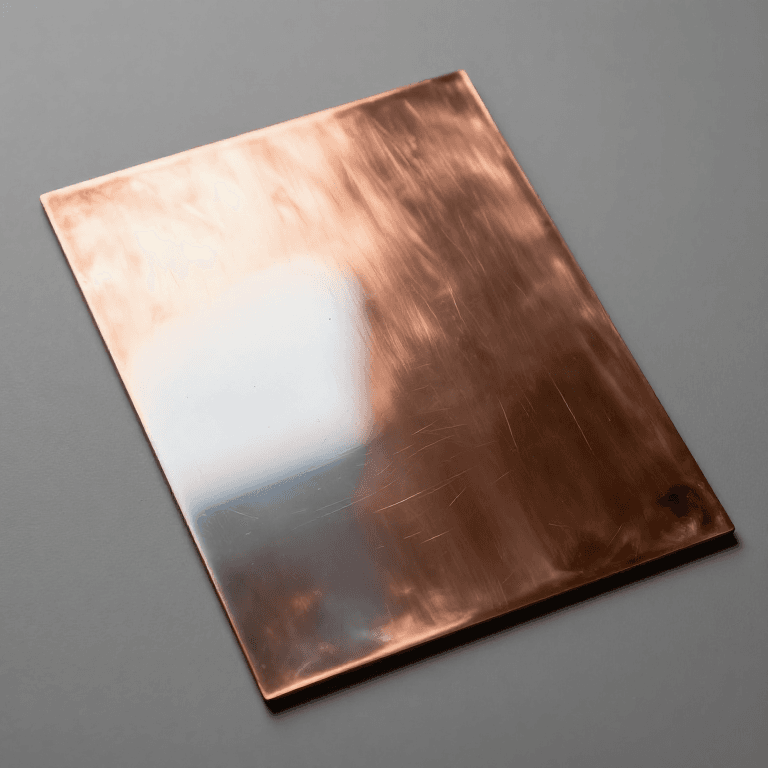
Лист малоуглеродистой стали2 штук Медный лист1 штука
Необходимые инструменты:
Регулируемый лабораторный источник питания Стакан из боросиликатного стекла
 Малярная лента
4
4
Masking and selective plating
Masking and selective plating
Sometimes the answer is to plate only part of the work.
**Lacquer or stop-off paint.** A peelable or solvent-removable coating painted on the areas not to be plated. It must resist the bath chemistry, which for an acid bath and an alkaline bath are different requirements.
**Plating tape.** Chemically resistant adhesive tape, cut to shape. Fast, accurate at an edge, and it lifts if the surface was not properly clean — which is a useful early warning.
**Wax.** The traditional stop-off, still good for an irregular shape, and it melts off cleanly afterwards.
**Mechanical masks.** A plug in a threaded hole, a cap over a bearing surface. Reusable and precise for production.
**Brush plating** goes the other way: no tank at all. An anode wrapped in an absorbent pad soaked in concentrated solution is stroked over the work with current flowing. It plates exactly where the pad touches, it is how worn machinery is repaired in place, and it works at very high current densities because the pad brings fresh solution constantly.
**Whatever the mask, the edge of it is a weak point.** The coating is at its thinnest where it meets the mask, and that is where corrosion starts. Put the boundary where it will not matter.
Материалы для этого шага:
Лист малоуглеродистой стали1 штукаНеобходимые инструменты:
Регулируемый лабораторный источник питания Химически стойкие перчаткиМалярная лента
Материалы
3- Заполнитель
- 1 штукаЗаполнитель
- 1 штукаЗаполнитель
Требуемые инструменты
7- Заполнитель
- Заполнитель
- Заполнитель
- Заполнитель
- Заполнитель
- Заполнитель
Связанные чертежи
Эти чертежи делятся знаниями — техники, материалы или принципы

CC0 Общественное достояние
Этот чертёж выпущен под лицензией CC0. Вы можете свободно копировать, изменять, распространять и использовать эту работу в любых целях без запроса разрешения.
Поддержите мейкера, покупая товары через его чертёж, где он получает Комиссию мейкера установленную продавцами, или создайте новую итерацию этого чертежа и включите его как связь в свой чертёж для распределения дохода.