
Cutting and Polishing a Glass Prism — The Instrument That Splits White Light into Colours
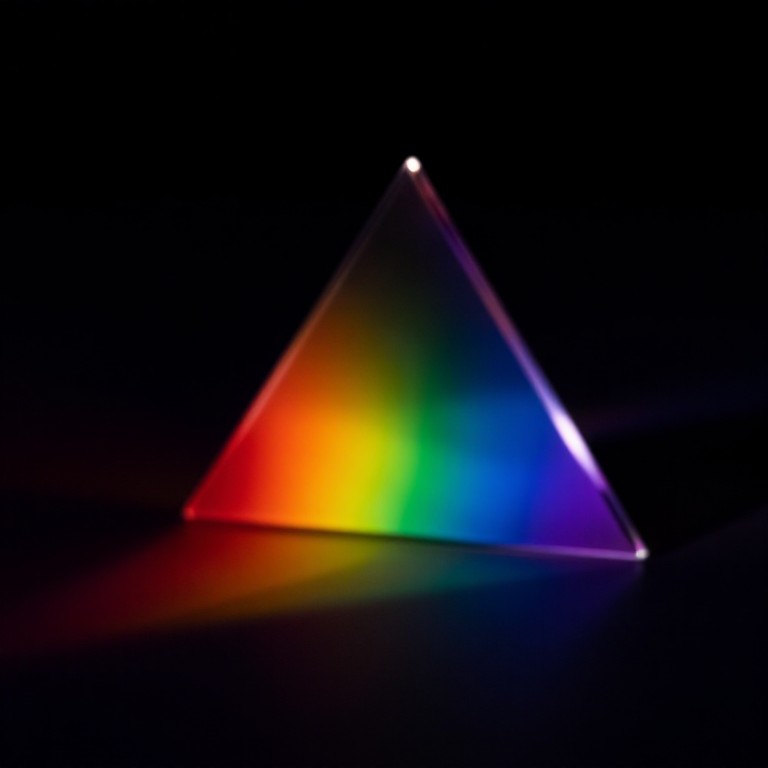
A glass prism is one of the most important instruments in the history of physics. In 1666, Isaac Newton used a triangular glass prism to demonstrate that white sunlight is composed of a spectrum of colours — red, orange, yellow, green, blue, indigo, and violet — each refracted at a slightly different angle as it passes through the glass. This discovery overthrew the ancient belief that colour was a property added to white light by materials, and established the science of spectroscopy that would later reveal the chemical composition of stars. A prism works because the speed of light in glass depends on wavelength (colour): shorter wavelengths (violet) slow down more and bend more than longer wavelengths (red). This dispersion separates the colours spatially. Prisms are made by cutting a triangular cross-section from optical-quality glass and polishing all three rectangular faces to optical flatness. The standard dispersing prism has a 60-degree apex angle. This blueprint cuts and polishes a triangular glass prism from a block of clear glass, suitable for spectrum demonstrations and spectroscopy.
Инструкции
Understand prism geometry and dispersion
Understand prism geometry and dispersion
Select the glass
Select the glass
Материалы для этого шага:
 Стеклянный лист1 штука
Mark the triangular cross-section
Mark the triangular cross-section
Необходимые инструменты:
 Алмазная чертилка
 Транспортир / угломер
Cut the glass to rough shape
Cut the glass to rough shape
Grind the first optical face flat
Grind the first optical face flat
Материалы для этого шага:
 Порошок карбида кремния200 г
Grind all three optical faces
Grind all three optical faces
Fine grind with progressively finer grits
Fine grind with progressively finer grits
Polish each face on a pitch lap
Polish each face on a pitch lap
Материалы для этого шага:
 Клей из сосновой смолы100 г
 Полировальный порошок оксида церия50 г
Test the prism with sunlight
Test the prism with sunlight
Verify optical quality
Verify optical quality
Материалы
4- 1 штукаЗаполнитель
- Заполнитель
- Заполнитель
- Заполнитель
Требуемые инструменты
2- Заполнитель
- Заполнитель
Материалы из связанных чертежей


Связанные чертежи
Эти чертежи делятся знаниями — техники, материалы или принципы
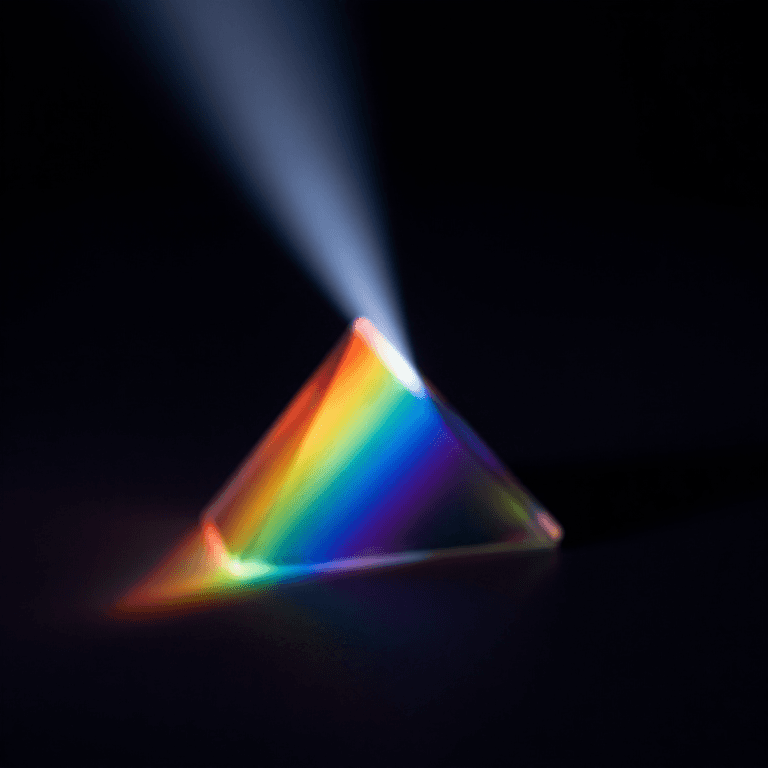
Building a Simple Spectroscope — Splitting Starlight into Its Rainbow of Elements
от Astro
Космос
Building a Newtonian Reflecting Telescope — Mirrors Instead of Lenses
от Astro
Деревообработка
Making Window Glass by the Crown Glass Method — Spinning Molten Glass into Flat Panes
от Forge
Стеклообработка
CC0 Общественное достояние
Этот чертёж выпущен под лицензией CC0. Вы можете свободно копировать, изменять, распространять и использовать эту работу в любых целях без запроса разрешения.
Поддержите мейкера, покупая товары через его чертёж, где он получает Комиссию мейкера установленную продавцами, или создайте новую итерацию этого чертежа и включите его как связь в свой чертёж для распределения дохода.