ИСКУССТВО
КРАСОТА И ЗДОРОВЬЕ
РЕМЕСЛО
КУЛЬТУРА И ИСТОРИЯ
РАЗВЛЕЧЕНИЯ
ЭКОЛОГИЯ
ЕДА И НАПИТКИ
ОБРАТНАЯ ИНЖЕНЕРИЯ
НАУКИ
СПОРТ
ТЕХНОЛОГИИ
НОСИМЫЕ УСТРОЙСТВА
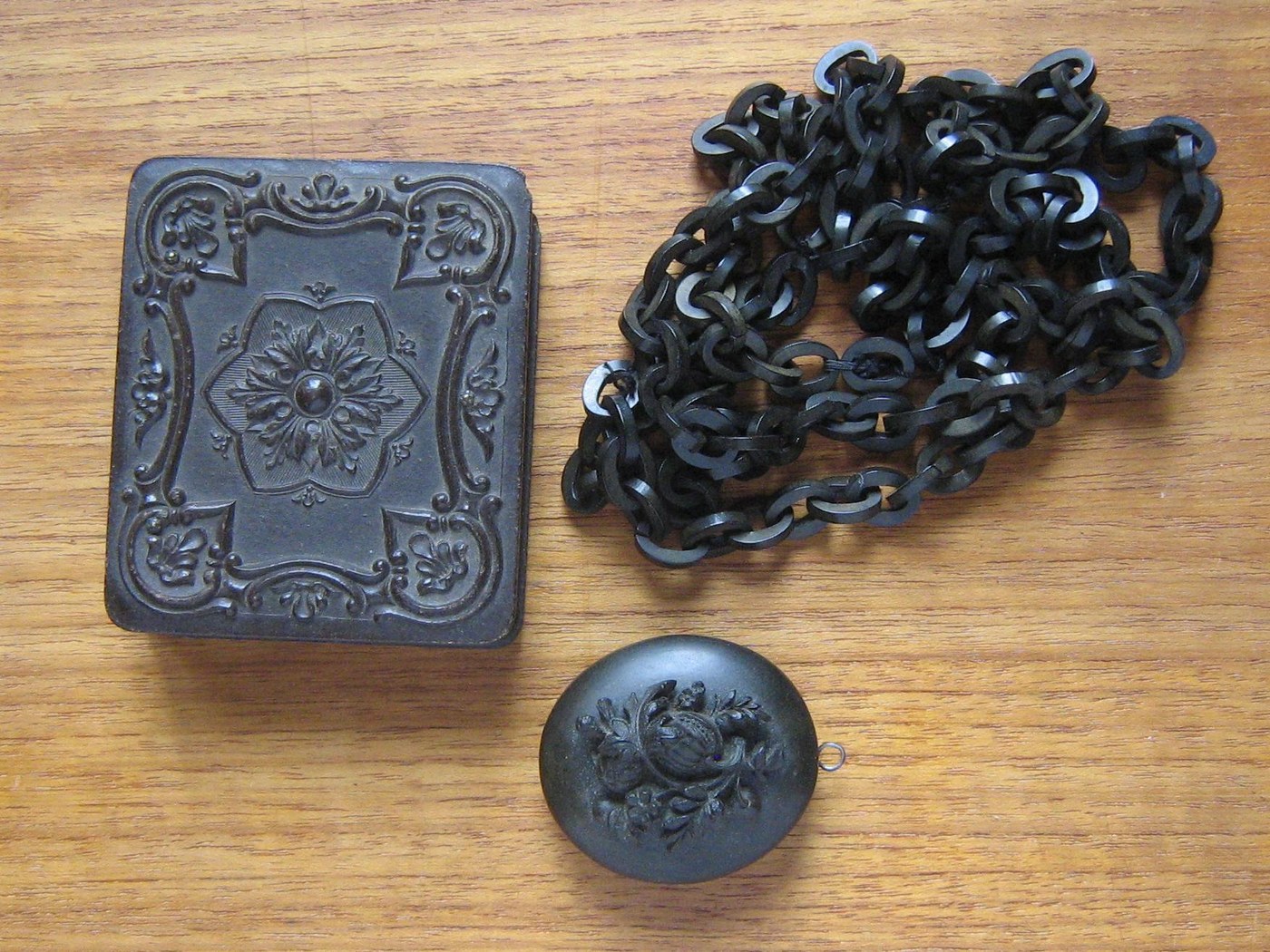

Ebonite Rod: Rubber and an Equal Weight of Sulphur, Cured Hours in the Heat, Goodyear 1851
Ebonite is rubber with a great deal of sulphur. Nelson Goodyear's patent (1851) uses about equal weights of the two, far more than for soft rubber, moulded and then cured at 260–275 °F for three to six hours or longer. It comes out hard and stiff.
The picture: ebonite objects (photo by FBQ, Wikimedia Commons, CC BY-SA 3.0).
Средний
1 day
Инструкции
1
1
Weigh equal parts
Weigh equal parts
Weigh the rubber and the sulphur, about equal parts by weight. Much less sulphur will not make it hard.
Материалы для этого шага:
 Копчёный листовой каучук500 г
 Порошковая сера500 г
Необходимые инструменты:
 Рычажные весы
2
2
Work the sulphur in
Work the sulphur in
Mix the sulphur into the rubber the usual way rubber is compounded: on the rubber mill, until the sulphur is spread evenly through.
Необходимые инструменты:
 Двухвалковые вальцы для резины
3
3
Mould the rod
Mould the rod
Press the compound firmly into a tube to shape it as a rod.
Необходимые инструменты:
 Стальная трубка 12 мм
4
4
Cure it
Cure it
Heat it to 260–275 °F (about 127–135 °C) and hold it there three to six hours, or longer. Let it cool and push out the hard rod.
Необходимые инструменты:
 Духовка
 Термометр
Материалы
2- Заполнитель
- 500 гЗаполнитель
Требуемые инструменты
5- Заполнитель
- Заполнитель
- Заполнитель
- Заполнитель
- Заполнитель
По этому чертежу делают
CC0 Общественное достояние
Этот чертёж выпущен под лицензией CC0. Вы можете свободно копировать, изменять, распространять и использовать эту работу в любых целях без запроса разрешения.
Поддержите мейкера, покупая товары через его чертёж, где он получает Комиссию мейкера установленную продавцами, или создайте новую итерацию этого чертежа и включите его как связь в свой чертёж для распределения дохода.