ИСКУССТВО
КРАСОТА И ЗДОРОВЬЕ
РЕМЕСЛО
КУЛЬТУРА И ИСТОРИЯ
РАЗВЛЕЧЕНИЯ
ЭКОЛОГИЯ
ЕДА И НАПИТКИ
ОБРАТНАЯ ИНЖЕНЕРИЯ
НАУКИ
СПОРТ
ТЕХНОЛОГИИ
НОСИМЫЕ УСТРОЙСТВА
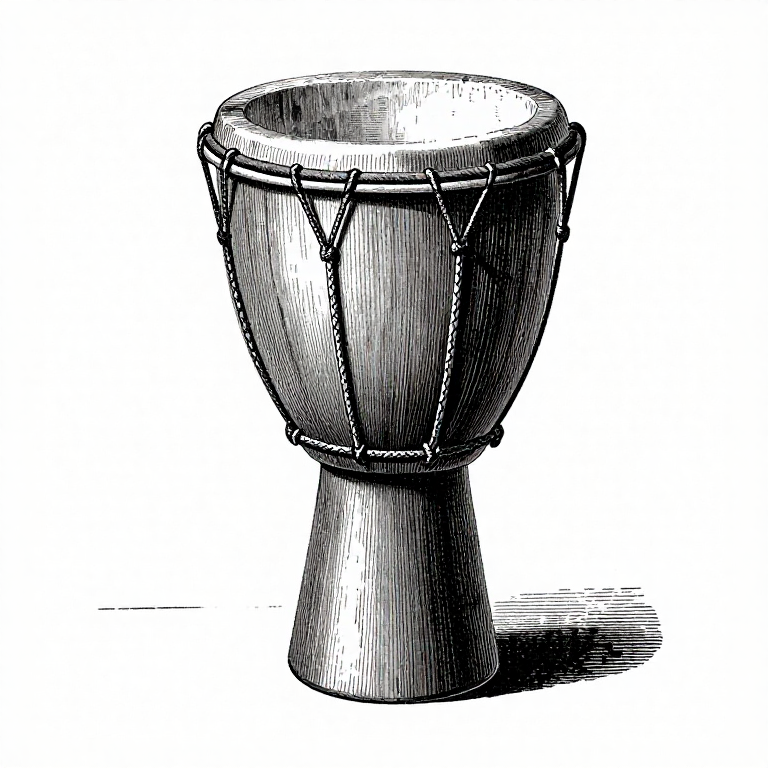

Heads and Tension: Why a Drum Has a Pitch You Can Argue About
A string vibrates in halves, thirds and quarters, so its overtones are whole-number multiples of the fundamental and the ear hears one clear note.
A circular drum head does not. Its modes are set by the zeros of Bessel functions, which fall at 1, 1.59, 2.14, 2.30 and so on — no simple ratios, no harmonic series, and therefore no single pitch the ear can settle on. That is not a defect; it is what makes a drum sound like a drum.
This rung covers mounting and tensioning a head, what the maker can and cannot change, and the trick that several traditions use to give a drum a definite note after all.
Средний
4 hours
Инструкции
1
1
Preparing and mounting the skin
Preparing and mounting the skin
A natural head is rawhide: skin that has been dehaired and dried without tanning, so it is still collagen and still shrinks when it dries.
**Soak it soft.** Cold water for an hour or several, until it is limp and flexible all the way through. Warm water works faster and weakens it, so cold and slow is the rule.
**Mount it wet and stretched.** Wrap it over the shell or its hoop while it is soft, pull it even all round, and fix it. The tension you set now is not the final tension.
**Let it dry on the drum.** This is where most of the tension comes from: the skin shrinks as it dries and tightens itself. A head mounted at what felt like full tension while wet will be drum-tight and often split.
Thickness is the other variable and it is chosen with the size. Goat is thin and bright and is the classic for a djembe or a bodhrán; cow and buffalo are thick and deep and belong on a large drum. Too thick a skin on a small shell will never speak; too thin on a large one tears.
Материалы для этого шага:
 Козья кожа1 штука
 Сыромятная кожа1 штука
 Ремень из сыромятной кожи1 штука
Необходимые инструменты:
 Линейка
 Цифровой штангенциркуль 6 дюймов
2
2
The modes, and what the maker controls
The modes, and what the maker controls
Загрузка блокнота Jupyter…
Необходимые инструменты:
 Настольный компьютер
3
3
Tensioning systems, and keeping the head even
Tensioning systems, and keeping the head even
However the head is pulled, the requirement is the same: **even tension all the way round**. A head that is tighter on one side has its modes split, so instead of one muddy pitch it gives two, and it sounds dead.
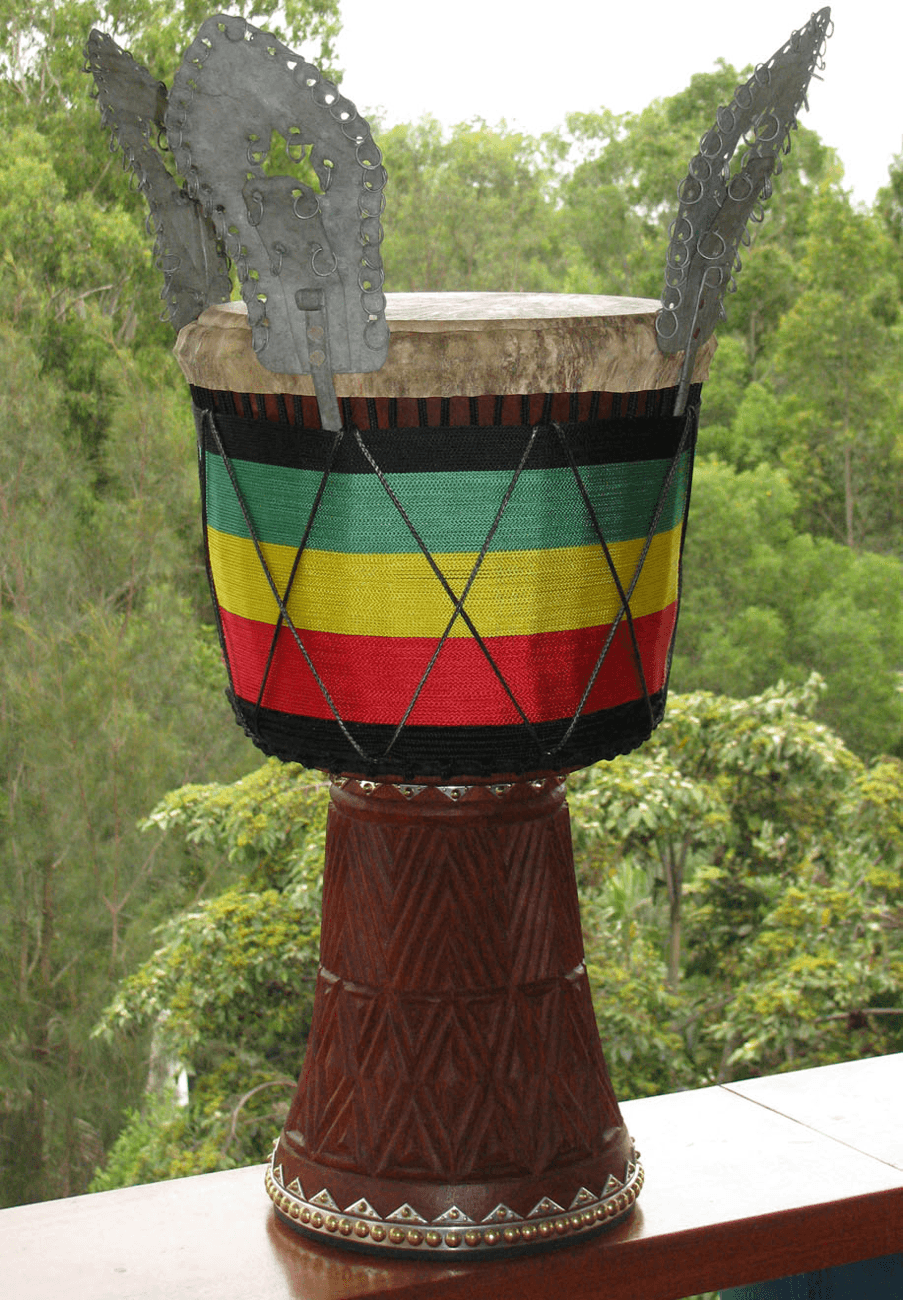
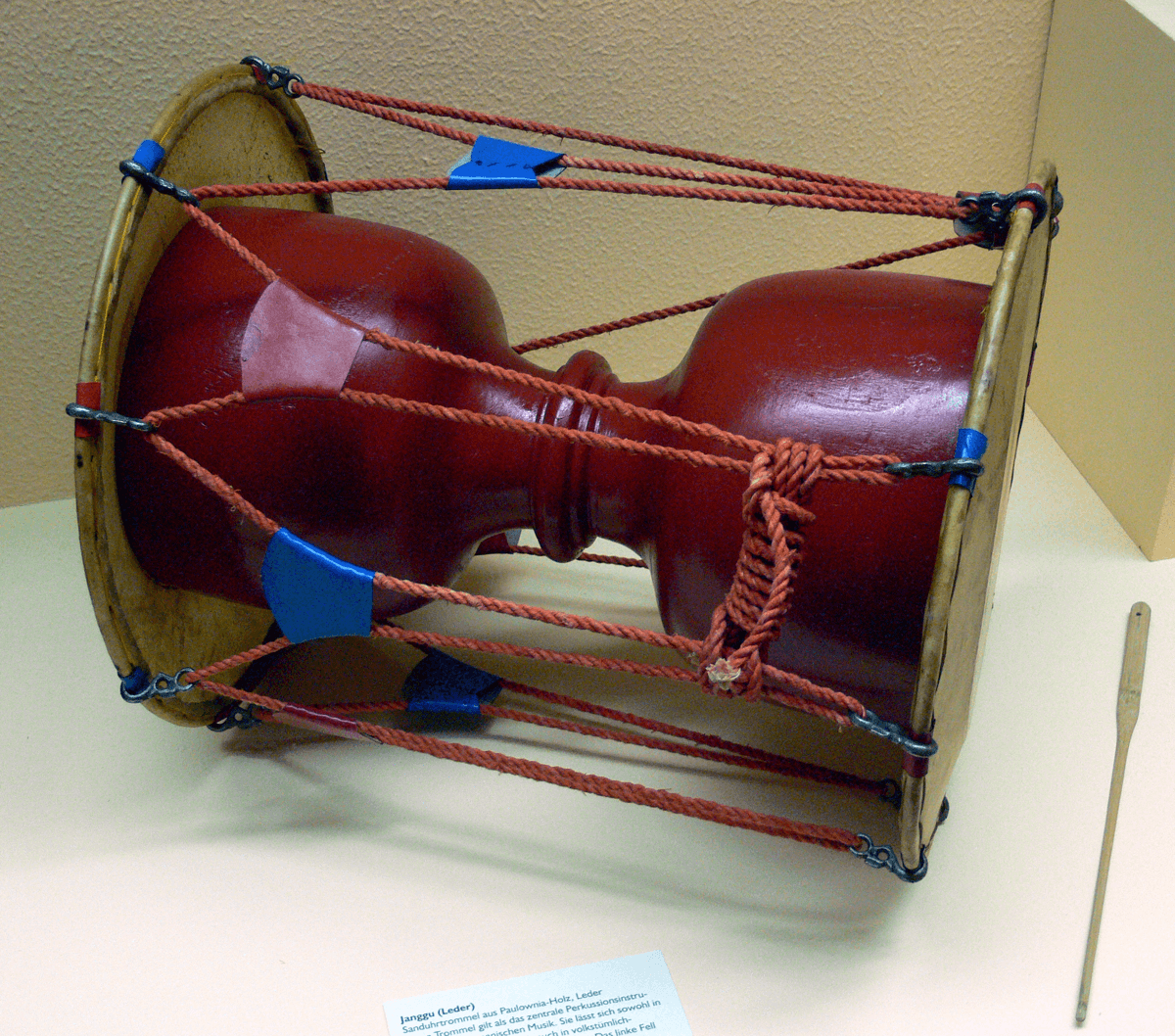
**Lacing**, as on a djembe or a janggu — cord zigzagged between the head hoop and a ring below, tightened by pulling the verticals into horizontal rows. Cheap, traditional, and re-tensioned by weaving another row.
**Pegs or nails**, as on many older frame drums — simple, permanent, and not adjustable, so the drum is tuned by heat and humidity alone.
**Screw tensioners**, the modern answer — a hoop pulled down by bolts around the rim.
With any of them, tighten **opposite pairs in turn**, never once round the circle. Going round pulls the head progressively sideways and leaves the last point tighter than the first, which is the same reason a wheel is trued and a cylinder head is torqued in a cross pattern.
Tap beside each tensioning point and listen. When every point gives the same note, the head is even. This is the whole tuning method and it needs no instrument.
Материалы для этого шага:
Ремень из сыромятной кожи1 штукаСыромятная кожа1 штукаНеобходимые инструменты:
 Хроматический тюнер и метроном (прищепка)Линейка
4
4
Weather, and what to do about it
Weather, and what to do about it
A natural skin is hygroscopic. It takes up water from damp air and goes slack, and it gives water back in dry air and tightens. A drum tuned in a cool damp evening can be a tone sharp in a warm dry hall.
Traditional playing uses this rather than fighting it: a djembe or a bodhrán is warmed at a fire before playing to bring the head up to pitch, and a head that has gone too tight is damped with a wet hand.
**A synthetic head does not move with the weather** — that is its whole advantage, and it is why they are standard on any drum that has to hold tune with other instruments. It sounds different, and which is better depends entirely on what the drum is for.
Two habits worth keeping either way:
**Slacken a natural head after playing** if the drum is to be stored somewhere dry. A head left at playing tension through a dry winter is a head that splits.
**Never dry a wet drum near direct heat.** The skin shrinks faster than it can stretch and tears at the rim, where it is already carrying the whole load.
Материалы для этого шага:
Козья кожа1 штукаНеобходимые инструменты:
Хроматический тюнер и метроном (прищепка)Материалы
3- 2 штукЗаполнитель
- 1 штукаЗаполнитель
- 1 штукаЗаполнитель
Связанные чертежи
Эти чертежи делятся знаниями — техники, материалы или принципы

CC0 Общественное достояние
Этот чертёж выпущен под лицензией CC0. Вы можете свободно копировать, изменять, распространять и использовать эту работу в любых целях без запроса разрешения.
Поддержите мейкера, покупая товары через его чертёж, где он получает Комиссию мейкера установленную продавцами, или создайте новую итерацию этого чертежа и включите его как связь в свой чертёж для распределения дохода.