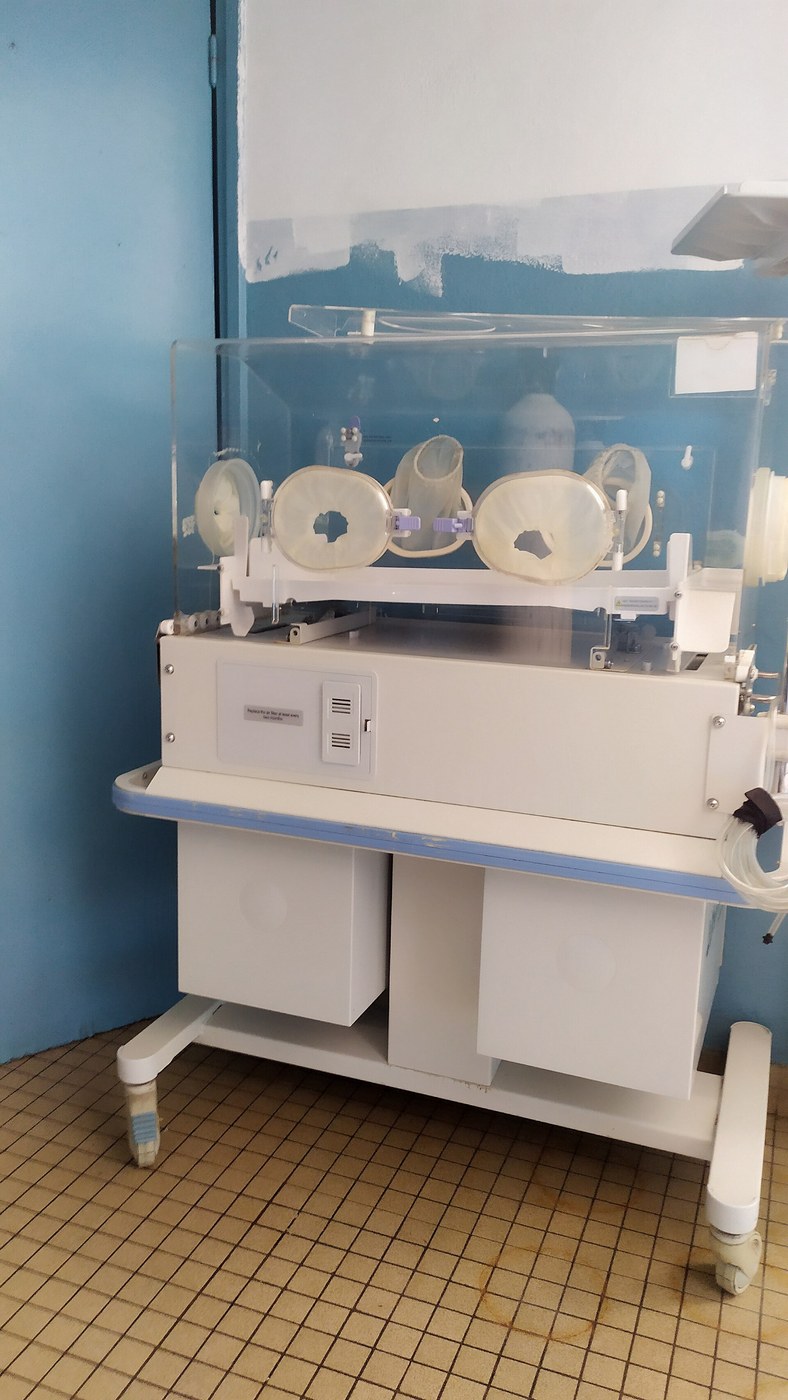


The Infant Incubator
A small body loses heat far faster than a large one. Surface area grows as the square of size while the mass generating heat grows as the cube, so halving a body's dimensions roughly doubles the heat it loses per gram. A premature infant is on the wrong side of that arithmetic, and has almost no insulating fat and little ability to shiver.
The result is that such an infant can be perfectly healthy in every other respect and still cool to death in an ordinary room. Warming a whole ward is impossibly wasteful and bad for everyone else in it.
The incubator's answer is to build a small enclosure with its own climate, and — crucially — to control it by feedback rather than by setting. An unregulated warm box is lethal in both directions: it drifts cold when the room does, and it cooks when the sun comes out.
So the mechanism at the centre is a thermostat: measure the temperature, compare it with a target, switch the heat accordingly. It is the same negative-feedback loop as the float valve, with temperature substituted for water level.
Two refinements matter as much as the heat. Humidity, because evaporation from thin skin cools powerfully and dehydrates. And an enclosure that can be worked through — portholes, so hands reach in without the climate falling out.
Инструкции
Measure the square-cube penalty yourself
Measure the square-cube penalty yourself
Fill a large bottle and a small one with water at the same temperature, and log both as they cool in the same room.
Plot the curves.
Expect the small one to lose temperature much faster, despite starting identically.
Compute surface area and volume for each and take the ratio. The small vessel has more skin per unit of contents, so it has more places to lose heat and less heat to lose.
Write it plainly: being small is a thermal disadvantage, and no amount of blankets changes the geometry.
Необходимые инструменты:
 Термометр
 Стеклянные бутылки с крышками
Show that an unregulated warm box is dangerous
Show that an unregulated warm box is dangerous
Put a constant heat source — a small lamp — in an insulated box with a thermometer and leave it running with no control.
Log the temperature for an hour, then open a window or move the box into sunlight and log again.
Expect it to overshoot badly and to track whatever the room does.
A fixed heat input does not produce a fixed temperature; it produces whatever temperature balances the losses at that moment. Since the losses change constantly, so does the result.
This is the argument for feedback, made by watching it fail.
Close the loop and watch it hold
Close the loop and watch it hold
Add a thermostat — a bimetallic switch or a simple electronic controller — set to a target, and repeat the disturbances from step 2.
Log the temperature.
Expect it to hold near target, cycling slightly, and to recover after each disturbance.
Note the cycling and measure its amplitude. A simple on-off controller must overshoot and undershoot a little, because it only acts once the error already exists.
That band is the fundamental cost of the simplest feedback, and reducing it is the entire subject of control engineering.
Find how much heat evaporation is stealing
Find how much heat evaporation is stealing
Put two identical warm wet objects in the enclosure — one wrapped so it cannot evaporate, one open — and log both.
Expect the open one to run cooler and to lose mass.
That is Cullen's evaporative cooling from the cold batch, working against you.
Now raise the humidity inside and repeat. Expect the difference to shrink.
This is why incubators humidify: very premature skin is thin and leaks water fast, so evaporation is a major heat loss and a fluid loss. Warming the air alone leaves the biggest drain running.
Test the cost of every intervention
Test the cost of every intervention
With the enclosure stable, open the whole lid for thirty seconds, close it, and time the recovery. Then repeat, reaching in through a small porthole instead.
Expect the lid opening to cost far more and take much longer to recover.
Every examination, feed and procedure is a disturbance to the environment being maintained.
Portholes, double walls and warmed air curtains all exist to make care possible without paying the full price each time — the same reasoning as the chest freezer that opens upward in the cold-chain blueprint. Design the access, not just the enclosure.
History & Context
History & Context
It came from a poultry hatchery. Stéphane Tarnier, an obstetrician in Paris, saw egg incubators at the zoo and had a version built for infants. The problem was recognised as the same one — hold a small warm thing at a steady temperature — and the technology was carried across intact. That is the ordinary route of invention in this corpus: a solved problem in one field noticed by someone standing in another.
It was popularised at fairgrounds, which is uncomfortable and true. Martin Couney exhibited premature infants in incubators as a paid sideshow at Coney Island and at world's fairs for decades, funding their care from ticket sales because hospitals would not provide it. Thousands of infants survived who would otherwise have been left to die as unviable. The spectacle is indefensible by modern standards; it also preceded and arguably forced hospital adoption, and both things are true at once.
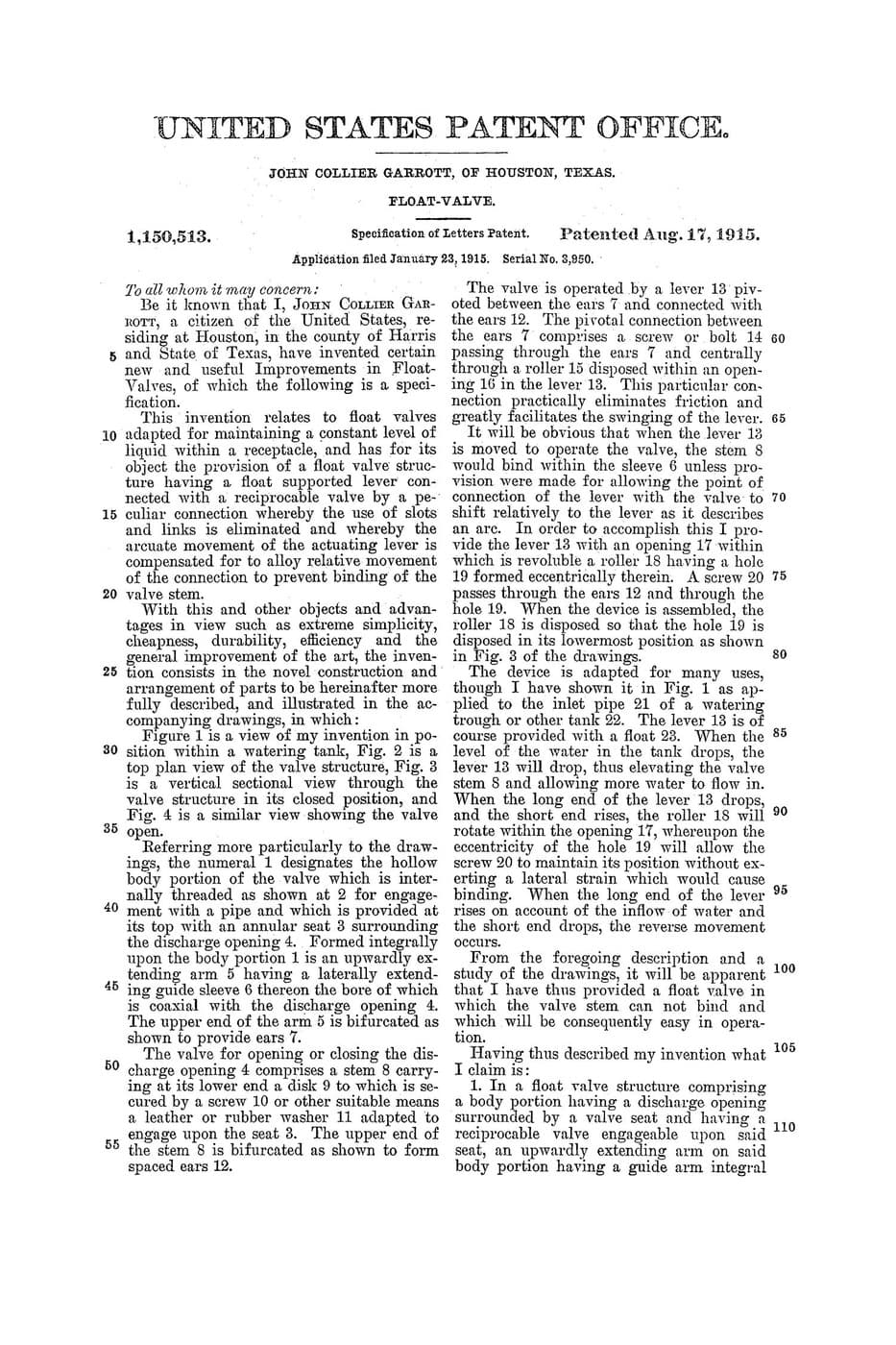
The thermostat is the same invention as the float valve. Measure the output, compare with a target, act to oppose the error. The blueprint for the ballcock in the sanitation batch is this loop with water level as the variable; the Butz thermostat elsewhere in this corpus is it with a room. Recognising one control principle behind three unrelated machines is worth more than any of the three.
Then the field learned that warmth is not enough. Incubators made survival possible and revealed the next problems: infection, over-oxygenation that blinded infants before the mechanism was understood, and the developmental cost of separating a newborn from its mother. Modern practice pushes hard the other way — kangaroo care, skin-to-skin on a parent's chest, uses an adult as the thermal source and outperforms an incubator for stable infants. The best answer turned out to be partly a return to the thing the machine replaced.
Honest limits. It controls an environment; it does not treat anything. It is a warm humid enclosed space, which is also excellent for bacteria, so cleaning discipline is not optional. It separates infant from parent, which has measurable costs. And it needs continuous power and continuous attention — in settings with neither, the low-technology alternatives are not a compromise, they are the correct choice.
Материалы из связанных чертежей

Связанные чертежи
Эти чертежи делятся знаниями — техники, материалы или принципы

CC0 Общественное достояние
Этот чертёж выпущен под лицензией CC0. Вы можете свободно копировать, изменять, распространять и использовать эту работу в любых целях без запроса разрешения.
Поддержите мейкера, покупая товары через его чертёж, где он получает Комиссию мейкера установленную продавцами, или создайте новую итерацию этого чертежа и включите его как связь в свой чертёж для распределения дохода.