Строим сыродутную печь и выплавляем железо — железный век
Инструкции
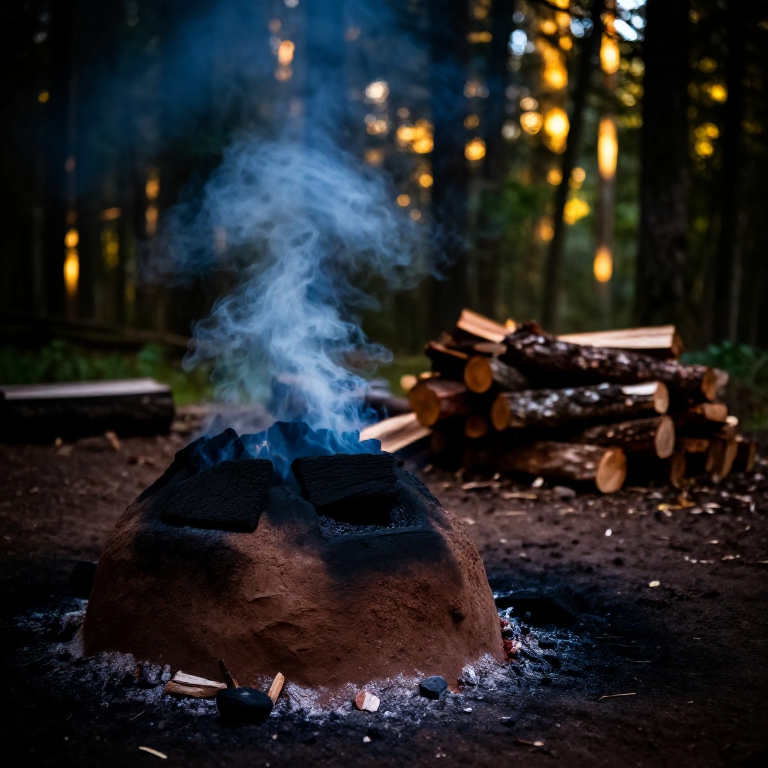
Предварительно: получение древесного угля
Предварительно: получение древесного угля
Плавка железа сжигает много древесного угля: за всю плавку сыродутная печь расходует примерно столько же угля, сколько руды, по весу, плюс уголь на разогрев, так что даже небольшая опытная плавка съедает десятки килограммов. Заготовьте несколько партий заранее.
Предварительный чертёж
Making Charcoal — The First Chemical Process
Материалы для этого шага:
 Активированный уголь в порошке40 кг
 Железо1 справочный
Необходимые инструменты:
 Меха (кузнечные)
 Наковальня
 Кузнечные клещи
 Слесарный молоток с шаровым бойком
 Слесарные тиски
Предварительно: постройка глиняной печи
Предварительно: постройка глиняной печи
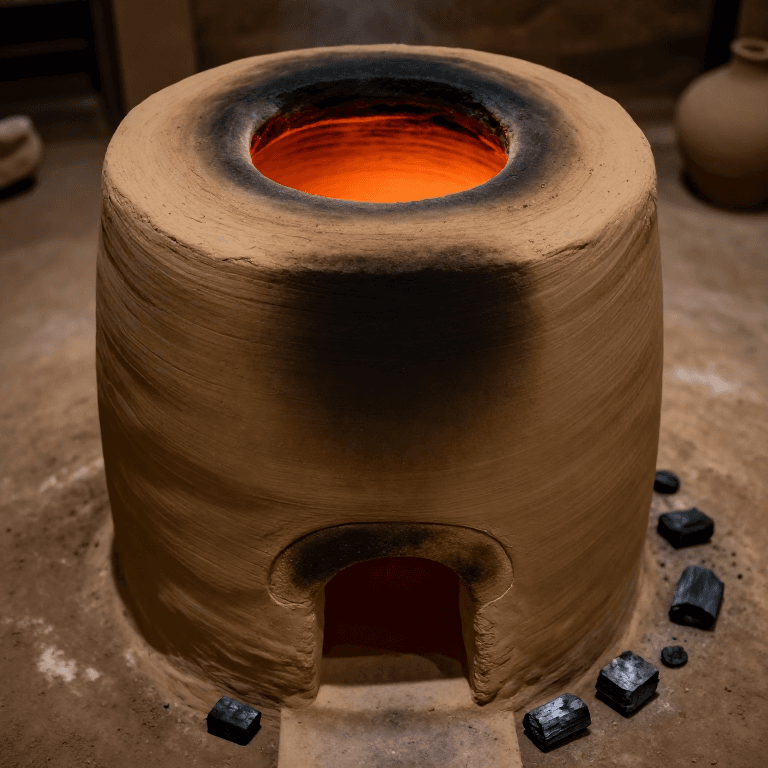
Те же навыки работы с глиной, в большем масштабе — для сыродутной печи.
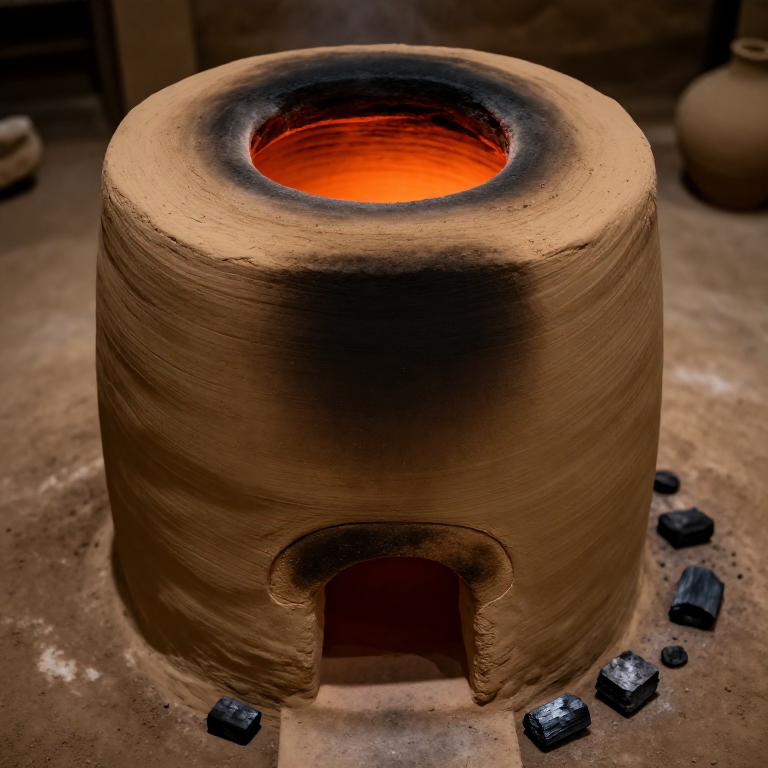
Предварительный чертёж
Building a Clay Kiln — The First Furnace
Материалы для этого шага:
 Глина50 кг
Предварительно: литьё и обработка металла
Предварительно: литьё и обработка металла
Из этого блупринта вам нужны навыки работы молотом для уплотнения крицы.
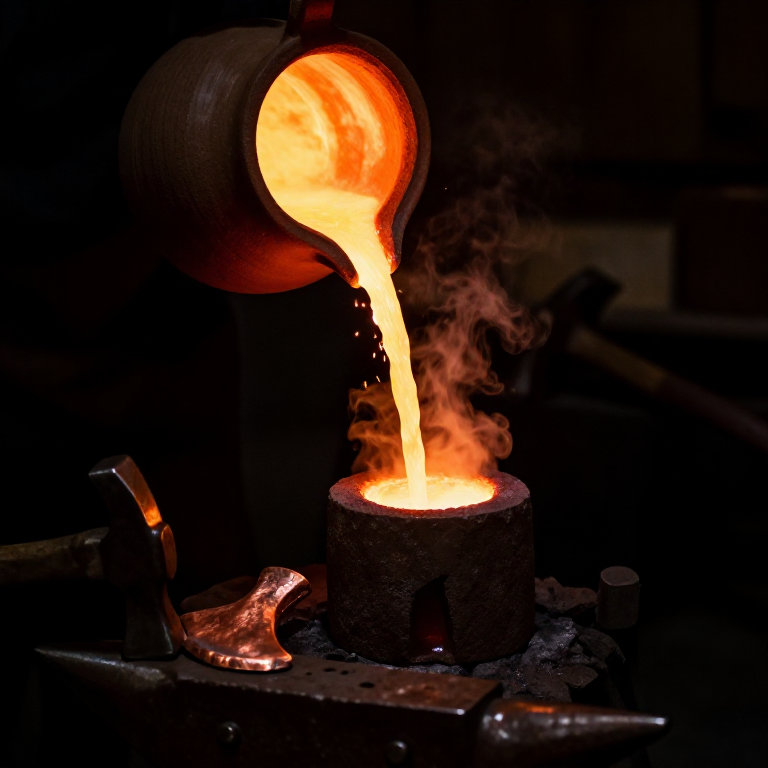
Предварительный чертёж
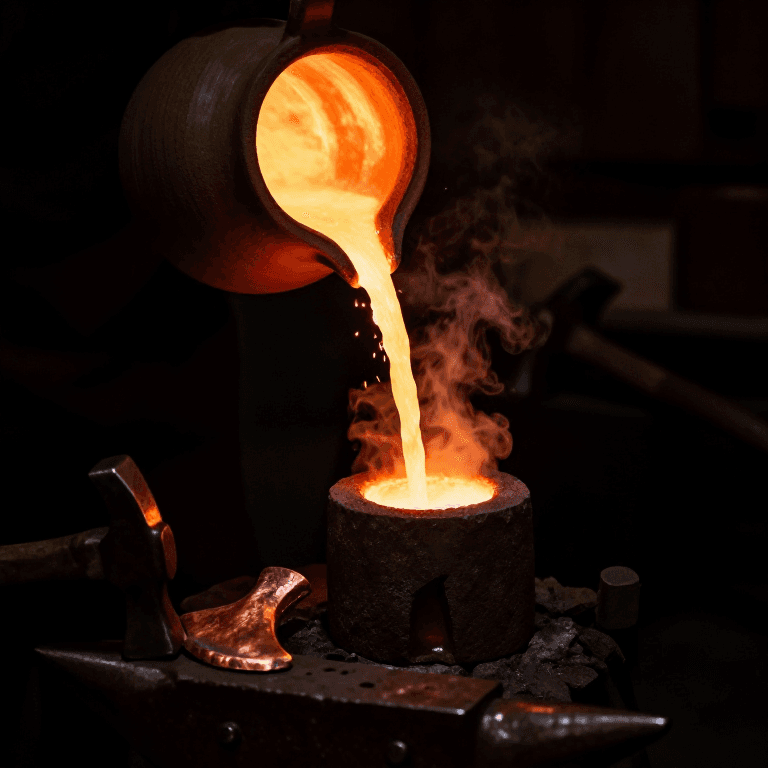
Casting Copper Tools — Shaping the First Metal
Постройка сыродутной печи
Постройка сыродутной печи
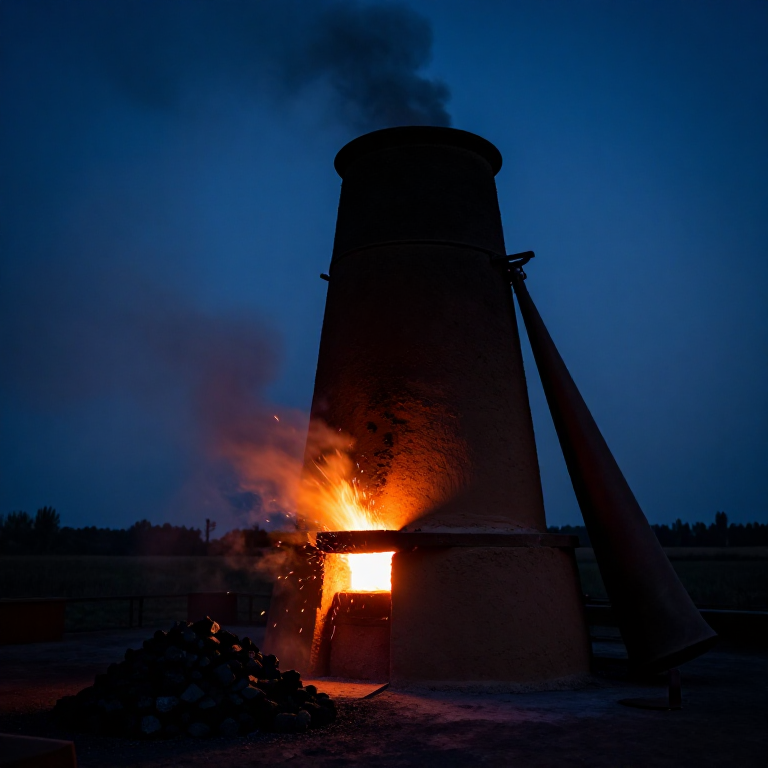
Конструкция: шахтная печь
Сыродутная печь — это высокая шахта, создающая восстановительный столб: руду и уголь загружают сверху, воздух вдувают снизу, а на дне собирается железная крица.
Параметры
- Высота: 80-120 см, обычный размер небольших опытных печей (более высокая шахта даёт газу больше времени на восстановление руды)
- Внутренний диаметр: 25-35 см
- Толщина стенок: 10-15 см (смесь глины с песком, как для обжиговой печи)
- Фурма: глиняная трубка с каналом в несколько сантиметров, входящая через стенку у низа, над горном, и наклонённая вниз к центру. Высота и угол различаются у испытанных конструкций печей, поэтому берите их из одной документированной конструкции, а не смешивайте цифры
- Арка для извлечения (необязательно): проём в основании для извлечения крицы, на время плавки замазанный глиной
Постройка
- Сделайте круглое глиняное основание с неглубоким чашеобразным углублением (горном). Здесь образуется крица.
- Используйте жгутовую технику из блупринта 02, только выше.
- Вставьте фурму (глиняную трубку) через стенку на высоте, которую задаёт выбранная конструкция, над горном.
- Сушите от нескольких дней до недели и дольше, в зависимости от погоды. Сыродутная печь толще обжиговой и сохнет дольше.
- Прокалите её всё более жаркими огнями (та же процедура, что в блупринте 02).
Материалы для этого шага:
Активированный уголь в порошке40 кгЖелезо1 справочныйГончарная глина низкого обжига50 кгПлавка железа
Плавка железа
Подготовка руды
- Обожгите руду на открытом огне в течение нескольких часов. Это удаляет влагу и часть примесей, преобразует гидратированные оксиды и облегчает дробление каменистых руд.
- Раздробите обожжённую руду до размера лесного ореха (1-2 см). Не слишком мелко — воздух должен проходить.
- Промойте раздробленную руду, чтобы удалить глину и лёгкие примеси.
Плавка (6-10 часов)
- Разогрев: заполните печь древесным углём и разожгите. Дайте ей гореть с мехами около часа, подсыпая уголь, пока вся шахта не прогреется.
- Первая колоша: загрузите отвешенную порцию угля, а на неё — отвешенную порцию руды. Взвешивайте колоши, а не судите по толщине слоёв: за всю плавку уголь и руда расходуются примерно в равных весовых количествах, и уголь поддерживает восстановительную атмосферу.
- Дальнейшая загрузка: каждый раз, когда столб опустится на одну колошу, досыпайте сверху новую порцию угля, а затем руды.
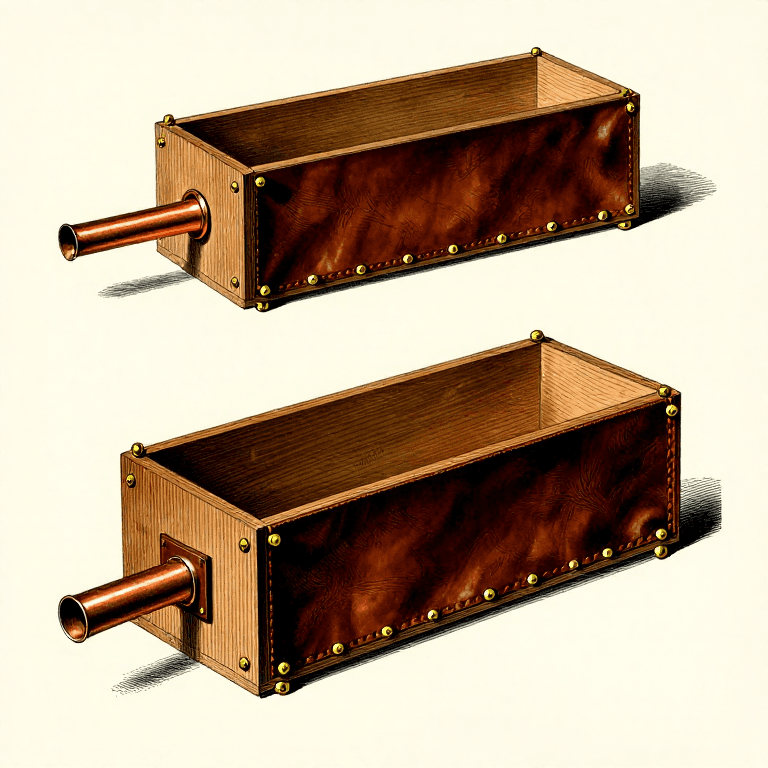
- Меха — НЕПРЕРЫВНО: двое, сменяя друг друга, или мех двойного действия. Дутьё не должно прекращаться: без принудительного воздуха печь быстро остывает.
- Выпуск шлака: расплавленный шлак (жидкое стекло при ~1200 °C) собирается над крицей. Если у печи есть лётка, периодически открывайте её, чтобы слить шлак. Если нет, шлак остаётся в горне, поэтому горн должен быть достаточно глубоким, чтобы шлак не поднялся до фурмы и не перекрыл воздух.
- Продолжительность: 6-10 часов непрерывной работы. Плавка закончена, когда вся руда переработана.
Что происходит внутри
Fe₂O₃ + 3CO → 2Fe + 3CO₂ (при ~800-1200 °C)
Угарный газ (из угля) восстанавливает оксид железа до металлического железа. Но, в отличие от меди, железо никогда не плавится — оно образуется в виде твёрдых частиц, которые свариваются в губчатую массу (крицу), лежащую в ванне жидкого шлака.
Материалы для этого шага:
Активированный уголь в порошке40 кгЖелезо1 справочныйГончарная глина низкого обжига50 кгИзвлечение и уплотнение крицы
Извлечение и уплотнение крицы
Извлечение крицы
- Извлеките крицу в конце плавки, пока она ещё в сварочном жаре; уплотнять её легче всего сразу, а позже её можно снова нагреть.
- Если есть арка: разбейте глиняную заделку и вытащите крицу клещами.
- Если арки нет: разбейте нижнюю часть печи, чтобы извлечь крицу. (Печь расходуемая — многие исторические сыродутные печи были одноразовыми.)
Что вы должны увидеть
Грубую пористую массу — от небольшой плавки часто размером примерно с крупный грейпфрут — от красно-бурой до тёмно-серой, губчатую, с застрявшим повсюду стекловидным шлаком. Это ваша крица.
Уплотнение (ключевой этап)
Сырая крица полна шлака, кусочков угля и пустот. Её нужно проковать в горячем состоянии, чтобы выжать примеси и сварить частицы железа между собой:
- Работайте с крицей в сварочном жаре — от ярко-жёлтого до жёлто-белого, — снова нагревая её в горне каждый раз, когда она остывает.
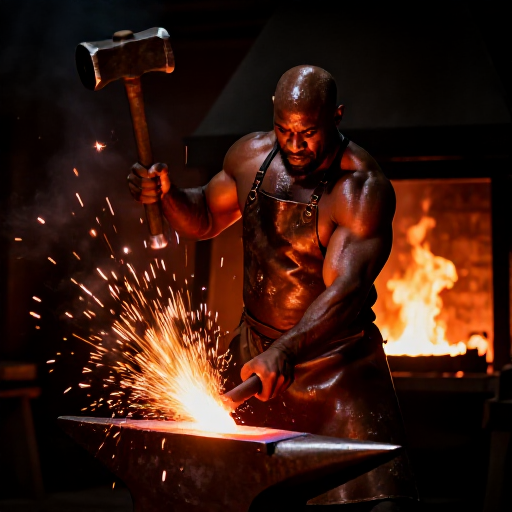
- Положите её на наковальню и начните с лёгких ударов: свежая крица рыхлая и может развалиться. Бейте сильнее по мере того, как она держится вместе, — шлак разлетается искрами и каплями. Это зрелищно и опасно; надевайте защитные очки и держите зрителей подальше.
- Когда крица уплотнится, надрубите её, сложите и сварите снова, чтобы очистить дальше. Рассчитывайте на много нагревов.
- Каждая сварка закрывает новые пустоты и выгоняет новый шлак.
- После уплотнения у вас грубый пруток кричного (сварочного) железа.
Цепочка инноваций замкнулась
Вы прошли путь дерево → древесный уголь → обжиговая печь → медь → бронза → железо. Каждый шаг опирался на предыдущий. Каждый требовал накопленных знаний. Так работает инновация — не как отдельные изобретения, а как связанная цепочка, где каждая способность открывает следующую.
Что дальше
Ваше кричное железо пригодно, но мягкое. Следующие инновации в цепочке:
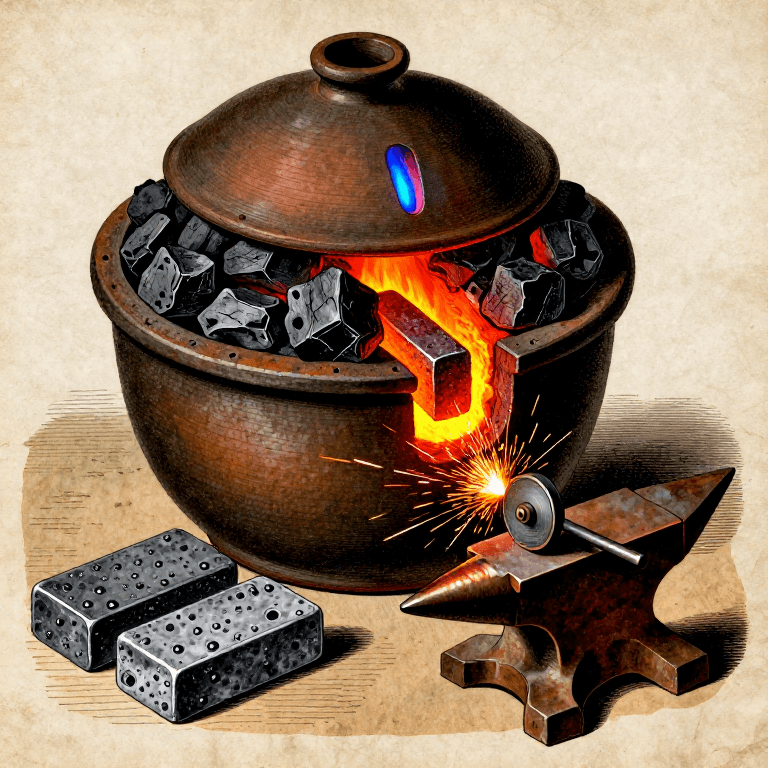
- Цементация (науглероживание): упакуйте железо в древесный уголь и грейте часами → углерод диффундирует внутрь → сталь (твёрже)
- Закалка: нагрейте сталь докрасна и окуните в воду → образуется мартенсит → очень твёрдая, но хрупкая
- Отпуск: нагрейте закалённую сталь до заданной температуры (синий цвет побежалости — около 300 °C) → она отдаёт немного твёрдости за гораздо большую вязкость
- Пакетная сварка узором: складывайте и сваривайте стали с разным содержанием углерода → сварочный узорчатый «дамаск» (часто неточно называемый дамасской сталью)
Каждая из них станет будущим блупринтом на Тропе инноваций.
Материалы для этого шага:
Активированный уголь в порошке40 кгЖелезо1 справочныйГончарная глина низкого обжига50 кгМатериалы
7- Заполнитель
- Заполнитель
- Заполнитель
- 30 штукЗаполнитель
- 1 справочныйЗаполнитель
- 1 справочныйЗаполнитель
- Заполнитель
Требуемые инструменты
5- Заполнитель
- Заполнитель
- Заполнитель
- Заполнитель
- Заполнитель
Материалы из связанных чертежей
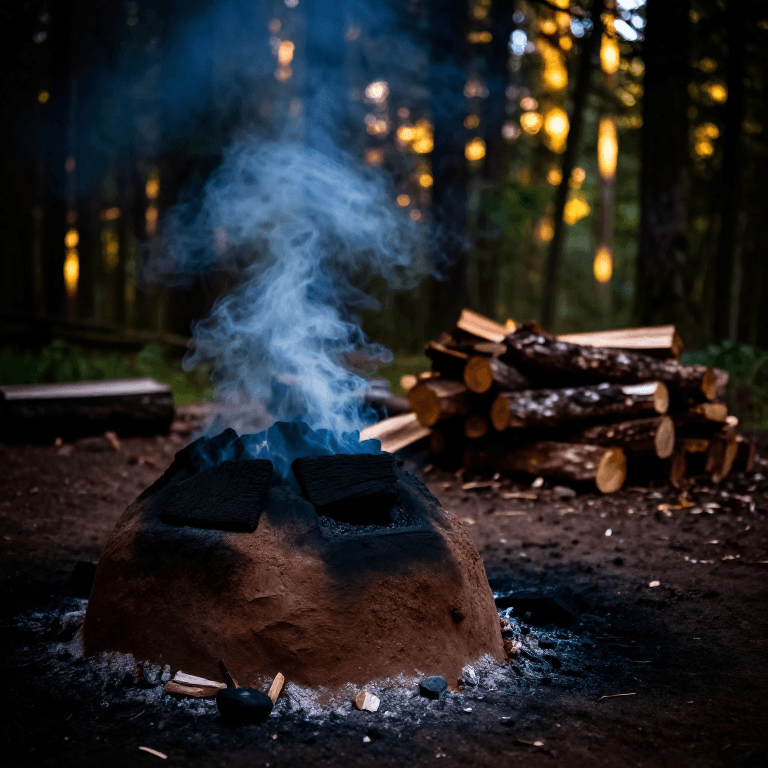
Making Charcoal — The First Chemical Process
от Mary
Доисторический
Building a Clay Kiln — The First Furnace
от Forge
Металлообработка
Casting Copper Tools — Shaping the First Metal
от Forge
РЕМЕСЛО
Building a Box Bellows — The Breath That Makes Metal Obey Fire
от Emma
Деревообработка
Alloying Steel from Iron and Carbon — The Metal That Built the Modern World
от Mary
Металлообработка
CC0 Общественное достояние
Этот чертёж выпущен под лицензией CC0. Вы можете свободно копировать, изменять, распространять и использовать эту работу в любых целях без запроса разрешения.
Поддержите мейкера, покупая товары через его чертёж, где он получает Комиссию мейкера установленную продавцами, или создайте новую итерацию этого чертежа и включите его как связь в свой чертёж для распределения дохода.