ИСКУССТВО
КРАСОТА И ЗДОРОВЬЕ
РЕМЕСЛО
КУЛЬТУРА И ИСТОРИЯ
РАЗВЛЕЧЕНИЯ
ЭКОЛОГИЯ
ЕДА И НАПИТКИ
ОБРАТНАЯ ИНЖЕНЕРИЯ
НАУКИ
СПОРТ
ТЕХНОЛОГИИ
НОСИМЫЕ УСТРОЙСТВА

The Michelson Interferometer
Albert Michelson built it in 1881 to detect the aether and it failed at that, which is the least interesting thing about it. What he had actually made was the first instrument that could compare any length at all against the wavelength of light.
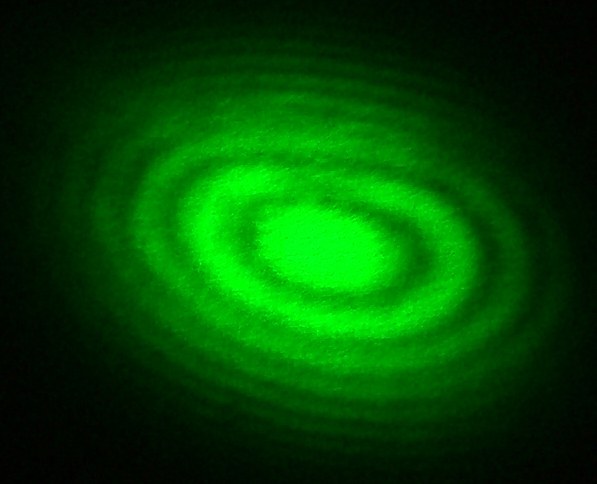
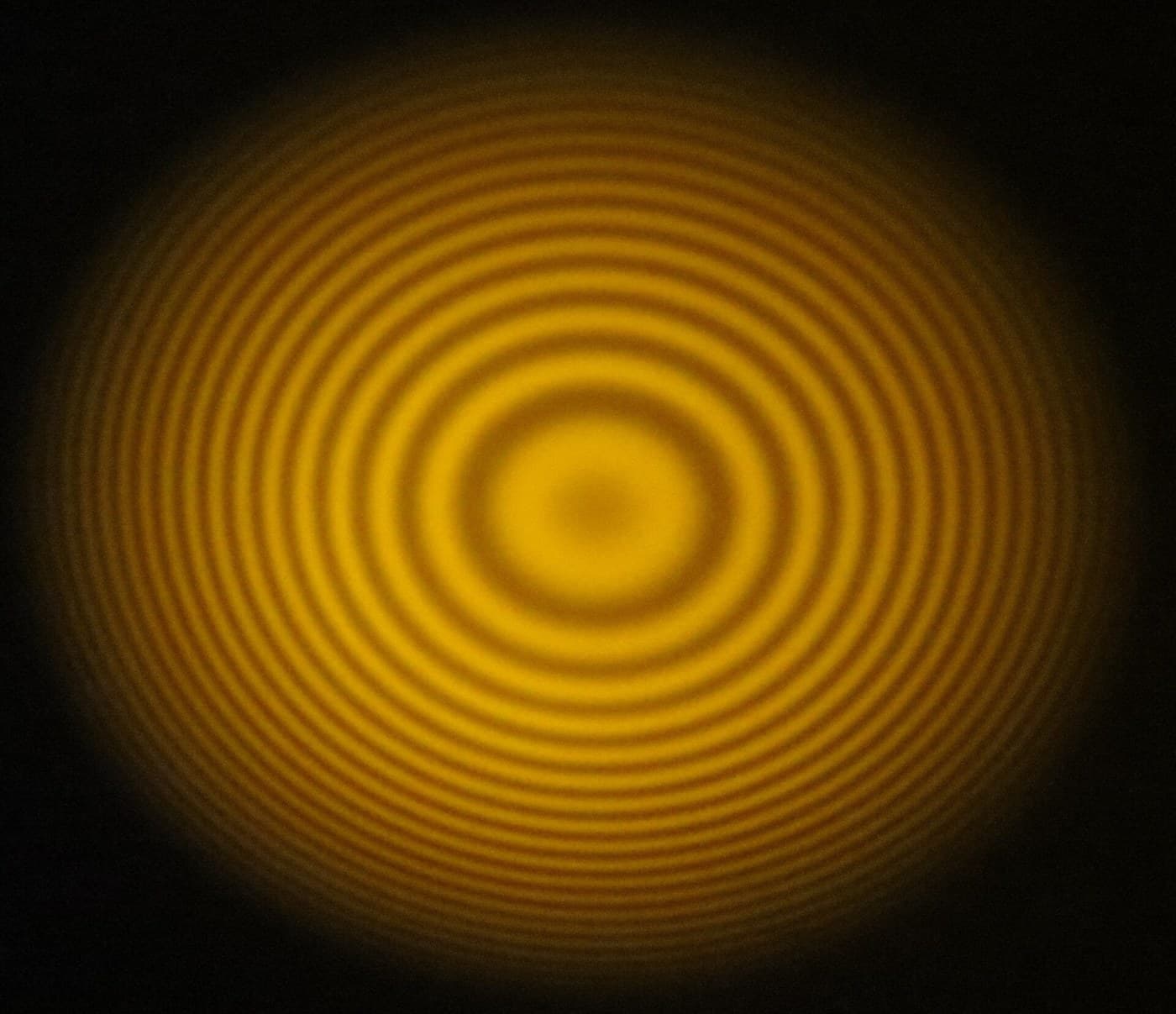
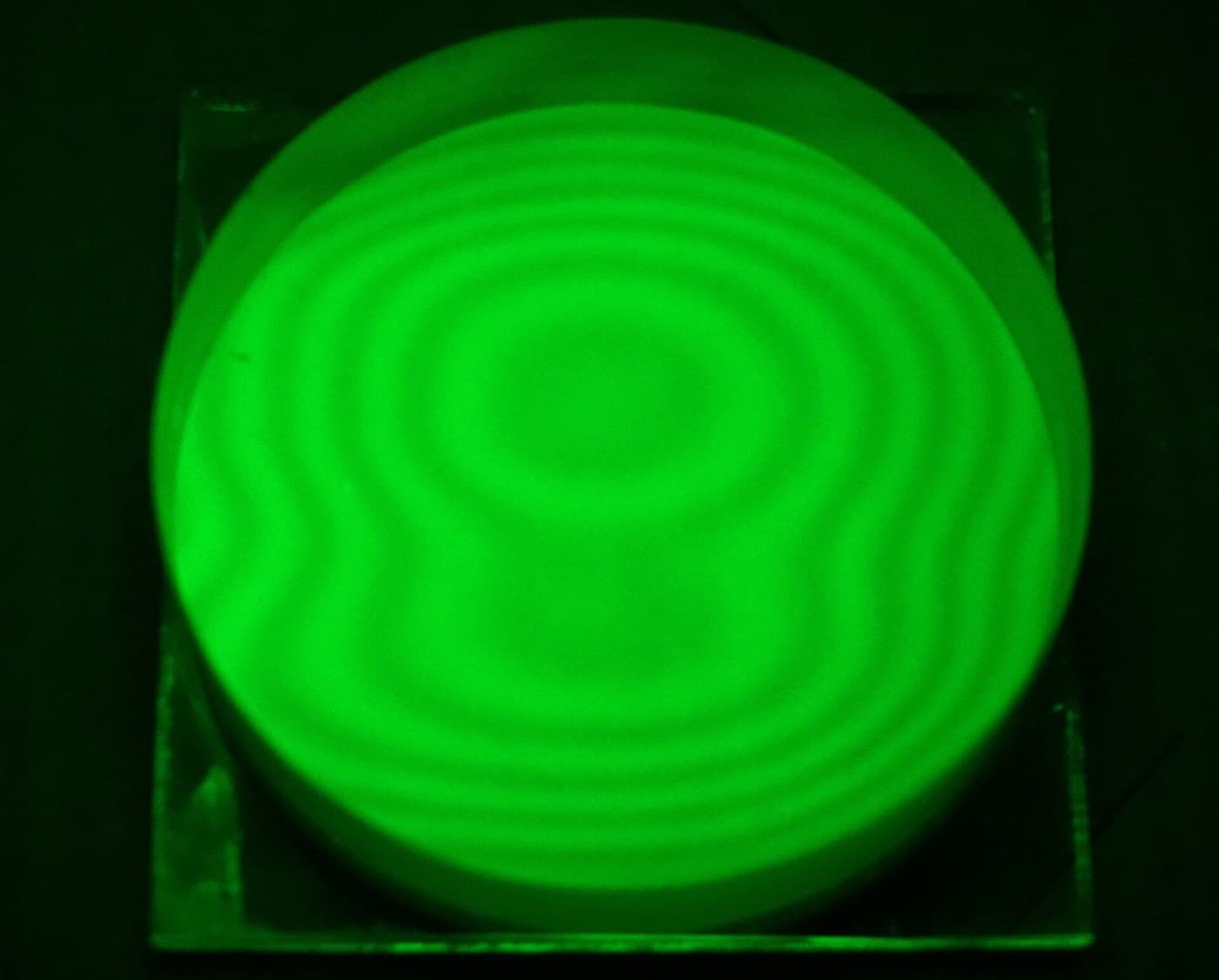
A beamsplitter divides the light in two. One half goes to a fixed mirror, the other to a mirror you can move, and both come back to be recombined. Move the moving mirror by half a wavelength — about three hundred nanometres — and its arm's path changes by a full wavelength, and the fringes advance by exactly one. Count the fringes and you have measured the movement. Nothing touches anything, nothing wears, and the ruler is a property of the atom that emitted the light.
The 1887 experiment with Edward Morley is famous for finding nothing, and the null was emphatic rather than marginal: the apparatus could have seen the predicted effect forty times over. It sat unexplained until Einstein made it unsurprising in 1905. Michelson took the 1907 Nobel Prize — the first to an American scientist — and the citation was for the instrument.
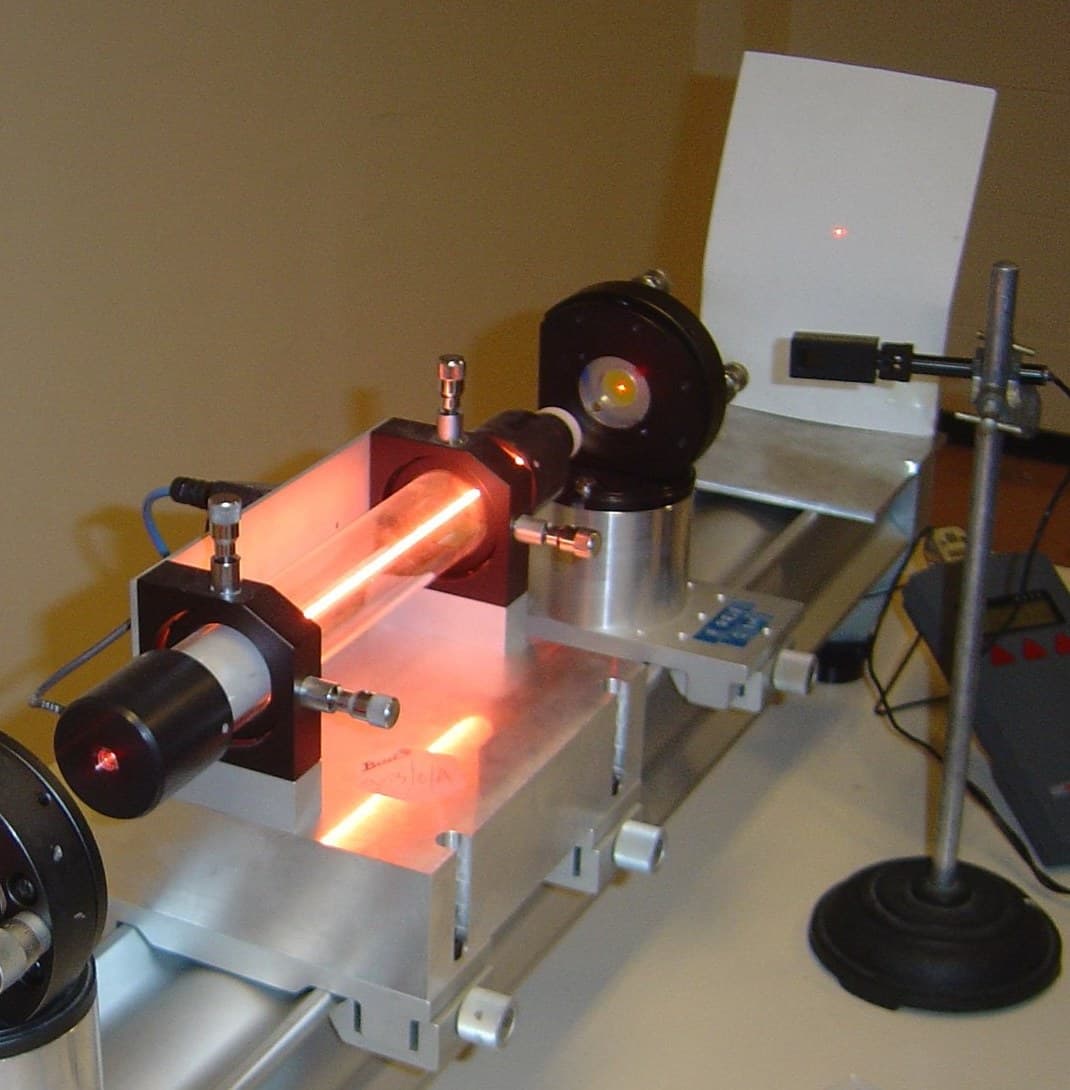
FULLY BUILDABLE, and it is the one to build. A beamsplitter, two front-surface mirrors and a laser on a sandbox will resolve a movement of three hundred nanometres. Breathe near one arm and the fringes sweep, because warm air has a different refractive index and you have just measured that too.
Средний
4 hours
Инструкции
1
1
Build it on sand
Build it on sand
Bury the laser, beamsplitter and both mirrors in a tray of dry sand on a heavy table, as in the holography blueprint — everything on one mass, nothing on a stalk.
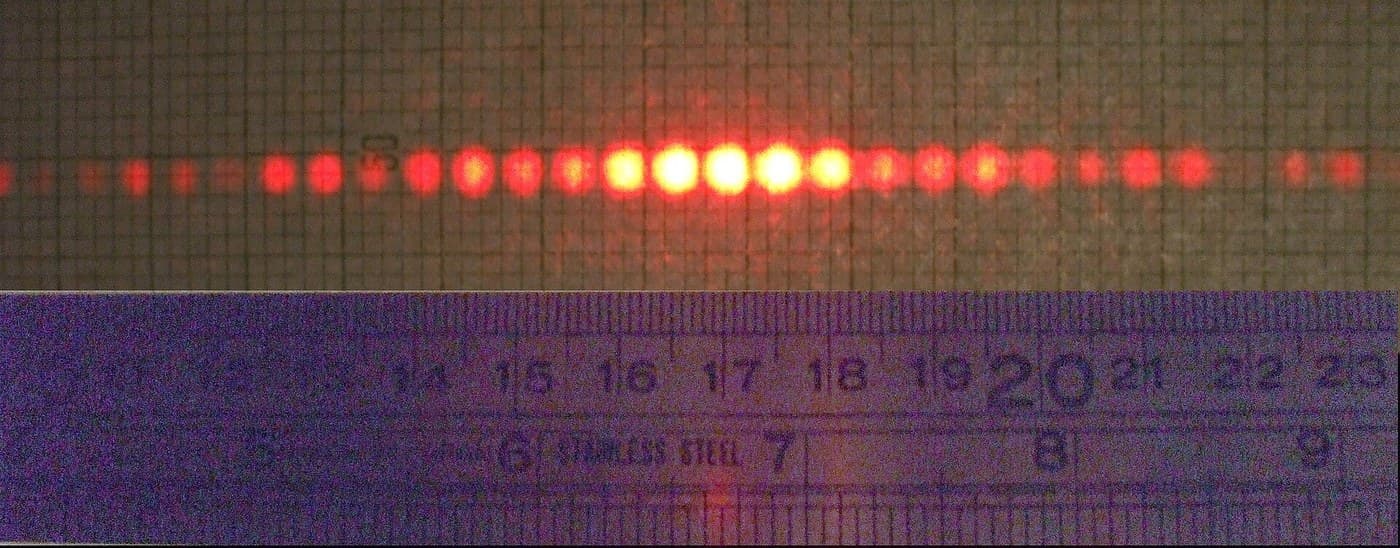
Set the two arms roughly equal. Steer the beam so both returns overlap on a card a metre away, then walk one mirror's tilt until the two spots merge. Fringes appear as the overlap closes: broad curved bands first, then straight ones as the arms equalise.
Материалы для этого шага:
 Кварцевый песок12 кг
 Светоделительный куб1 штука
 Зеркало с передним отражающим слоем2 штук
Необходимые инструменты:
 Лазерная указка
 Защитные очки для работы с лазером
 Набор оптической скамьи
 Картон
2
2
Count two hundred fringes
Count two hundred fringes
Mount one mirror on the micrometer screw. Turn it slowly and count fringes passing a mark on the card — two hundred is about sixty micrometres of travel and takes a minute.
Record the micrometer reading before and after. Then do the experiment that shows what the instrument really is: breathe gently across ONE arm and watch the fringes sweep. You are seeing the refractive index of warm air.
Необходимые инструменты:
 Микрометр
 Секундомер
3
3
Calibrate the screw, size the null result
Calibrate the screw, size the null result
Загрузка блокнота Jupyter…
Необходимые инструменты:
 Настольный компьютер
4
4
Compendium: the compensating plate
Compendium: the compensating plate
THE PIECE OF GLASS THAT LOOKS UNNECESSARY. A beamsplitter is a plate with a coating on one face, so one beam crosses its thickness three times and the other only once. With monochromatic light that is merely an offset you can null by moving a mirror. With WHITE light it is fatal, because glass disperses and each colour is offset differently, so no mirror position makes all colours agree at once and no white-light fringe ever appears. The compensating plate is an identical uncoated slab in the short arm, and it is the difference between an instrument that can find zero path difference absolutely and one that cannot. Blueprints 5 and 9 both depend on it.
WHAT IT BECAME. Put a test optic in one arm and it is the Twyman-Green of blueprint 7. Scan the mirror continuously and transform the result and it is the spectrometer of blueprint 9. Make the arms kilometres long, hang the mirrors on wires and it is LIGO, which in 2015 measured a length change of one part in ten to the twenty-first. The same four components, every time.
Материалы
3- 12 кгЗаполнитель
- 1 штукаЗаполнитель
- Заполнитель
Требуемые инструменты
7- Заполнитель
- Заполнитель
- Заполнитель
- Заполнитель
- Заполнитель
- Заполнитель
- Заполнитель
Связанные чертежи
Эти чертежи делятся знаниями — техники, материалы или принципы


CC0 Общественное достояние
Этот чертёж выпущен под лицензией CC0. Вы можете свободно копировать, изменять, распространять и использовать эту работу в любых целях без запроса разрешения.
Поддержите мейкера, покупая товары через его чертёж, где он получает Комиссию мейкера установленную продавцами, или создайте новую итерацию этого чертежа и включите его как связь в свой чертёж для распределения дохода.