
Oak Bark Leather Tanning — Vegetable Tanning with Tannins
Инструкции
Prepare the Raw Hide — Liming
Prepare the Raw Hide — Liming
Fresh raw hide must first have the hair removed. Make a lime solution: dissolve 2-3kg of slaked lime (calcium hydroxide) in a large container of water. Submerge the hide completely and soak for 7-14 days, stirring daily.
The alkaline lime solution swells the hide fibers and loosens the hair follicles. After 7-10 days, test by pulling a tuft of hair — it should slide out easily with no resistance. If it holds firm, continue soaking.
The Vikings also used wood ash lye (potassium hydroxide from hardwood ash) as an alternative to lime. Urine (containing urea → ammonia) was another traditional method, though less pleasant.
Материалы для этого шага:
 Сырая шкура
 Гашёная известь
Flesh and De-Hair the Hide
Flesh and De-Hair the Hide
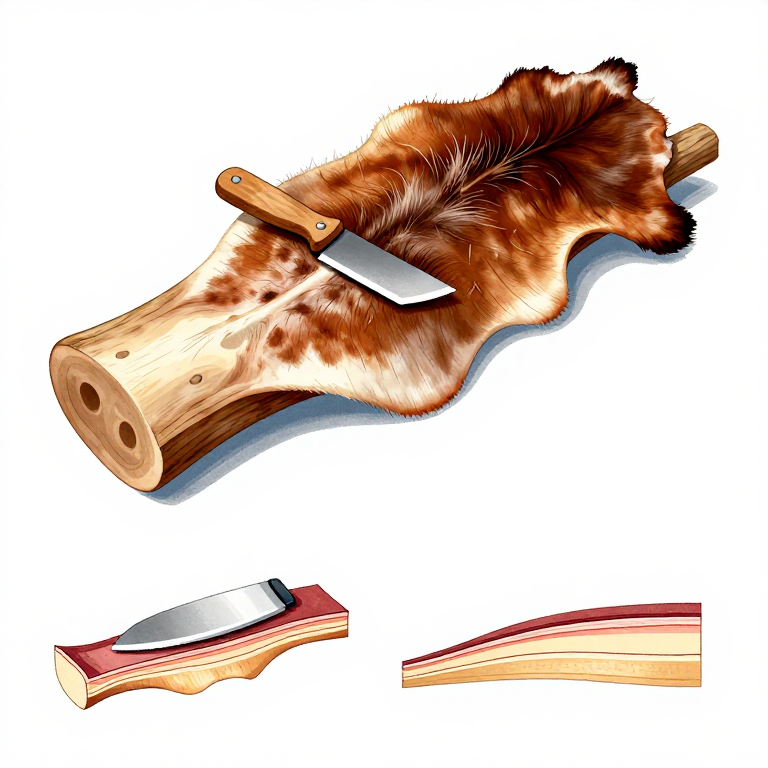
Remove the hide from the lime bath and drape it over the fleshing beam (hair side up). Using a dull fleshing knife or scraper, push firmly across the surface — the loosened hair and epidermis should scrape off in sheets.
Flip the hide and scrape the flesh side to remove all fat, membrane, and remaining tissue. This is physically demanding work — a cattle hide can take 2-3 hours of continuous scraping.
Rinse thoroughly in running water for 24-48 hours to remove all lime from the hide. Residual lime interferes with tanning. Some tanners add a weak acid bath (vinegar or fermented grain) at this stage to neutralize remaining alkalinity — this is called "bating."
Необходимые инструменты:
 Мездрильная колода
 Нож для мездрения
Prepare the Tanning Liquor
Prepare the Tanning Liquor
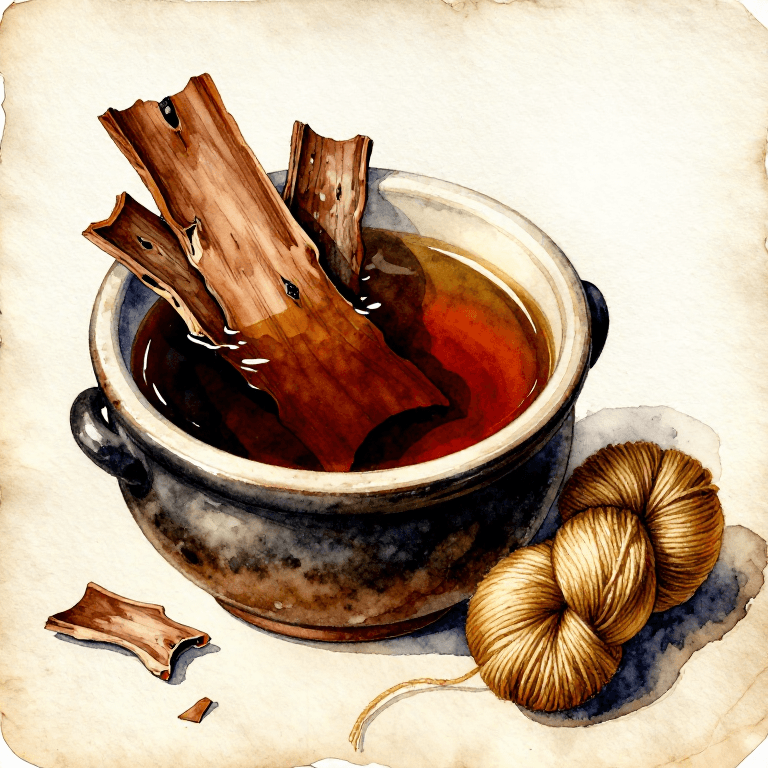
Crush or grind dried oak bark into small pieces (1-2cm). The bark of English oak (Quercus robur) and sessile oak (Q. petraea) contains 8-12% tannin — among the highest of European trees.
Make the tanning liquor by steeping bark in water. Start with a weak solution for the first immersion — too-strong tannin on a fresh hide causes "case hardening" where the outer surface tans hard while the interior remains raw.
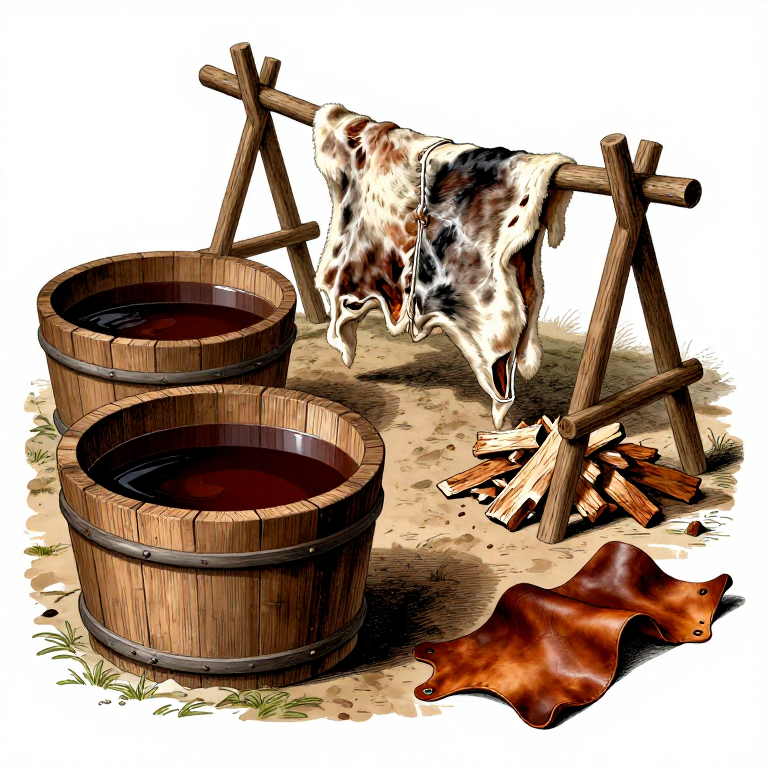
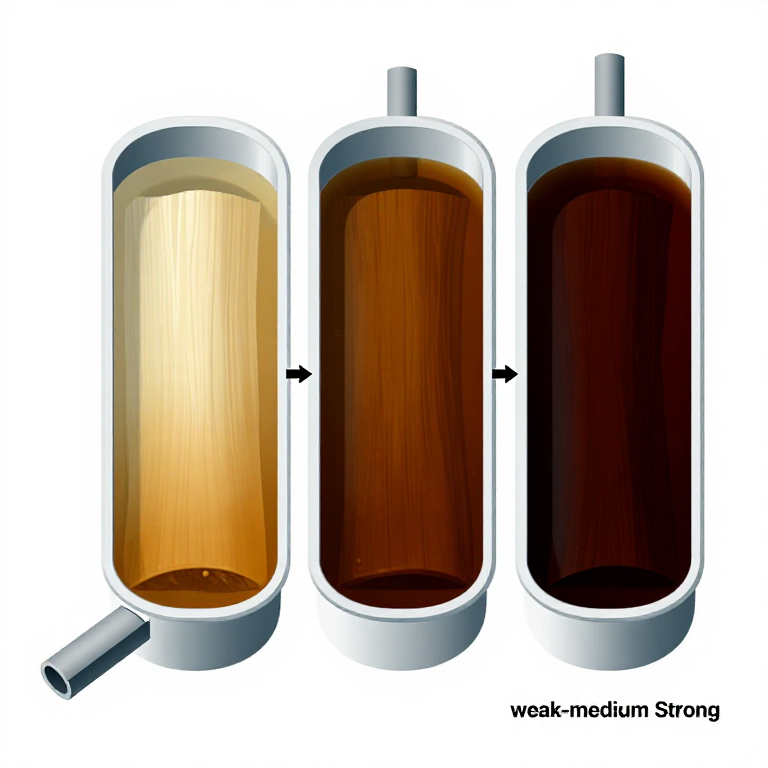
Prepare three vats of increasing strength: weak (1:20 bark-to-water), medium (1:10), and strong (1:5). The hide will progress through each one. Traditional bark tan yards used pit vats dug into the ground and lined with planks.
Материалы для этого шага:
 Сушёная дубовая кора
Tan the Hide — Weeks of Patience
Tan the Hide — Weeks of Patience
Place the prepared hide in the weakest tanning liquor first. Submerge fully and ensure the liquor contacts all surfaces. Stir or move the hide daily to prevent uneven tanning.
After 2-3 weeks in the weak solution, move to the medium vat for another 2-3 weeks. Finally, the strong vat for the final 2-4 weeks. Thick hides (cattle, horse) take longer; thin hides (goat, deer) tan faster.
You can tell tanning is complete by cutting a small sliver from the thickest part — it should be uniform brown all the way through with no pale core. Under-tanned leather will rot; properly tanned leather lasts centuries.
The entire process takes 6-12 weeks for a full cattle hide. Medieval and Viking-era tanners ran continuous batches, cycling hides through vats in sequence.
Condition and Finish the Leather
Condition and Finish the Leather
Remove the tanned hide and rinse in clean water. Hang to dry slowly in shade — never in direct sun or near heat, which causes cracking.
When leather is damp but not wet (feels like a chamois cloth), apply a dressing of animal fat or tallow, worked in with hands. This replaces oils lost during tanning and keeps the leather supple. Neatsfoot oil (from cattle hooves) was the premium conditioner in medieval Europe.
For a smoother finish, work the leather back and forth over a staking post (smooth wooden beam) — this breaks the fiber structure and softens it. More staking = softer leather.
Oak-tanned leather has a distinctive warm brown color, a pleasant earthy smell, and extraordinary durability. It was used for Viking-era shoes, belts, scabbards, shields, ship fittings, and book bindings. It remains the standard for premium leather goods today.
Материалы
3- 1 штукаЗаполнитель
- 1 штукаЗаполнитель
- 1 штукаЗаполнитель
Требуемые инструменты
2- Заполнитель
- Заполнитель
По этому чертежу делают

Связанные чертежи
Эти чертежи делятся знаниями — техники, материалы или принципы

CC0 Общественное достояние
Этот чертёж выпущен под лицензией CC0. Вы можете свободно копировать, изменять, распространять и использовать эту работу в любых целях без запроса разрешения.
Поддержите мейкера, покупая товары через его чертёж, где он получает Комиссию мейкера установленную продавцами, или создайте новую итерацию этого чертежа и включите его как связь в свой чертёж для распределения дохода.