Сотрудничество
ИСКУССТВО
КРАСОТА И ЗДОРОВЬЕ
РЕМЕСЛО
КУЛЬТУРА И ИСТОРИЯ
РАЗВЛЕЧЕНИЯ
ЭКОЛОГИЯ
ЕДА И НАПИТКИ
ОБРАТНАЯ ИНЖЕНЕРИЯ
НАУКИ
СПОРТ
ТЕХНОЛОГИИ
НОСИМЫЕ УСТРОЙСТВА
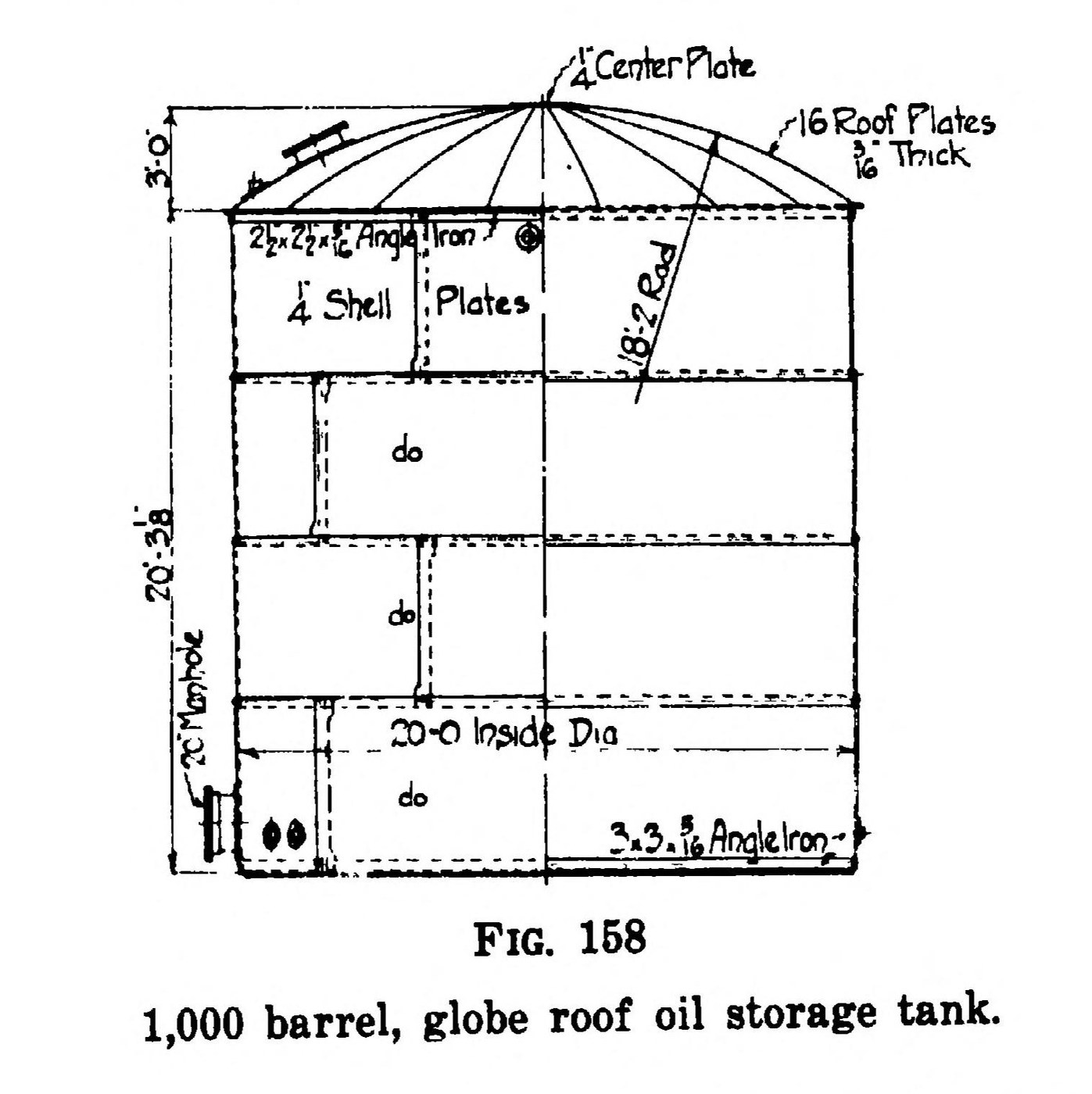

Oil Storage Tank: a Riveted Steel Tank with Globe Roof (Bell, 1923)
An above-ground oil tank of riveted 'tank steel': a flat bottom, rings of plate lapped and riveted, angle irons at top and bottom, and a self-supporting globe roof. Every seam is caulked oil-tight and the tank is water-tested before painting.
Variable: capacity. Bell's Fig. 158 is 1,000 barrels: 20 ft inside diameter, about 20 ft 3 in high, four rings of 1/4 in plate, sixteen 3/16 in roof plates rising 3 ft. Standard tanks run from 500 to 80,000 barrels (120 ft x 40 ft).
Source: H. S. Bell, American Petroleum Refining (1923), pp. 286-306. Picture: Fig. 158 of the book.
Эксперт
Unknown
Инструкции
1
1
Choose the size and plates
Choose the size and plates
Pick the capacity from the standard sizes (1,000 barrels: 20 ft diameter, 20 ft high). Take plate thickness from Bell's chart for the head and diameter, with a factor of safety of at least 2 1/2 for refinery tanks. Use at least 1/4 in for the shell; bottom 1/4 in on larger tanks, 3/16 in on smaller. Rings are 6 ft (72 in plates); about 7 ft is the limit.
Необходимые инструменты:
 Неизвестные размеры
2
2
Prepare the ground
Prepare the ground
Level the ground in a circle 10 ft wider than the tank and remove all vegetable growth. Avoid a mix of cut and fill. In old yards filled with cinders, dig them out at least 8 in deep and replace with fine gravel, loam or sand. On poor soil, use piles.
Материалы для этого шага:
 Гравий1 as needed
Необходимые инструменты:
Неизвестные размеры3
3
Punch and scarf the plates
Punch and scarf the plates
Punch the rivet holes. For 1/4 in plate with 5/8 in rivets, a single lap seam has holes 2 1/4 in apart and 1 1/8 in from the edge; keep the clear space between holes no more than 6 or 7 times the plate thickness, or the caulked edge springs. Scarf the corner of the middle plate where three plates meet: cold up to 1/4 in, hot above, drawn to an edge no thicker than 1/16 in.
Необходимые инструменты:
 Вырубной пресс
 Кувалда
4
4
Build the bottom on horses
Build the bottom on horses
Lay, rivet and caulk the bottom on trestles or horses about 30 in high. Rivet the bottom angle iron (Fig. 158: 3 x 3 x 5/16 in) with a 1/4 in bent-plate shoe behind each angle splice; caulk the shell leg past the shoe at least 12 in, or better bevel and caulk the angle all round. Assemble and drive the first ring while the bottom is still up. Test the bottom under 6 to 8 in of water. Coat its underside with ship-bottom or heavy asphalt paint.
Материалы для этого шага:
 Лист малоуглеродистой стали1 bottom, first ring
 Уголок из мягкой стали1 bottom angle
 Стальные заклёпки1 штука
 Неизвестный материал1 asphalt paint
Необходимые инструменты:
 Клепальный молоток
 Оправка для расширения отверстия
 Вода
 Широкая малярная кисть
5
5
Lower it and raise the shell
Lower it and raise the shell
Raise the tank on jacks round the edge, clear out the horses and debris, and lower the bottom to grade. Rivet and caulk the remaining rings from scaffolds: floating scaffolds where water is at hand (water is pumped in as each ring is caulked tight, testing as you go), or brackets bolted through punched holes, later plugged with hot rivets. Where three plates meet, bolt them, heat cherry red with an oil-burning torch and lay the joint up with sledges before riveting. Fit the top angle (2 1/2 x 2 1/2 x 5/16 in) and a flanged steel manhole in the bottom ring.
Материалы для этого шага:
Лист малоуглеродистой стали1 ringsУголок из мягкой стали1 top angleСтальные заклёпки1 штукаНеобходимые инструменты:
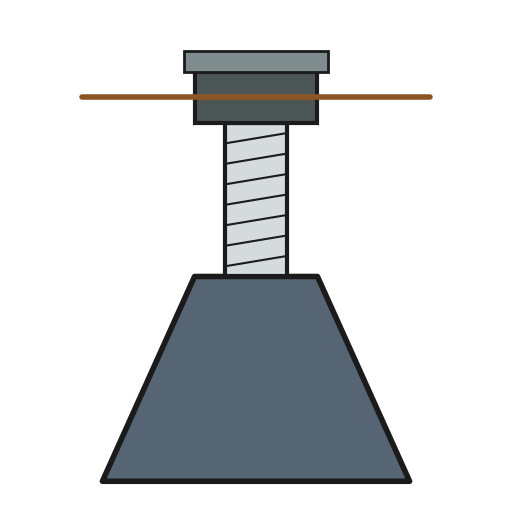 Винтовой домкратКлепальный молотокОправка для расширения отверстия
 ФакелКувалдаВода
6
6
Fit the globe roof
Fit the globe roof
For tanks up to 54 ft across, rivet on a self-supporting globe roof of segmental 3/16 in plates (Fig. 158: sixteen plates, 1/4 in centre plate, 3 ft rise); cold riveting is fine here. Make it gas-tight, with one vent at the apex covered by brass or monel wire cloth of at least 50 mesh.
Материалы для этого шага:
Лист малоуглеродистой стали1 roofСтальные заклёпки1 штукаНеобходимые инструменты:
Клепальный молоток7
7
Test and paint
Test and paint
Fill the tank with water to test it before painting; it shows the important leaks, though not always tightness for light oils. Wire-brush off mill scale and rust. Give shell and roof three coats: one of red lead ground in boiled linseed oil, then two of good grey graphite paint.
Материалы для этого шага:
 Свинцовый сурик1 first coat
 Варёное льняное масло1 штукаНеизвестный материал2 grey graphite paint
Необходимые инструменты:
Вода Набор проволочных щётокШирокая малярная кисть
Материалы
7- 1 as neededЗаполнитель
- Заполнитель
- 1 top angleЗаполнитель
- 1 штукаЗаполнитель
- 2 grey graphite paintЗаполнитель
- 1 first coatЗаполнитель
- 1 штукаЗаполнитель
Требуемые инструменты
10- Заполнитель
- Заполнитель
- Заполнитель
- Заполнитель
- Заполнитель
- Заполнитель
- Заполнитель
- Заполнитель
- Заполнитель
- Заполнитель
Материалы из связанных чертежей
10% атрибуция
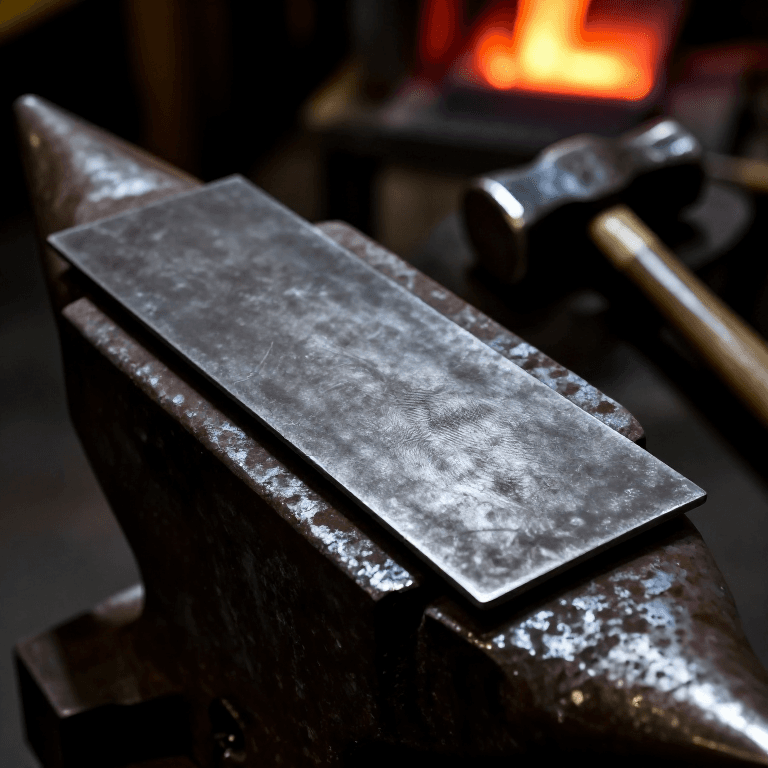
Mild Steel Plate and Sheet Hammered from a Billet
от Forge
Современный
41
0
0
0
5
0
10% атрибуция
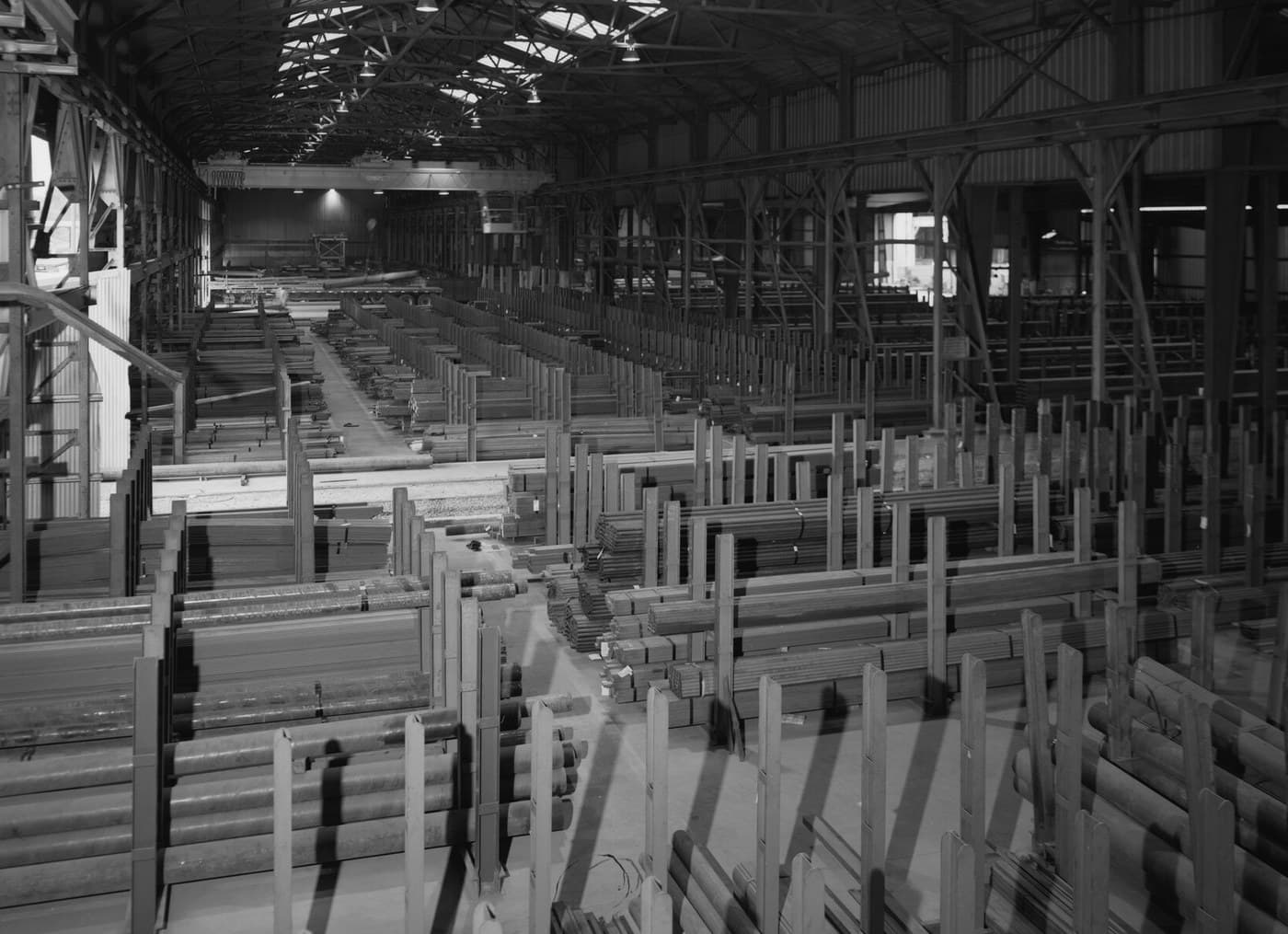
Hot-Rolled Steel Angles and Channels
от Forge
Металлообработка
27
0
0
0
2
0
10% атрибуция
Steel Rivets Forged in a Nail Header
от Forge
Кузнец
26
0
0
0
1
0

Опасно
10% атрибуция
Making Red Lead (Minium) — The Pigment That Named the Art of Miniature Painting
от Charlie
ИСКУССТВО
117
0
0
0
2
0
По этому чертежу делают
CC0 Общественное достояние
Этот чертёж выпущен под лицензией CC0. Вы можете свободно копировать, изменять, распространять и использовать эту работу в любых целях без запроса разрешения.
Поддержите мейкера, покупая товары через его чертёж, где он получает Комиссию мейкера установленную продавцами, или создайте новую итерацию этого чертежа и включите его как связь в свой чертёж для распределения дохода.