ИСКУССТВО
КРАСОТА И ЗДОРОВЬЕ
РЕМЕСЛО
КУЛЬТУРА И ИСТОРИЯ
РАЗВЛЕЧЕНИЯ
ЭКОЛОГИЯ
ЕДА И НАПИТКИ
ОБРАТНАЯ ИНЖЕНЕРИЯ
НАУКИ
СПОРТ
ТЕХНОЛОГИИ
НОСИМЫЕ УСТРОЙСТВА
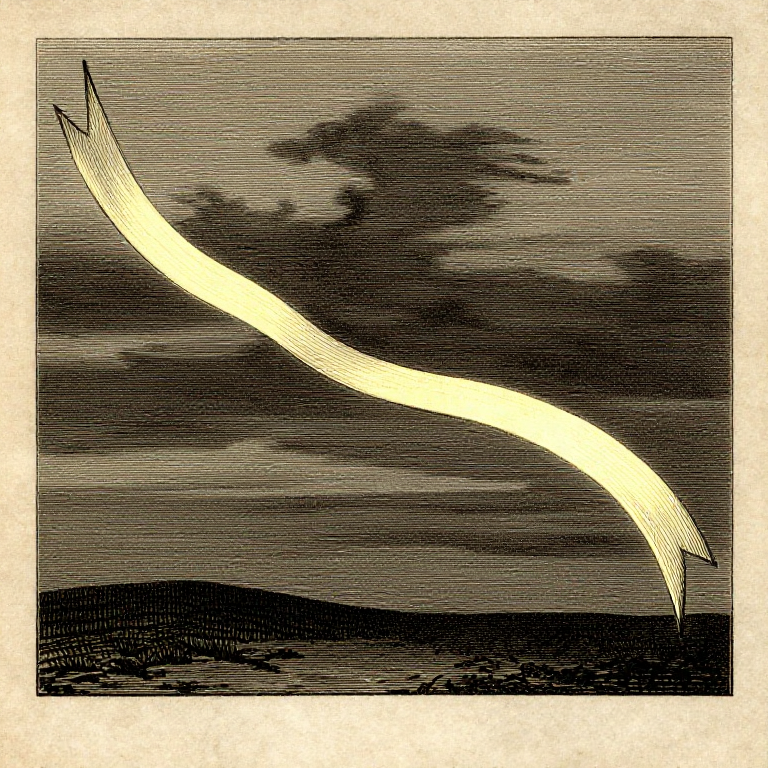


Reciprocity Failure: A One Minute Exposure Is Not One Minute
The whole exposure system rests on one assumption: half the light for twice the time is the same exposure. It is true over most of the working range and it fails badly at long exposures — a failure with a name, **reciprocity failure**, and a correction that is specific to each film.
The practical size of it surprises everyone. A meter reading of one minute can genuinely need five, and at longer times the correction becomes larger than the reading it is correcting.
It also raises contrast, because the shadows are affected more than the highlights — so a long exposure needs **less** development, which is the opposite of the instinct.
Продвинутый
3 hours
Инструкции
1
1
What is actually happening in the emulsion
What is actually happening in the emulsion
A silver halide crystal does not become developable when one photon hits it. It needs several, and they have to arrive close enough together in time for the intermediate state to survive until the next one comes.
At ordinary light levels photons arrive in a flood and this never matters. At very low light levels they arrive so sparsely that the early ones decay before the later ones arrive, and the crystal never reaches the threshold. The film behaves as if it were slower.
**It is a property of the film, not the camera or the lens**, and it varies enormously between films. Some modern emulsions are engineered to have almost none; some traditional films need several times the metered exposure within a few seconds.
**There is a failure at the other end too** — very short, very bright exposures, below about 1/10000 s — where the photons arrive so fast the crystal cannot use them all. It matters for flash and for scientific work and almost never otherwise.
**Digital sensors do not have it.** They have their own problem at long exposures — thermal noise, which accumulates with time and is why long-exposure digital work uses dark-frame subtraction. Different mechanism, same practical consequence of needing a correction.
Материалы для этого шага:
 Фотоплёнка2 штук
2
2
The correction, and how large it gets
The correction, and how large it gets
Загрузка блокнота Jupyter…
Необходимые инструменты:
 Настольный компьютер
3
3
Working with it in the field
Working with it in the field
**Use the manufacturer's table, not a general rule.** The exponent varies by a factor that matters between films, and every manufacturer publishes one. Carry it written on the inside of the camera bag.
**Correct with TIME, not aperture.** Opening the aperture changes the depth of field, which is usually the reason a long exposure was chosen. Adding time is free except for the time.
**Apply the correction to the METERED time**, then apply any filter factor afterwards — a neutral density filter's factor is a property of the filter and does not itself suffer reciprocity failure. Getting this order wrong is the commonest arithmetic mistake in long-exposure work.
**Bracket generously.** A whole stop either side, not a third. The correction is approximate, the film is variable, and the exposure took five minutes so a second attempt costs ten.
**Cut development.** Ten to twenty per cent less for an exposure of a minute or more, for the contrast reason the notebook shows.
**Note the actual time**, not the metered one, in the log. A roll of night exposures with only metered times recorded teaches nothing at all.
Материалы для этого шага:
Фотоплёнка1 штукаНеобходимые инструменты:
 Цифровая фотокамера
 Фотоштатив
 Экспонометр (падающий/отражённый свет)
4
4
What a long exposure is actually for
What a long exposure is actually for
Time is a dimension the eye cannot see, and a long exposure is the only way to photograph it.
**Moving water** goes from frozen droplets to a smooth sheet somewhere around a second, and keeps smoothing to about thirty. Past that little changes.
**Cloud** needs far longer — a minute or more before movement shows as streaks, and several minutes for the effect most people want.
**People disappear.** Anyone walking through a several-minute exposure records nothing at all, which is how photographs of empty streets in busy cities are made. This is also the oldest trick in the medium: the earliest photographs of streets show no traffic for exactly this reason.
**Stars trail** at about 15 degrees an hour. The old rule for keeping them as points is 500 divided by the focal length in millimetres, in seconds — about 10 seconds on a 50 mm lens.
**What it needs:** a tripod that does not move, a cable release or a self-timer, a way of locking the shutter open, and patience. The reciprocity correction is what turns the metered reading into the real one, and the log is what makes the next one better.
Материалы для этого шага:
Фотоплёнка1 штукаНеобходимые инструменты:
ФотоштативЦифровая фотокамераТребуемые инструменты
4- Заполнитель
- Заполнитель
- Заполнитель
- Заполнитель
Связанные чертежи
Эти чертежи делятся знаниями — техники, материалы или принципы
CC0 Общественное достояние
Этот чертёж выпущен под лицензией CC0. Вы можете свободно копировать, изменять, распространять и использовать эту работу в любых целях без запроса разрешения.
Поддержите мейкера, покупая товары через его чертёж, где он получает Комиссию мейкера установленную продавцами, или создайте новую итерацию этого чертежа и включите его как связь в свой чертёж для распределения дохода.