ИСКУССТВО
КРАСОТА И ЗДОРОВЬЕ
РЕМЕСЛО
КУЛЬТУРА И ИСТОРИЯ
РАЗВЛЕЧЕНИЯ
ЭКОЛОГИЯ
ЕДА И НАПИТКИ
ОБРАТНАЯ ИНЖЕНЕРИЯ
НАУКИ
СПОРТ
ТЕХНОЛОГИИ
НОСИМЫЕ УСТРОЙСТВА

The Heat of Compression: Why Compressed Air Is Hot and Wet
Every compressor in this batch — scroll, liquid ring, screw, and the piston compressor in a workshop — does two things it was not asked to do. It heats the air, and it wrings water out of it.
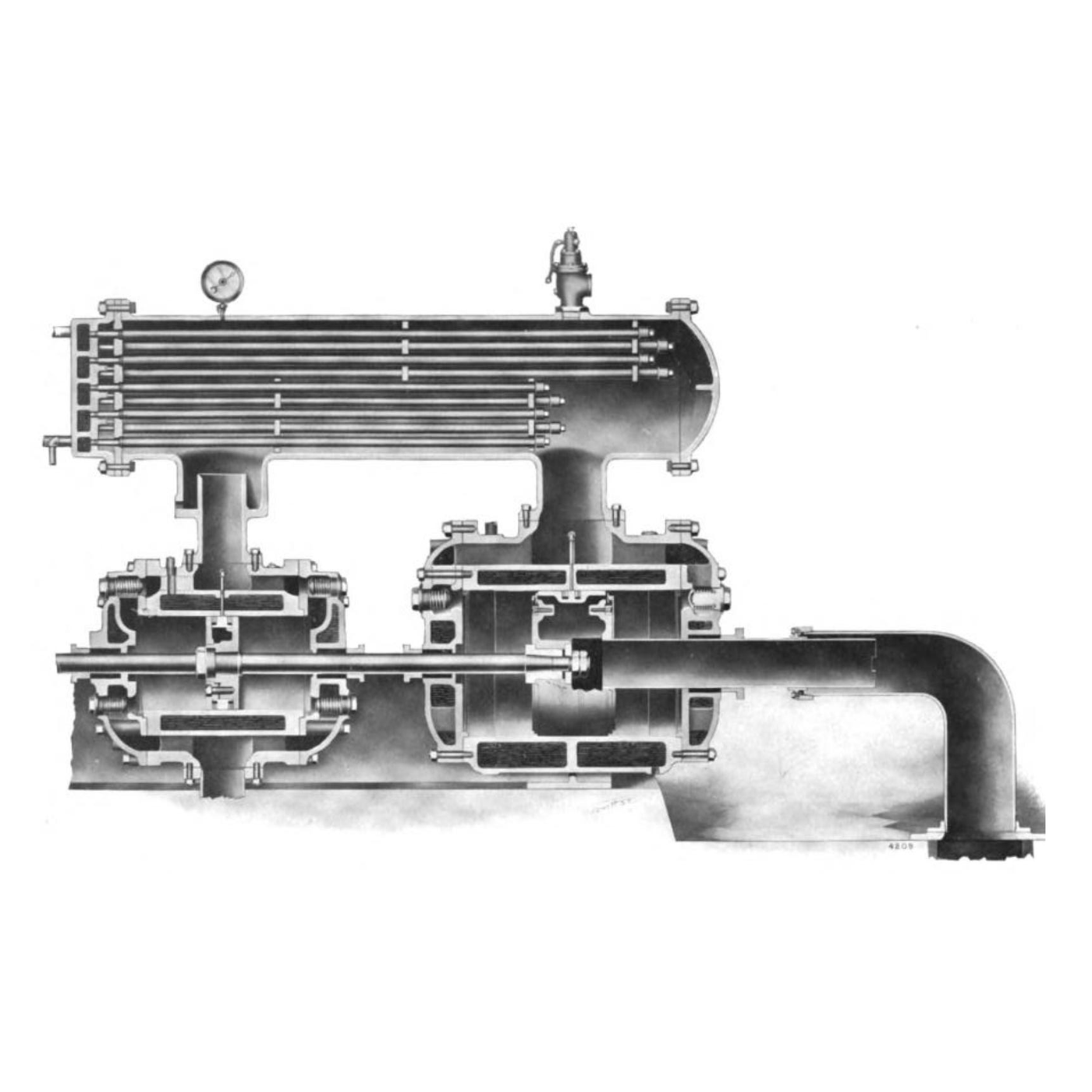
The heat is not a defect: squeezing a gas does work on it, and the work appears as temperature. The water is not a leak: air carries vapour, and compressed and cooled air can carry much less of it. Both follow from a few lines of physics, and both decide how a real air system is laid out — two stages with an intercooler, a tank with a drain, a pipe that falls towards a trap.
This rung measures them on a workshop compressor: its real delivery by a pump-up test, its discharge temperature, and the water in its tank.
Начинающий
About 3 hours
Инструкции
1
1
How hot, and what it costs
How hot, and what it costs
Загрузка блокнота Jupyter…
2
2
Measure the discharge temperature
Measure the discharge temperature
Clamp the thermocouple's tip against the discharge pipe where it leaves the compressor pump with a hose clip — not with plastic tape, which softens on a pipe this hot — and start with the tank empty. Log the temperature every 30 seconds as the tank fills, with the tank pressure beside it. Aim the infrared thermometer at the cylinder head fins at the same moments.
The discharge pipe will climb well past boiling on most small piston compressors as the pressure rises — nowhere near the notebook's adiabatic ceiling, because the cylinder loses heat through its fins, but enough to burn. That is why the pipe to the tank is metal and often finned, and why a plastic hose must never be fitted there.
Do not touch the head or the discharge pipe while it runs, or for several minutes after.
Необходимые инструменты:
 Воздушный компрессор
 Термопара с индикатором
 Инфракрасный термометр
 Секундомер
 Кожаные рабочие перчатки
 Защита слуха (наушники, SNR 30 дБ)
 Разводной ключ
 Набор хомутов для шлангов
3
3
The pump-up test: what does it really deliver?
The pump-up test: what does it really deliver?
The litres per minute printed on a compressor are usually displacement — the swept volume of the piston — not the air it actually delivers. The pump-up test measures the real figure, the **free air delivery**.
Read the tank volume off its plate. Drain the tank, close the drain and all outlets, and start the compressor. Time how long the gauge takes to climb from 4 bar to 6 bar — somewhere in the middle, well away from the cut-out.
Free air delivered = tank volume × (6 − 4) ÷ 1.013 ÷ time. A 24 L tank that takes 40 seconds to go from 4 to 6 bar gains 47 litres of free air: 71 L/min. Expect a figure well below the displacement on the label. The tank air is warm when you read it; for a closer figure, repeat after it has cooled and compare.
Необходимые инструменты:
Воздушный компрессор МанометрСекундомер
4
4
Where the water comes from
Where the water comes from
Загрузка блокнота Jupyter…
5
5
Drain the tank and weigh the water
Drain the tank and weigh the water
Note the room humidity on the hygrometer before a working session. At the end, with the tank still under a little pressure, put a measuring jug under the drain and open it slowly: water and rusty sludge come out first, then air.
Weigh the water and compare with the notebook's estimate for your delivery, run time and humidity. It will be lower — some of the water left as mist with the air, some is still on the tank walls — but it will be the same order.
Then lay the air system out to deal with it: the main line falling slightly away from the tank towards a low point with a drain, and each tool taken off the TOP of the main so water running along the bottom does not go down to the tool.
Необходимые инструменты:
 Мерный кувшин
 Цифровые весы
 Гигрометр (измеритель влажности)Разводной ключ
6
6
Water at the tool: find where it gets through
Water at the tool: find where it gets through
The usual reasons compressed air arrives wet, in the order to check them.
Flow
Loading...
7
7
Context
Context
This is a practice rung: the physics underneath every compressor in this batch, measured on the one most makers own. It carries no patent; the relations are those of ideal-gas thermodynamics.
What it explains in the machines before it: the **liquid-ring pump** stays cool because its ring swallows the heat as fast as it is made — close to the isothermal floor. The **oil-flooded screw** does the same with oil. The **scroll** and the dry **screw** compress with little cooling and run hot. And the **air-operated diaphragm pump** throws its compressed air away through the exhaust, cold, which is why it can ice up.
**Honest limits of the numbers.** The temperatures are ideal adiabatic ceilings; real machines lose heat through their walls and run cooler. The condensate figures assume the air is cooled back to intake temperature — warm air in the tank holds more, and drops it later, downstream, in the pipes.
Требуемые инструменты
12- 1 vendor sell this, none ship to you yetЗаполнитель
- Заполнитель
- Заполнитель
- Заполнитель
- Заполнитель
- Заполнитель
- Заполнитель
- Заполнитель
- Заполнитель
- Заполнитель
- Заполнитель
- Заполнитель
Связанные чертежи
Эти чертежи делятся знаниями — техники, материалы или принципы
Boyle's Law — Squeeze a Syringe of Air
от Charlie
Химия
51
0
0
0
2
0
Guericke Air Pump
от Penny
ТЕХНОЛОГИИ
60
0
0
0
0
0
Holding a Pressure: The Reducing Regulator
от Martin
Механика
35
0
0
0
0
0
Watt Indicator Diagram
от Martin
ТЕХНОЛОГИИ
69
0
0
0
0
0
The Scroll Compressor: Two Spirals, One Orbiting, No Valves
от Emma
Механика
34
0
0
0
0
0
The Liquid-Ring Pump: The Water Is the Piston
от Martin
Механика
44
0
0
0
0
0
The Screw Compressor: A Built-In Ratio, and the Cost of the Wrong One
от Martin
Механика
36
0
0
0
0
0
The Air-Operated Double-Diaphragm Pump: It Stalls Instead of Bursting
от Emma
Механика
26
0
0
0
0
0
CC0 Общественное достояние
Этот чертёж выпущен под лицензией CC0. Вы можете свободно копировать, изменять, распространять и использовать эту работу в любых целях без запроса разрешения.
Поддержите мейкера, покупая товары через его чертёж, где он получает Комиссию мейкера установленную продавцами, или создайте новую итерацию этого чертежа и включите его как связь в свой чертёж для распределения дохода.