ИСКУССТВО
КРАСОТА И ЗДОРОВЬЕ
РЕМЕСЛО
КУЛЬТУРА И ИСТОРИЯ
РАЗВЛЕЧЕНИЯ
ЭКОЛОГИЯ
ЕДА И НАПИТКИ
ОБРАТНАЯ ИНЖЕНЕРИЯ
НАУКИ
СПОРТ
ТЕХНОЛОГИИ
НОСИМЫЕ УСТРОЙСТВА
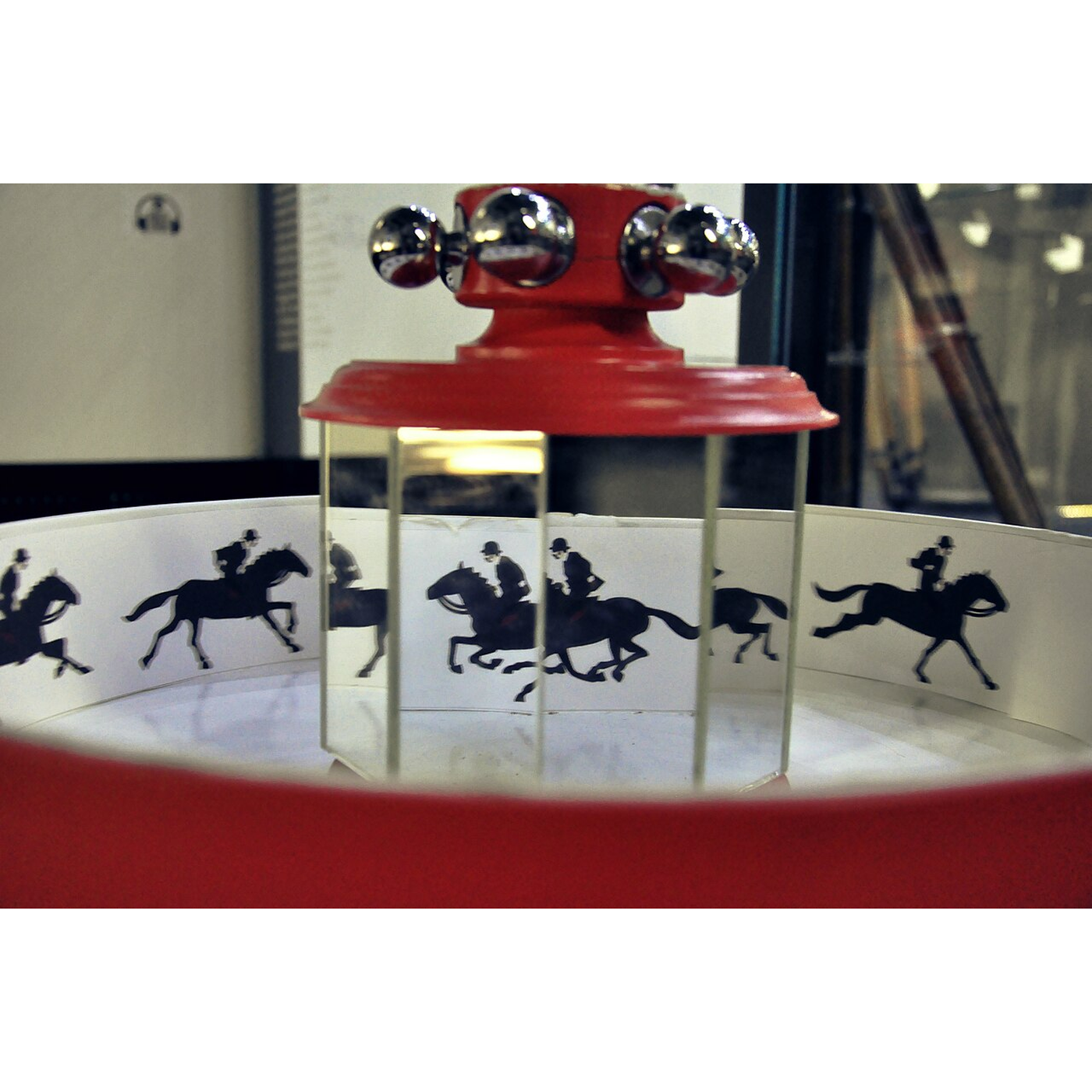


The Praxinoscope: Moving Pictures in a Ring of Mirrors
Before cinema, moving pictures were toys. The zoetrope spun a strip of drawings inside a slotted drum; looking through the slots, you saw each drawing only for an instant, and the series ran together into motion — dimly, because the slots let in so little.
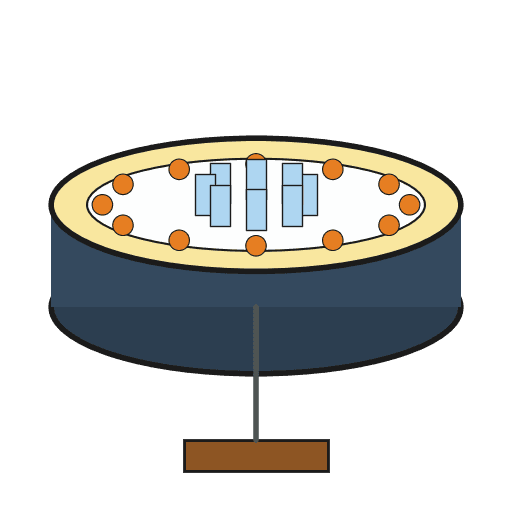
Émile Reynaud of Paris patented the praxinoscope in France on 30 August 1877 (patent 120484). He replaced the slots with a ring of flat mirrors at the centre of the drum, one for each picture, set at half the drum's radius. The reflected pictures appear one after another in the same place, bright and steady. Reynaud went on to project them for audiences in his Théâtre Optique.
This rung shows why the mirrors must stand at half the radius, and builds a praxinoscope.
Начинающий
About 3 hours
Инструкции
1
1
Where the images land
Where the images land
Загрузка блокнота Jupyter…
2
2
Mirrors making images
Mirrors making images
The praxinoscope's trick is plane-mirror imaging, as in the kaleidoscope. The embedded blueprint shows how facing mirrors multiply a picture.
3
3
Build a praxinoscope
Build a praxinoscope
Cut a cardboard disc 220 mm across and glue a 60 mm-high cardboard wall round it: the drum, radius 110 mm. Mount it on a pencil or dowel through a bead so it spins freely on a base.
Cut twelve pieces of acrylic mirror sheet, each 28 mm wide and 50 mm high, and stand them round a twelve-sided cardboard prism glued at the centre, so the mirror faces are 55 mm from the axis — half the drum's radius.
Draw twelve pictures of a simple motion — a ball bouncing, a figure jumping — on a paper strip that fits inside the drum wall, one picture opposite each mirror. Spin the drum and look into the mirrors: the drawings move. Move the mirrors to 45 mm and to 65 mm from the axis and see the image jump and blur.
Материалы для этого шага:
 Листы гофрокартона1 штука
 Зеркальный акриловый лист1 штука
 Шканты из твёрдой древесины1 штука
Необходимые инструменты:
 Клеевой пистолет
 Линейка
 Цифровой штангенциркуль 6 дюймов
 Транспортир
4
4
A praxinoscope whose pictures jump or blur
A praxinoscope whose pictures jump or blur
Praxinoscope problems.
Flow
Loading...
5
5
History and honest limits
History and honest limits
**Émile Reynaud** patented the praxinoscope in France on 30 August 1877 (patent 120484), and later built the projecting Théâtre Optique, showing hand-drawn animated films to audiences in Paris from 1892 — before cinema.
**Honest limits.** The notebook treats the mirrors as ideal planes and the strip as a perfect circle. The persistence-of-vision explanation of why the pictures blend is simplified; how the brain perceives apparent motion is more subtle.
Материалы
3- 1 штукаЗаполнитель
- 1 штукаЗаполнитель
- 1 штукаЗаполнитель
Требуемые инструменты
4- Заполнитель
- Заполнитель
- Заполнитель
- Заполнитель
По этому чертежу делают
Связанные чертежи
Эти чертежи делятся знаниями — техники, материалы или принципы

CC0 Общественное достояние
Этот чертёж выпущен под лицензией CC0. Вы можете свободно копировать, изменять, распространять и использовать эту работу в любых целях без запроса разрешения.
Поддержите мейкера, покупая товары через его чертёж, где он получает Комиссию мейкера установленную продавцами, или создайте новую итерацию этого чертежа и включите его как связь в свой чертёж для распределения дохода.