ИСКУССТВО
КРАСОТА И ЗДОРОВЬЕ
РЕМЕСЛО
КУЛЬТУРА И ИСТОРИЯ
РАЗВЛЕЧЕНИЯ
ЭКОЛОГИЯ
ЕДА И НАПИТКИ
ОБРАТНАЯ ИНЖЕНЕРИЯ
НАУКИ
СПОРТ
ТЕХНОЛОГИИ
НОСИМЫЕ УСТРОЙСТВА



Weight of Fibre: The One Number Every Dye Recipe Is Built On
Natural dye recipes are written as percentages — 15% alum, 100% madder, 8% cochineal — and every one of those percentages is of the **dry weight of the fibre**, abbreviated WOF.
It is not a percentage of the water, of the dyebath, or of the plant material as gathered. Almost every beginner's failure to repeat a colour comes from getting that base number wrong, or from not writing it down.
This rung is short and entirely about the arithmetic, because the arithmetic is what makes a dye recipe transferable between one dyer's kitchen and another's.
Начинающий
2 hours
Инструкции
1
1
Weigh dry, weigh once, write it on the tag
Weigh dry, weigh once, write it on the tag
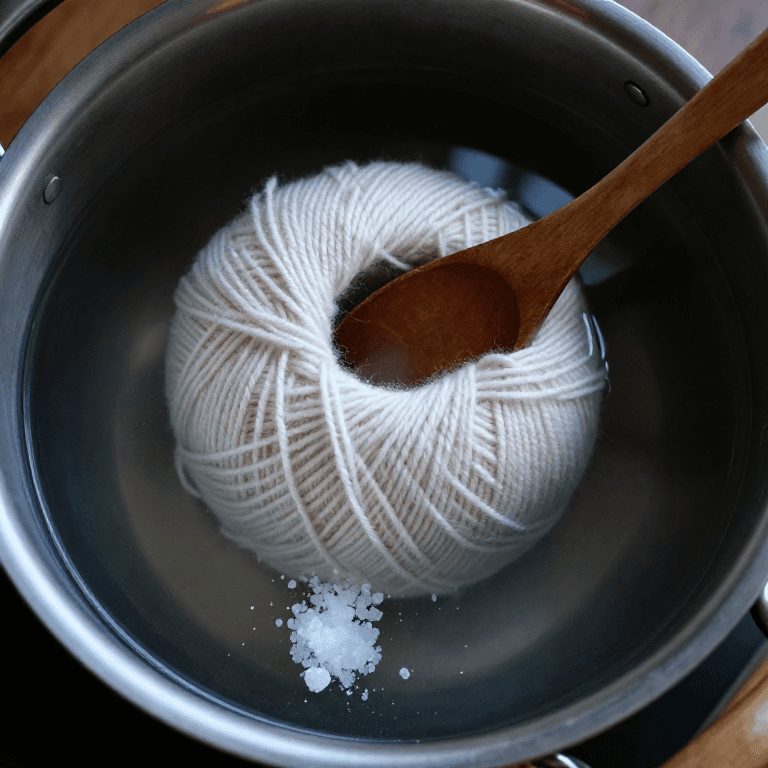
Weigh the fibre bone dry before it goes anywhere near water, and use that one number for the whole day: the scour, the mordant, the dye, and any modifier afterwards.
A kitchen scale reading to a gram is enough for a 100 g skein. For samples under about 20 g, a jeweller's scale reading to 0.1 g is worth having, because a gram of error on a 10 g sample is a tenth of the recipe.
Tie a tag on with the weight written on it. That sounds fussy until the third skein of the day goes into the wrong pot — and it is also the first line of the dye record, which is its own rung.
If the fibre has been sitting in a damp room, it is worth drying it in a warm place for an hour first. Wool at 80% relative humidity can carry 15% of its own weight in water without feeling damp at all.
Материалы для этого шага:
 Некрашеная шерстяная пряжа3 мотков
 Шёлковая пряжа1 моток
Необходимые инструменты:
 Прецизионные весы
 Каталожные карточки
2
2
Working the recipe out
Working the recipe out
Загрузка блокнота Jupyter…
Необходимые инструменты:
 Настольный компьютер
3
3
Dyestuff is the one weight that is not straightforward
Dyestuff is the one weight that is not straightforward
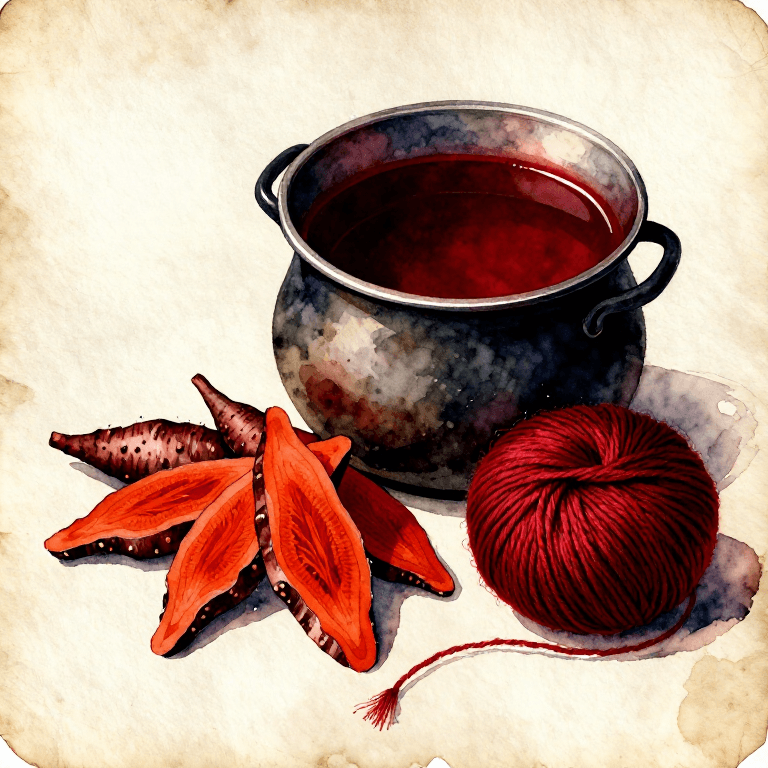
The fibre, the mordant and the water are all easy to weigh. The dyestuff is not, because the same plant is sold in forms that carry very different amounts of colour.
**Fresh versus dried.** Fresh plant material is mostly water. Fresh weld or marigold is typically used at three to four times the dried weight for the same depth, and the exact factor depends on the season and on how it was dried.
**Whole versus ground.** Ground madder root gives up its colour far faster than chopped root, so the same weight gives a stronger first bath and a weaker second. It is not more dye, it is sooner.
**Extract versus raw.** A commercial extract may be five to twenty times the strength of the raw material, and the multiplier is the supplier's, not a constant. A recipe calling for 100% WOF of madder root means perhaps 10% WOF of madder extract, and that is a number to read off the packet rather than guess.
Write down which form you used. A recipe that says only "madder 100%" cannot be repeated.
Материалы для этого шага:
Некрашеная шерстяная пряжа1 мотокНеобходимые инструменты:
Прецизионные весы Стеклянные банки с крышкамиКаталожные карточки
4
4
Sample small, then scale
Sample small, then scale
A dye day on 500 g of yarn is expensive in dyestuff, in fuel and in time. A dye day on five 10 g samples costs almost nothing and answers the same question.
Work in jars standing in one pot of hot water. Each jar holds one sample at one concentration, all at the same temperature, all for the same time — so the only variable is the one being tested.
Scale by WOF and the result transfers: a 10 g sample at 50% madder and a 500 g skein at 50% madder are the same recipe, provided the liquor ratio is kept roughly the same too.
What does not transfer is evenness. A big pot heats and stirs differently from a jar, so a sample proves the colour and not the levelness. That is the dyebath rung's problem.
Материалы для этого шага:
Некрашеная шерстяная пряжа1 моток Квасцы (алюмокалиевые)1 штука
Необходимые инструменты:
Стеклянные банки с крышками Большая кастрюля
 ТермометрПрецизионные весыКаталожные карточки
Материалы
3- 5 мотковЗаполнитель
- 1 мотокЗаполнитель
- 1 штукаЗаполнитель
Связанные чертежи
Эти чертежи делятся знаниями — техники, материалы или принципы

CC0 Общественное достояние
Этот чертёж выпущен под лицензией CC0. Вы можете свободно копировать, изменять, распространять и использовать эту работу в любых целях без запроса разрешения.
Поддержите мейкера, покупая товары через его чертёж, где он получает Комиссию мейкера установленную продавцами, или создайте новую итерацию этого чертежа и включите его как связь в свой чертёж для распределения дохода.