UBUHANZI
UBWIZA N'UBUZIMA
UBUKORIKORI
UMUCO N'AMATEKA
IMYIDAGADURO
IBIDUKIKIJE
IBIRIBWA N'IBINYOBWA
UBWUBATSI BUSUBIRA INYUMA
UBUMENYI
SIPORO
IKORANABUHANGA
IBYAMBARWA
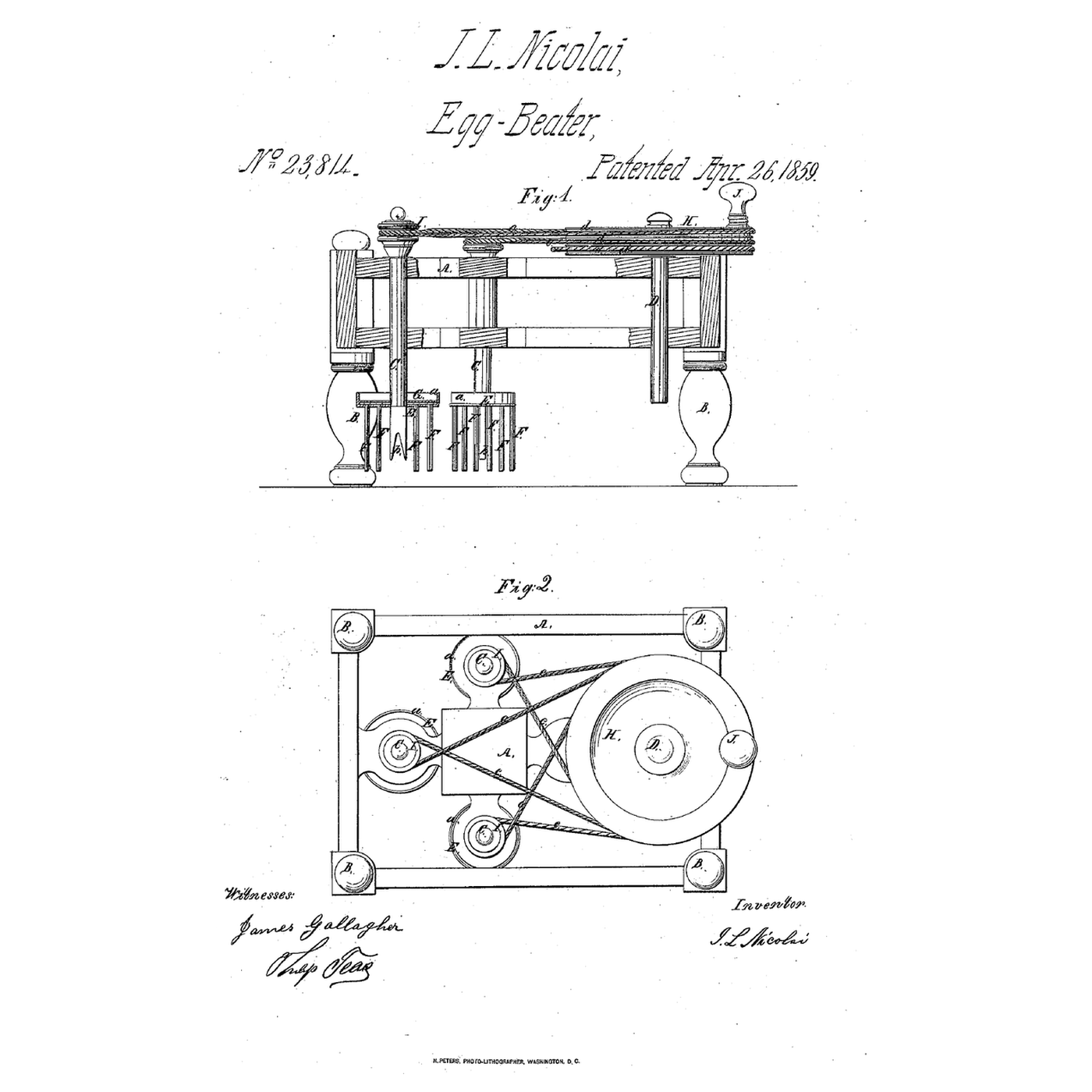


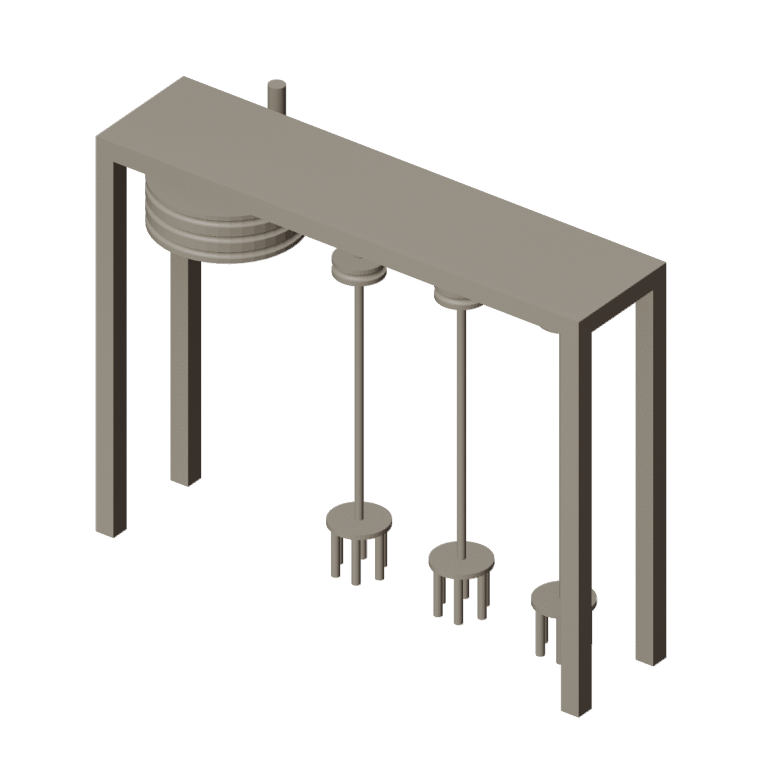
Belt-Driven Multiple Egg Beater: One Wheel Beats Three Bowls
A kitchen beating whites, yolks and batter needs several beaters going at once.
John L. Nicolai of Chicago received US 23,814, dated 26 April 1859, for an egg beater: a grooved driving wheel turned by a handle belts a series of vertical arbors in one frame, each with a disk of flexible fingers of rubber or gutta-percha; turning, the fingers spread and sweep "through every nook and corner of the vessel," so several vessels are beaten at once.
This rung works out the belt ratio and the fingers' spread, then prints the wheel, pulleys and disks and beats three bowls together.
Hejuru
About 6 hours, plus printing
Amabwiriza
1
1
Ratio and finger spread
Ratio and finger spread
Gupakira ikaye ya Jupyter…
2
2
A belt drive before it
A belt drive before it
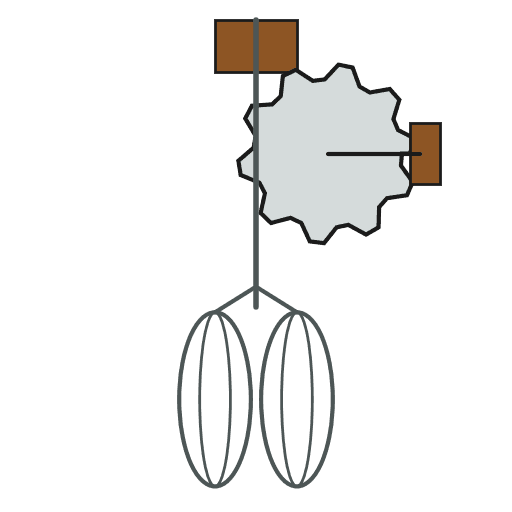
The embedded blueprint drives a pulley by a belt. Nicolai runs one belt per arbor in its own groove of a single wheel.
3
3
Read US 23,814
Read US 23,814
"By this motion and by the action of the substance in the vessels the fingers F spread out and a large quantity of the substance is agitated by the same at once, so that it takes but a very short time to reduce a quantity of eggs to froth or to mix a certain quantity of eggs with sugar, and as the fingers are flexible they diverge by being rotated with the disks and they adapt themselves to the shape of the vessel so that they actually sweep through every nook and corner of the vessel."
4
4
Print the wheel, pulleys and disks
Print the wheel, pulleys and disks
Print the three-groove driving wheel, three pulleys and three finger disks. Print in PETG at 0.2 mm layers, 30 % infill, 4 walls.
Ibikoresho by'iyi ntambwe:
 Fibere ya PETG1 igice
Ibikoresho bikenewe:
 Imashini icapa 3D ikoresha umugozi (FDM)
5
5
Print the wheel
Print the wheel
The wheel, printed as step 4 describes.
6
6
Print the pulley
Print the pulley
The pulley, printed as step 4 describes.
7
7
Print the disk
Print the disk
The disk, printed as step 4 describes.
8
8
Build the frame
Build the frame
Make a table frame of plywood 330 × 80 mm on four legs 240 mm high. Drill 5 mm holes for the wheel's shaft and three arbors 70 mm apart.
Ibikoresho by'iyi ntambwe:
 Urupapuro rw'ibiti byometse1 igice
 Igihimba cy'Igiti Gikomeye1 igice
 Uruganda rw'igiti #8 x 1"1 igice
Ibikoresho bikenewe:
 Umucumita w'Imigororwa
 Icyuma Cyivumbura Kidafite Insinga
 Ibyuma Byinshi byo Gucukura
 Ikusanyirizo ry'ibitorezi
 Umurongo w'ipima
9
9
Arbors and fingers
Arbors and fingers
Cut three 200 mm arbors of 5 mm rod. Epoxy a pulley at each top, at the height of its own groove, and a disk at each foot. Push six 30 mm lengths of silicone tube into each disk's holes as fingers.
Ibikoresho by'iyi ntambwe:
 Umurongo Uzengurutse w'Icyuma Cyoroshye1 igice
 Umuyoboro wa Silikone1 igice
 Epoksi y'Ibice Bibiri1 igice
Ibikoresho bikenewe:
 Umucumita w'Ibyuma
 Ifatiro ry'Ameza
10
10
Belts and crank
Belts and crank
Fit the wheel on its shaft with a crank screw near its rim. Loop an O-ring from each groove to its pulley, choosing sizes that are taut.
Ibikoresho by'iyi ntambwe:
 Urutonde rw'inziga za O1 igice
 Ibitorezo by'imashini1 igice
 Umupira w'Impande Esheshatu1 igice
Ibikoresho bikenewe:
 Ikigereranyo cya Digitale cy'Amasentimetero 6
 Isupana ihindurwa
11
11
The patent drawing
The patent drawing
US 23,814 drawing sheet, public domain (expired patent).
12
12
Beat three bowls
Beat three bowls
Set three bowls under the arbors with one egg white each. Turn the crank about once a second and time each bowl to stiff peaks.
Ibikoresho by'iyi ntambwe:
 Igi3 ibice
Ibikoresho bikenewe:
 Ibakure rinini ryo kuvanga ry'icyuma kitagira ingese
 Isaha yo Guhagarika
13
13
Belts that slip, cross or fingers that fly off
Belts that slip, cross or fingers that fly off
Belt-driven multiple egg beater troubleshooting.
Flow
Loading...
14
14
History and honest limits
History and honest limits
**John L. Nicolai** of Chicago, assignor to himself, S. E. Knott and R. F. Farrell, received US 23,814, dated 26 April 1859. The frame is wood or other material on legs; the disks may be flanged, plain sheet metal, or small cups; the arbors' ends pass through the disks and finish in a flattened fork that also mixes. For larger machines he would put a multiplying gear before the wheel; under steam power it is unnecessary.
**Honest limits.** FDM prints hold food in their layer lines, so wash well and replace when worn. O-rings stand in for his endless belts, silicone tube for rubber or gutta-percha fingers. Your times are the result.
Ibikoresho
11- 1 igiceUmwanya
- 1 igiceUmwanya
- 1 igiceUmwanya
- 1 igiceUmwanya
- Umwanya
- 1 igiceUmwanya
- 1 igiceUmwanya
- 1 igiceUmwanya
- 1 igiceUmwanya
- 1 igiceUmwanya
- 3 ibiceUmwanya
Ibikoresho bikenewe
12- Umwanya
- 1 vendor sell this, none ship to you yetUmwanya
- Umwanya
- Umwanya
- Umwanya
- Umwanya
- Umwanya
- Umwanya
- Umwanya
Dosiye z'igishushanyo
3Iki gishushanyo gikora
Blueprint zijyanye
Izi blueprint zisangira ubumenyi — uburyo, ibikoresho cyangwa amahame

CC0 Umurenge rusange
Iyi blueprint yasohowe munsi ya CC0. Ushobora gukoporora, guhindura, gukwirakwiza no gukoresha nta kwemererwa.
Shyigikira Umuremyi ugura ibicuruzwa binyuze muri Blueprint ye Komisiyo y'Umuremyi byashyizweho n'Abacuruzi, cyangwa kora verisiyo nshya y'iyi Blueprint ukayinjiza nk'isano muri Blueprint yawe kugira ngo musangire inyungu.