Ubufatanye
UBUHANZI
UBWIZA N'UBUZIMA
UBUKORIKORI
UMUCO N'AMATEKA
IMYIDAGADURO
IBIDUKIKIJE
IBIRIBWA N'IBINYOBWA
UBWUBATSI BUSUBIRA INYUMA
UBUMENYI
SIPORO
IKORANABUHANGA
IBYAMBARWA
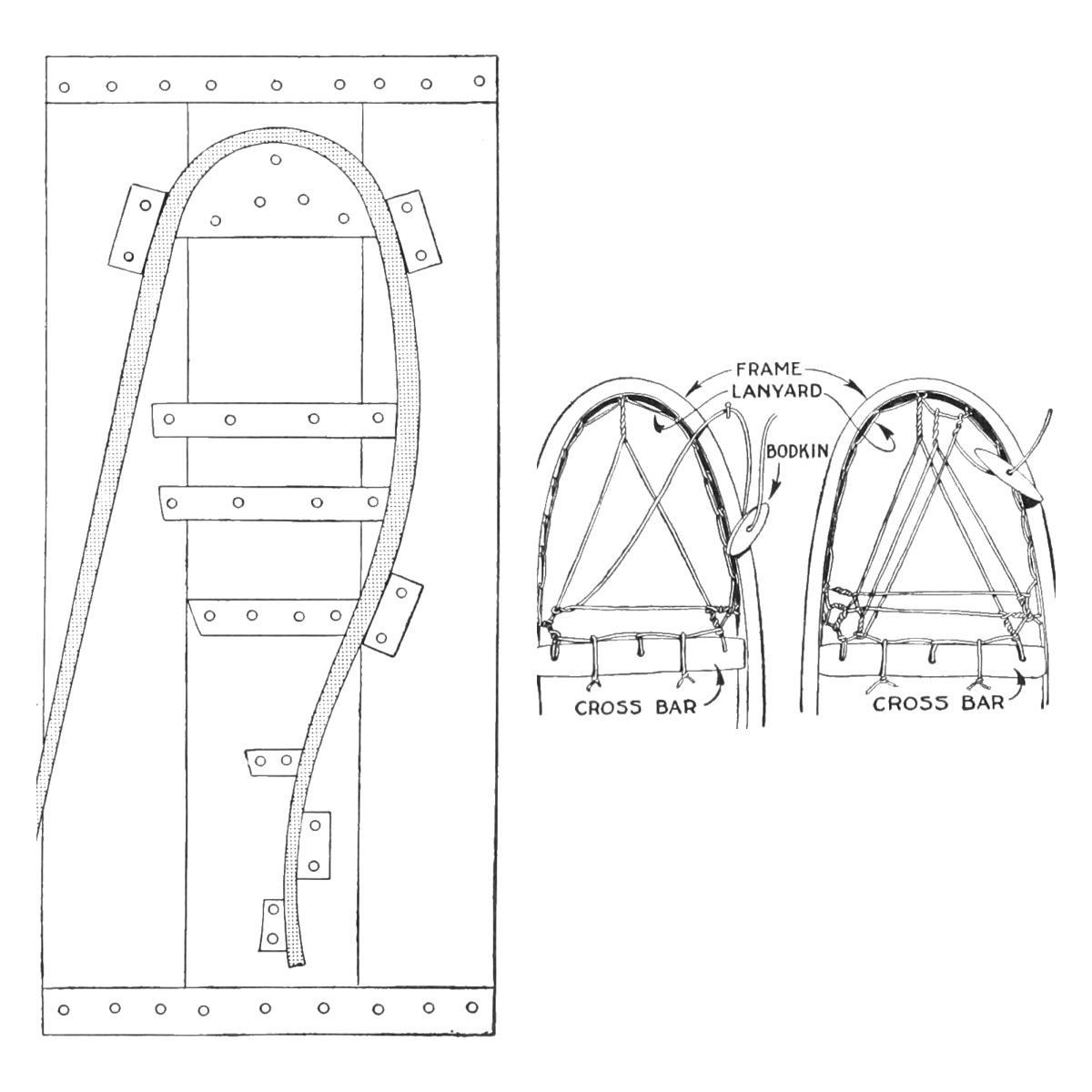


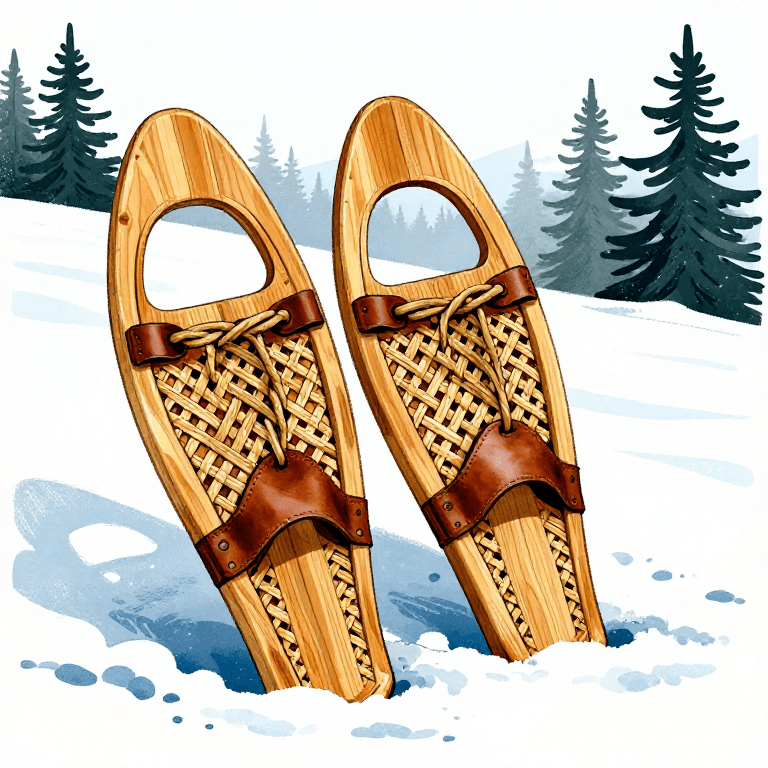
Ash Snowshoes: Steam-Bent Frame, Mortised Cross Bars and Rawhide Filling (Boy Mechanic, 1915)
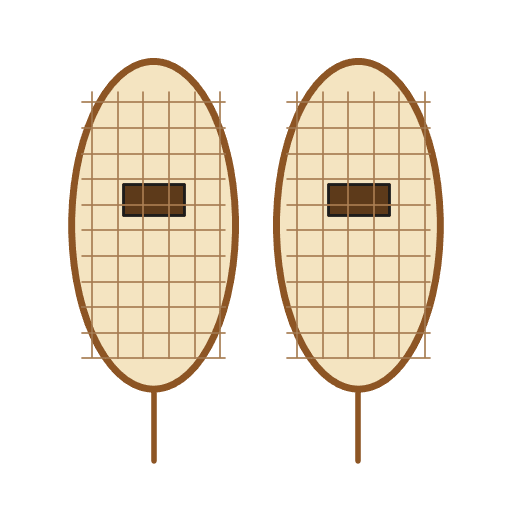
Stillman Taylor's snowshoes from The Boy Mechanic, Book 2 (1915): a white ash frame steamed and bent on a board form, two mortised cross bars set so the heel is a little heavier, and a rawhide filling woven on a lanyard, coarse in the centre and finer at toe and heel. He recommends style B, about 12 in by 42 in, for one all-round pair.
Hejuru
About 2 weeks (frames dry a week)
Amabwiriza
1
1
His sizes in centimetres
His sizes in centimetres
Gupakira ikaye ya Jupyter…
2
2
Read The Boy Mechanic, Book 2
Read The Boy Mechanic, Book 2
"For the frames, white ash is much the best wood, but hickory and white birch are dependable substitutes, if the former cannot be obtained." Choose the style first: style B, "the ordinary eastern model", is about 12 in wide and 42 in long, with about 2 in turn at the toe; he advises a flat toe, or a turn not over 1 in, for one all-round pair.
3
3
Cut the frame sticks
Cut the frame sticks
From seasoned white ash, saw and plane two frame sticks about 1-1/16 in wide, 7/16 in thick at the toe and 9/16 in thick at the heel (make green wood heavier, for shrinkage). Cut each 2 in longer than the finished length. The toe of the finished frame is the centre of the stick, the heel the two ends, and the centre of the shoe halfway between.
Ibikoresho by'iyi ntambwe:
 Ikibaho cy'Igiti Gikomeye1 igice
Ibikoresho bikenewe:
 Umucumita w'Intoki
 Ikoresho cyo gusiga ibiti
 Ikirwanya gifite imifatiro ibiri
 Ikaramu ya penisile
 Umugozi wo Gupima
4
4
Make the bending form
Make the bending form
Draw the shoe outline on paper, cut it out, and trace it on a board. Nail the inside blocks in place on the line; drive nails part-way into the outside stay blocks so they can be fixed quickly once the hot frame is on the form. Two forms, made exactly alike, let both frames be bent at once.
Ibikoresho by'iyi ntambwe:
 Ikibaho cy'igiti cya pinusi1 igice
 Imisumari1 igice
Ibikoresho bikenewe:
 Impapuro z'ikigina zo gupfunyikaIkaramu ya penisile
 UmukasiUmucumita w'Intoki
 Inyundo
5
5
Steam and bend the frame
Steam and bend the frame
Put boiling water in a wash boiler, lay the stick over the top and mop it with the boiling water, shifting it until the fibres soften. After 10 or 15 minutes, wrap it in cloth and bend it back and forth; repeat until it bends easily without splintering. Soften the toe well, as it is the sharpest curve. Put the hot frame on the form, bend it slowly against the inside blocks starting at the toe, nail on the outside blocks, finish one side, then the other. Leave it on the form for at least a week, until thoroughly dry and set.
Ibikoresho by'iyi ntambwe:
 Urupapuro rw'umwenda w'ipamba1 igice
Ibikoresho bikenewe:
 Inkono Nini
 Igikoresho cyo guhanagura hasiInyundo
6
6
Close the tail and fit the cross bars
Close the tail and fit the cross bars
When dry, fasten the tail by boring three holes about 4 in from the end and lashing with rawhide. Spring the two cross bars into the frame about 15 in apart and balance the shoe in your hands at the centre; when it balances exactly, move the bars so the heel is about 3 oz heavier than the toe, and mark the mortises. Cut them a good tight fit with a small, sharp chisel; 1/4 in deep is ample.
Ibikoresho by'iyi ntambwe:
Ikibaho cy'Igiti Gikomeye1 igice Uduce tw'uruhu rutasukuye1 igice
Ibikoresho bikenewe:
 Igikoresho cyo gutobora gikoreshwa n'intoki
 Ibyuma byo kubazaUmucumita w'Intoki
 Umunzani w'ibiroIkaramu ya penisile
7
7
Lace the lanyard
Lace the lanyard
Bore pairs of small holes obliquely in the toe and heel sections of the frame and lace a narrow rawhide thong through them as the lanyard. Bore three holes in each cross bar, one on each side about 1-1/2 in from the frame and one in the centre, and carry the lanyard through them.
Ibikoresho by'iyi ntambwe:
 Umugozi w'uruhu rutaruziye1 igice
Ibikoresho bikenewe:
Igikoresho cyo gutobora gikoreshwa n'intoki Icyuma cyo gukata uruhu
8
8
Weave the toe and heel
Weave the toe and heel
Make a wooden bodkin about 1/4 in thick and 2 in long to pull the strands taut. Make an eye in the end of a fine thong, pass it through a lanyard loop and back through the eye as a slipknot. Start at the corner of cross bar and frame, take the strand up and twist it round the lanyard in the middle of the toe, then down to the opposite corner. Loop it round the next lanyard (No. 2) with the twisted loop knot, carry it across, make the same knot on No. 2 on the starting side, twist it round the first strand, loop under the next cross-bar lanyard, up to the toe again, and so on until the space is filled. Join thongs endlessly by cutting an eye in each end and passing each through the other. Fill the heel the same way.
Ibikoresho by'iyi ntambwe:
Umugozi w'uruhu rutaruziye1 igiceIbikoresho bikenewe:
Icyuma cyo gukata uruhu9
9
Weave the centre
Weave the centre
Use heavier hide for the centre. Make the toe cord first: carry the strand across the frame five or six times, finish with a half hitch, then twist it round the cross bar to form the first toe-cord stay. Fill the centre by looping back and twisting as for the toe, but loop round the frame with a clove hitch instead of a lanyard. Leave a toe hole 4 in wide: once enough is woven, weave through the toe cord instead of round the cross bar, in and out several times. Finish by looping round the cross bar beside the toe hole, twisting down the toe-cord stay, along the toe cord to the other side, down the other stay, round the frame, and end in a clove hitch. A mesh of about 3/4 in suits the centre.
Ibikoresho by'iyi ntambwe:
Uduce tw'uruhu rutasukuye1 igiceIbikoresho bikenewe:
Icyuma cyo gukata uruhu10
10
Troubleshooting
Troubleshooting
Snowshoe troubleshooting.
Flow
Loading...
11
11
History and honest limits
History and honest limits
From "Snowshoes: How to Make and Use Them" by Stillman Taylor, Parts I-II, in **The Boy Mechanic, Book 2**, Popular Mechanics, 1915 (Project Gutenberg 44585; checked on the archive.org scan boymechanicbook200chic2, pp. 36-45). He gives no size for the cross bars and no widths for the thongs, only that the centre strand is heavier and the toe and heel finer. He describes a simpler filling than the Indian patterns. Foot fastenings (toe strap and heel thong) are in his Part I and not made here. The tools and metric figures are ours.
Ibikoresho
6- 1 igiceUmwanya
- 1 igiceUmwanya
- 1 igiceUmwanya
- Umwanya
- 1 igiceUmwanya
- 1 igiceUmwanya
Ibikoresho bikenewe
14- Umwanya
- Umwanya
- 1 vendor sell this, none ship to you yetUmwanya
- 1 vendor sell this, none ship to you yetUmwanya
- Umwanya
- Umwanya
- Umwanya
- Umwanya
- Umwanya
- Umwanya
Iki gishushanyo gikora
Blueprint zijyanye
Izi blueprint zisangira ubumenyi — uburyo, ibikoresho cyangwa amahame
CC0 Umurenge rusange
Iyi blueprint yasohowe munsi ya CC0. Ushobora gukoporora, guhindura, gukwirakwiza no gukoresha nta kwemererwa.
Shyigikira Umuremyi ugura ibicuruzwa binyuze muri Blueprint ye Komisiyo y'Umuremyi byashyizweho n'Abacuruzi, cyangwa kora verisiyo nshya y'iyi Blueprint ukayinjiza nk'isano muri Blueprint yawe kugira ngo musangire inyungu.