Ubufatanye
UBUHANZI
UBWIZA N'UBUZIMA
UBUKORIKORI
UMUCO N'AMATEKA
IMYIDAGADURO
IBIDUKIKIJE
IBIRIBWA N'IBINYOBWA
UBWUBATSI BUSUBIRA INYUMA
UBUMENYI
SIPORO
IKORANABUHANGA
IBYAMBARWA
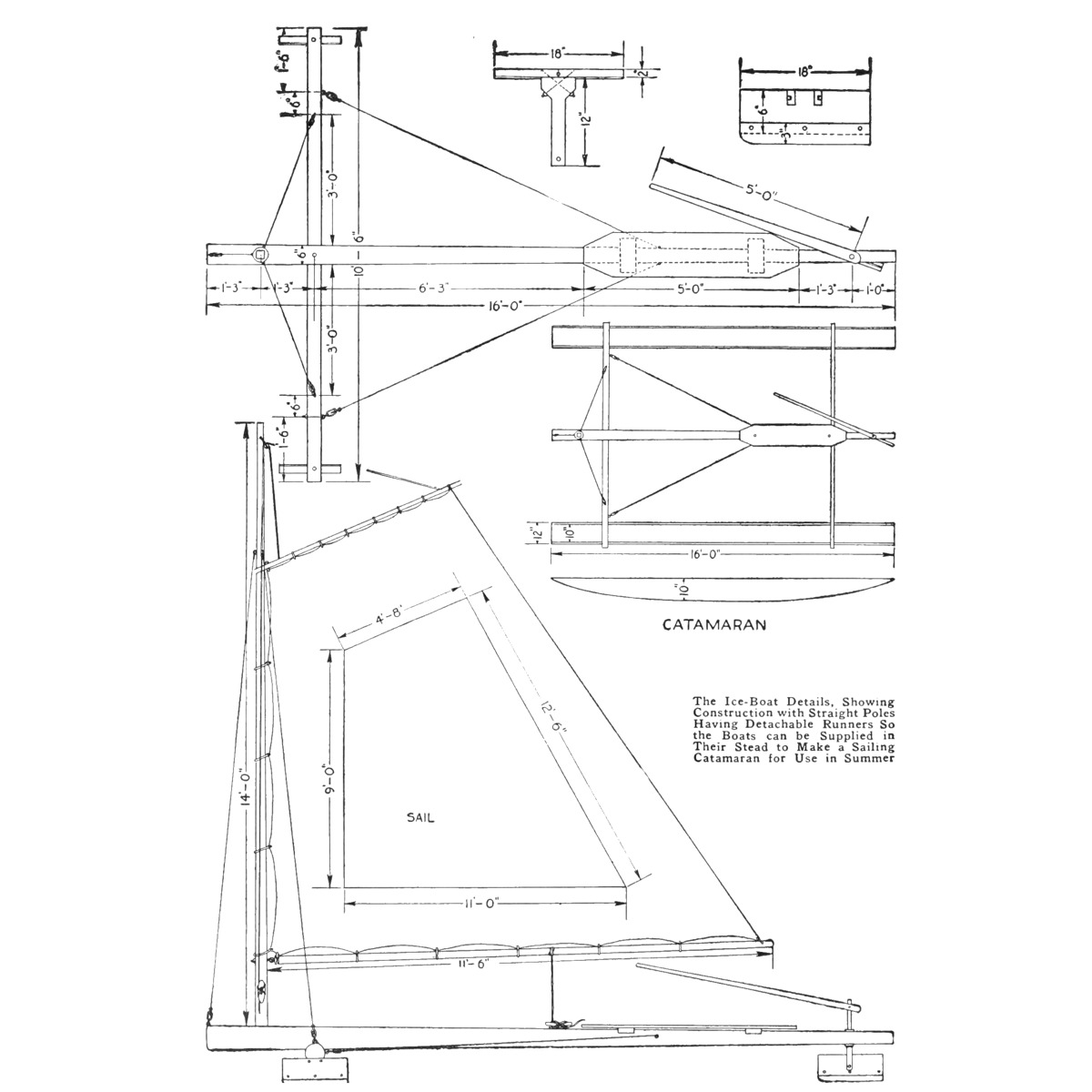


Ice Boat: Crossed Timbers, Skate-Edged Runners, Bicycle-Fork Steering and a Gaff Sail (Boy Mechanic, 1915)
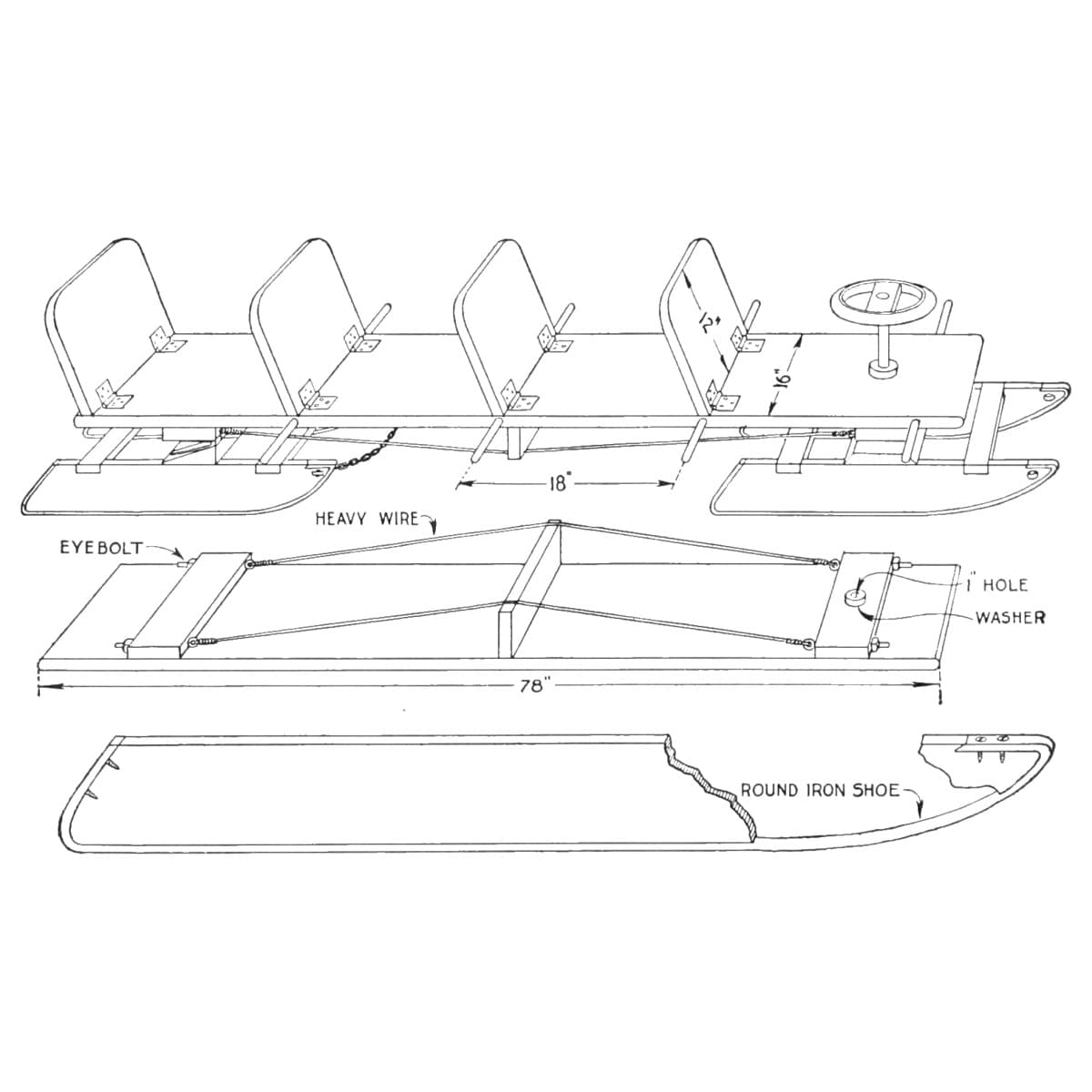
Robert K. Patterson's ice boat from The Boy Mechanic, Book 2 (1915): a 16 ft timber crossed by a 10-1/2 ft one and braced with wires, two front runners of band iron ground like a skate edge, and a rear steering runner clamped in a cut-down bicycle fork worked by a lever. His text and his drawing differ on the mast (about 12 ft against 14 ft); both are given.
Hejuru
About 1 week
Amabwiriza
1
1
Text against drawing
Text against drawing
Gupakira ikaye ya Jupyter…
2
2
Read The Boy Mechanic, Book 2
Read The Boy Mechanic, Book 2
"In constructing the ice boat, use two poles, or timbers, one 16 ft. and the other 10-1/2 ft. long, crossed at a point 2-1/2 ft. from one end of the longer timber. The crossed pieces are firmly braced with wires, as shown."
3
3
Cross and brace the frame
Cross and brace the frame
Cross the 10-1/2 ft timber over the 16 ft one, 2-1/2 ft from its front end, and fasten them firmly. Brace them with wires as in the drawing: from the bow to points on the cross timber, and from the cross timber back along the long one. The drawing puts the wire points 6 in and 1 ft 6 in from each end of the cross timber.
Ibikoresho by'iyi ntambwe:
 Inkingi y'igiti2 ibice
 Bulo ifite umutwe uzengurutse1 igice
 Insinga y'icyuma1 igice
Ibikoresho bikenewe:
 Umucumita w'Intoki
 Ivuvuzo ry'ukuboko rifite umutwe
 Umugozi wo Gupima
 Ikaramu ya penisile
4
4
Make the front runners
Make the front runners
Cut two band-iron strips 18 in long, 3 in wide and 1/8 in thick; grind one edge like the edge of a skate and round the ends. Bolt each to the side of a wood piece 18 in long, 6 in wide and 2 in thick, so the ground edge projects about 1 in. With a pole frame, bolt each runner block at right angles to a 12 in piece of wood shaped as drawn, the bolts running diagonally through its shouldered part; the pole end rests on this and is bolted down. With squared timbers, fasten the runners straight to them.
Ibikoresho by'iyi ntambwe:
 Umurongo ugororotse w'icyuma cyoroshye1 igice
 Ikibaho cy'Igiti Gikomeye1 igiceBulo ifite umutwe uzengurutse1 igice
Ibikoresho bikenewe:
 Umucumita w'Ibyuma
 Imashini ihyeza yo ku meza
 Ifatiro ry'Ameza
 Igikoresho cyo gutobora gikoreshwa n'intokiUmucumita w'Intoki
5
5
Make the steering runner
Make the steering runner
Fasten the rear runner between two pieces of wood so its edge projects, and clamp it in a bicycle fork cut down to leave about 3 in of the blades. Bore a hole through the rear end of the long timber for the fork head. Fit a lever (5 ft on the drawing) to the top of the fork head: bore a hole through the lever end at a slight angle to fit the head, slot the end, bore across the width of the handle and put in a bolt as a clamp.
Ibikoresho by'iyi ntambwe:
Umurongo ugororotse w'icyuma cyoroshye1 igiceIkibaho cy'Igiti Gikomeye1 igice Ifoleshi y'igare1 igiceBulo ifite umutwe uzengurutse1 igice
 Agati k'igiti cyoroshye1 igice
Ibikoresho bikenewe:
Umucumita w'IbyumaImashini ihyeza yo ku mezaIvuvuzo ry'ukuboko rifite umutweUmucumita w'Intoki Ibyuma byo kubaza
6
6
Step the mast and fit the seat
Step the mast and fit the seat
Cut a mortise in the long timber 15 in from the front end and set the mast in it; stay it with wires as drawn. His text says the mast should be about 12 ft; his drawing marks it 14 ft 0 in: choose one and keep the sail to suit. Fasten a board on two crosspieces mortised into the top of the long timber, as a seat for the driver (5 ft long on the drawing, ending 2 ft 3 in from the stern).
Ibikoresho by'iyi ntambwe:
Agati k'igiti cyoroshye1 igiceInsinga y'icyuma1 igice Ikibaho cy'igiti cya pinusi1 igice
 Imisumari y'ibiti1 igice
Ibikoresho bikenewe:
Umucumita w'IntokiIbyuma byo kubaza Ikoresho cyo gusiga ibitiUmugozi wo Gupima
7
7
Make and rig the sail
Make and rig the sail
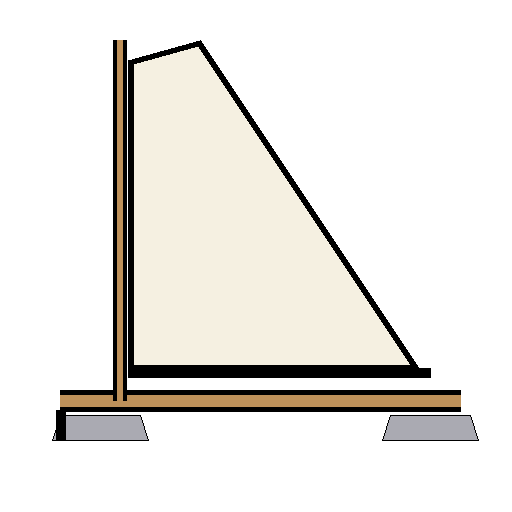
Make the sail of any good material to his drawing: luff (along the mast) 9 ft 0 in, head 4 ft 8 in, foot 11 ft 0 in, leech 12 ft 6 in. Hang the main boom, 11-1/2 ft long, and the upper spar on the mast "in the usual manner". The text also names a jib boom of about 6 ft, which the drawing does not show.
Ibikoresho by'iyi ntambwe:
 Umwenda wa kanvasi1 igiceAgati k'igiti cyoroshye1 igice
 Umugozi munini w'ipamba1 igice
Ibikoresho bikenewe:
 UmukasiUmucumita w'IntokiUmugozi wo Gupima
8
8
Troubleshooting
Troubleshooting
Ice boat troubleshooting.
Flow
Loading...
9
9
History and honest limits
History and honest limits
From "An Ice Boat and Catamaran" by Robert K. Patterson, in **The Boy Mechanic, Book 2**, Popular Mechanics, 1915 (Project Gutenberg 44585; checked on the archive.org scan boymechanicbook200chic2, pp. 27-28). His text and drawing differ on the mast (about 12 ft against 14 ft 0 in) and on the jib boom, which is in the text only; both are stated, not resolved. He gives no timber sections, wire size or sail cloth: those choices are ours, as are the tools and metric figures. The summer catamaran conversion is not made here.
Ibikoresho
11- 2 ibiceUmwanya
- Umwanya
- 2 ibiceUmwanya
- Umwanya
- 1 igiceUmwanya
- 1 igiceUmwanya
- 1 igiceUmwanya
- 1 igiceUmwanya
- 1 igiceUmwanya
- 1 igiceUmwanya
- 1 igiceUmwanya
Ibikoresho bikenewe
11- Umwanya
- 1 vendor sell this, none ship to you yetUmwanya
- 1 vendor sell this, none ship to you yetUmwanya
- Umwanya
- Umwanya
- Umwanya
- Umwanya
- Umwanya
- Umwanya
Iki gishushanyo gikora
Blueprint zijyanye
Izi blueprint zisangira ubumenyi — uburyo, ibikoresho cyangwa amahame
CC0 Umurenge rusange
Iyi blueprint yasohowe munsi ya CC0. Ushobora gukoporora, guhindura, gukwirakwiza no gukoresha nta kwemererwa.
Shyigikira Umuremyi ugura ibicuruzwa binyuze muri Blueprint ye Komisiyo y'Umuremyi byashyizweho n'Abacuruzi, cyangwa kora verisiyo nshya y'iyi Blueprint ukayinjiza nk'isano muri Blueprint yawe kugira ngo musangire inyungu.