Ubufatanye
UBUHANZI
UBWIZA N'UBUZIMA
UBUKORIKORI
UMUCO N'AMATEKA
IMYIDAGADURO
IBIDUKIKIJE
IBIRIBWA N'IBINYOBWA
UBWUBATSI BUSUBIRA INYUMA
UBUMENYI
SIPORO
IKORANABUHANGA
IBYAMBARWA
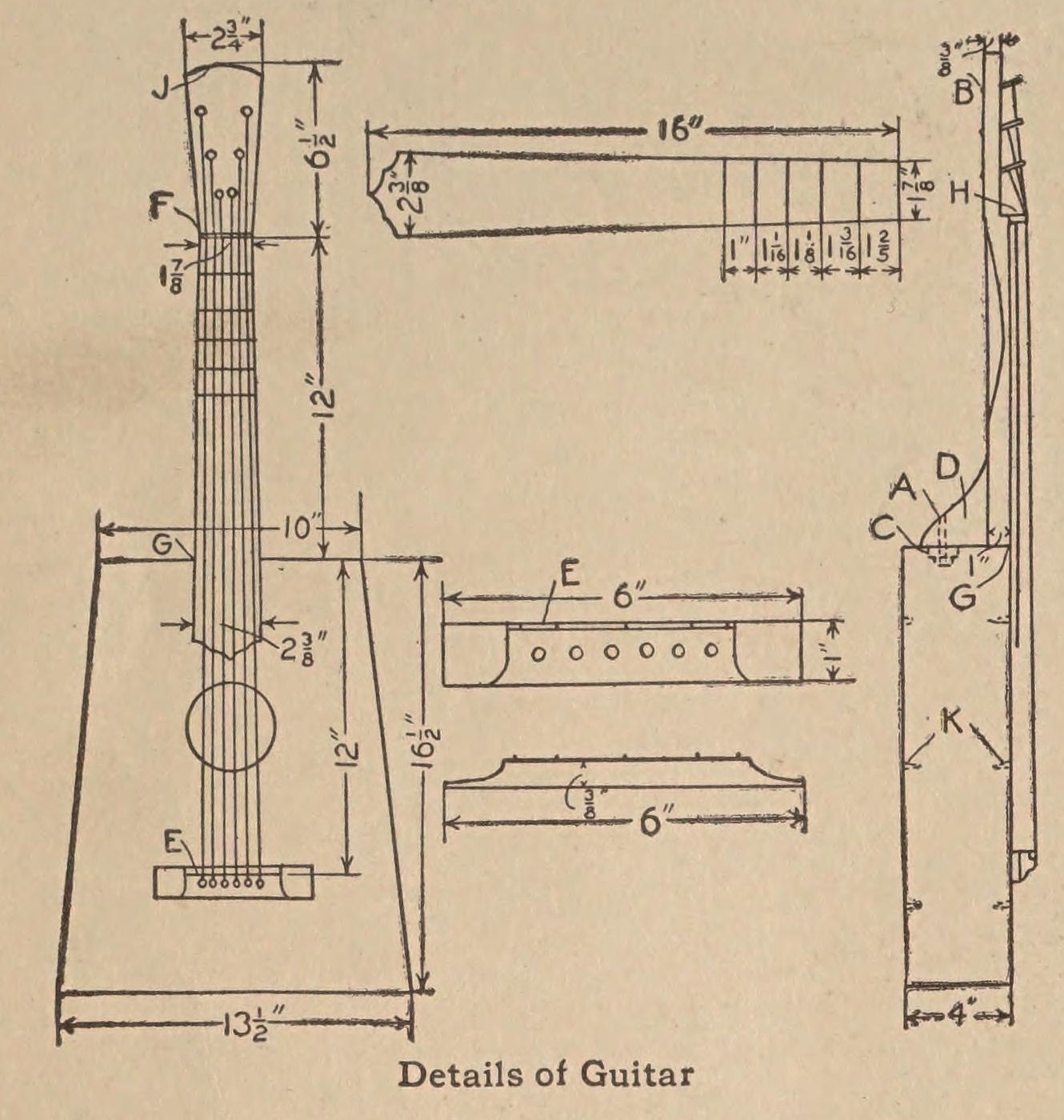


Straight-Sided Guitar: Maple Box, Pine Top, Hatpin Frets and a 24-Inch Scale (Boy Mechanic, 1913)
A six-string guitar "having straight lines, giving it an old-fashioned appearance", from The Boy Mechanic (1913): a tapered box of hard maple with a seasoned soft-pine top, a drawknifed neck, frets cut from hatpins and a 24 in scale. Sizes are read on the 1913 scan.
"If care is taken in selecting the material, and having it thoroughly seasoned, the finished instrument will have a fine tone."
Hejuru
About 1 week, with glue drying
Amabwiriza
1
1
Cutting list and frets
Cutting list and frets
Gupakira ikaye ya Jupyter…
2
2
Read The Boy Mechanic
Read The Boy Mechanic
"The sides, ends and bottom are made of hard wood, preferably hard maple, and the top should be made of a thoroughly seasoned piece of soft pine." (J. H. Stoddard, Carbondale, Pa.)
3
3
Cut the pieces
Cut the pieces
Cut from thoroughly seasoned wood: top 3/16 by 14 by 17 in (soft pine); bottom 3/16 by 14 by 17 in, two sides 3/16 by 3-5/8 by 16-3/4 in, and ends 3/16 by 3-5/8 by 13-1/8 in and 9-5/8 in (hard maple); neck 1 by 2-5/16 by 18-1/2 in; fingerboard 3/16 by 2-5/8 by 16 in.
Ibikoresho by'iyi ntambwe:
 Ikibaho cy'Igiti Gikomeye1 igice
 Ikibaho cy'igiti cya pinusi1 igice
Ibikoresho bikenewe:
 Umucumita w'Intoki
 Umugozi wo Gupima
 Igipimo cy'inguni ya dogere mirongo cyenda
4
4
Shape the neck and fingerboard
Shape the neck and fingerboard
Taper the neck from G to F and from J to F, with the back rounded, using a drawknife: 2-3/8 in at the heel, 1-7/8 in at the nut F, and a head 2-3/4 in wide and 6-1/2 in long. Taper the fingerboard to match. Glue a piece of hard wood 1/4 in square and 1-7/8 in long across the neck at F as the nut. Glue the fingerboard to the neck and clamp it until the glue sets.
Ibikoresho by'iyi ntambwe:
 Agace k'igiti gikomeye1 igice
 Ikinyabutabire cy'Ibiti1 igice
Ibikoresho bikenewe:
 Imbugita ikururwaUmucumita w'Intoki
 Igifashe cy'inkoni
5
5
Fret the fingerboard
Fret the fingerboard
Mark the frets from the nut using the computed positions in step 1 (fret 1 at 1.347 in, fret 12 at 12 in). His drawing gives only five spaces, 1-2/5, 1-3/16, 1-1/8, 1-1/16 and 1 in; added up they put the 5th fret about 0.3 in short of the true place, so they are shown for history only. Cut pieces from hatpins and fasten them across the fingerboard with small wire staples. Mark accurately: the frets decide the pitch.
Ibikoresho by'iyi ntambwe:
 Urushinge rw'ingofero1 igice
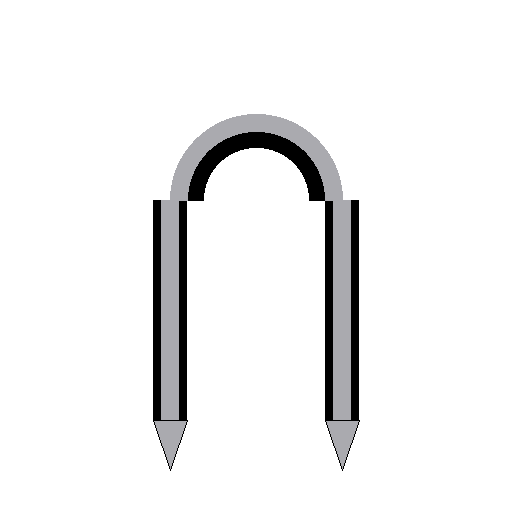 Agasumari k'insinga kameze nka U1 igice
Ibikoresho bikenewe:
 Ipfundo Rifite Umunwa Uringaniye
 InyundoUmugozi wo GupimaIgipimo cy'inguni ya dogere mirongo cyenda
6
6
Build the box
Build the box
Glue the sides and ends together, so the body is 10 in wide at the neck end, 13-1/2 in at the tail and 16-1/2 in long. Glue the front on, put heavy weights on top and give the glue time to dry. Fasten pieces of soft wood in the corners as braces, glue a small block C inside the neck end to take the bolt, and glue strips of soft wood K across the front and back to strengthen them. Cut the sound hole in the top as drawn.
Ibikoresho by'iyi ntambwe:
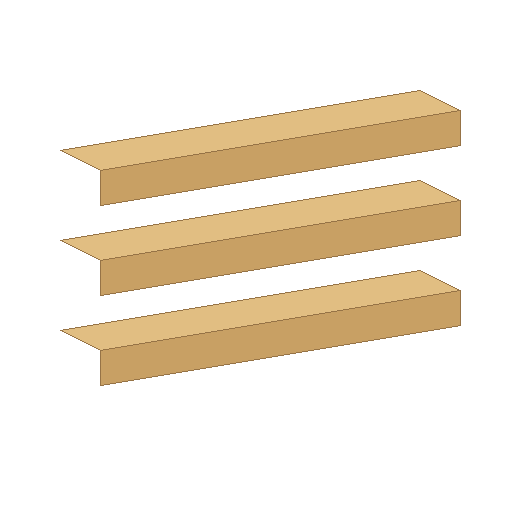 Agati k'igiti cyoroshye1 igiceIkinyabutabire cy'Ibiti1 igice
Ibikoresho bikenewe:
Umucumita w'IntokiIgifashe cy'inkoni Ivuvuzo ry'ukuboko rifite umutwe
7
7
Fit the neck
Fit the neck
Make the brace D 1 in thick, to any shape you like. Glue the neck to the box and secure it with a carriage bolt at A through the end and block C. Glue the back on and smooth the outside with sandpaper.
Ibikoresho by'iyi ntambwe:
Agace k'igiti gikomeye1 igice Bulo ifite umutwe uzengurutse1 igiceIkibaho cy'Igiti Gikomeye1 igiceIkinyabutabire cy'Ibiti1 igice
 Urupapuro rwo Gusya1 igice
Ibikoresho bikenewe:
Ivuvuzo ry'ukuboko rifite umutweIgifashe cy'inkoni8
8
Make and place the bridge
Make and place the bridge
Make the bridge 6 in long, 1 in wide and 3/8 in high, with an old hatpin or wire of the same size secured on top with pin staples as the saddle E. Drill six 3/16 in holes in it for the pins. Glue it on the top so the distance from the nut F to the saddle E is just 24 in.
Ibikoresho by'iyi ntambwe:
Agace k'igiti gikomeye1 igiceUrushinge rw'ingofero1 igiceAgasumari k'insinga kameze nka U1 igiceIkinyabutabire cy'Ibiti1 igiceIbikoresho bikenewe:
Ivuvuzo ry'ukuboko rifite umutweUmucumita w'IntokiUmugozi wo Gupima9
9
String it
String it
Fit the turning pegs B in the head and string the guitar, holding the strings in the bridge with the pins. He bought the pegs and strings from a music store.
Ibikoresho by'iyi ntambwe:
 Utubaho two guhindura amajwi1 igice
 Imirya ya gitari1 igice
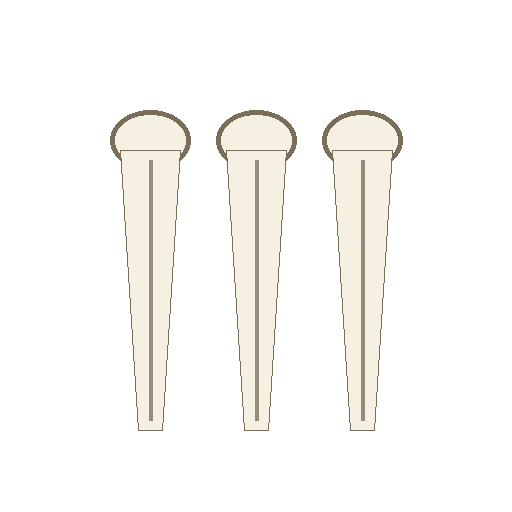 Udusumari tw'ikiraro cya gitari1 igice
Ibikoresho bikenewe:
Ivuvuzo ry'ukuboko rifite umutwe10
10
Troubleshooting
Troubleshooting
Guitar troubleshooting.
Flow
Loading...
11
11
History and honest limits
History and honest limits
From **The Boy Mechanic**, edited by H. H. Windsor, Popular Mechanics, Chicago, 1913, p. 320, "A Guitar That Is Easy to Make", sent in by J. H. Stoddard of Carbondale, Pa.; sizes read on the 1913 scan (archive.org boymechanicthing01unse). He dimensions only the first five fret spaces, and they disagree with equal temperament; the fret positions used are computed by us. The sound hole, saddle and string tensions are not dimensioned. The tools and metric figures are ours.
Ibikoresho
12- 1 igiceUmwanya
- 1 igiceUmwanya
- 1 igiceUmwanya
- 4 ibiceUmwanya
- 2 ibiceUmwanya
- Umwanya
- 1 igiceUmwanya
- Umwanya
- 1 igiceUmwanya
- 1 igiceUmwanya
- 1 igiceUmwanya
- Umwanya
Ibikoresho bikenewe
8- Umwanya
- 1 vendor sell this, none ship to you yetUmwanya
- Umwanya
- Umwanya
- Umwanya
Iki gishushanyo gikora
Blueprint zijyanye
Izi blueprint zisangira ubumenyi — uburyo, ibikoresho cyangwa amahame

CC0 Umurenge rusange
Iyi blueprint yasohowe munsi ya CC0. Ushobora gukoporora, guhindura, gukwirakwiza no gukoresha nta kwemererwa.
Shyigikira Umuremyi ugura ibicuruzwa binyuze muri Blueprint ye Komisiyo y'Umuremyi byashyizweho n'Abacuruzi, cyangwa kora verisiyo nshya y'iyi Blueprint ukayinjiza nk'isano muri Blueprint yawe kugira ngo musangire inyungu.