

Annealing and Cold-Working Bronze — Hardening Without a Forge
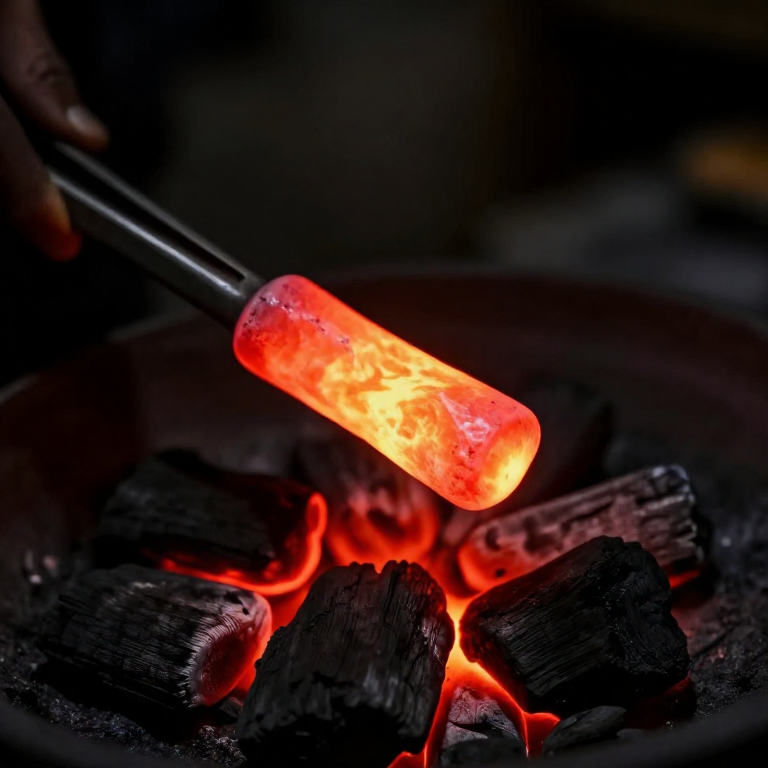
Annealing and cold-working are the two inseparable halves of Bronze Age metallurgy. Every bronze tool, weapon, and ornament was shaped and strengthened by this cycle — hammer to harden, heat to soften, hammer again. Understanding these two processes is the foundation of all pre-industrial metalwork.
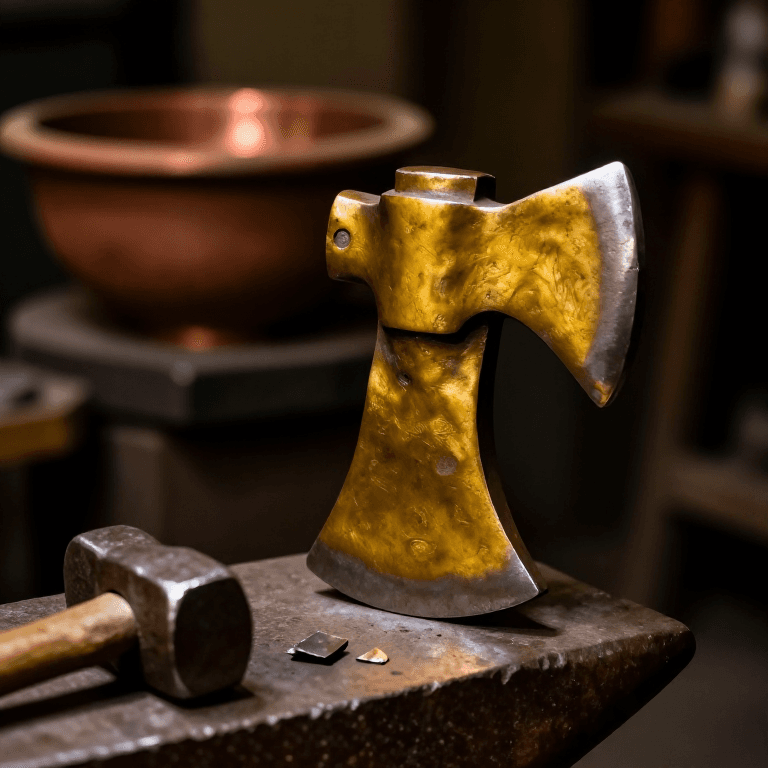
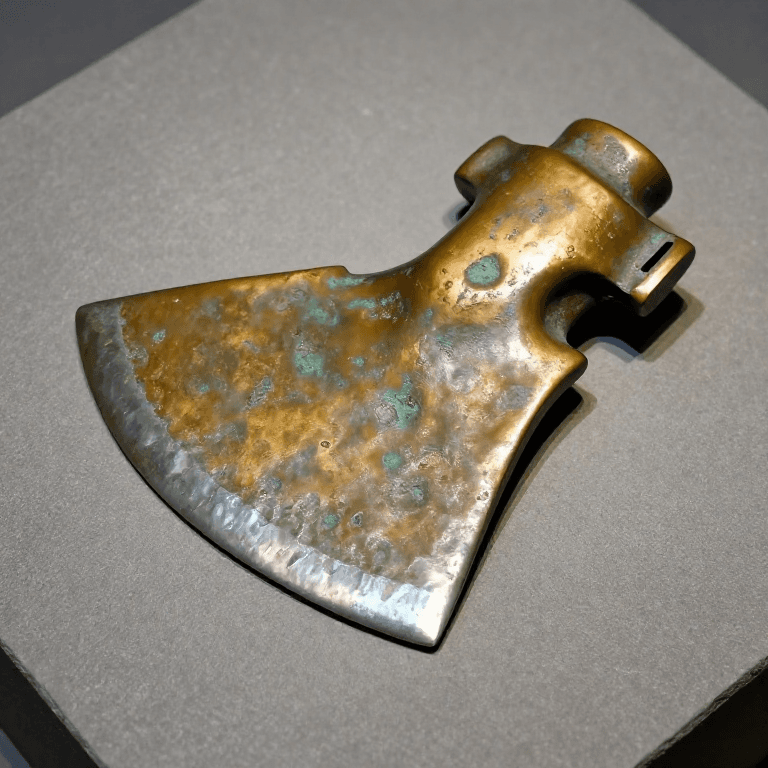
Cold-working means deforming metal at room temperature. Each hammer blow compresses the crystal grains, creating dislocations that resist further movement — the metal becomes harder and stiffer. This is called work-hardening. A freshly cast bronze axe at 80 HV (Vickers hardness) can be cold-worked to 200+ HV, rivalling mild steel.
But work-hardening has a limit. Continue hammering past it and the bronze cracks. Annealing resets the process: heating to 500-600 °C causes the distorted grains to recrystallise into new, strain-free grains. The metal is soft again and ready for the next cycle. A Bronze Age smith might anneal the same piece 15 times during a single project.
Amabwiriza
Prepare a test piece
Prepare a test piece
Ibikoresho by'iyi ntambwe:
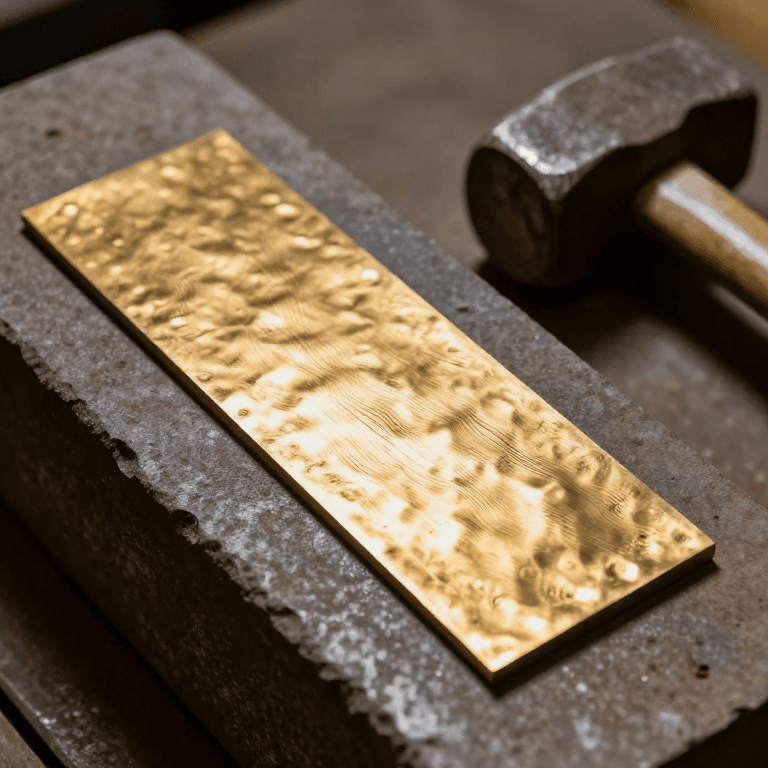
 Urupapuro rw'Umuringa100 g
Test as-cast hardness
Test as-cast hardness
Cold-work one half
Cold-work one half
Ibikoresho bikenewe:
 Ibuye ryo Gukubita
 Ikibaho cy'Ibuye Kirambuye
Compare hardness
Compare hardness
Anneal the cold-worked section
Anneal the cold-worked section
Ibikoresho by'iyi ntambwe:
 Amakara y'Ibihimba500 g
Ibikoresho bikenewe:
 Ifashi rifite imikondo miremire
Test annealed hardness
Test annealed hardness
Demonstrate the full cycle on a cutting edge
Demonstrate the full cycle on a cutting edge
Understand the critical differences from steel
Understand the critical differences from steel
Ibikoresho
3- Umwanya
- 500 gUmwanya
- 1 igiceUmwanya
Ibikoresho bikenewe
3- Umwanya
- Umwanya
Ibikoresho by'Ibishushanyo Bifitanye Isano
Blueprint zijyanye
Izi blueprint zisangira ubumenyi — uburyo, ibikoresho cyangwa amahame
CC0 Umurenge rusange
Iyi blueprint yasohowe munsi ya CC0. Ushobora gukoporora, guhindura, gukwirakwiza no gukoresha nta kwemererwa.
Shyigikira Umuremyi ugura ibicuruzwa binyuze muri Blueprint ye Komisiyo y'Umuremyi byashyizweho n'Abacuruzi, cyangwa kora verisiyo nshya y'iyi Blueprint ukayinjiza nk'isano muri Blueprint yawe kugira ngo musangire inyungu.