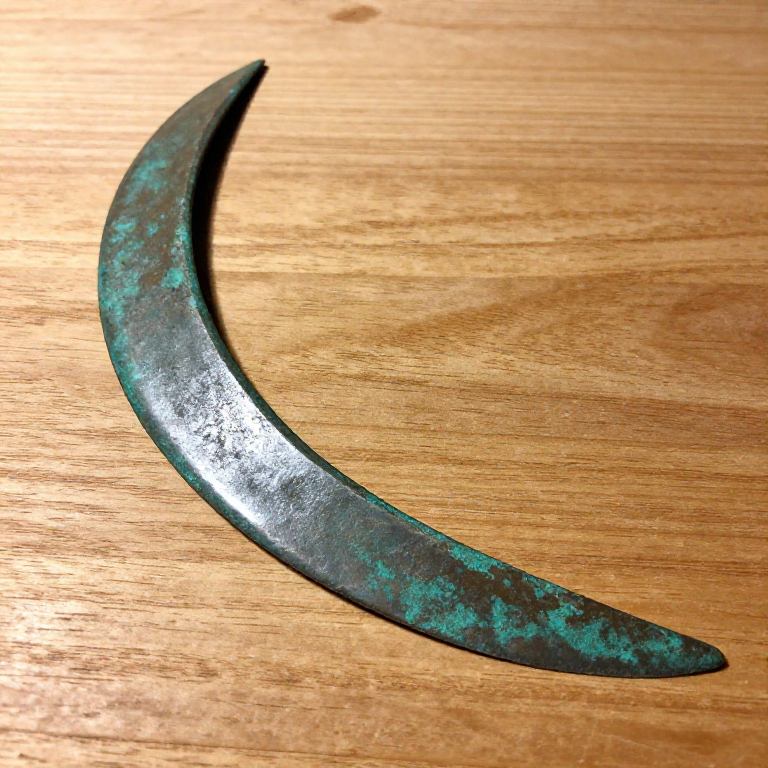


Casting a Bronze Sickle — The Harvesting Tool That Fed Civilisation
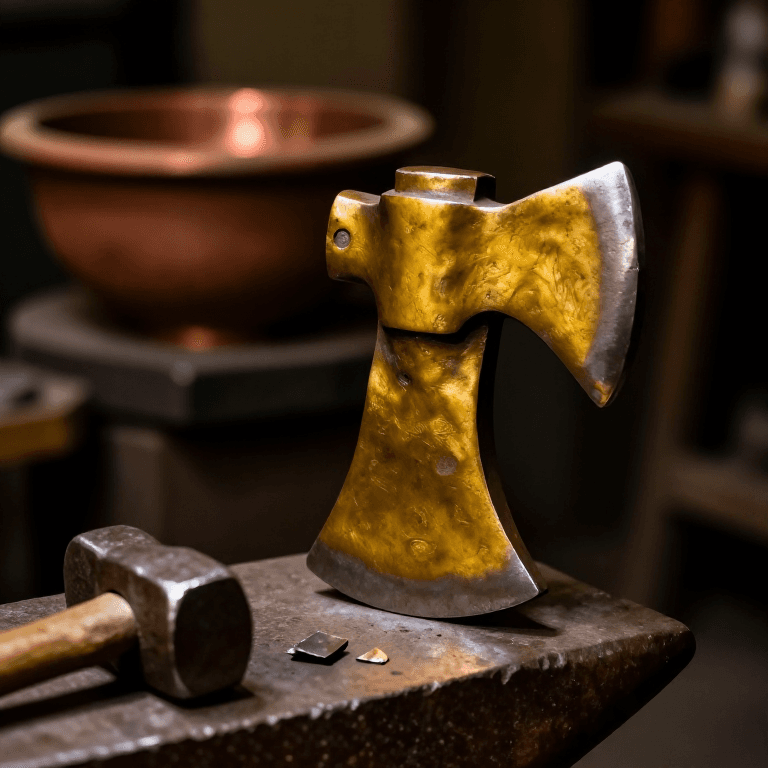
The bronze sickle was the tool that made large-scale grain agriculture possible. Its curved blade could cut a handful of wheat or barley stalks in a single sweeping motion — ten times faster than plucking individual seed heads by hand. When bronze sickles replaced flint-toothed sickles around 2000 BCE, a single farmer's harvest yield increased enough to feed several non-farming specialists, enabling the growth of cities, armies, and craft guilds.
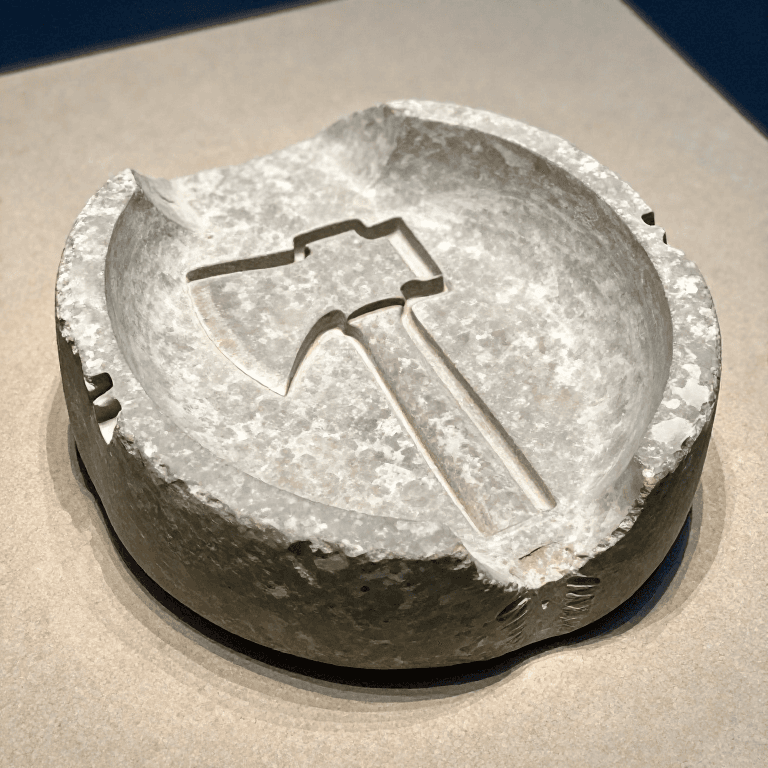
The sickle is cast in a bivalve stone mould as a flat crescent blade with a tang for hafting. The inner (cutting) edge is cold-hammered and ground sharp while the outer edge remains thick for rigidity. The curved form naturally guides the stalks into the blade as the farmer sweeps through a stand of grain.
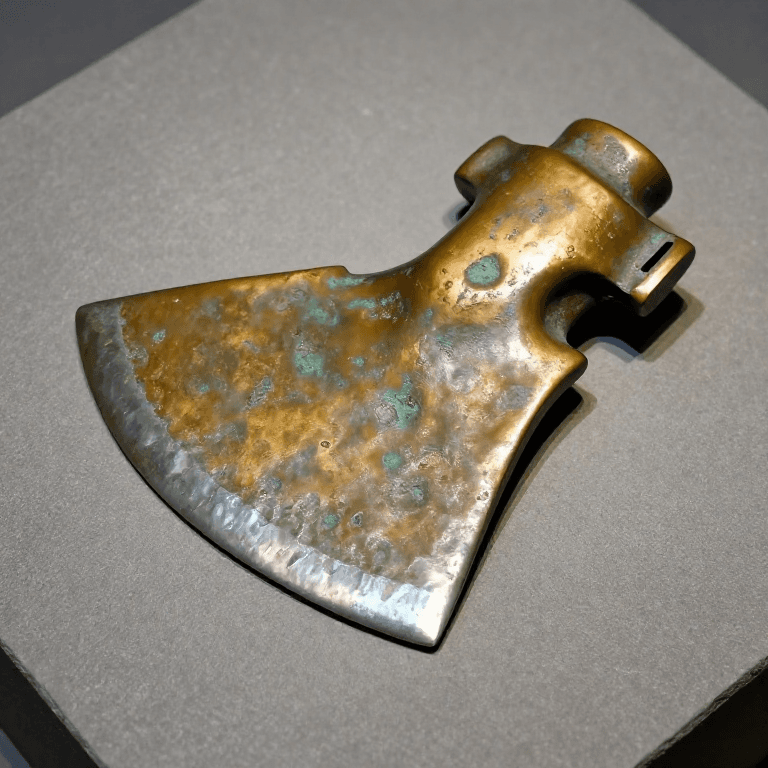
Archaeological examples show distinctive wear polish (sickle sheen) on the cutting edge from contact with silica-rich grass stems — a telltale sign that identifies even fragmentary bronze sickles in the archaeological record.
Amabwiriza
Prepare the bivalve mould
Prepare the bivalve mould
Ibikoresho by'iyi ntambwe:
 Igice cy'ibuye rya sabune2 ibice
Assemble and bind the mould
Assemble and bind the mould
Ibikoresho by'iyi ntambwe:
 Uduce tw'uruhu rutasukuye1 m
Melt and pour the bronze
Melt and pour the bronze
Ibikoresho by'iyi ntambwe:
 Amakara3 kg
Ibikoresho bikenewe:
 Amakoro y'Icyombo Gishongesha
Cool, demould, and remove sprue
Cool, demould, and remove sprue
Ibikoresho bikenewe:
 Ibuye ry'Umusenyi (Iryo Gusya)
Cold-hammer the cutting edge
Cold-hammer the cutting edge
Ibikoresho bikenewe:
 Ibuye ryo Gukubita
 Ikibaho cy'Ibuye Kirambuye
Grind and sharpen
Grind and sharpen
Ibikoresho bikenewe:
 Ibuye ryo gutyaza
Shape the wooden handle
Shape the wooden handle
Haft the sickle and secure
Haft the sickle and secure
Ibikoresho
3- 2 ibiceUmwanya
- Umwanya
- 3 kgUmwanya
Ibikoresho bikenewe
5- Umwanya
- Umwanya
- Umwanya
Ibikoresho by'Ibishushanyo Bifitanye Isano
Iki gishushanyo gikora

Blueprint zijyanye
Izi blueprint zisangira ubumenyi — uburyo, ibikoresho cyangwa amahame
CC0 Umurenge rusange
Iyi blueprint yasohowe munsi ya CC0. Ushobora gukoporora, guhindura, gukwirakwiza no gukoresha nta kwemererwa.
Shyigikira Umuremyi ugura ibicuruzwa binyuze muri Blueprint ye Komisiyo y'Umuremyi byashyizweho n'Abacuruzi, cyangwa kora verisiyo nshya y'iyi Blueprint ukayinjiza nk'isano muri Blueprint yawe kugira ngo musangire inyungu.