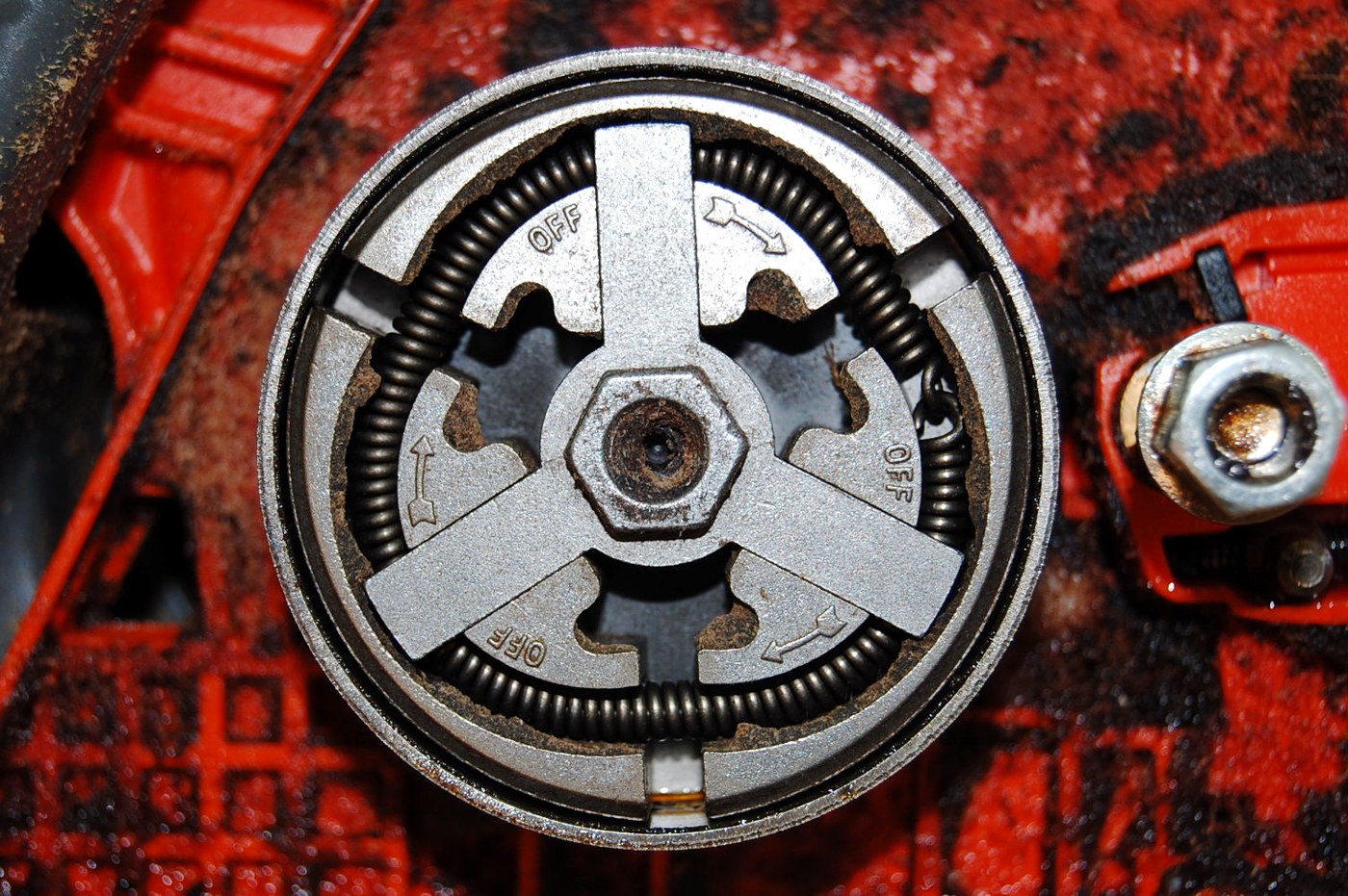


Centrifugal Clutch
Amabwiriza
Build the drum and hub
Build the drum and hub
A shallow drum, and a hub that spins inside it.
- Cut a drum from 18 mm ply: a 120 mm disc with a 100 mm internal bore, leaving a 10 mm rim.
- Line the bore with a strip of 1 mm aluminium as the friction surface.
- Cut a 70 mm hub disc from 18 mm ply and bore it 8.0 mm.
- Mount drum and hub on separate 608 bearings so each turns independently on the same axis.
Coaxial and independent is the requirement. The whole point is that at low speed the input hub spins freely inside a stationary drum — so any rubbing at rest, from a wonky bore or a tight bearing, masks the very behaviour you are building.
Spin the hub with the drum held: it should coast for several seconds. If it stops quickly, find the drag before adding the shoes.Ibikoresho by'iyi ntambwe:
 Urupapuro rw'ibiti byometse1 urupapuro
 Bearing y'utubumbe3 ibice
 Umurongo w'Aluminiyumu Urambuye1 igice
Ibikoresho bikenewe:
 Umucumita wa Jigsaw
 Umucumita w'Imigororwa
 Icyuma Cyivumbura Kidafite Insinga
 Ibyuma Byinshi byo Gucukura
 Amakariso Menshi
 Ikigereranyo cya Digitale cy'Amasentimetero 6
Make two pivoting shoes
Make two pivoting shoes
Two, opposite each other, so the assembly stays balanced.
- Cut two shoes from 6 mm aluminium, each a curved segment matching the drum bore radius.
- Drill a pivot hole near one end of each.
- Pivot them to the hub 180 degrees apart with M5 × 20 socket head cap screws × 2, M5 flat washers × 4 and M5 nylon insert lock nuts × 2.
- Check each shoe swings out freely and its outer face meets the drum squarely.
- Weigh both shoes — they must match within a gram or two.
Balance is not optional at speed. Two shoes of unequal mass make the whole assembly vibrate, and vibration at several thousand revolutions per minute in a plywood model is a genuine hazard rather than an annoyance. If one shoe is heavier, file material from its non-contact edge until they match.
Pivoted shoes rather than sliding weights because a pivot has almost no friction to overcome, so engagement speed is set by the spring rather than by stiction — which makes the measurement in step 4 repeatable.Ibikoresho by'iyi ntambwe:
Umurongo w'Aluminiyumu Urambuye1 igice Uruziga Rurambuye4 ibice
 Ecrou ifunga ifite umuzingo wa nayiloni2 ibice
Ibikoresho bikenewe:
Umucumita w'ImigororwaAmakariso MenshiIcyuma Cyivumbura Kidafite InsingaIbyuma Byinshi byo Gucukura Imfunguzo Nyinshi z'Impande EsheshatuIkigereranyo cya Digitale cy'Amasentimetero 6
Fit the return springs — the tuning element
Fit the return springs — the tuning element
The spring alone sets the engagement speed.
- Hook a light spring between the two shoes, or one spring per shoe back to the hub.
- Set the tension so the shoes sit clear of the drum at rest with about 1 mm clearance.
- Note which spring you fitted, and keep the spares.
- Confirm both shoes lift off together — unequal springs engage one shoe first, which is the same imbalance problem again.
The physics you are tuning against. Centrifugal force rises with the square of speed while the spring force rises only linearly with extension. Those two curves cross at exactly one speed, and that crossing IS the engagement point. Because one is quadratic, engagement is quite sharp — a small speed increase past the crossing produces a large net outward force.
Keep the spare springs. Step 4 asks you to swap them, and the change in engagement speed is the most instructive measurement in the build.Ibikoresho by'iyi ntambwe:
 Ikusanyirizo ry'Imizingo Ikandamizwa1 ikirundo
Ibikoresho bikenewe:
Imfunguzo Nyinshi z'Impande EsheshatuIkigereranyo cya Digitale cy'Amasentimetero 6Amakariso MenshiFind the engagement speed, then change it
Find the engagement speed, then change it
Measure the crossing point, then move it deliberately.
- Drive the hub with a variable-speed drill and hold the drum lightly.
- Raise speed slowly until the drum begins to be dragged round. Record that speed.
- Reduce speed until it releases — note that this happens LOWER than engagement.
- Swap to a stiffer spring and repeat both readings.
- Tabulate spring versus engage and release speeds.
Ibikoresho bikenewe:
Icyuma Cyivumbura Kidafite Insinga Isaha yo GuhagarikaIkigereranyo cya Digitale cy'Amasentimetero 6
Where it wins, and history
Where it wins, and history
What it buys is the removal of the operator. No lever, no linkage, no pedal, no decision. A small engine can idle without stalling and without driving anything, then take up drive smoothly as it is revved. That is why chainsaws, strimmers, go-karts, mopeds and countless small machines use one — most of them have no clutch control at all, and their users never think about it.
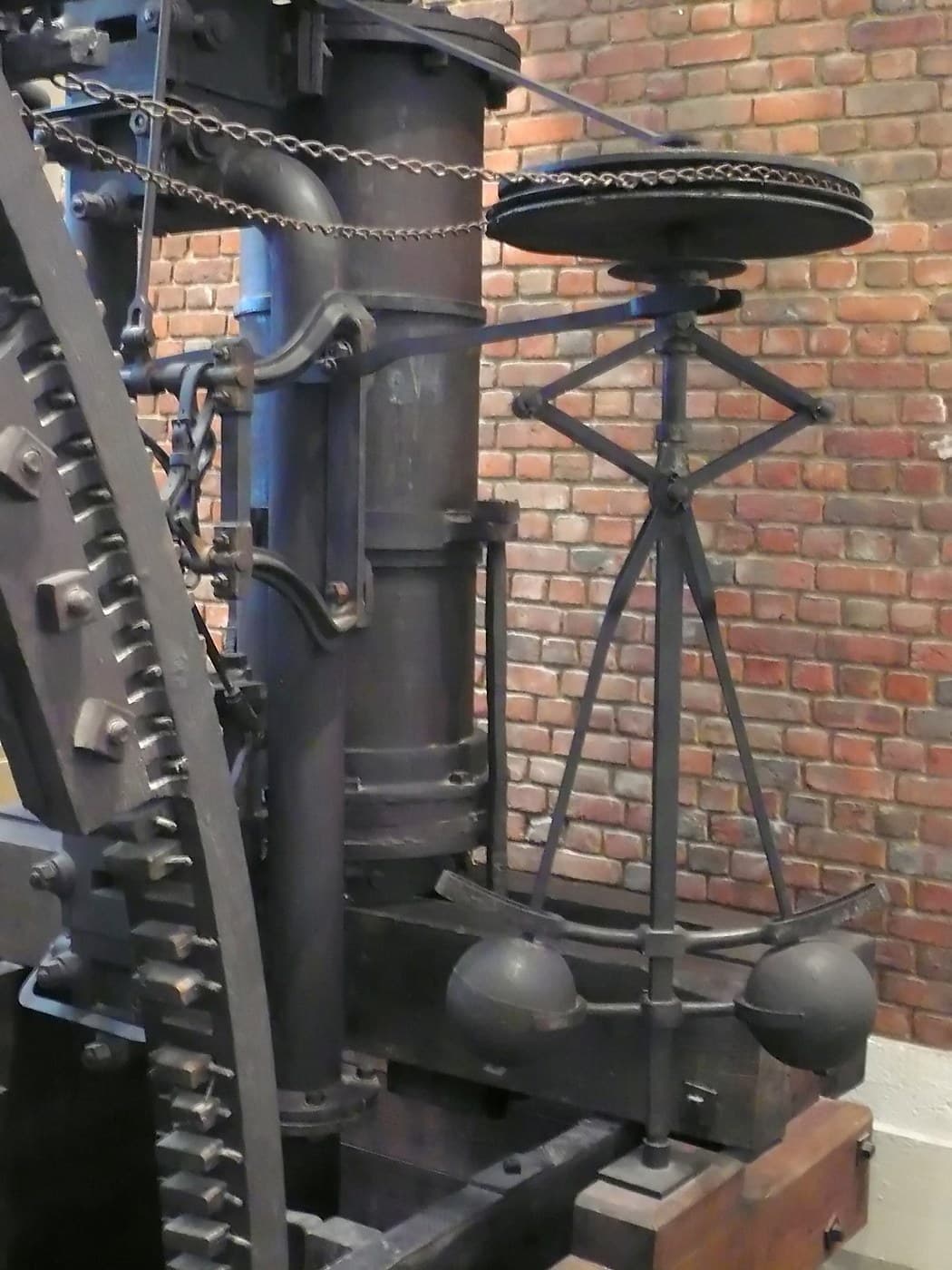
The same principle, two different jobs. The centrifugal governor already in this catalogue uses flying weights to REGULATE speed by throttling the input. This uses them to CONNECT drive. Identical physics, opposite purpose — one feeds back to reduce speed, the other engages a load. Recognising that a mechanism is a physical principle rather than a fixed device is how you find new uses for it.
Its honest limits: it engages at only one speed, set when it was built, so it cannot be used deliberately at other speeds. It slips every time it engages, and that slip is heat and wear — a chainsaw clutch is a consumable. It cannot hold a load stationary. And it cannot be disengaged at speed at all, which is why machines using one still need a separate brake.
Against the batch: cone clutch — any speed, needs an operator, slips under overload. Dog clutch — no slip ever, needs matched speeds. Centrifugal — no operator, one speed only. Three answers to "connect these shafts", and the choice is really a question about who or what decides when.
Ibikoresho
6- 1 urupapuroUmwanya
- Umwanya
- Umwanya
- 4 ibiceUmwanya
- Umwanya
- 1 ikirundoUmwanya
Ibikoresho bikenewe
8- 1 vendor sell this, none ship to you yetUmwanya
- Umwanya
- 1 vendor sell this, none ship to you yetUmwanya
- Umwanya
- Umwanya
- Umwanya
Blueprint zijyanye
Izi blueprint zisangira ubumenyi — uburyo, ibikoresho cyangwa amahame

CC0 Umurenge rusange
Iyi blueprint yasohowe munsi ya CC0. Ushobora gukoporora, guhindura, gukwirakwiza no gukoresha nta kwemererwa.
Shyigikira Umuremyi ugura ibicuruzwa binyuze muri Blueprint ye Komisiyo y'Umuremyi byashyizweho n'Abacuruzi, cyangwa kora verisiyo nshya y'iyi Blueprint ukayinjiza nk'isano muri Blueprint yawe kugira ngo musangire inyungu.