UBUHANZI
UBWIZA N'UBUZIMA
UBUKORIKORI
UMUCO N'AMATEKA
IMYIDAGADURO
IBIDUKIKIJE
IBIRIBWA N'IBINYOBWA
UBWUBATSI BUSUBIRA INYUMA
UBUMENYI
SIPORO
IKORANABUHANGA
IBYAMBARWA


Crank-Point Can Opener: A Bent Point to Turn On, a Knife Set in a Slot
A can opened with a lever knife leaves a jagged hole of any size.
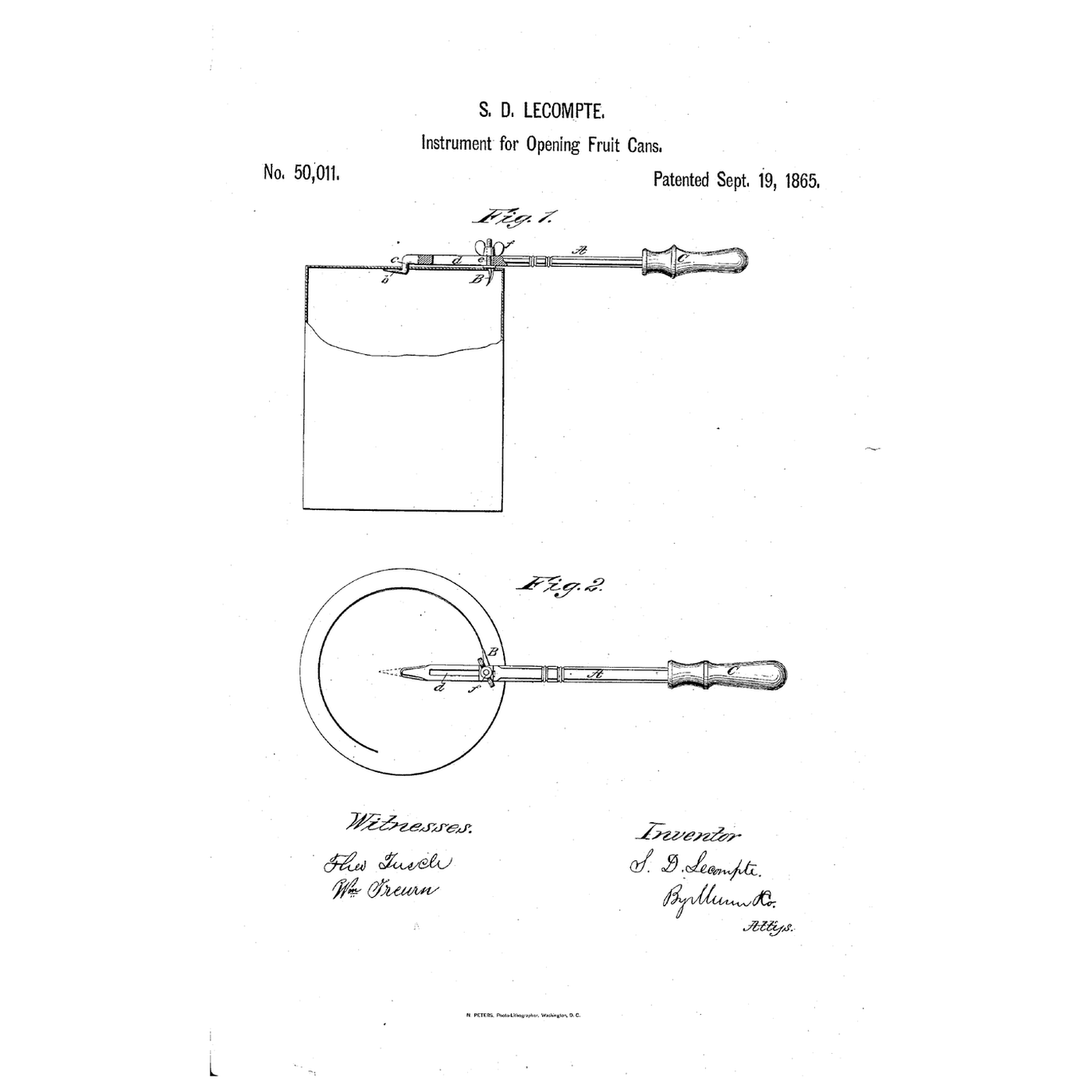
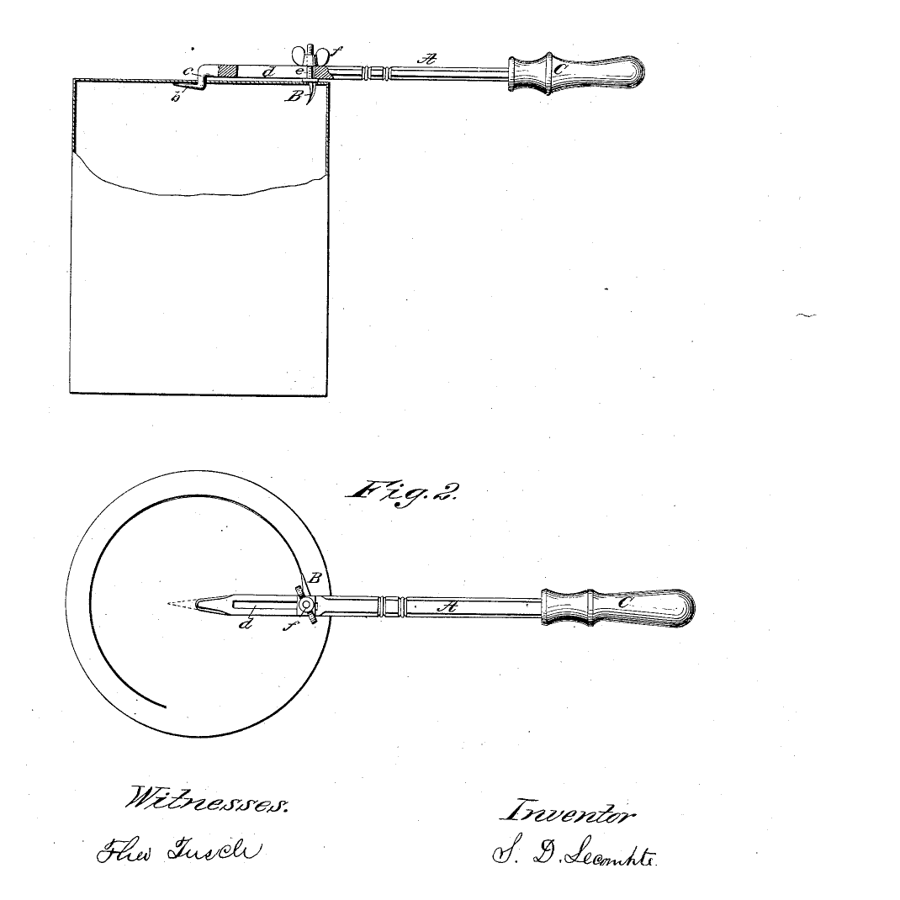
Samuel D. Lecompte of Leavenworth, Kansas, received US 50,011, dated 19 September 1865, for an instrument for opening fruit and other sealed cans: a bar with a handle, its end bent like a crank and pointed so that, thrust through the top, the bent part is held by the edges of the hole as a bearing; a knife slides along a slot in the bar on a set screw, and the instrument is turned round to cut.
This rung works out where to set the knife for each can, then forges the bar, crank and knife and cuts a round opening.
Hagati
About 3 hours
Amabwiriza
1
1
Knife position for each can
Knife position for each can
Gupakira ikaye ya Jupyter…
2
2
A lever opener before it
A lever opener before it
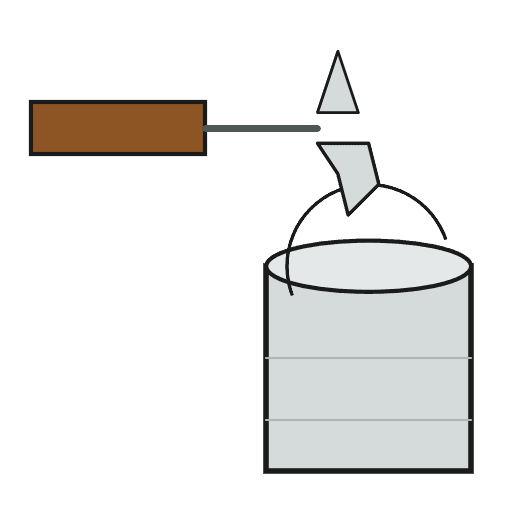
The embedded blueprint saws round a can with a lever knife. Lecompte gives the knife a centre to turn about and a slot to set its radius.
3
3
Read US 50,011
Read US 50,011
"The end of the instrument is bent somewhat in the form of a crank, and pointed, as shown by the letters b c in Fig. 1. This enables the instrument to be thrust into the top of the can in such manner that the part c, which is bent at right angles to the bar A, will be encircled by the edges of the hole made in the top of the can, thus insuring a good and sufficient bearing to enable the instrument to be operated."
4
4
Slot the bar
Slot the bar
Cut 170 mm of 25 × 3 mm flat bar. Drill a row of 5 mm holes along its centre from 25 to 70 mm from one end and file them into a slot.
Ibikoresho by'iyi ntambwe:
 Umurongo ugororotse w'icyuma cyoroshye1 igice
Ibikoresho bikenewe:
 Umucumita w'Ibyuma
 Ifatiro ry'Ameza
 Igicukuzi cyo Gushyira Ikimenyetso
 Icyuma Cyivumbura Kidafite Insinga
 Ibyuma Byinshi byo Gucukura
 Ikusanyirizo ry'Amakariso Mato
 Umurongo w'ipima
5
5
Forge the crank point
Forge the crank point
File the bar's slotted end down to 6 mm wide for its last 30 mm. Bend it down 15 mm, along 10 mm, and down again 15 mm in the vice, and file the end to a sharp point.
Ibikoresho bikenewe:
 Amakariso (Ikariso ry'Intoki)Ifatiro ry'Ameza
 Inyundo
 Amadarubindi Asobanutse yo Kwirinda
6
6
Make the knife
Make the knife
Cut a 6 × 25 mm knife from 1 mm steel sheet with a pointed lower end and a 5 mm hole at the top. Hone its edge.
Ibikoresho by'iyi ntambwe:
 Urupapuro rw'icyuma cyoroshye1 igice
Ibikoresho bikenewe:
 Ibyuma bikata ibyuma bisanzweIcyuma Cyivumbura Kidafite InsingaIbyuma Byinshi byo GucukuraAmakariso (Ikariso ry'Intoki)
 Ibuye ryo gutyaza
7
7
Fit the knife and handle
Fit the knife and handle
Bolt the knife under the slot with an M5 screw, washer and nut as the set screw. Fit a hardwood handle to the bar's other end with epoxy.
Ibikoresho by'iyi ntambwe:
 Ibitorezo by'imashini1 igice
 Uruziga Rurambuye1 igice
 Umupira w'Impande Esheshatu1 igice
 Udukoni tw'ibiti bikomeye1 igice
 Epoksi y'Ibice Bibiri1 igice
Ibikoresho bikenewe:
 Isupana ihindurwaIcyuma Cyivumbura Kidafite InsingaIbyuma Byinshi byo Gucukura
8
8
The patent drawing
The patent drawing
US 50,011 drawing sheet, public domain (expired patent).
9
9
Cut a round opening
Cut a round opening
Set the knife for the can and tighten it. Stand a sealed can on the kitchen scale, thrust the point through the top's centre, press the knife in and turn round; read the peak load, time it, and measure the hole.
Ibikoresho by'iyi ntambwe:
 Ikopo ry'icyuma1 igice
Ibikoresho bikenewe:
 Iminzani ya Digitale yo mu Gikoni
 Isaha yo Guhagarika
 Ikigereranyo cya Digitale cy'Amasentimetero 6
 Uturindantoki tw'uruhu tw'akazi
10
10
A point that tears out, a knife that slips
A point that tears out, a knife that slips
Crank-point can opener troubleshooting.
Flow
Loading...
11
11
History and honest limits
History and honest limits
**Samuel D. Lecompte** of Leavenworth, Kansas, received US 50,011, dated 19 September 1865, for cans used for fruits, preserves and oysters. He did not limit himself to one knife shape, having adopted various styles. The patent was reissued on 4 February 1868 (No. 2,851). F. S. Wyman's 1868 patent names it as the circular opener he added a side knife to.
**Honest limits.** A bolt and nut stand in for his set screw, and the knife is unhardened. Your loads and times are the result.
Ibikoresho
8- Umwanya
- Umwanya
- 1 igiceUmwanya
- 1 igiceUmwanya
- 1 igiceUmwanya
- 1 igiceUmwanya
- 1 igiceUmwanya
- 1 igiceUmwanya
Ibikoresho bikenewe
17- Umwanya
- Umwanya
- 1 vendor sell this, none ship to you yetUmwanya
- Umwanya
- Umwanya
- Umwanya
- Umwanya
- Umwanya
- Umwanya
Iki gishushanyo gikora
Blueprint zijyanye
Izi blueprint zisangira ubumenyi — uburyo, ibikoresho cyangwa amahame



CC0 Umurenge rusange
Iyi blueprint yasohowe munsi ya CC0. Ushobora gukoporora, guhindura, gukwirakwiza no gukoresha nta kwemererwa.
Shyigikira Umuremyi ugura ibicuruzwa binyuze muri Blueprint ye Komisiyo y'Umuremyi byashyizweho n'Abacuruzi, cyangwa kora verisiyo nshya y'iyi Blueprint ukayinjiza nk'isano muri Blueprint yawe kugira ngo musangire inyungu.