Ubufatanye
UBUHANZI
UBWIZA N'UBUZIMA
UBUKORIKORI
UMUCO N'AMATEKA
IMYIDAGADURO
IBIDUKIKIJE
IBIRIBWA N'IBINYOBWA
UBWUBATSI BUSUBIRA INYUMA
UBUMENYI
SIPORO
IKORANABUHANGA
IBYAMBARWA
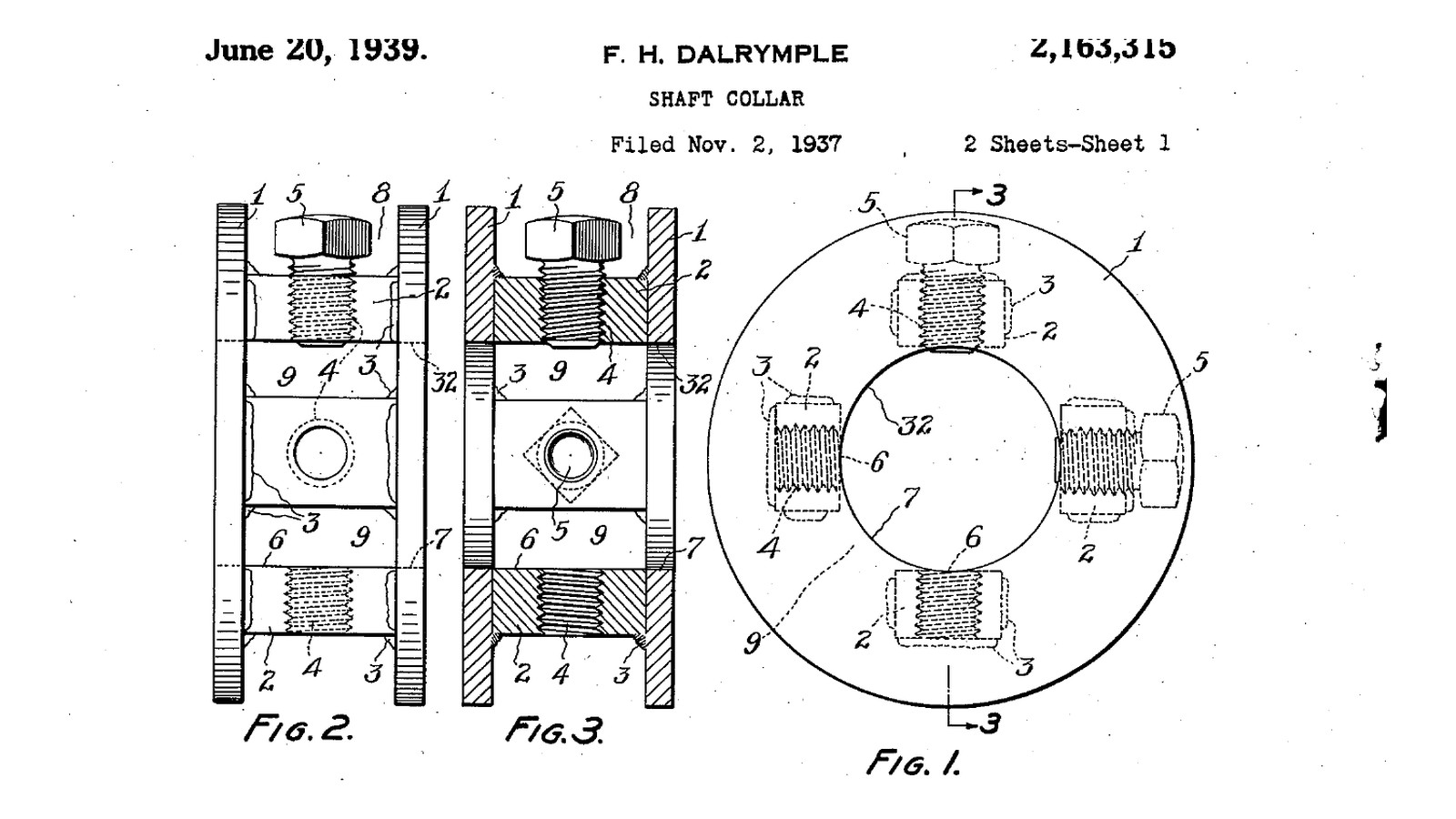


Built-Up Shaft Collar: Two Washers Welded to Four Nuts, a Set Screw in One Nut, No Machining (Dalrymple, 1939)
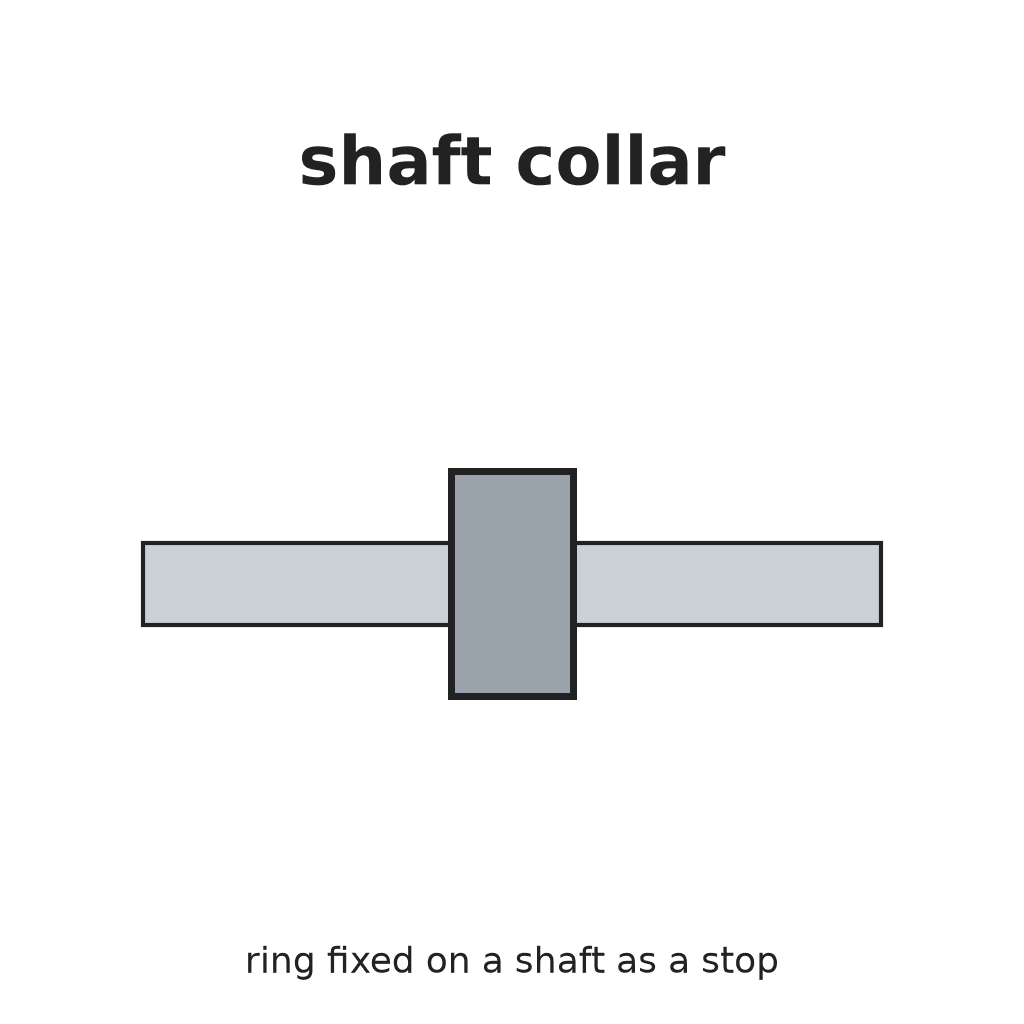
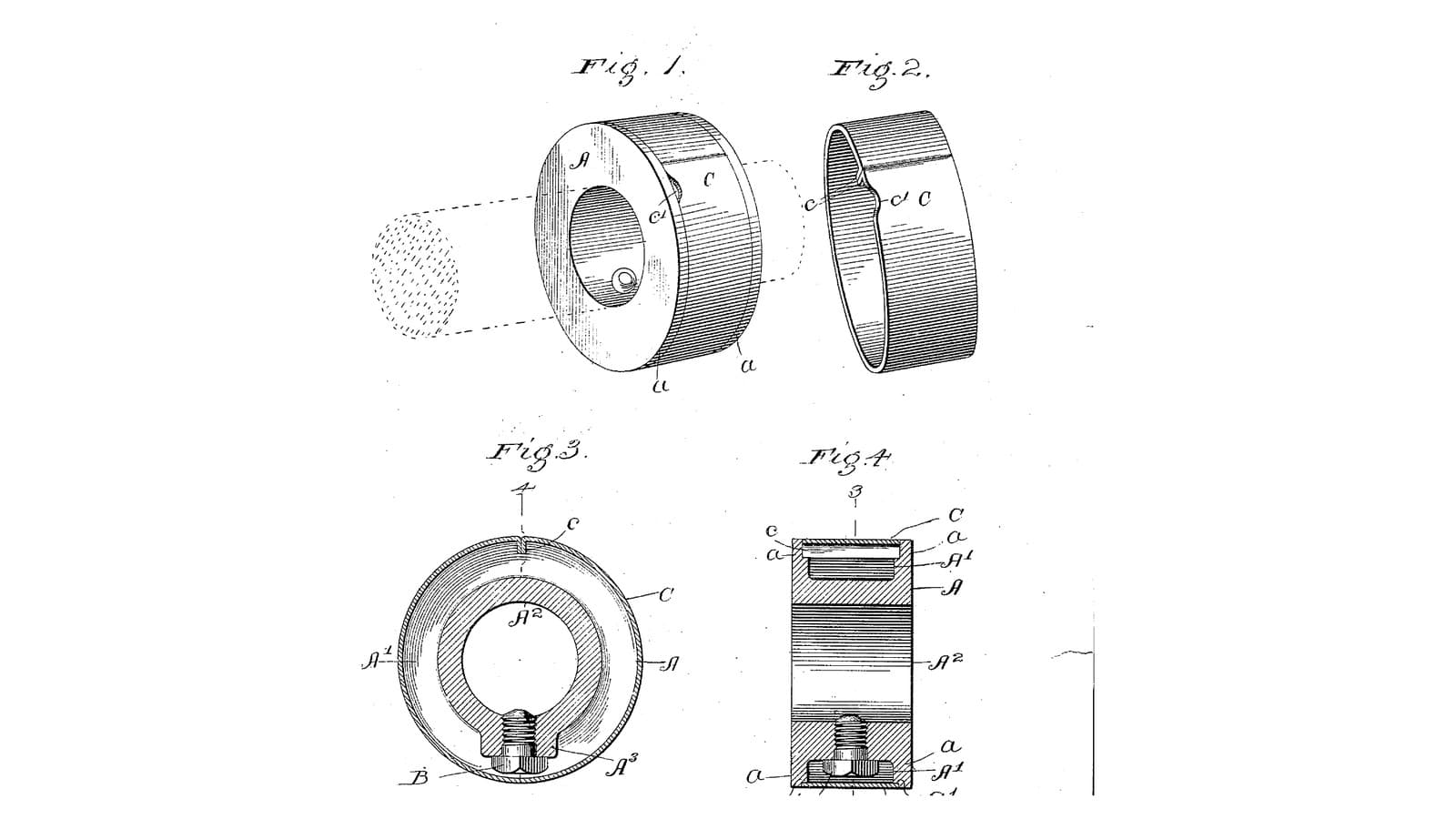
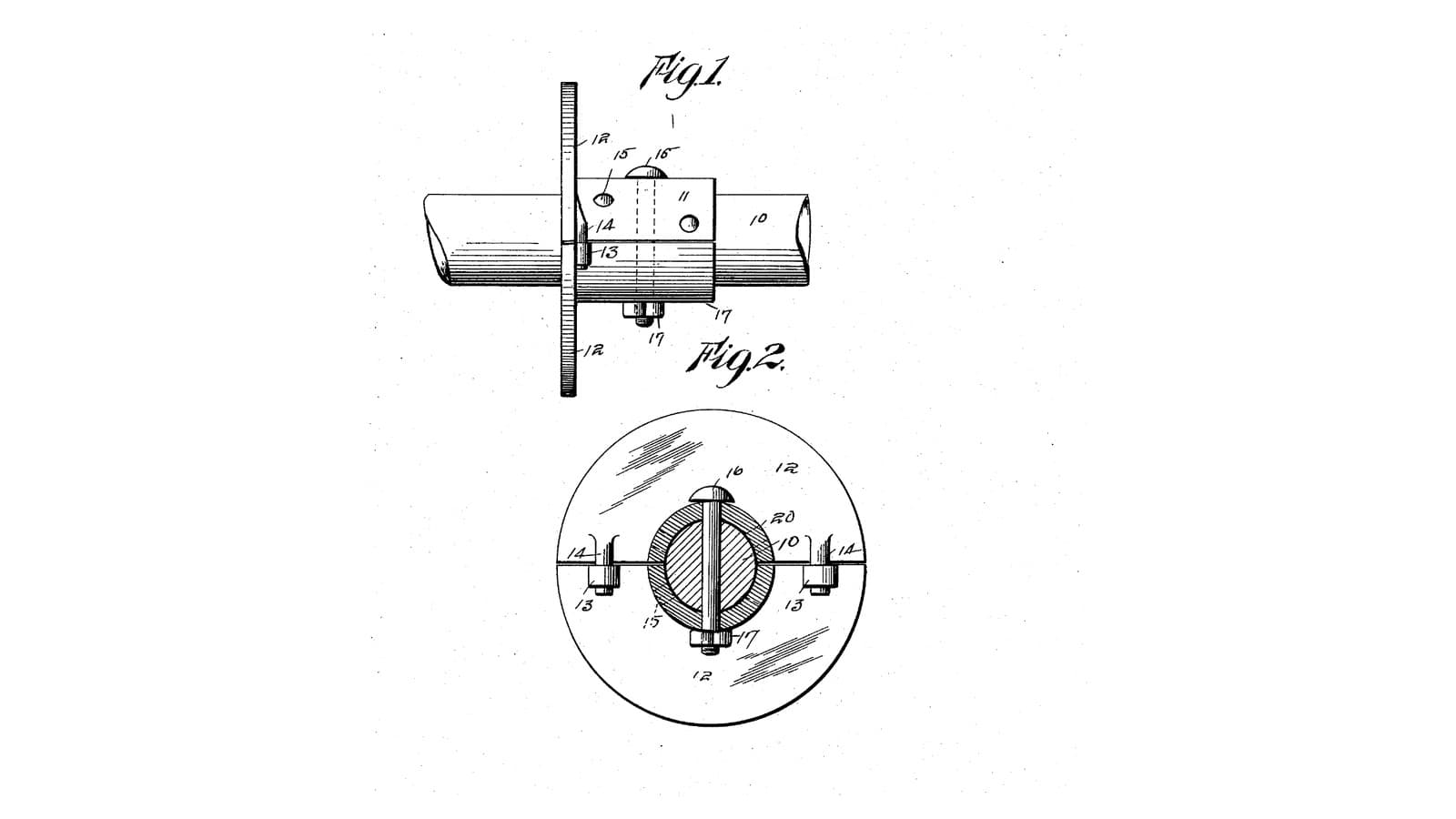
Ferdinand H. Dalrymple of Bedford, Ohio, received US 2,163,315, dated 20 June 1939, for a shaft collar "comprised of few parts which are readily obtainable as standard market articles". Two washers are held apart by nuts welded between them. The nuts' inner faces rest on the shaft, and a set screw in one nut's thread holds it. It needs no machining. He says it is stronger, lighter and cheaper than a cast collar, and breaks less readily under a hammer. It also touches the shaft only along lines, so it rusts to it less, and oil can be put in between the nuts.
The patent gives no sizes for this form; every size here is ours.
Utangiye
About 1 hour
Amabwiriza
1
1
Will it fit together?
Will it fit together?
Gupakira ikaye ya Jupyter…
2
2
Read US 2,163,315
Read US 2,163,315
"Preferably, I use as plates standard washers of suitable dimension, and I use as blocks standard nuts."
"Inasmuch as the space between the plates is not sufficient for the convenient manipulation of an ordinary wrench, I use socketed set screws for securing the collar to the shaft."
3
3
Set the parts up on a bar
Set the parts up on a bar
Use plain steel washers and nuts, not zinc-plated ones. Wire-brush them clean. Grip a 16 mm round bar upright in the vice. Slide one washer onto it, stand four M8 nuts on the washer round the bar at quarter turns, each with a flat down and its hole pointing at the bar's centre and its inner face against the bar. Put the second washer on top and squeeze the stack with the C-clamp; check with the square that the washers are parallel.
Ibikoresho by'iyi ntambwe:
 Uruziga Rurambuye2 ibice
 Umupira w'Impande Esheshatu4 ibice
Ibikoresho bikenewe:
 Umurongo uziguye w'icyuma cyoroheje
 Ifatiro ry'Ameza
 Igifata gifite ishusho ya C
 Ibikoresho by'uburoso bw'insinga
 Ikigereranyo Gihuriweho
 Ikigereranyo cya Digitale cy'Amasentimetero 6
4
4
Weld the nuts to the washers
Weld the nuts to the washers
Wearing the helmet and gloves, tack each nut to both washers with a short fillet weld at its outer corner, keeping the arc away from the bar. Let it cool, lift the collar off the bar, and run a fillet along both ends of every nut on both washers. Chip and wire-brush the slag. Run the set screw in and out of one nut to clear any spatter from its thread, and file the bore ends smooth.
Ibikoresho by'iyi ntambwe:
 Urutambi rusudira4 ibice
Ibikoresho bikenewe:
 Imashini isudira ikoresha umuriro w'amashanyarazi
 Ingofero yo guhambira ihita yijima
 Uturindantoki two gukomeza ibyumaIbikoresho by'uburoso bw'insinga
 Isaruro ry'impande
 Amakariso Menshi
 Amadarubindi y'umutekano
5
5
The collar in 3D
The collar in 3D
FreeCAD model, our sizes: the two 50 mm washers, the four M8 nuts between them at quarter turns, their inner faces on a 16 mm shaft, and the socket set screw in one nut. The welds are not modelled.
6
6
Fit it on the shaft
Fit it on the shaft
Run an M8 x 8 cup point socket set screw into one nut from outside. Slide the collar onto the shaft to its place and tighten the screw with the hex key between the washers. Try to slide and turn it; it must not move.
Ibikoresho by'iyi ntambwe:
 Urwara rwo gufata rufite impera y'igikombe1 igice
Ibikoresho bikenewe:
 Umutwe w'imfunguzo z'impande esheshatu
7
7
Troubleshooting
Troubleshooting
Built-up collar troubleshooting.
Flow
Loading...
8
8
History and honest limits
History and honest limits
**Ferdinand H. Dalrymple** of Bedford, Ohio, US 2,163,315, dated 20 June 1939, filed 2 November 1937. He claimed "opposed spaced plane plates formed with coaxial bores for the reception of a shaft, transverse spaced internally-threaded blocks welded to the opposed faces of the plates and serving as the sole means for holding the plates in relatively fixed positions, and set screws engaging the blocks". His Figs. 8 and 9 use standard square nuts and socketed set screws; we use hex nuts, as his Figs. 1-5 allow "standard nuts". His patent also shows special blocks, flanged plates, three-plate and split forms; we build the simplest. He gives no sizes for this form; every size here is ours.
Ibikoresho
4- 2 ibiceUmwanya
- 4 ibiceUmwanya
- 4 ibiceUmwanya
- Umwanya
Ibikoresho bikenewe
13- Umwanya
- Umwanya
- Umwanya
- 1 vendor sell this, none ship to you yetUmwanya
- Umwanya
- Umwanya
Dosiye z'igishushanyo
1Iki gishushanyo gikora
Blueprint zijyanye
Izi blueprint zisangira ubumenyi — uburyo, ibikoresho cyangwa amahame
CC0 Umurenge rusange
Iyi blueprint yasohowe munsi ya CC0. Ushobora gukoporora, guhindura, gukwirakwiza no gukoresha nta kwemererwa.
Shyigikira Umuremyi ugura ibicuruzwa binyuze muri Blueprint ye Komisiyo y'Umuremyi byashyizweho n'Abacuruzi, cyangwa kora verisiyo nshya y'iyi Blueprint ukayinjiza nk'isano muri Blueprint yawe kugira ngo musangire inyungu.