Ubufatanye
UBUHANZI
UBWIZA N'UBUZIMA
UBUKORIKORI
UMUCO N'AMATEKA
IMYIDAGADURO
IBIDUKIKIJE
IBIRIBWA N'IBINYOBWA
UBWUBATSI BUSUBIRA INYUMA
UBUMENYI
SIPORO
IKORANABUHANGA
IBYAMBARWA
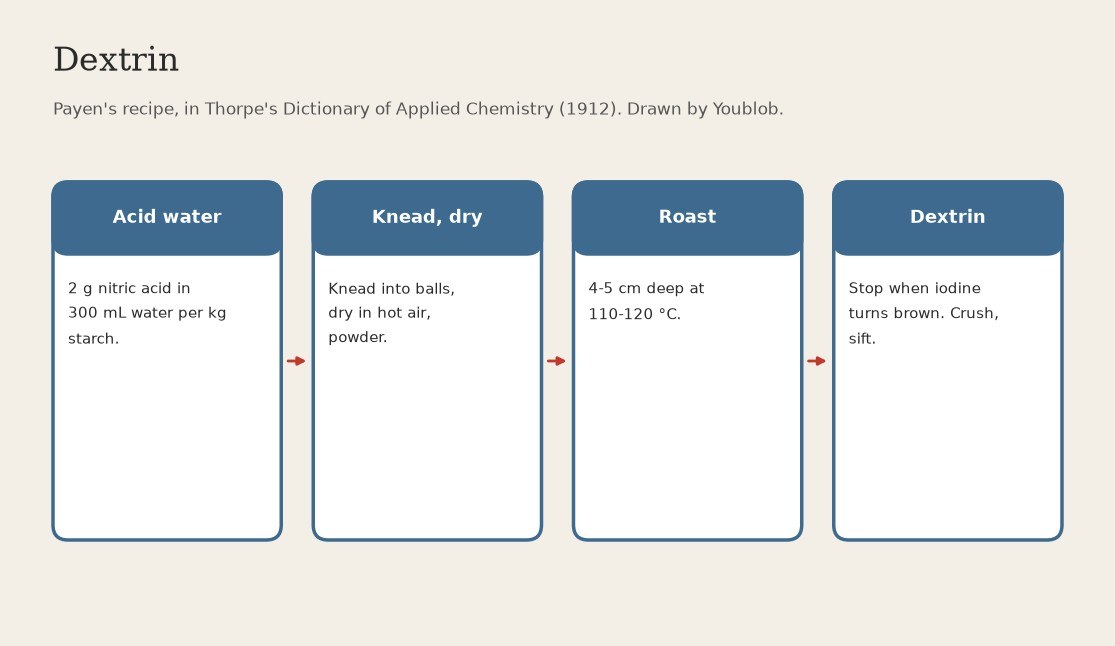


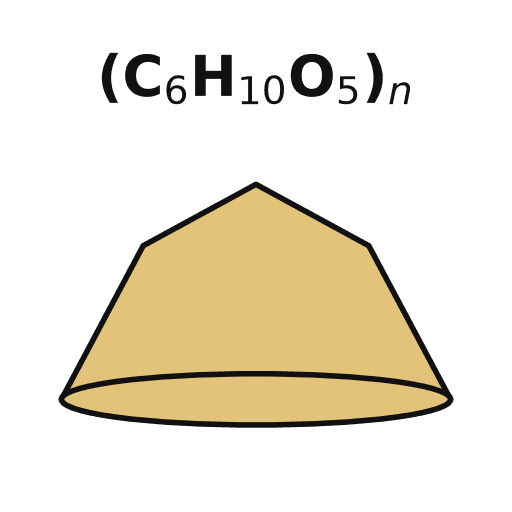
Dextrin: Starch Moistened with Dilute Nitric Acid and Heated at 110-120 °C (Payen, in Thorpe 1912)
Dextrin, also called British gum, is starch broken down by heat into a powder that dissolves in water to a sticky gum. A trace of nitric acid lets it form at a lower heat, 110 to 120 °C, so it comes out paler. The lower the heat and the drier the starch, the whiter the dextrin.
Source: Thorpe, Dictionary of Applied Chemistry, vol. 2 (1912), Dextrins, giving Payen's recipe. Ours: potato starch (Payen names no starch) and the scaling to 1 kg. Not given: how long to dry and to heat. Picture drawn by Youblob.
Utangiye
2 days
Amabwiriza
1
1
Mix 2 g nitric acid into 300 mL water
Mix 2 g nitric acid into 300 mL water
Payen: 30 gallons of water holding 2 lb nitric acid (sp. gr. 1.38) for 1000 lb starch. Ours, scaled to 1 kg of starch: weigh 2 g of the acid into about 300 mL water. Add acid to water, not water to acid. Goggles and gloves for the strong acid.
Ibikoresho by'iyi ntambwe:
 Asidi nitirike2 g
 Amazi300 ml
Ibikoresho bikenewe:
 Umunzani w'ibiro
 Icyombo cyo gupima
 Amadarubindi yo Kwirinda Ibinyabutabire
 Uturindantoki twa Nitirile
2
2
Knead 1 kg starch with the acid water into balls
Knead 1 kg starch with the acid water into balls
Moisten 1 kg of starch with the acid water, knead it well and make it up into balls. Payen names no starch; ours: potato starch.
Ibikoresho by'iyi ntambwe:
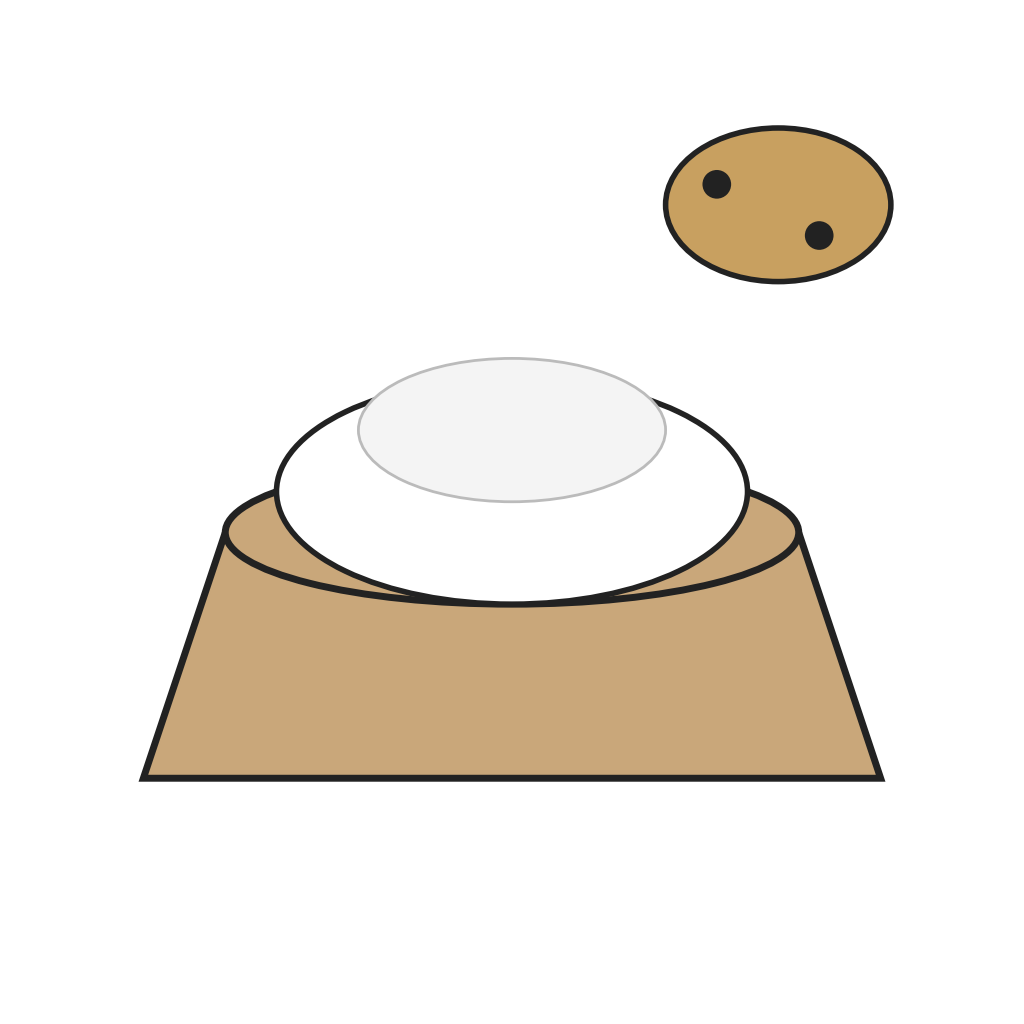 Amidoni y'ibirayi1 kg
Ibikoresho bikenewe:
 Igikombe cy'ikirahureUturindantoki twa Nitirile
3
3
Dry the balls in hot air, then powder them
Dry the balls in hot air, then powder them
Dry the balls in a hot-air chamber, then powder them. Time and heat for this drying are not given. Ours: a drying oven, and a mortar to powder.
Ibikoresho bikenewe:
 Ifuru yo kumishaho
 Isekuru n'Umuhini
4
4
Heat 4-5 cm deep on trays at 110-120 °C
Heat 4-5 cm deep on trays at 110-120 °C
Spread the powder 1 1/2 to 2 inches (4 to 5 cm) deep on trays (Payen: brass trays) and heat in a hot-air oven at 110 to 120 °C. Time not given.
Ibikoresho bikenewe:
 Umutiba uringaniye wo kumishaIfuru yo kumishaho
 Igipimo cy'ubushyuhe cy'itanura
5
5
Stop as soon as iodine turns a sample brown
Stop as soon as iodine turns a sample brown
Test small samples with iodine. Starch turns iodine blue; commercial dextrin, mostly erythrodextrin, gives a brown colour. When the change is complete, stop the heating at once. Ours: a few iodine crystals shaken in water as the test liquid.
Ibikoresho bikenewe:
 Ibirahure bya iyodiAmaziIfuru yo kumishaho
6
6
Crush, sift and store dry
Crush, sift and store dry
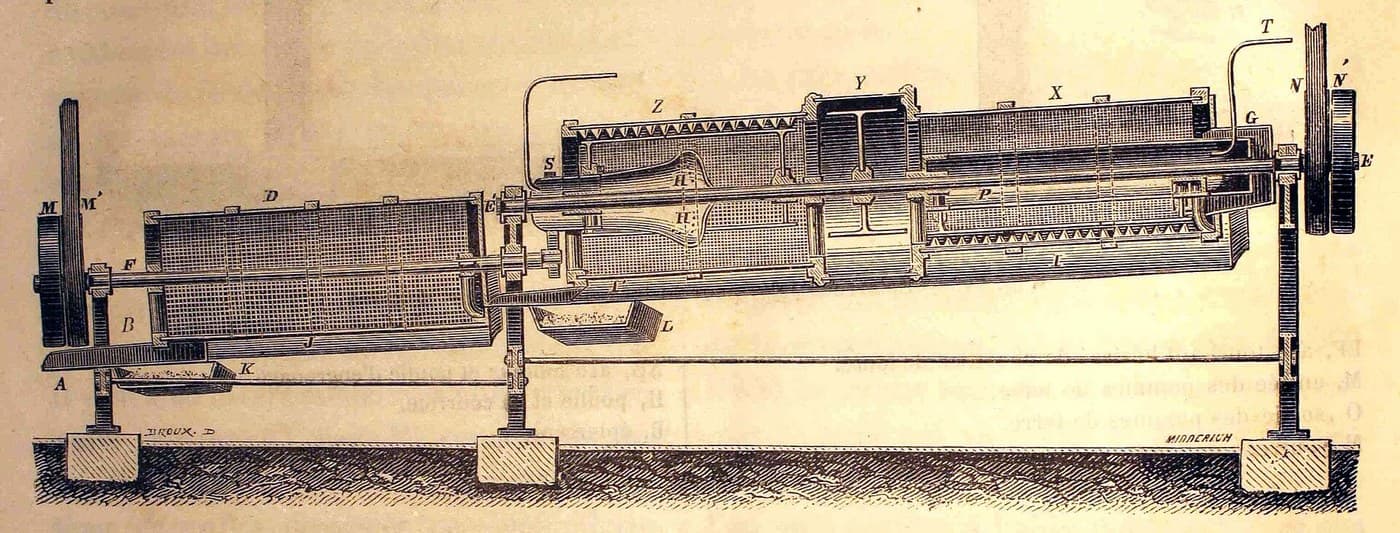
Crush the roasted dextrin and sift it (in works: crushing pans or rollers, then a rotating silk screen as in flour mills). Ours: mortar and a fine sieve. Keep it dry in a closed jar.
Ibikoresho bikenewe:
Isekuru n'Umuhini Akayunguruzo k'insinga nziza
 Icupa ry'Ikirahure
Ibikoresho
3- Umwanya
- 300 mlUmwanya
- Umwanya
Ibikoresho bikenewe
13- Umwanya
- Umwanya
- Umwanya
- Umwanya
- Umwanya
- Umwanya
- Umwanya
- Umwanya
- Umwanya
- Umwanya
Iki gishushanyo gikora
Blueprint zijyanye
Izi blueprint zisangira ubumenyi — uburyo, ibikoresho cyangwa amahame

CC0 Umurenge rusange
Iyi blueprint yasohowe munsi ya CC0. Ushobora gukoporora, guhindura, gukwirakwiza no gukoresha nta kwemererwa.
Shyigikira Umuremyi ugura ibicuruzwa binyuze muri Blueprint ye Komisiyo y'Umuremyi byashyizweho n'Abacuruzi, cyangwa kora verisiyo nshya y'iyi Blueprint ukayinjiza nk'isano muri Blueprint yawe kugira ngo musangire inyungu.