UBUHANZI
UBWIZA N'UBUZIMA
UBUKORIKORI
UMUCO N'AMATEKA
IMYIDAGADURO
IBIDUKIKIJE
IBIRIBWA N'IBINYOBWA
UBWUBATSI BUSUBIRA INYUMA
UBUMENYI
SIPORO
IKORANABUHANGA
IBYAMBARWA
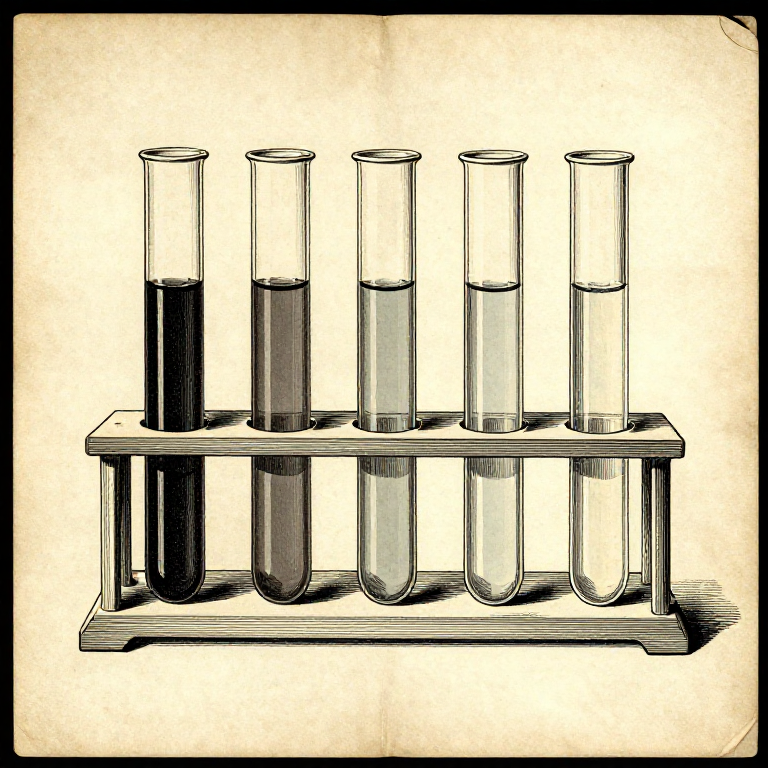


Dilution: One Equation, and Knowing When to Do It in Steps
Diluting does not change how much solute you have — only how much solvent it is spread through. That single fact is the whole of dilution arithmetic, and it is why C1V1 = C2V2 works: both sides are the same number of moles.
The practical question is not the arithmetic but whether to do it in ONE step or several. A hundredfold dilution in one step means measuring 1 mL accurately and making it up to 100 mL, and 1 mL is right at the limit of what most glassware measures well.
Two steps of ten give the same result while measuring 10 mL twice — a volume that is measured far more accurately. That is the entire reason serial dilution exists, and the arithmetic below shows exactly how much it buys.
Utangiye
2 hours
Amabwiriza
1
1
C1V1 = C2V2, and what each letter is
C1V1 = C2V2, and what each letter is
C1 is the concentration you are starting from and V1 the volume of it you will take. C2 is the concentration you want and V2 the final volume you will make it up to. Rearranged, V1 = C2 x V2 / C1.
V2 is the FINAL volume, not the amount of solvent added. Making 100 mL of diluted solution from 10 mL of stock means adding about 90 mL of solvent, not 100 — and treating V2 as the solvent added is the commonest error here.
It works in any units as long as both concentrations match and both volumes match. Percent, mol/L, g/L, parts per million — the equation does not care, because it is only saying that the amount of solute is unchanged.
Ibikoresho by'iyi ntambwe:
 Amazi Yatunganyijwe1 litiro
Ibikoresho bikenewe:
 Ikibariro
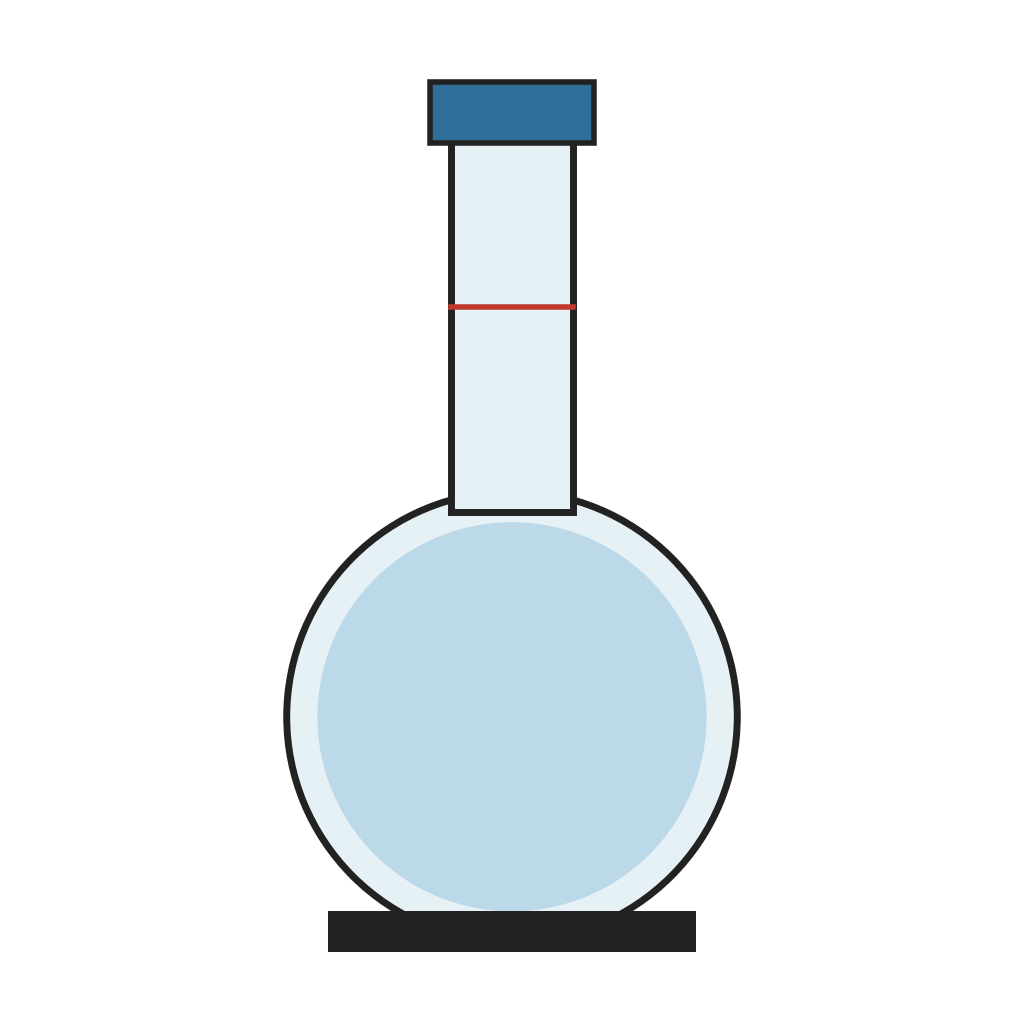 Icupa ripima ubunini
2
2
Take the aliquot with a pipette, make up in a flask
Take the aliquot with a pipette, make up in a flask
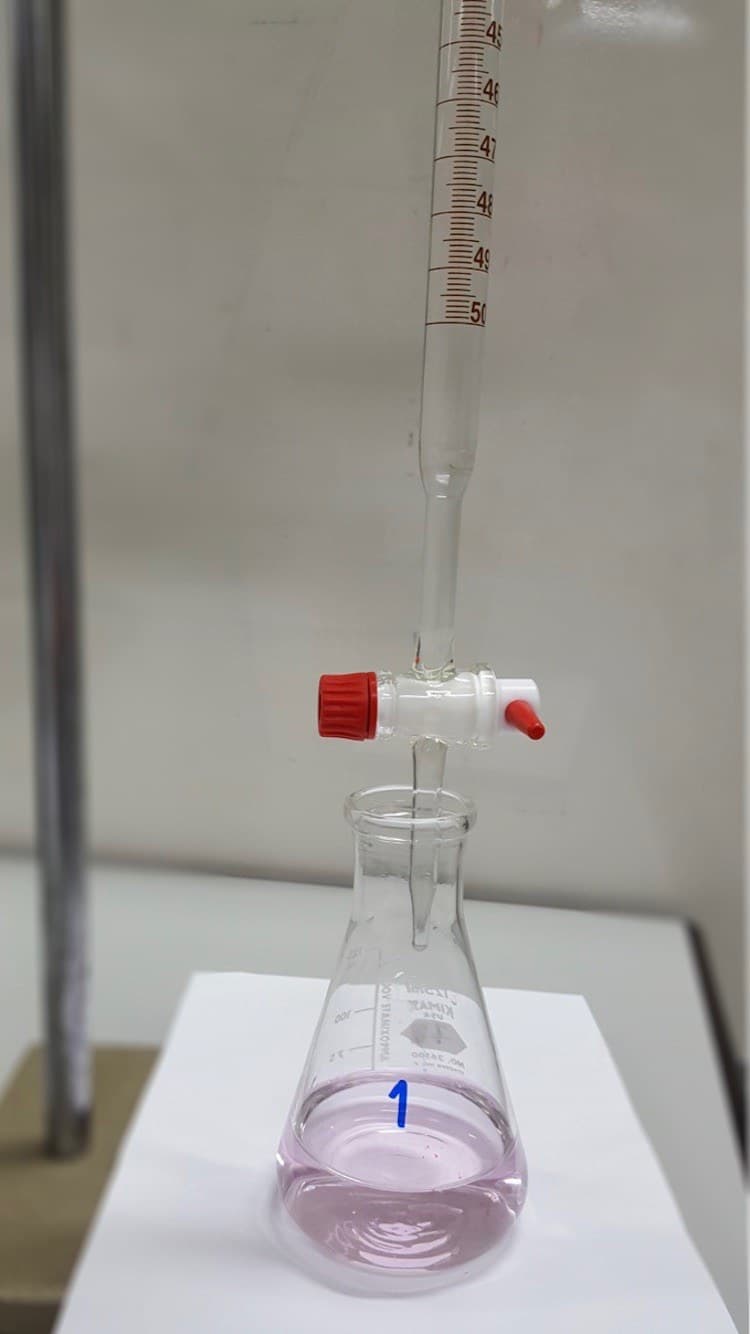
Measure V1 with a pipette or burette — volumetric glassware — and make up to V2 in a volumetric flask. Both numbers appear directly in the result, so both need to be measured rather than estimated.
Rinse the pipette with the stock solution before use, not with water. A pipette wet with water dilutes the very aliquot it is about to measure, and the error is invisible.
Deliver by touching the pipette tip to the inside wall of the flask and letting it drain, then touch off. Do not blow out the last drop of a bulb pipette: it is calibrated to deliver with that drop still in it.
Ibikoresho by'iyi ntambwe:
Amazi Yatunganyijwe1 litiroIbikoresho bikenewe:
 Ipipete ifite ibipimo (ya Mohr)Icupa ripima ubunini
 Bureti (y'ikirahure)
 Ikibano cya laboratwari (buretti/icupa)
3
3
One big step or several small ones
One big step or several small ones
Gupakira ikaye ya Jupyter…
Ibikoresho by'iyi ntambwe:
Amazi Yatunganyijwe1 litiroIbikoresho bikenewe:
Ipipete ifite ibipimo (ya Mohr)Icupa ripima ubunini Mudasobwa yo ku MezaIkibariro
4
4
Label every intermediate, and keep the stock
Label every intermediate, and keep the stock
Each step in a serial dilution is a solution in its own right and needs its own label. A bench with four unlabelled beakers of clear liquid differing thousandfold in concentration is a problem waiting to happen.
Write the dilution factor as well as the concentration: "0.001 M NaCl, 1:1000 from 1 M stock, 3 x 10-fold". That records how it was made, so a suspect result can be traced to a step rather than re-done from scratch.
Keep the stock solution and the intermediates until the work is finished and checked. Throwing them away the moment the final dilution exists means a disagreement can only be resolved by starting again.
Ibikoresho by'iyi ntambwe:
 Ibimenyetso Byifatisha1 igice
Ibikoresho bikenewe:
 Ikaramu Idasibangana
 Igikombe cy'Ikirahure
Ibikoresho
2- 3 litiroUmwanya
- 1 igiceUmwanya
Ibikoresho bikenewe
8- Umwanya
- Umwanya
- Umwanya
- Umwanya
- Umwanya
- Umwanya
Blueprint zijyanye
Izi blueprint zisangira ubumenyi — uburyo, ibikoresho cyangwa amahame

CC0 Umurenge rusange
Iyi blueprint yasohowe munsi ya CC0. Ushobora gukoporora, guhindura, gukwirakwiza no gukoresha nta kwemererwa.
Shyigikira Umuremyi ugura ibicuruzwa binyuze muri Blueprint ye Komisiyo y'Umuremyi byashyizweho n'Abacuruzi, cyangwa kora verisiyo nshya y'iyi Blueprint ukayinjiza nk'isano muri Blueprint yawe kugira ngo musangire inyungu.