UBUHANZI
UBWIZA N'UBUZIMA
UBUKORIKORI
UMUCO N'AMATEKA
IMYIDAGADURO
IBIDUKIKIJE
IBIRIBWA N'IBINYOBWA
UBWUBATSI BUSUBIRA INYUMA
UBUMENYI
SIPORO
IKORANABUHANGA
IBYAMBARWA
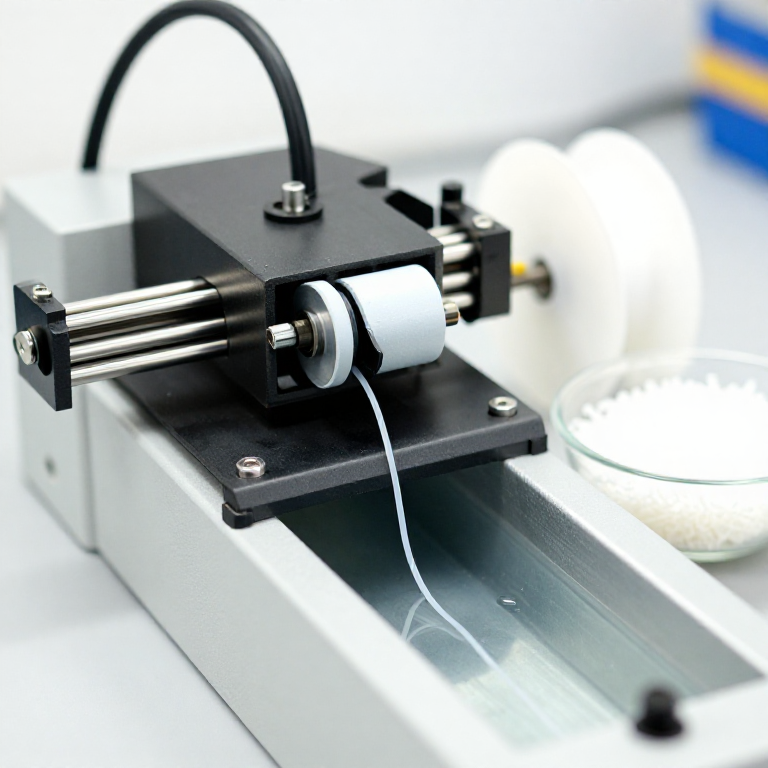

3D Printer Filament Extruded from Pellets
Filament is made the way a 3D printer prints, only continuously: dry plastic pellets fall from a hopper onto a turning screw inside a heated barrel, melt as they are carried forward, and are pushed out through a round nozzle. The strand is cooled in air or a water bath, drawn by a puller at a steady speed so it keeps its diameter, and wound on a spool. Commercial 1.75 mm filament is typically held to about ±0.02 mm; a small line should be measured.
PETG and many other plastics take up moisture, which makes bubbles and weak prints: makers dry PETG at about 55–70 °C for 5–8 hours, depending on the resin. Melt temperatures follow the resin's datasheet; PETG is usually printed at about 230–260 °C.
Hagati
A day per few kilograms
Amabwiriza
1
1
Dry the pellets
Dry the pellets
Dry the pellets in a dryer as the resin maker specifies; for PETG about 55–70 °C for 5–8 hours.
Ibikoresho by'iyi ntambwe:
 Utubuye twa PETG2 kg
 Uduhuma twa pulasitiki ibora (PLA)2 kg
 Utubuye twa ABS2 kg
Ibikoresho bikenewe:
 Umwumutsi w'utubuye
 Iminzani ya Digitale yo mu Gikoni
2
2
Heat the barrel
Heat the barrel
Set the barrel's heating zones to rise from the hopper end to the nozzle within the resin's datasheet range and let them settle.
Ibikoresho bikenewe:
 Icyuma cy'Igikwangari Kimwe Gisohora
 Ikibindi gitanga utubuye
3
3
Extrude
Extrude
Fill the hopper and start the screw slowly. Purge until the strand comes out clear of old material and bubbles.
Ibikoresho bikenewe:
Icyuma cy'Igikwangari Kimwe GisohoraIkibindi gitanga utubuye Uturindantoki twihanganira ubushyuhe
 Amadarubindi y'umutekano
4
4
Cool and pull
Cool and pull
Lead the strand through a water bath or past the fan to the puller. Adjust the puller's speed: faster pulls the strand thinner, slower lets it swell.
Ibikoresho by'iyi ntambwe:
 Amazi50 litiro
Ibikoresho bikenewe:
 Ikibindi kinini cya pulasitiki cya litiro 100
 Umuyaga w'agasanduku (umuvuduko uhinduka)
 Ikurura n'ikizingira umugozi
5
5
Measure and wind
Measure and wind
Measure the diameter every few metres and wind the filament on a spool. Keep it sealed and dry.
Ibikoresho bikenewe:
 Ikigereranyo cya Digitale cy'Amasentimetero 6Ikurura n'ikizingira umugoziIminzani ya Digitale yo mu Gikoni
6
6
Troubleshooting
Troubleshooting
Filament extrusion troubleshooting.
Flow
Loading...
Ibikoresho
4- 2 kgUmwanya
- Umwanya
- 2 kgUmwanya
- 50 litiroUmwanya
Ibikoresho bikenewe
10- Umwanya
- Umwanya
- Umwanya
- Umwanya
Iki gishushanyo gikora



CC0 Umurenge rusange
Iyi blueprint yasohowe munsi ya CC0. Ushobora gukoporora, guhindura, gukwirakwiza no gukoresha nta kwemererwa.
Shyigikira Umuremyi ugura ibicuruzwa binyuze muri Blueprint ye Komisiyo y'Umuremyi byashyizweho n'Abacuruzi, cyangwa kora verisiyo nshya y'iyi Blueprint ukayinjiza nk'isano muri Blueprint yawe kugira ngo musangire inyungu.