
Growing Alum Crystals
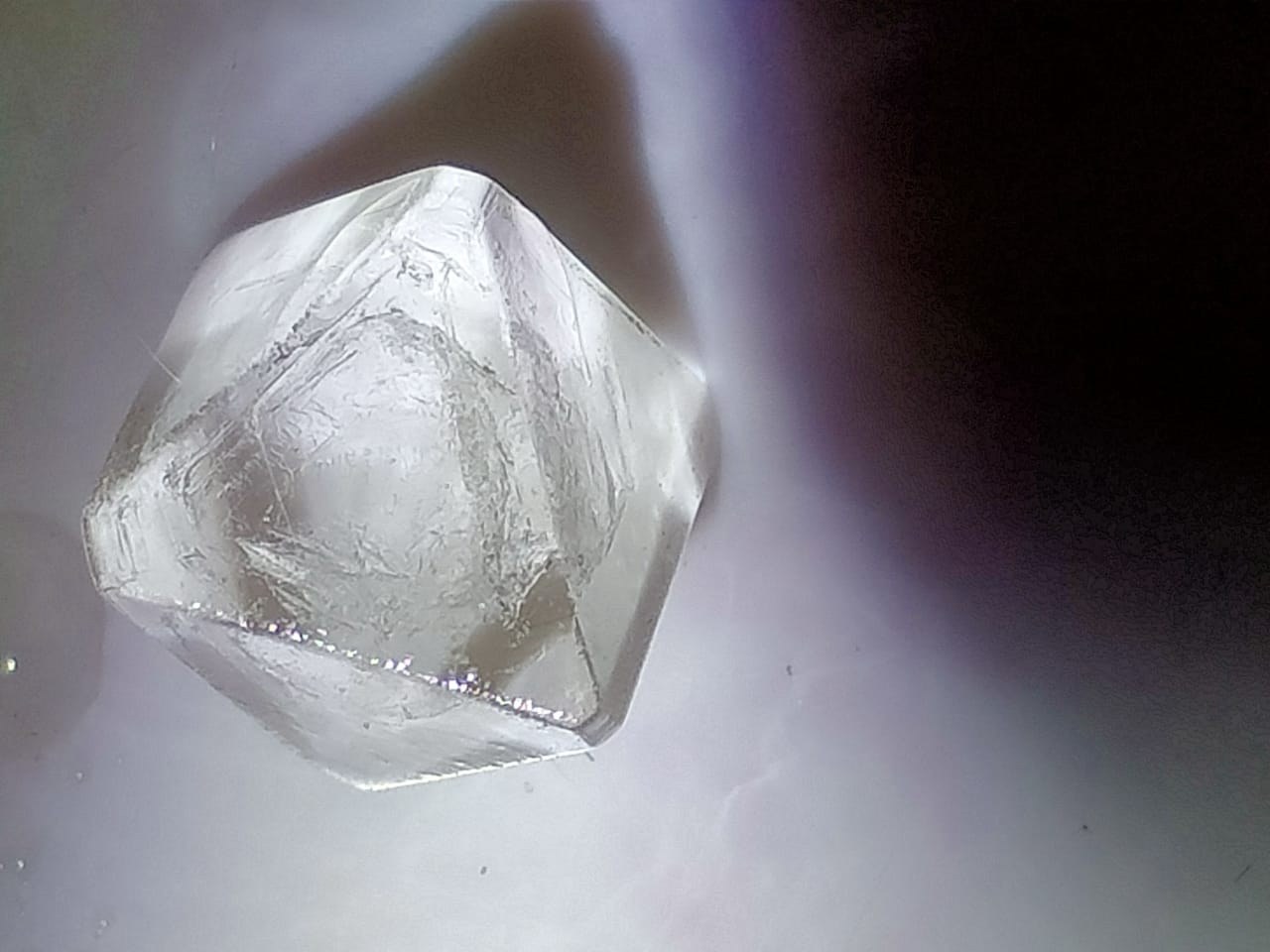
A crystal is not a lump that grew larger. It is a three-dimensional repeating arrangement of ions, and its outward shape is that arrangement made visible at a scale you can hold. Potassium alum builds octahedra — eight triangular faces — and it does so every time, because the shape is dictated by how the ions stack, not by anything you do.
That is what makes alum the classic crystallography exercise. Grow it fast and you get a heap of small crystals; grow it slowly from a seed and you get one large single crystal with flat faces and sharp edges. Same chemistry, same solution — the only variable is the rate.
This is a measurement project with a beautiful object at the end of it, not a craft project that happens to involve chemistry.
Amabwiriza
Handle alum sensibly
Handle alum sensibly
Potassium alum is used in food and cosmetics and is not a dangerous substance, but it is not a sweet: do not eat it, wash your hands after handling, and keep it away from eyes. Work with an adult present if you are using near-boiling water.
Heat 200 ml of water to about 60 °C
Heat 200 ml of water to about 60 °C
Warm 200 ml of distilled water to roughly 60 °C. Distilled matters — dissolved minerals in tap water give extra nucleation sites and you get many small crystals instead of one big one.
Ibikoresho bikenewe:
 Igipimo cy'ubushyuhe cy'igikoni
Dissolve alum until no more will go in
Dissolve alum until no more will go in
Stir in potassium alum a spoonful at a time until a little refuses to dissolve. You have now made a saturated solution at that temperature, which is the whole basis of the method.
Ibikoresho by'iyi ntambwe:
 Alumu (Alumu ya Potasiyumu)60 g
Ibikoresho bikenewe:
 Iminzani ya Digitale
Record how much dissolved
Record how much dissolved
Weigh what you added and write it down with the temperature. Solubility rises steeply with temperature for alum, and that single fact is why cooling produces crystals at all.
Filter the hot solution
Filter the hot solution
Pour the warm solution through filter paper or a coffee filter into a clean jar. Every speck of dust left behind becomes a crystal you did not want.
Ibikoresho bikenewe:
 Ishungura rito
Cool it slowly, covered, overnight
Cool it slowly, covered, overnight
Cover the jar and leave it undisturbed to cool to room temperature. As it cools the solution becomes supersaturated — holding more alum than it comfortably can — and small crystals form on the bottom.
Pick the best seed crystal
Pick the best seed crystal
Next morning, pour off the liquid and look at the crystals with a lens. Choose one with flat faces, clean edges and no cloudiness. A flawed seed grows into a large flawed crystal — the defect propagates.
Ibikoresho bikenewe:
 Indorerwamo Yagura
Note the shape before you go further
Note the shape before you go further
Look at the seed: it is an octahedron, eight triangular faces meeting in points. Draw it. That habit comes from the cubic arrangement of the ions in the lattice and it is the visible output of invisible geometry.
Hang the seed on a thread
Hang the seed on a thread
Tie fine nylon thread round the seed — nylon rather than cotton, because cotton fibres seed extra crystals along the thread — and suspend it from a pencil so it hangs clear of the bottom and sides.
Ibikoresho by'iyi ntambwe:
 Ubudodo bw'Ipamba1 metero
Make a fresh saturated solution and cool it first
Make a fresh saturated solution and cool it first
Prepare a new saturated solution and let it cool to room temperature before lowering the seed in. Putting a seed into warm solution dissolves it immediately, and this is the mistake almost everyone makes once.
Cover it and leave it entirely alone
Cover it and leave it entirely alone
Cover loosely to slow evaporation and keep dust out, then leave it somewhere with a steady temperature. Vibration, draughts and temperature swings all produce flaws — patience is a technique here.
Measure it every few days
Measure it every few days
Lift it out briefly, measure across the widest points, note the date and put it back. Plot size against time — growth is fast at first and slows as the solution is depleted.
Ibikoresho bikenewe:
 Umurongo w'ipima
Remove any competitors
Remove any competitors
Scrape out small crystals forming on the jar bottom. They compete for the same dissolved alum, and every one that grows is material your crystal did not get.
Run a fast-cooled control
Run a fast-cooled control
Take a second saturated solution and cool it in ice water. You get a mass of tiny crystals rather than one large one. That comparison is the experiment — same chemistry, different rate, entirely different result.
Dry and seal the finished crystal
Dry and seal the finished crystal
Blot it dry and coat it with clear nail varnish or keep it in a closed box. Alum crystals give up their water of crystallisation to dry air and go chalky and white over weeks if left out.
Compendium — why the shape is the answer
Compendium — why the shape is the answer
Habit is not decoration. Potassium alum crystallises in the cubic system and its usual growth habit is the octahedron. You did not shape it and no mould was involved: the ions stack in a repeating pattern, faces grow at rates set by that pattern, and the slowest-growing faces end up as the visible ones. The external form is a direct readout of internal structure — which is the founding idea of crystallography, established long before anyone could see atoms.
Saturation, supersaturation and rate. Solubility rises with temperature. A solution saturated hot becomes supersaturated when it cools — it holds more solute than it stably can — and the excess must come out. If it comes out fast, it comes out on many nucleation sites at once as a powder of tiny crystals. If it comes out slowly onto a single existing surface, that surface grows. Nucleation versus growth is the whole control you have, and it is why filtering, using distilled water and leaving the jar alone all matter.
The same principle at industrial scale. Controlled crystallisation is how sugar, salt, many pharmaceuticals and most semiconductors are purified and formed. A drug's crystal form can change how fast it dissolves in the body, so pharmaceutical companies spend serious effort on exactly the variables you are playing with in a jam jar.
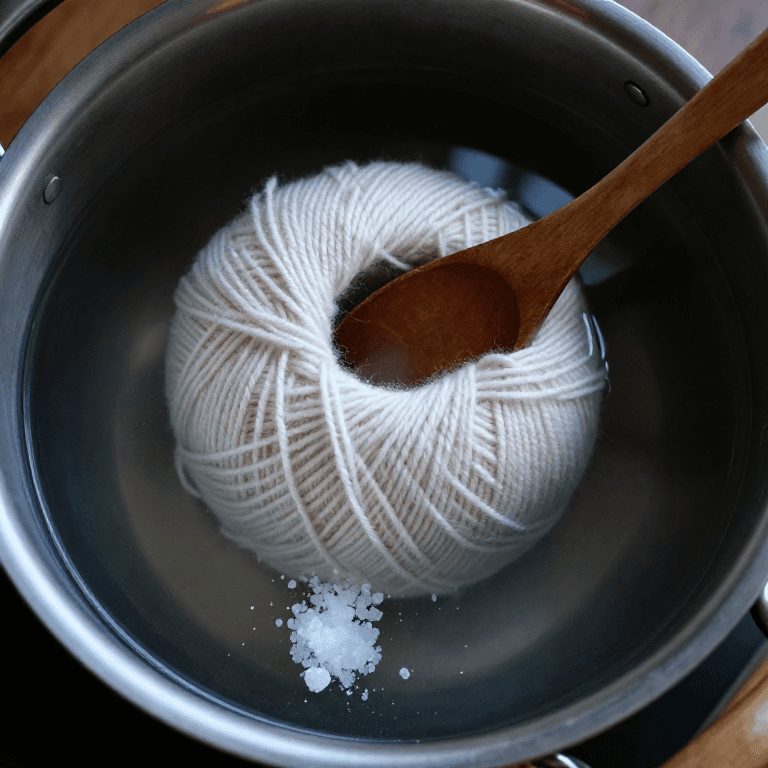
Alum has a long history of its own. Before this was a school experiment, alum was a major industrial commodity — the essential mordant for fixing dye to cloth, and the subject of a large and strategically important trade in medieval and early modern Europe. Youblob already carries a blueprint on mordanting wool with alum; the mineral being grown here is the same substance seen from the crystallographer's side rather than the dyer's.
Ibikoresho
2- Umwanya
- 1 meteroUmwanya
Ibikoresho bikenewe
5- Umwanya
- Umwanya
- Umwanya
- Umwanya
Blueprint zijyanye
Izi blueprint zisangira ubumenyi — uburyo, ibikoresho cyangwa amahame

CC0 Umurenge rusange
Iyi blueprint yasohowe munsi ya CC0. Ushobora gukoporora, guhindura, gukwirakwiza no gukoresha nta kwemererwa.
Shyigikira Umuremyi ugura ibicuruzwa binyuze muri Blueprint ye Komisiyo y'Umuremyi byashyizweho n'Abacuruzi, cyangwa kora verisiyo nshya y'iyi Blueprint ukayinjiza nk'isano muri Blueprint yawe kugira ngo musangire inyungu.