UBUHANZI
UBWIZA N'UBUZIMA
UBUKORIKORI
UMUCO N'AMATEKA
IMYIDAGADURO
IBIDUKIKIJE
IBIRIBWA N'IBINYOBWA
UBWUBATSI BUSUBIRA INYUMA
UBUMENYI
SIPORO
IKORANABUHANGA
IBYAMBARWA
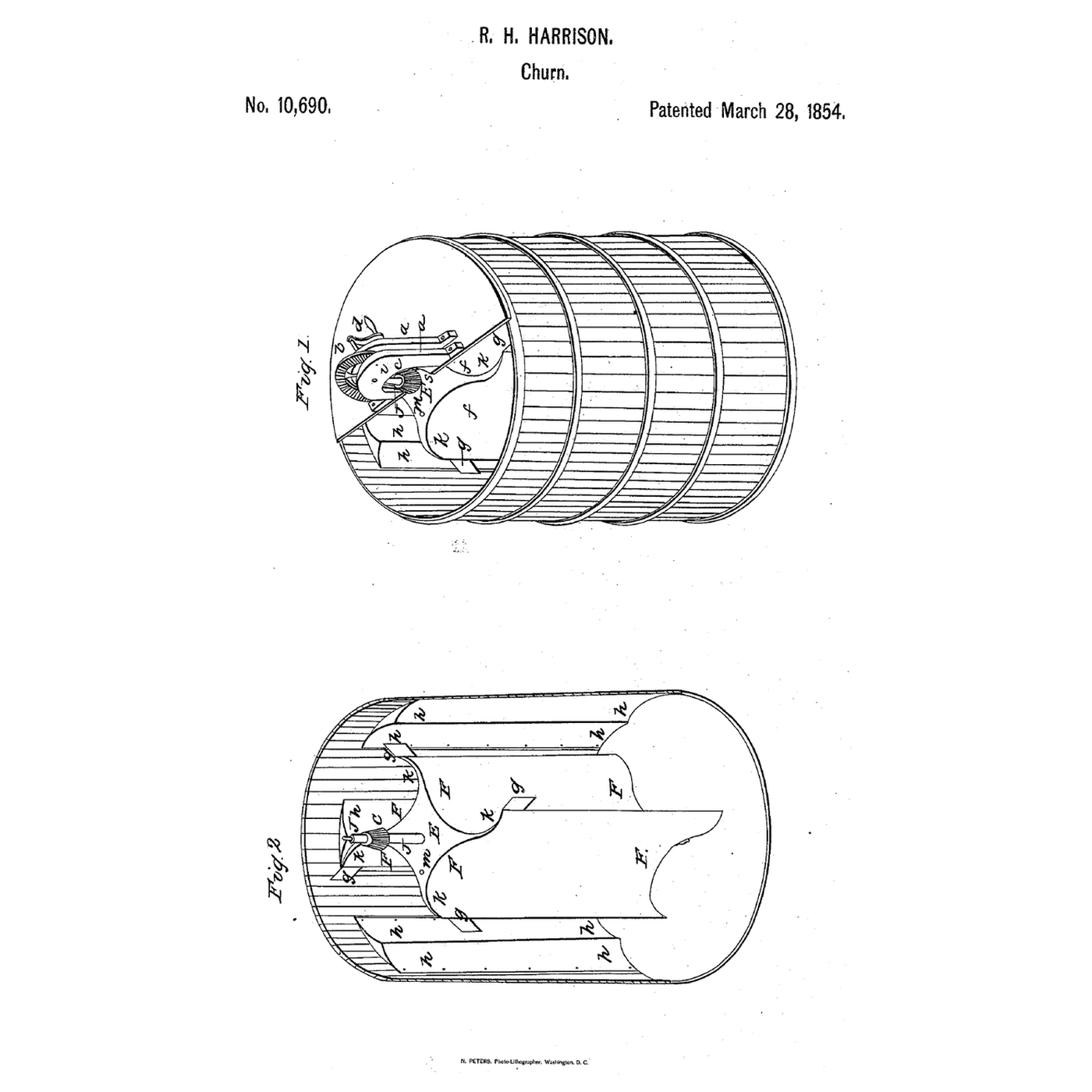

Hydrothermal Reservoir Dasher Churn: Warm Water in the Dasher to Churn, Cold to Firm the Butter
Harrison carried the water to temper the cream inside the dasher itself.
Robert H. Harrison of Washington, District of Columbia, assignor to R. H. Harrison and Jno. S. Gallaher, Jr., received US 10,690, dated 28 March 1854, for what he termed "the hydrothermal churn": a vertical "concavo-convex rotary reservoir dasher having hollow, deflective, or curved radial chambers" and straight radial wings, turned by a winch through a driving wheel and bevel gear, with "double concave vertically arranged cleats or butter gatherers" of tin round the vessel's inside, which can hold water too. Hot water poured in through a hole in the dasher tempers the cream; once the butter appears, cold water substituted for it firms the butter, and in hot weather cold water or pounded ice goes in.
This rung works out how far the dasher's water can move the cream's temperature, then prints the reservoir dasher, gatherers and gears, builds the churn, and makes butter.
Hagati
About 4 hours, plus printing
Amabwiriza
1
1
Water in the dasher
Water in the dasher
Gupakira ikaye ya Jupyter…
2
2
Tempering the cream with water before it
Tempering the cream with water before it
The embedded blueprint puts hot or cold water in a chamber under the churn. Harrison puts it inside the dasher and the side gatherers, where it turns through the cream.
3
3
Read US 10,690
Read US 10,690
"These particles are not spontaneously accumulated in concrete mass, but by the aid of cold water substituted in lieu of the warm water, which is withdrawn from the dasher by detaching the dasher from the churn vessel, the concave gatherers F, F, F, F, and h, h, h, h augmenting the concretion and forming the mass of butter without requiring much, if any, additional agency."
4
4
Print the parts
Print the parts
Print the hollow reservoir dasher with its four curved chambers, wings and filling hole standing up with 4 walls so it holds water, three or four hollow gatherers, the 36-tooth crown wheel, the 12-tooth pinion and the standard. Fill the dasher and gatherers with water and check for leaks before use. Print in PETG at 0.2 mm layers, 30 % infill, 4 walls; wash before first use.
Ibikoresho by'iyi ntambwe:
 Fibere ya PETG1 igice
Ibikoresho bikenewe:
 Imashini icapa 3D ikoresha umugozi (FDM)
5
5
Print the reservoir dasher
Print the reservoir dasher
The reservoir dasher, printed as step 4 describes.
6
6
Print the gatherer
Print the gatherer
The gatherer, printed as step 4 describes.
7
7
Print the crown wheel
Print the crown wheel
The crown wheel, printed as step 4 describes.
8
8
Print the pinion
Print the pinion
The pinion, printed as step 4 describes.
9
9
Print the standard
Print the standard
The standard, printed as step 4 describes.
10
10
Vessel and gatherers
Vessel and gatherers
Use a straight-sided round food-grade container about 190 mm across inside and 200 mm deep. Hook the gatherers over its rim, spaced round the side, their double-concave faces inward.
Ibikoresho by'iyi ntambwe:
 Ikibindi cyo kubikamo cy'urwego rw'ibiribwa1 igice
Ibikoresho bikenewe:
 Urupapuro rwo Gusya
11
11
Dasher, gears and winch
Dasher, gears and winch
Slide the reservoir dasher onto a 10 mm stainless rod and tighten its set screw, its foot standing in a shallow hole in a scrap of the lid laid in the bottom. Fix half the lid over the vessel with a hole for the rod, the pinion on the rod's top, and the standard with the crown wheel meshing it; screw a dowel handle into the wheel's boss. Fit a cork to the filling hole.
Ibikoresho by'iyi ntambwe:
 Umurongo Uzengurutse w'Icyuma Cyoroshye1 igice
 Ibipfundikizo by'ikorogo1 igice
 Udukoni tw'ibiti bikomeye1 igice
 Uruganda rw'igiti #8 x 1"1 igice
 Ibitorezo by'imashini1 igice
Ibikoresho bikenewe:
 Umucumita w'Ibyuma
 Icyuma Cyivumbura Kidafite Insinga
 Ibyuma Byinshi byo Gucukura
 Ikusanyirizo ry'ibitorezi
12
12
The build in 3D
The build in 3D
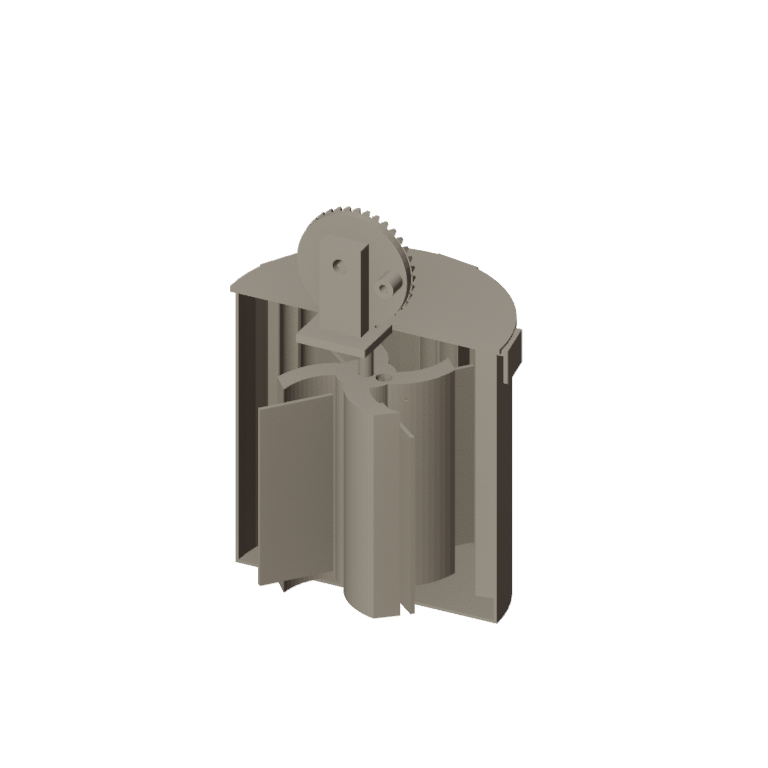
FreeCAD model of this build, not of the patent: the vessel cut away to show the hollow reservoir dasher with its four curved chambers and wings, the hollow gatherers hooked over the rim, and the crown wheel and pinion on the half lid.
13
13
Temper, churn, then firm
Temper, churn, then firm
Check the cream's temperature. If it is below about 15 °C, fill the dasher with lukewarm water, cork it and stir slowly until the cream reaches about 15 °C; if it is above, use cold water. Pour in 1.5 litres and turn the winch at a moderately rapid rate; time until the butter comes. Lift out the dasher, empty it, refill it with cold water or ice and water, and turn slowly to gather the butter. Pour off the buttermilk, add cold water, churn a little and pour off again until it runs clear; work in a pinch of salt and weigh the butter.
Ibikoresho by'iyi ntambwe:
 Igice cy'ibinure cy'amata1500 ml
 Utubuye tw'urubura1 igice
 Umunyu w'inyanja munini1 igice
 Amazi1 igice
Ibikoresho bikenewe:
 Igipima ubushyuhe gifite uruti rusigara mu kintu
 Isaha yo Guhagarika
 Iminzani ya Digitale yo mu Gikoni
 Ibakure rinini ryo kuvanga ry'icyuma kitagira ingese
14
14
A dasher that leaks, cream that will not warm
A dasher that leaks, cream that will not warm
Hydrothermal churn troubleshooting.
Flow
Loading...
15
15
History and honest limits
History and honest limits
**Robert H. Harrison** of Washington, District of Columbia, assignor to R. H. Harrison and Jno. S. Gallaher, Jr., received US 10,690, dated 28 March 1854. He wrote that turning for "3 to 5 minutes" is all that is required for the separation, that fresh milk can be used, and that the wings act "as coolers or fans" drawing cool air in through a vent round the spindle; these are his claims, not tested here. He claimed the vessel with double concave gatherers or water reservoirs, the reservoir dasher with curved chambers and radial wings combined with them, and the double application of warm and cold water or ice with both; he did not claim the use of hot or cold water alone in butter making, "as the same have been employed separately, or distinctly heretofore."
**Honest limits.** A container, printed parts and a crown wheel with a spur pinion stand in for his tin and bevel gearing. PETG softens at about 55–60 °C, so we use lukewarm water rather than hot. The notebook's temperatures are upper bounds with an estimated specific heat. FDM prints hold food in their layer lines, so wash well and replace when worn. Your times and weights are the result.
Ibikoresho
11- 1 igiceUmwanya
- Umwanya
- Umwanya
- 1 igiceUmwanya
- 1 igiceUmwanya
- 1 igiceUmwanya
- 1 igiceUmwanya
- 1500 mlUmwanya
- 1 igiceUmwanya
- 1 igiceUmwanya
- 1 igiceUmwanya
Ibikoresho bikenewe
10- Umwanya
- Umwanya
- 1 vendor sell this, none ship to you yetUmwanya
- Umwanya
- Umwanya
- Umwanya
Dosiye z'igishushanyo
6Iki gishushanyo gikora

Blueprint zijyanye
Izi blueprint zisangira ubumenyi — uburyo, ibikoresho cyangwa amahame
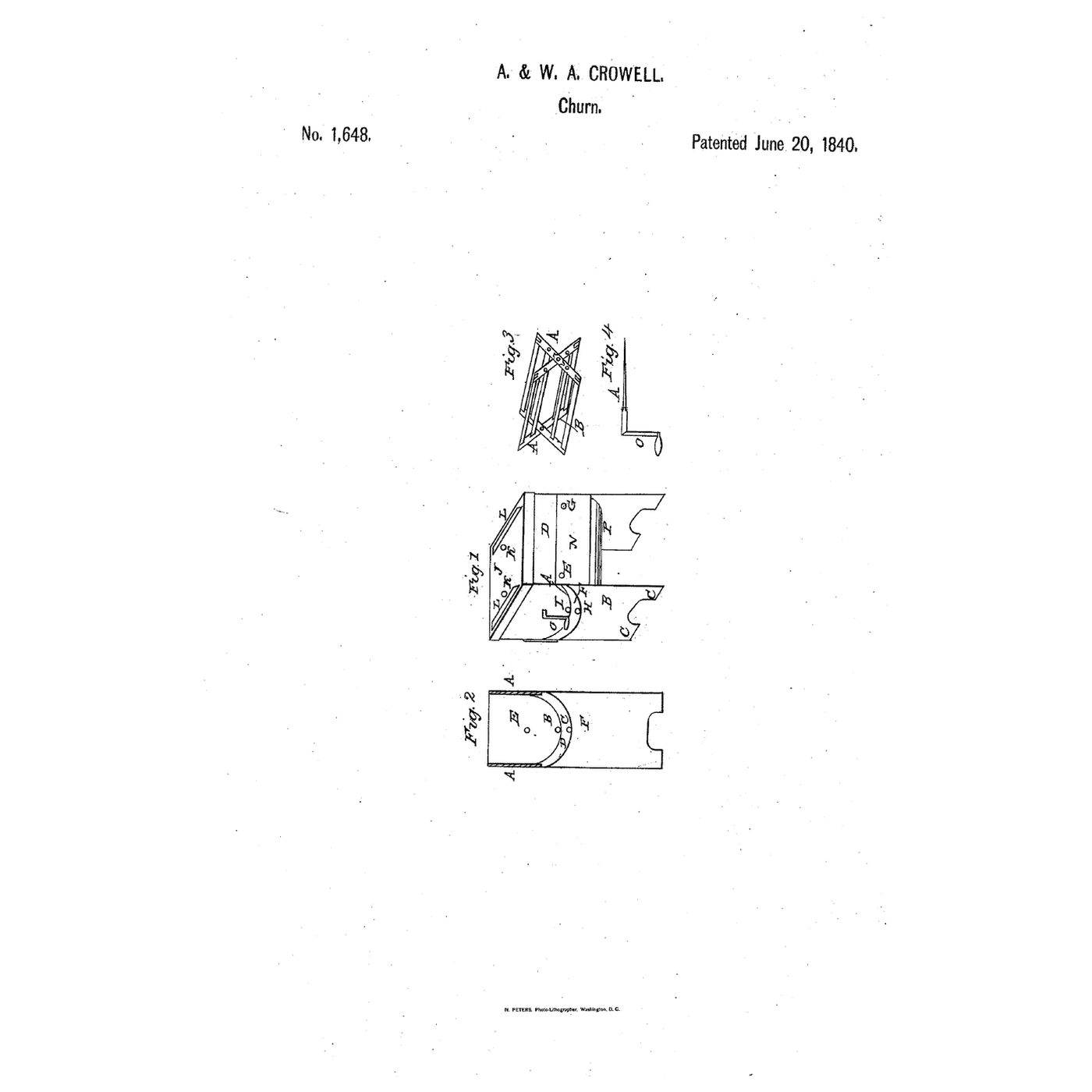
Water-Jacketed Churn: Hot or Cold Water Under a Metal Plate Tempers the Cream
na Karen
IBIRIBWA N'IBINYOBWA
34
0
0
0
0
0
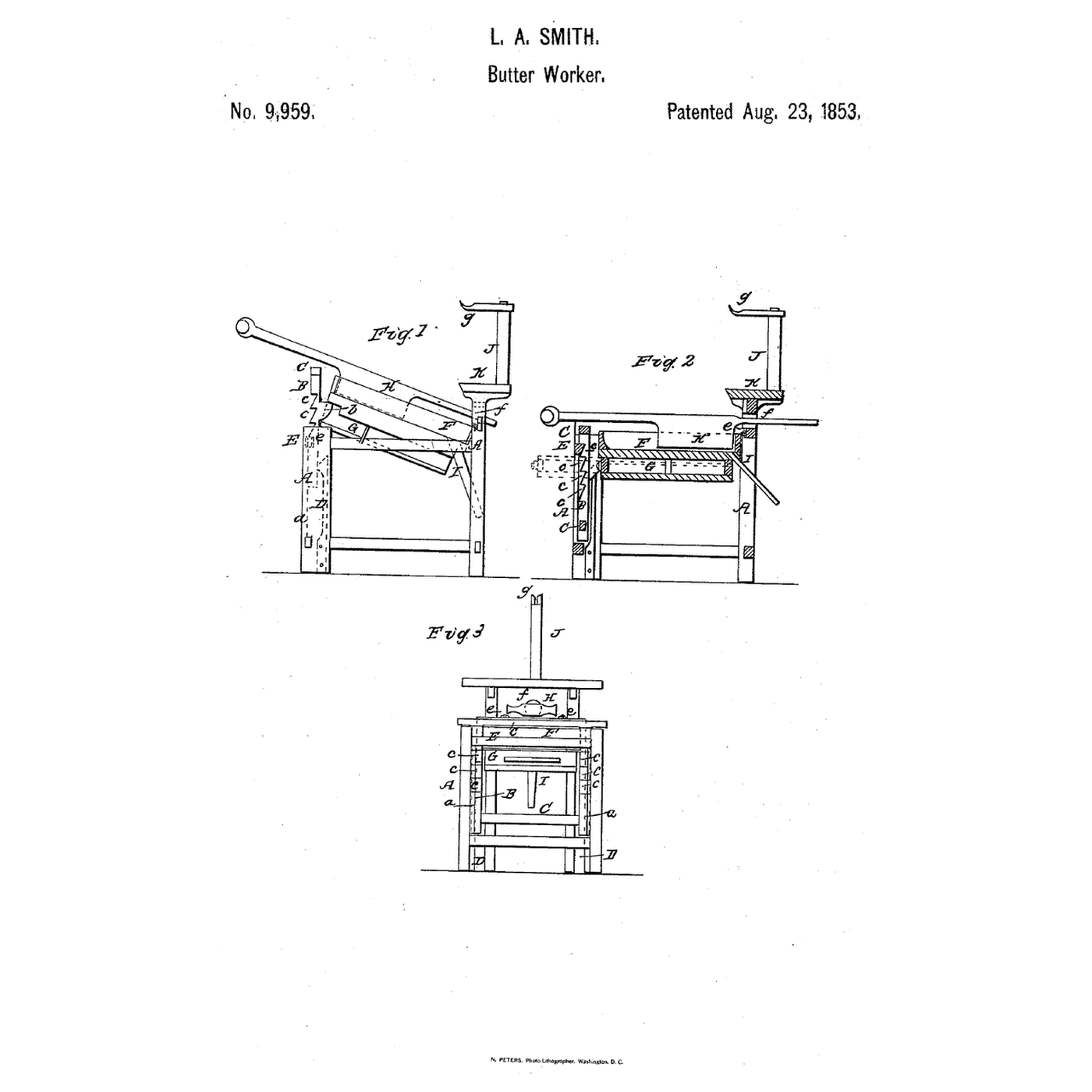
Ice-Drawer Butter Worker: An Ice Box Under the Tray, a Worker With Acute Edges
na YourGrandma
Ububaji
30
0
0
0
0
0

Churning Butter from Cream — The 5,000-Year-Old Fat Separation
na TheChef
UBUKORIKORI
54
0
0
0
0
0
CC0 Umurenge rusange
Iyi blueprint yasohowe munsi ya CC0. Ushobora gukoporora, guhindura, gukwirakwiza no gukoresha nta kwemererwa.
Shyigikira Umuremyi ugura ibicuruzwa binyuze muri Blueprint ye Komisiyo y'Umuremyi byashyizweho n'Abacuruzi, cyangwa kora verisiyo nshya y'iyi Blueprint ukayinjiza nk'isano muri Blueprint yawe kugira ngo musangire inyungu.