Ubufatanye
UBUHANZI
UBWIZA N'UBUZIMA
UBUKORIKORI
UMUCO N'AMATEKA
IMYIDAGADURO
IBIDUKIKIJE
IBIRIBWA N'IBINYOBWA
UBWUBATSI BUSUBIRA INYUMA
UBUMENYI
SIPORO
IKORANABUHANGA
IBYAMBARWA
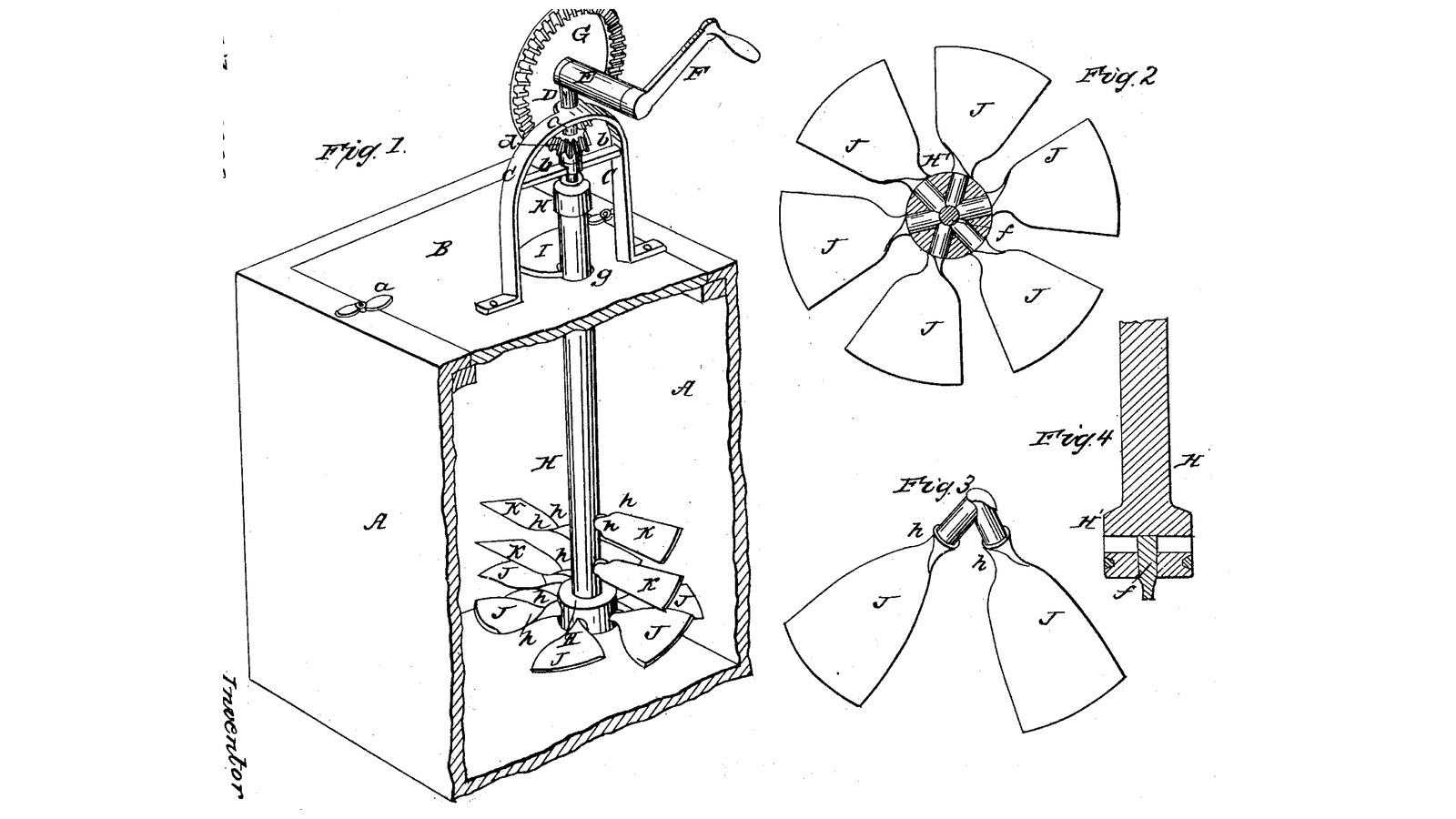
Interlocked-Blade Dasher Churn: Each Blade's Round Shank Is Bored Through by the Next, So They Key Each Other in the Hub
Buttercup

Yaremwe na

Buttercup

11. Ugushyingo 2026IE
0
0
0
0
0

Interlocked-Blade Dasher Churn: Each Blade's Round Shank Is Bored Through by the Next, So They Key Each Other in the Hub

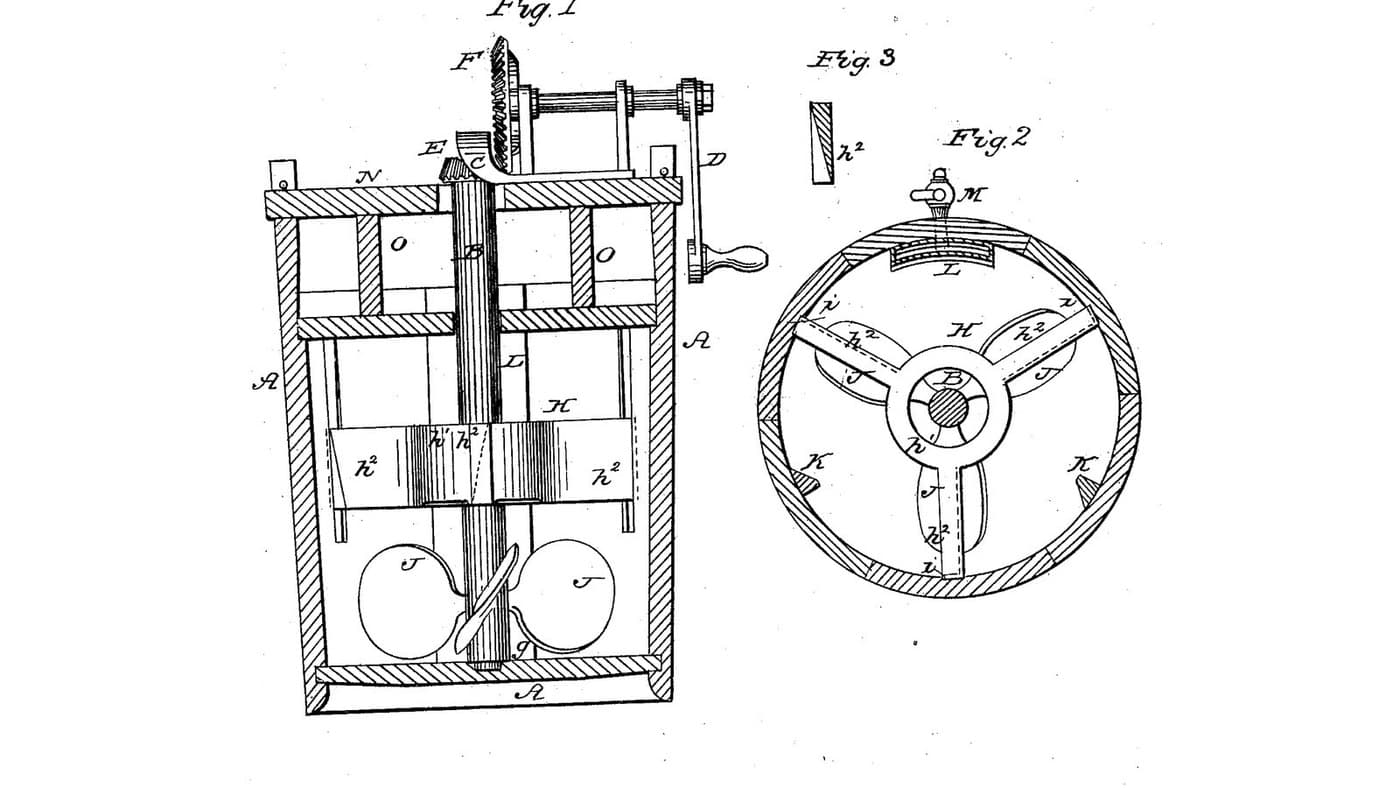
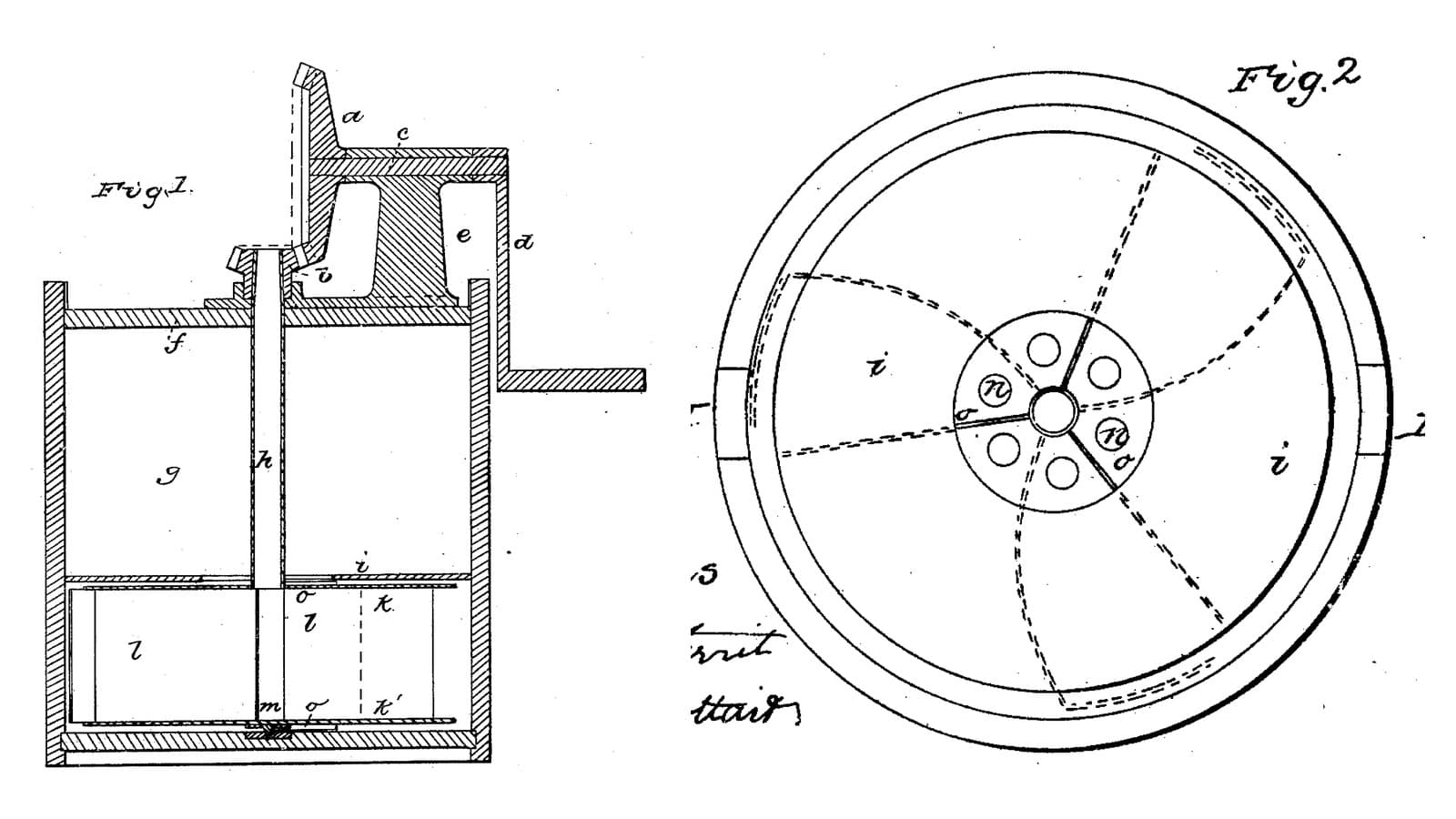
Salem T. Lamb of New Washington, Indiana, received US 30,411, dated 16 October 1860, for fastening the blades of a churn dasher so they never work loose. Each lower blade has a round shank driven into a hole bored to the middle of the hub; boring the next hole cuts the end of the last shank, so every shank keys the one before, and a spindle up the middle locks the set. The dasher turns by a crank and bevel gear on a bracket on the lid, its sloping blades pressing the cream down, and it lifts out through a large opening for cleaning. The patent gives no sizes; every size here is ours.
Hagati
About 3 days

Amabwiriza

1

Where the shanks lock

Gupakira ikaye ya Jupyter…
2

Sloping blades that drive the cream down, six months before

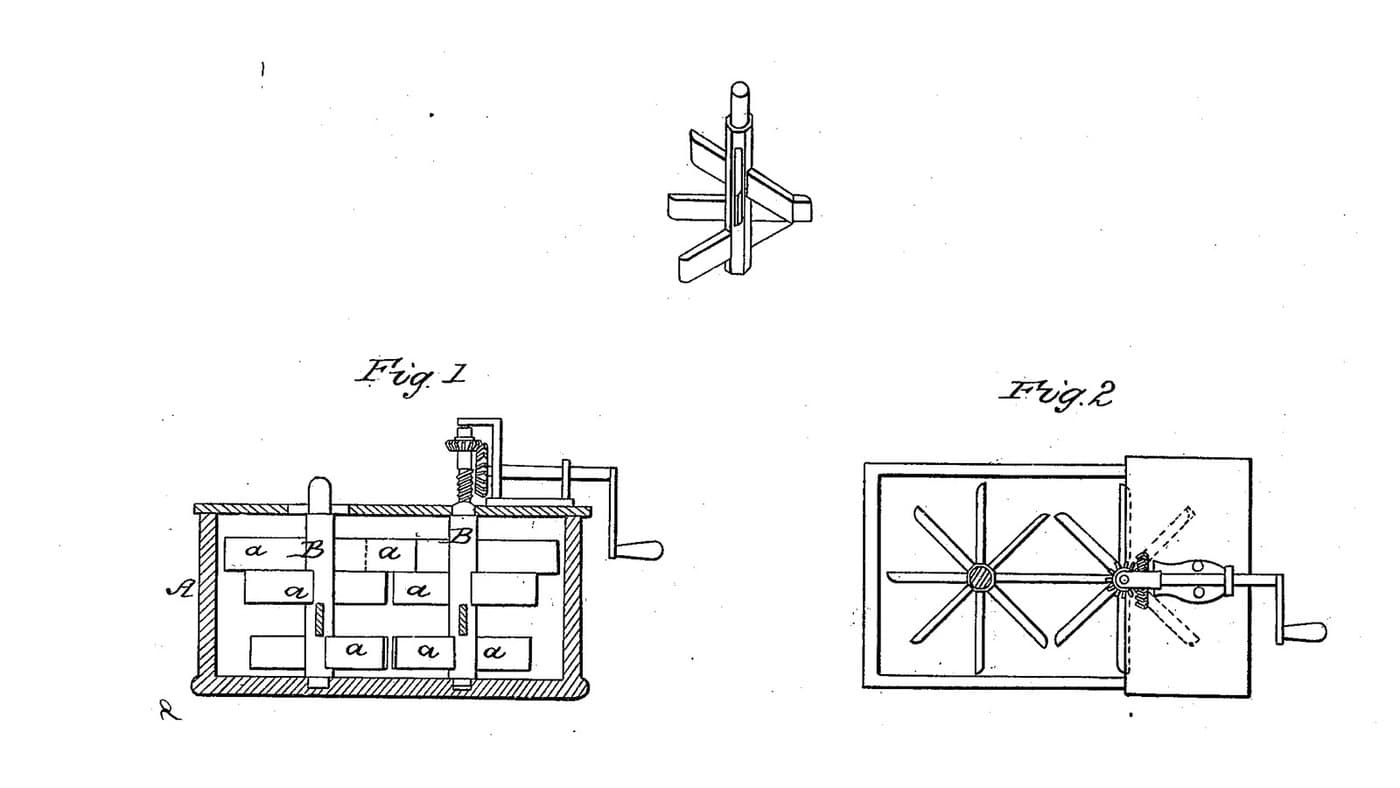
Lynch's propeller dasher also drives the cream down. Lamb's answer is how to keep such blades tight.
3

Read US 30,411

"Another radial hole is then bored for the next adjacent blade, the boring tool passing through or cutting off the end of the first shank. The second blade with the same preparation as the first one is then driven in or united, its shank fitting against and overlapping the first driven one, so as to answer as a key to it, to prevent it from turning or becoming loose."
4

Box A, lid B, cover I and buttons a

Glue up hardwood for a box A 300 x 300 mm inside and 420 deep, sides 22 mm, joints sealed with silicone sealant. Rout a seat round the top for a 22 mm lid B. Cut an opening in the lid 120 mm wide running from 30 mm behind its centre to 140 mm in front; fit a cover I to it with a 22 mm hole at the centre for the shaft c and a slot from that hole to the cover's back edge, so it can be lifted off past the shaft. Turn two hardwood buttons a on screws at the lid's edge to hold it down.

Ibikoresho by'iyi ntambwe:

Ikibaho cy'Igiti GikomeyeIkibaho cy'Igiti Gikomeye4 ibice
Ikinyabutabire cy'IbitiIkinyabutabire cy'Ibiti1 igice
Igifunga cya silikoneIgifunga cya silikone1 igice
Imisumari y'ibitiImisumari y'ibiti24 ibice

Ibikoresho bikenewe:
Ikimasa cyo ku mezaIkimasa cyo ku meza
Umucumita wa JigsawUmucumita wa Jigsaw
Imashini ibaza inkombeImashini ibaza inkombe
Ibikoresho by'amasuka y'igitiIbikoresho by'amasuka y'igiti
Agasanduku k'ibinyo bipfunyitseAgasanduku k'ibinyo bipfunyitse
Icyuma Cyivumbura Kidafite InsingaIcyuma Cyivumbura Kidafite Insinga
Ibyuma Byinshi byo GucukuraIbyuma Byinshi byo Gucukura
Igifashe cy'inkoniIgifashe cy'inkoni
Ikusanyirizo ry'ibitoreziIkusanyirizo ry'ibitorezi
Umugozi wo GupimaUmugozi wo Gupima
5

Staff H, hub and band

Turn a hardwood staff 40 mm across and 375 mm long, with a hub H 76 mm across for its bottom 80 mm, and the top 15 mm turned to 28 mm for the cap. Turn a groove near the hub's foot and press on a ring cut from a stainless tube as the band, so the hub cannot split when it dries. Bore a 10.2 mm hole up the middle of the hub from below, 50 mm deep, for the spindle f.

Ibikoresho by'iyi ntambwe:

Ikibaho cy'Igiti GikomeyeIkibaho cy'Igiti Gikomeye2 ibice
Ikinyabutabire cy'IbitiIkinyabutabire cy'Ibiti1 igice
Umuyoboro w'icyuma kitagira ingeseUmuyoboro w'icyuma kitagira ingese1 igice

Ibikoresho bikenewe:
Imashini ikerekeza ibitiImashini ikerekeza ibiti
Icyuma Cyivumbura Kidafite InsingaIcyuma Cyivumbura Kidafite Insinga
Ibyuma Byinshi byo GucukuraIbyuma Byinshi byo Gucukura
Umucumita w'IbyumaUmucumita w'Ibyuma
Amakariso (Ikariso ry'Intoki)Amakariso (Ikariso ry'Intoki)
6

Blades J and K

Carve six lower blades J from hardwood 8 mm thick: 26 mm wide at the neck widening to 100 mm at the tip, reaching 135 mm from the staff's centre, slightly hollowed on top, each on a round shank 20 mm across and 52 mm long, so it reaches the centre, with a small shoulder i, the blade's twist running out along the neck into the shank as the spiral lines h. Carve six upper blades K the same way, 16 to 60 mm wide, reaching 125 mm, on 14 mm shanks 34 mm long.

Ibikoresho by'iyi ntambwe:

Ikibaho cy'Igiti GikomeyeIkibaho cy'Igiti Gikomeye1 igice

Ibikoresho bikenewe:

Ikimasa cyo ku mezaIkimasa cyo ku meza
Umucumita wa JigsawUmucumita wa Jigsaw
Ibikoresho by'ibyuma byo gucukura ibitiIbikoresho by'ibyuma byo gucukura ibiti
Ibikoresho by'amasuka y'igitiIbikoresho by'amasuka y'igiti
Imashini ikerekeza ibitiImashini ikerekeza ibiti
Amakariso (Ikariso ry'Intoki)Amakariso (Ikariso ry'Intoki)
7

Lock the lower shanks

Bore a 20 mm radial hole level into the hub, 40 mm above its foot, to just past the centre. Coat the first J shank near its shoulder with food-safe silicone sealant (the patent used white lead or other cement) and drive it in with the blade sloped 30 degrees. Bore the next hole 60 degrees round, cutting off the end of the first shank, and drive the next blade so its shank overlaps the first. Go on round all six, each keying the last, every blade sloped the same way. Drive a 10 mm stainless rod 60 mm long up the centre hole through the shanks as the spindle f, leaving 14 mm below the hub.

Ibikoresho by'iyi ntambwe:

Igifunga cya silikoneIgifunga cya silikone1 igice
Agati k'icyuma kitagira ingeseAgati k'icyuma kitagira ingese1 igice

Ibikoresho bikenewe:

Icyuma Cyivumbura Kidafite InsingaIcyuma Cyivumbura Kidafite Insinga
Agasanduku k'ibinyo bipfunyitseAgasanduku k'ibinyo bipfunyitse
Ibyuma Byinshi byo GucukuraIbyuma Byinshi byo Gucukura
Umucumita w'IbyumaUmucumita w'Ibyuma
8

Set the upper blades

Bore three 14 mm radial holes 120 degrees apart into the staff 180 mm above the hub's foot and three more 210 mm up, turned 60 degrees, so the upper blades break spaces with each other and with the lower. Set the K blades in them with sealant, sloped the same way as the J blades.

Ibikoresho by'iyi ntambwe:

Igifunga cya silikoneIgifunga cya silikone1 igice

Ibikoresho bikenewe:

Icyuma Cyivumbura Kidafite InsingaIcyuma Cyivumbura Kidafite Insinga
Agasanduku k'ibinyo bipfunyitseAgasanduku k'ibinyo bipfunyitse
9

Print the step

The step on the box's bottom: 60 mm across, 15 high, with a 10.6 mm hole 9 deep for the spindle f. PETG, 0.2 mm layers, 30 % infill, 4 walls.
Dosiye y'IgishushanyoSTLCC0 - Free
10

Print the staff cap

The cap glued on the staff's top: 40 mm across, 30 high, a 28 mm socket 15 deep below and a 12.2 mm square socket above for the foot of shaft c. PETG, 0.2 mm layers, 30 % infill, 4 walls.
Dosiye y'IgishushanyoSTLCC0 - Free
11

Print the crown wheel G

The driving wheel G on the crank shaft: a crown wheel of 42 teeth, module 2.5, 16.2 mm bore. PETG, 0.2 mm layers, 30 % infill, 4 walls.
Dosiye y'IgishushanyoSTLCC0 - Free
12

Print the pinion d

The pinion d on shaft c: 14 teeth, module 2.5, 16.2 mm bore. PETG, 0.2 mm layers, 30 % infill, 4 walls.
Dosiye y'IgishushanyoSTLCC0 - Free
13

Bracket C, shaft c, gears and crank F

Screw two hardwood posts 40 x 40 mm, 200 mm tall, to the lid either side of the opening, 160 mm apart over their inside faces; join them with a cross brace b 60 mm up and a top bar at the top, both bored 16.6 mm over the staff. Cut a 16 mm stainless shaft c 283 mm long, file its foot 12 mm square for 14 mm, and run it down through the bar and brace with the pinion d pinned on it above the bar. Screw two hardwood blocks 50 x 25 x 100 mm on the bar either side of the pinion as the sleeve E, bored 16.6 mm across 75 mm above the bar; run a 16 mm stainless crank shaft 180 mm long through them with the crown wheel G pinned on it meshing d, a shaft collar, and a crank F of mild steel flat bar, 100 mm throw, with a hardwood handle.

Ibikoresho by'iyi ntambwe:

Ikibaho cy'Igiti GikomeyeIkibaho cy'Igiti Gikomeye1 igice
Agati k'icyuma kitagira ingeseAgati k'icyuma kitagira ingese1 igice
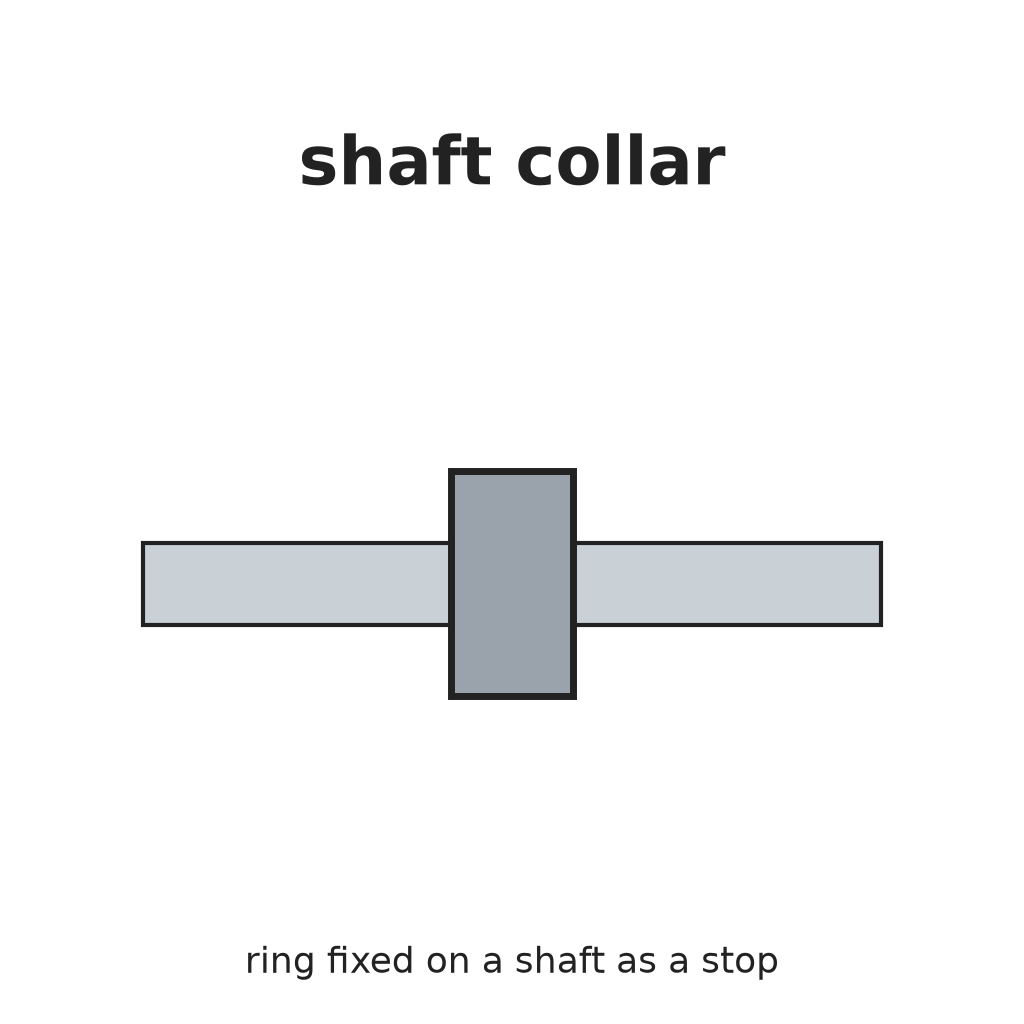
Shaft CollarShaft Collar1 igice
Agashinge gafite amaguru abiriAgashinge gafite amaguru abiri3 ibice
Umurongo ugororotse w'icyuma cyoroshyeUmurongo ugororotse w'icyuma cyoroshye1 igice

Udukoni tw'ibiti bikomeyeUdukoni tw'ibiti bikomeye1 igice
Ikinyabutabire cy'IbitiIkinyabutabire cy'Ibiti1 igice
Imisumari y'ibitiImisumari y'ibiti12 ibice
Fibere ya PETGFibere ya PETG1 igice

Ibikoresho bikenewe:
Imashini icapa 3D ikoresha umugozi (FDM)Imashini icapa 3D ikoresha umugozi (FDM)
Ikimasa cyo ku mezaIkimasa cyo ku meza
Icyuma Cyivumbura Kidafite InsingaIcyuma Cyivumbura Kidafite Insinga
Ibyuma Byinshi byo GucukuraIbyuma Byinshi byo Gucukura
Umucumita w'IbyumaUmucumita w'Ibyuma
Amakariso (Ikariso ry'Intoki)Amakariso (Ikariso ry'Intoki)
Ifatiro ry'AmezaIfatiro ry'Ameza
Igifashe cy'inkoniIgifashe cy'inkoni
Ikusanyirizo ry'ibitoreziIkusanyirizo ry'ibitorezi
14

The build in 3D

FreeCAD model of this build, the box cut open: the step, the staff with its banded hub, the six lower blades on interlocked shanks and the six upper blades, the lid with its opening and cover, and the bracket with shaft c, pinion, crown wheel and crank.
Dosiye y'IgishushanyoBLENDCC0 - Free
15

Churn, gather and lift out

Pour about 20 litres of heavy cream at about 15 °C, checked with the thermometer, into the box. Tilt the dasher in through the opening, set its spindle in the step, swing the staff upright under shaft c so the square enters the cap, and put on the cover and lid. Turn the crank briskly so the blades press the cream down, timing it. When the butter comes, turn on the same way but much slower, so the blades roll it into masses. Take off the cover, lift the dasher slowly while turning it backwards by hand so it slips out through the butter. Gather the butter, pour the buttermilk into a bowl, wash the butter in cold water until it runs clear, salt and weigh it. Scald, wash and air-dry the dasher.

Ibikoresho by'iyi ntambwe:

Igice cy'ibinure cy'amataIgice cy'ibinure cy'amata20 l
Umunyu w'inyanja muniniUmunyu w'inyanja munini1 igice
AmaziAmazi1 igice

Ibikoresho bikenewe:

Igipima ubushyuhe gifite uruti rusigara mu kintuIgipima ubushyuhe gifite uruti rusigara mu kintu
Isaha yo GuhagarikaIsaha yo Guhagarika
Iminzani ya Digitale yo mu GikoniIminzani ya Digitale yo mu Gikoni
Ibakure rinini ryo kuvanga ry'icyuma kitagira ingeseIbakure rinini ryo kuvanga ry'icyuma kitagira ingese
16

Troubleshooting

Interlocked-blade churn troubleshooting.

Flow

Loading...
17

History and honest limits

**Salem T. Lamb** of New Washington, Clark County, Indiana, US 30,411, 16 October 1860, "Fastening Blades of Churn-Dashers". He claimed the "interlocking or overlapping of the shanks of the blades J, so that they shall serve to hold each other firmly in the staff". He set the shanks in white lead or other cement; we use food-safe silicone, as white lead is a lead compound. His hub band was molten metal run into a groove and his gears a cast bracket with bevel wheels; ours are a pressed stainless ring, wooden posts and printed crown gears. The patent gives no sizes; every size here is ours.

Ibikoresho

14

Ibikoresho bikenewe

20

Dosiye z'igishushanyo

5

CC0 Umurenge rusange

Iyi blueprint yasohowe munsi ya CC0. Ushobora gukoporora, guhindura, gukwirakwiza no gukoresha nta kwemererwa.

Shyigikira Umuremyi ugura ibicuruzwa binyuze muri Blueprint ye Komisiyo y'Umuremyi byashyizweho n'Abacuruzi, cyangwa kora verisiyo nshya y'iyi Blueprint ukayinjiza nk'isano muri Blueprint yawe kugira ngo musangire inyungu.

Ibiganiro

(0)

Injira kugira ngo ujye mu biganiro

Gutegura ibitekerezo...