Ubufatanye
UBUHANZI
UBWIZA N'UBUZIMA
UBUKORIKORI
UMUCO N'AMATEKA
IMYIDAGADURO
IBIDUKIKIJE
IBIRIBWA N'IBINYOBWA
UBWUBATSI BUSUBIRA INYUMA
UBUMENYI
SIPORO
IKORANABUHANGA
IBYAMBARWA
Friction Plunger Churn: Cream Pumped Through Openings You Close a Little More as It Thickens
Buttercup

Yaremwe na

Buttercup

10. Ugushyingo 2026IE
1
0
0
0
0

Friction Plunger Churn: Cream Pumped Through Openings You Close a Little More as It Thickens

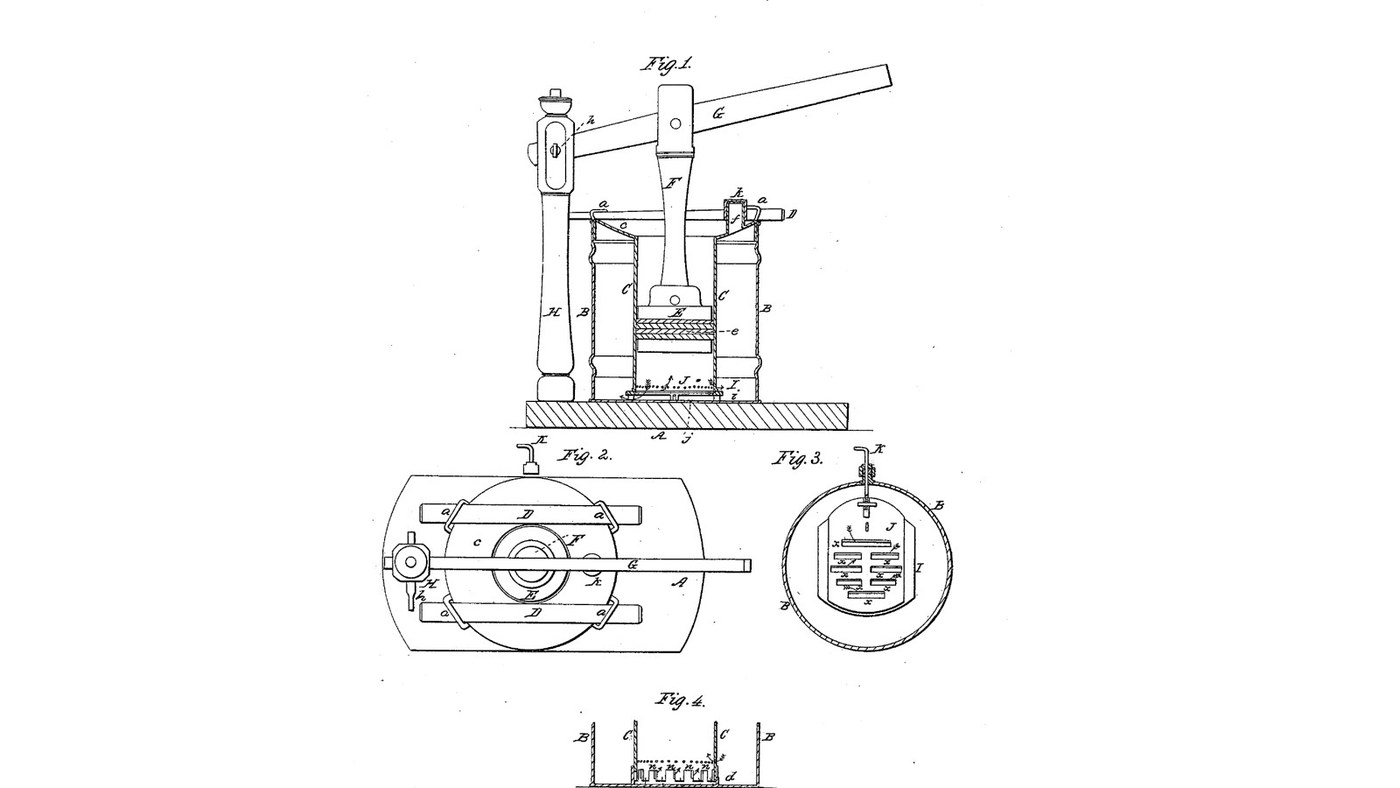
John J. Lehaye of Reading, Pennsylvania, received US 25,162, dated 16 August 1859, for a churn that works by friction. A hollow cylinder stands inside the cream vessel on two slotted plates. A packed plunger, worked by a long lever, draws the cream from the vessel into the cylinder through the slots and drives it back. A screw rod through a stuffing box in the vessel's side slides the upper plate, so the openings can be narrowed as the churning goes on. Lehaye gives no sizes; every size here is ours.
Hagati
About 2 days, plus printing

Amabwiriza

1

How hard the cream is rubbed through the openings

Gupakira ikaye ya Jupyter…
2

A piston that draws through a grate, the week before

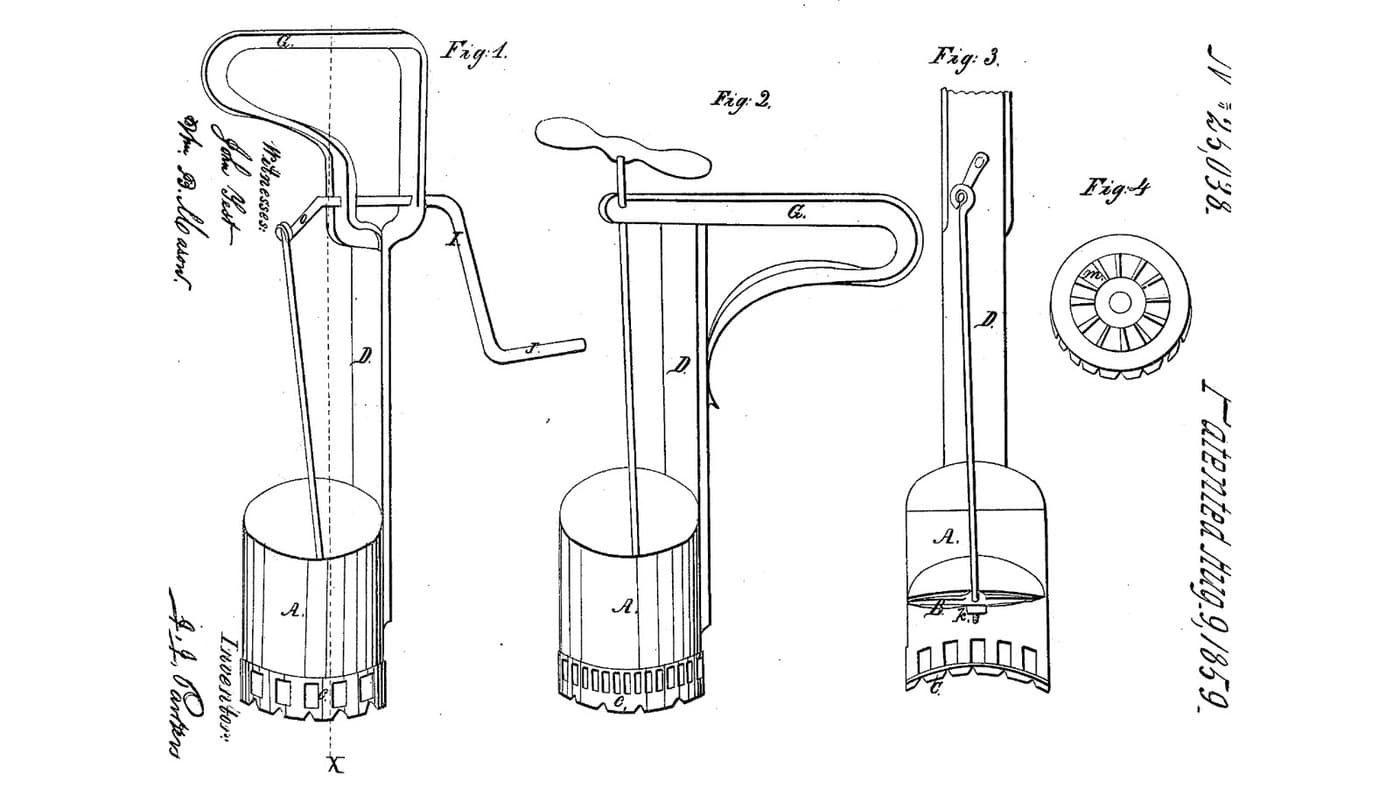
Parker's beater pumped eggs through fixed openings. Lehaye's openings close a little more as the cream thickens.
3

Read US 25,162

"By causing the cream to pass and repass through contracted openings, and with considerable force, the friction of the cream against the edges of the openings has the effect of rapidly separating the butter from the whey at the same time the constant change in the course of the cream agitates the latter as effectually as the ordinary dashers."
4

Print the plate I

The 200 mm lower plate on four 20 mm legs i, with six 8 x 50 mm openings 18 mm apart and two guide flanges for plate J. Print it legs up. PETG, 0.2 mm layers, 30 % infill, 4 walls.
Dosiye y'IgishushanyoSTLCC0 - Free
5

Print the plate J

The 116 x 64 mm sliding plate with six openings matching plate I's and a boss at one end for rod K's nut. PETG, 0.2 mm layers, 30 % infill, 4 walls.
Dosiye y'IgishushanyoSTLCC0 - Free
6

Print the cylinder rings

One 86.5 mm ring of the cylinder C, 160 mm across with a 3 mm wall and a spigot on top. Print three. PETG, 0.2 mm layers, 30 % infill, 4 walls.
Dosiye y'IgishushanyoSTLCC0 - Free
7

Print the bottom cylinder ring

The bottom ring, with an 18 mm notch in its lower edge for rod K. PETG, 0.2 mm layers, 30 % infill, 4 walls.
Dosiye y'IgishushanyoSTLCC0 - Free
8

Print the plunger's upper plate

A 152 mm plate with a hub bored 6.4 mm across for rod F's pin. PETG, 0.2 mm layers, 30 % infill, 4 walls.
Dosiye y'IgishushanyoSTLCC0 - Free
9

Print the plunger's lower plate

The plain 152 mm plate with a 6.4 mm hole in the middle. PETG, 0.2 mm layers, 30 % infill, 4 walls.
Dosiye y'IgishushanyoSTLCC0 - Free
10

Print the stuffing box's inner half

The flanged boss that sits inside the bucket, with an O-ring groove in its face and two 4.4 mm screw holes. PETG, 0.2 mm layers, 30 % infill, 4 walls.
Dosiye y'IgishushanyoSTLCC0 - Free
11

Print the stuffing box's outer half

The flanged boss outside the bucket, with a groove in its bore for a 6 mm O-ring round rod K. PETG, 0.2 mm layers, 30 % infill, 4 walls.
Dosiye y'IgishushanyoSTLCC0 - Free
12

Print the vent tube

The 20 mm tube through the flange that lets the gases out. PETG, 0.2 mm layers, 30 % infill, 4 walls.
Dosiye y'IgishushanyoSTLCC0 - Free
13

Print the vent's cover k

The push-on cover for the vent tube. PETG, 0.2 mm layers, 30 % infill, 4 walls.
Dosiye y'IgishushanyoSTLCC0 - Free
14

Base A and column H

Cut an 18 mm plywood base 750 x 400 mm. Stand a hardwood column 70 x 70 mm, 643 mm tall, on it 290 mm from where the bucket's middle will be, glued and screwed from under the base. Saw a slot 24 mm wide and 100 mm deep in its top and bore it 12.4 mm across 40 mm below the top for the pin h.

Ibikoresho by'iyi ntambwe:

Urupapuro rw'ibiti byometseUrupapuro rw'ibiti byometse1 igice
Ikibaho cy'Igiti GikomeyeIkibaho cy'Igiti Gikomeye1 igice
Ikinyabutabire cy'IbitiIkinyabutabire cy'Ibiti1 igice
Imisumari y'ibitiImisumari y'ibiti6 ibice

Ibikoresho bikenewe:

Umucumita wa JigsawUmucumita wa Jigsaw
Umucumita w'IntokiUmucumita w'Intoki
Ibyuma byo kubazaIbyuma byo kubaza
Icyuma Cyivumbura Kidafite InsingaIcyuma Cyivumbura Kidafite Insinga
Agasanduku k'ibinyo bipfunyitseAgasanduku k'ibinyo bipfunyitse
Ibyuma Byinshi byo GucukuraIbyuma Byinshi byo Gucukura
Igipimo cy'inguni ya dogere mirongo cyendaIgipimo cy'inguni ya dogere mirongo cyenda

Umugozi wo GupimaUmugozi wo Gupima
15

Bucket B and the stuffing box

Screw the bucket's floor to the base. Drill a 20.4 mm hole in its side 30 mm above the floor, facing away from the column, and two 4.4 mm holes 19 mm either side of it. Lay a 30 x 2 mm O-ring in the inner half's groove, fit the halves inside and outside the wall and draw them together with two stainless M4 screws and lock nuts. Fill the bucket with water to check the box does not leak, then empty it.

Ibikoresho by'iyi ntambwe:

Indobo ya Litiro 20Indobo ya Litiro 201 igice
Imisumari y'ibitiImisumari y'ibiti4 ibice
Impeta ya O y’ikoroboyiImpeta ya O y’ikoroboyi2 ibice
Ibitorezo by'imashiniIbitorezo by'imashini2 ibice
Ecrou ifunga ifite umuzingo wa nayiloniEcrou ifunga ifite umuzingo wa nayiloni2 ibice

Fibere ya PETGFibere ya PETG1 igice

Ibikoresho bikenewe:

Imashini icapa 3D ikoresha umugozi (FDM)Imashini icapa 3D ikoresha umugozi (FDM)
Icyuma Cyivumbura Kidafite InsingaIcyuma Cyivumbura Kidafite Insinga
Agasanduku k'ibinyo bipfunyitseAgasanduku k'ibinyo bipfunyitse
Ibyuma Byinshi byo GucukuraIbyuma Byinshi byo Gucukura
Ikusanyirizo ry'ibitoreziIkusanyirizo ry'ibitorezi
Isupana ihindurwaIsupana ihindurwa
AmaziAmazi
16

Plates I and J, and rod K

Press an M6 nut into plate J's boss. Lay J on plate I between its flanges and stand I on its legs in the middle of the bucket's floor. Cut 170 mm of M6 stainless threaded rod, bend 40 mm of one end to an L for a handle, push the straight end in through the stuffing box with a 6 mm O-ring in its bore and screw it into J's nut. Turn K both ways: J slides until its openings line up with I's, and closes them after 8 mm.

Ibikoresho by'iyi ntambwe:

Umupira w'Impande EsheshatuUmupira w'Impande Esheshatu1 igice
Inkoni ifite imirongoInkoni ifite imirongo1 igice
Impeta ya O y’ikoroboyiImpeta ya O y’ikoroboyi1 igice

Ibikoresho bikenewe:

Umucumita w'IbyumaUmucumita w'Ibyuma
Ifatiro ry'AmezaIfatiro ry'Ameza
Isupana ihindurwaIsupana ihindurwa
17

Cylinder C, flange c, staples and wedges

Stack the four rings on plate I, the notched one at the bottom over rod K. Cut the flange from 12 mm plywood, a ring 304 mm across with a 154 mm hole, and bore a 16 mm hole 125 mm from its middle for the vent. Set it on the bucket's rim over the cylinder's top. Fit four stainless U-bolts through the bucket wall just under the rim, two each side, and drive two tapered hardwood wedges, 340 x 30 mm and 16 mm at their thick end, through them over the flange so it presses the cylinder down on the plates. Push the vent tube into its hole and its cover on top.

Ibikoresho by'iyi ntambwe:

Urupapuro rw'ibiti byometseUrupapuro rw'ibiti byometse1 igice
Umusumari wa UUmusumari wa U4 ibice
Ikibaho cy'Igiti GikomeyeIkibaho cy'Igiti Gikomeye1 igice
Fibere ya PETGFibere ya PETG1 igice

Ibikoresho bikenewe:

Umucumita wa JigsawUmucumita wa Jigsaw
Agasanduku k'ibinyo bipfunyitseAgasanduku k'ibinyo bipfunyitse
Icyuma Cyivumbura Kidafite InsingaIcyuma Cyivumbura Kidafite Insinga
Ibyuma Byinshi byo GucukuraIbyuma Byinshi byo Gucukura
Umucumita w'IntokiUmucumita w'Intoki
Isupana ihindurwaIsupana ihindurwa
18

Plunger E, rod F and arm G

Cut two 153.9 mm discs of 3 mm food-grade silicone sheet and bolt them between the plunger plates through the middle, hub up; the silicone's edge is the packing e and should slide in the cylinder with a light drag. Saw a slot in each end of a 22 mm hardwood dowel 470 mm long between pin centres and pin its lower end to the plunger's hub with a 6 mm stainless bolt. Make the arm G from hardwood 40 x 22 mm, 930 mm long, bore it 12.4 mm 30 mm from one end for the pin h and 6.4 mm 290 mm from that for rod F, then bolt it into the column's slot with a 12 mm bolt and pin rod F to it.

Ibikoresho by'iyi ntambwe:

Urupapuro rwa rubber ya silikoniUrupapuro rwa rubber ya silikoni1 igice
Icyegeranyo cy'inyuzi z'impande esheshatuIcyegeranyo cy'inyuzi z'impande esheshatu4 ibice
Ecrou ifunga ifite umuzingo wa nayiloniEcrou ifunga ifite umuzingo wa nayiloni4 ibice

Uruziga RurambuyeUruziga Rurambuye4 ibice
Udukoni tw'ibiti bikomeyeUdukoni tw'ibiti bikomeye1 igice
Ikibaho cy'Igiti GikomeyeIkibaho cy'Igiti Gikomeye1 igice

Ibikoresho bikenewe:

UmukasiUmukasi
Umucumita w'IntokiUmucumita w'Intoki
Icyuma Cyivumbura Kidafite InsingaIcyuma Cyivumbura Kidafite Insinga
Ibyuma Byinshi byo GucukuraIbyuma Byinshi byo Gucukura
Isupana ihindurwaIsupana ihindurwa
Umugozi wo GupimaUmugozi wo Gupima
19

The build in 3D

FreeCAD model of this build, cut open: the bucket on its base, the slotted plates I and J with rod K through the stuffing box, the cylinder of four rings under the flange, the wedges and staples, the vent, and the plunger on rod F worked by the arm G from the column H. Checked over the lever's whole travel and with plate J slid fully.
Dosiye y'IgishushanyoBLENDCC0 - Free
20

Churn

With plate J slid so all the openings are open, pour about 10 litres of heavy cream at about 15 °C into the bucket, checked with the thermometer. Work the arm about once a second, timing it. As the cream thickens, give rod K a turn now and then to close the openings a little. Lift the vent's cover now and then to let the gas out. When the butter comes, knock the wedges out, lift out the flange, the cylinder and the plunger, pour off the buttermilk, wash the butter in cold water until it runs clear, work in a pinch of salt and weigh it.

Ibikoresho by'iyi ntambwe:

Igice cy'ibinure cy'amataIgice cy'ibinure cy'amata10 l
Umunyu w'inyanja muniniUmunyu w'inyanja munini1 igice
AmaziAmazi1 igice

Ibikoresho bikenewe:

Igipima ubushyuhe gifite uruti rusigara mu kintuIgipima ubushyuhe gifite uruti rusigara mu kintu

Isaha yo GuhagarikaIsaha yo Guhagarika
Iminzani ya Digitale yo mu GikoniIminzani ya Digitale yo mu Gikoni
Ibakure rinini ryo kuvanga ry'icyuma kitagira ingeseIbakure rinini ryo kuvanga ry'icyuma kitagira ingese
21

Troubleshooting

Friction plunger churn troubleshooting.

Flow

Loading...
22

History and honest limits

**John J. Lehaye** of Reading, Pennsylvania, assignor to himself and John Tucker of Philadelphia, US 25,162, 16 August 1859, "Churn". He claimed the vessel B, cylinder C and plunger E in combination with means for enlarging or contracting the openings between the cylinder and the vessel. He gives no sizes, so every size here is ours; the U-bolts are his staples a, the O-ring box his stuffing box, and silicone his packing. His Fig. 4 alternative, projections on the cylinder's foot and on a ring in the vessel's bottom, turned to open or close the gaps, is not built. He also offered the machine as an egg beater and for mixing curds.

Ibikoresho

19

Ibikoresho bikenewe

19

Dosiye z'igishushanyo

11

CC0 Umurenge rusange

Iyi blueprint yasohowe munsi ya CC0. Ushobora gukoporora, guhindura, gukwirakwiza no gukoresha nta kwemererwa.

Shyigikira Umuremyi ugura ibicuruzwa binyuze muri Blueprint ye Komisiyo y'Umuremyi byashyizweho n'Abacuruzi, cyangwa kora verisiyo nshya y'iyi Blueprint ukayinjiza nk'isano muri Blueprint yawe kugira ngo musangire inyungu.

Ibiganiro

(0)

Injira kugira ngo ujye mu biganiro

Gutegura ibitekerezo...