

Hydraulic Brake
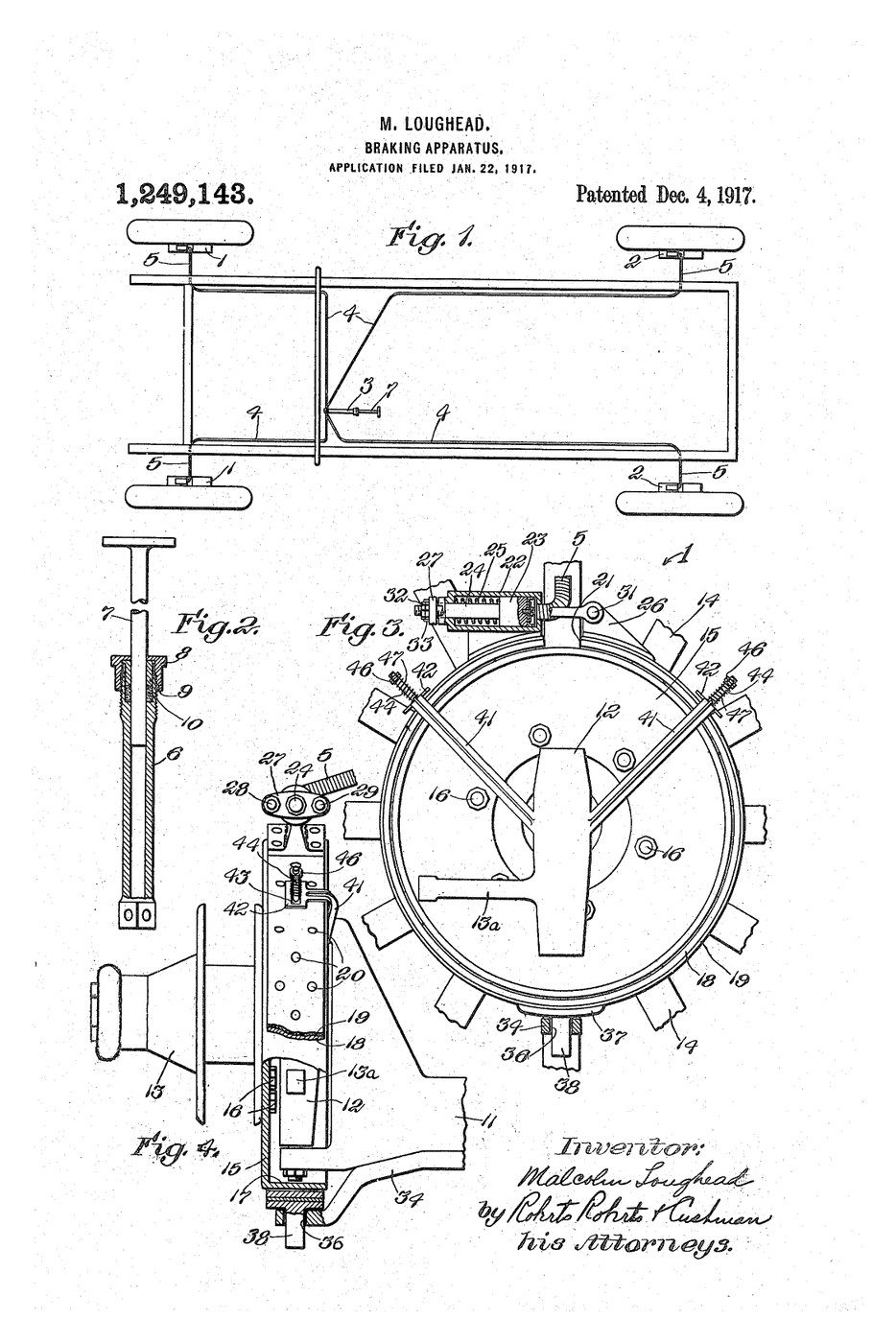
Early cars braked through rods and cables. The problem was never that a rod is weak — it is that the wheels move relative to the chassis, and a rod does not. Every bump changes the length the linkage has to span, so the brakes go out of adjustment as the suspension works. Loughead's patent names this directly: mechanical linkages "involve a change in the adjustment of the brakes as the chassis moves".
The consequence is not just fade. It is uneven braking. One wheel bites before another, and the car pulls toward the wheel that grabbed — at the exact moment the driver least wants to be steering.
A hydraulic circuit fixes this by exploiting the property that made Bramah's press work. Pressure in a closed fluid is the same everywhere. One master cylinder under the pedal, four wheel cylinders, and every wheel receives the same pressure automatically — not because anything was adjusted, but because a fluid cannot do otherwise. Equal pressure on equal piston areas is equal force, permanently and without maintenance.
The piece that makes it survive a moving axle is the flexible hose: rigid pipe along the chassis, flexible hose for the last span to the wheel. The hose changes length freely and carries pressure regardless — so suspension travel stops being a brake adjustment problem at all.
Malcolm Loughead, US 1,249,143, "Braking apparatus", filed 22 January 1917, granted 4 December 1917.
Amabwiriza
Measure the problem Loughead names in the patent
Measure the problem Loughead names in the patent
Rig a cable or rod between two points and set its tension so it is just taut. Now move one end 30 mm, as a wheel does when the suspension compresses.
Measure how much slack appears, or how much tension is added.
Do it for two "wheels" moving by different amounts — which is what actually happens on a real road.
Expect the two to end up at different tensions. That difference is uneven braking, and no amount of careful adjustment in the workshop removes it, because it appears only when the car is moving.
Ibikoresho by'iyi ntambwe:
 Insinga y'Icyuma Yasizwe Zinki2 m
Ibikoresho bikenewe:
 Umugozi wo Gupima
Build a one-master, two-slave circuit
Build a one-master, two-slave circuit
Connect one syringe as master to two identical syringes as slaves, through a tee, and purge every bubble.
Push the master. Both slaves should advance together.
Now hold one slave still by hand and push again. The other simply takes all the movement — and when you release, both come up to the same pressure.
That is the whole reason the system self-balances: the fluid distributes pressure, not motion, so a wheel that has further to go simply gets more travel at the same force.
Ibikoresho by'iyi ntambwe:
 Ibikoresho by'urushinge rw'inshinge2 ibirundo
 Umuyoboro wa Silikone2 m
 Ibihuza by'umuringa1 ikirundo
 Amazi Yatunganyijwe300 ml
Deliberately mismatch the slaves
Deliberately mismatch the slaves
Replace one slave with a larger-bore syringe and repeat.
Measure the force each produces against the scale.
Expect the larger one to push harder, in proportion to its area, from the same pedal.
This is not a fault — it is the design lever. Cars deliberately fit larger front wheel cylinders than rear, because weight transfers forward under braking and the front tyres can therefore take more force before locking. Brake balance is set by choosing piston areas, and a fluid circuit makes that choice arithmetic instead of linkage geometry.
Ibikoresho bikenewe:
 Iminzani ya Digitale yo mu Gikoni
 Ikigereranyo cya Digitale cy'Amasentimetero 6
Introduce air and feel what a spongy pedal is
Introduce air and feel what a spongy pedal is
Draw a few millilitres of air into the circuit on purpose and work the master again.
Expect long, soft travel and much less force at the slaves.
Measure how far the master now moves before the slaves move at all.
That dead travel is the air being compressed. It is the same lesson as the hydraulic press, but here it has a consequence: the pedal reaches the floor before the brakes reach full force. Bleeding a brake system is not maintenance fussiness — an air bubble is a length of pedal travel that does no braking.
Show why the last span must be a hose
Show why the last span must be a hose
Replace the tube to one slave with something rigid, clamp the slave to a board, and move the board as a suspension would.
Expect the rigid connection to fight the movement, and to strain its fittings.
Now put the flexible tube back and repeat. The movement is free and the pressure is unchanged.
Loughead's patent calls this out explicitly — flexible connections at the wheels so the brake works "independently of chassis position changes". It is the small part of the invention that makes the large part usable, in the same way Maudslay's leather cup was what made Bramah's press hold pressure.
History & Context
History & Context
The patent. US 1,249,143, "Braking apparatus", Malcolm Loughead, filed 22 January 1917, granted 4 December 1917. Worth noting what it actually describes: not the disc or drum-shoe arrangement most people picture, but an annular brake ring with a gap, whose ends are pulled together by a yoke driven by the wheel cylinders, gripping a rotating drum. The hydraulic circuit was the invention; the friction element was of its time and was superseded.
The name. Malcolm and his brother Allan spelled the family name Loughead and were endlessly mispronounced, so they later respelled it phonetically — Lockheed. The same brothers founded the aircraft company. The brake business became Lockheed Hydraulic Brake, and the name survived on brake components long after the family had moved on to aeroplanes.
Adoption was slower than the idea deserved. Duesenberg fitted four-wheel hydraulic brakes to a production car in 1921, and Chrysler in 1924 pushed them toward the mainstream. Ford held out with mechanical brakes until 1939 — more than twenty years after the patent — chiefly on cost and on distrust of a system that could be disabled by one leak.
That distrust was not unreasonable, and the answer shaped the modern car. A single circuit means a single failure empties everything. The fix was the dual-circuit master cylinder, splitting the four wheels into two independent halves, usually diagonally, so a burst hose leaves braking on one front and one rear wheel. It became mandatory in the United States in 1967. The weakness of Loughead's architecture is why that regulation exists.
Two properties of the fluid that are not incidental. Brake fluid is hygroscopic — it absorbs water from the air over years, which lowers its boiling point until hard braking can boil it and produce exactly the compressible pocket of step 4, a failure called vapour lock. That is why fluid is changed on a schedule rather than when it looks dirty. Glycol-ether brake fluids are also toxic if swallowed and strip paint on contact; they are handled with gloves and disposed of as chemical waste, never poured away.
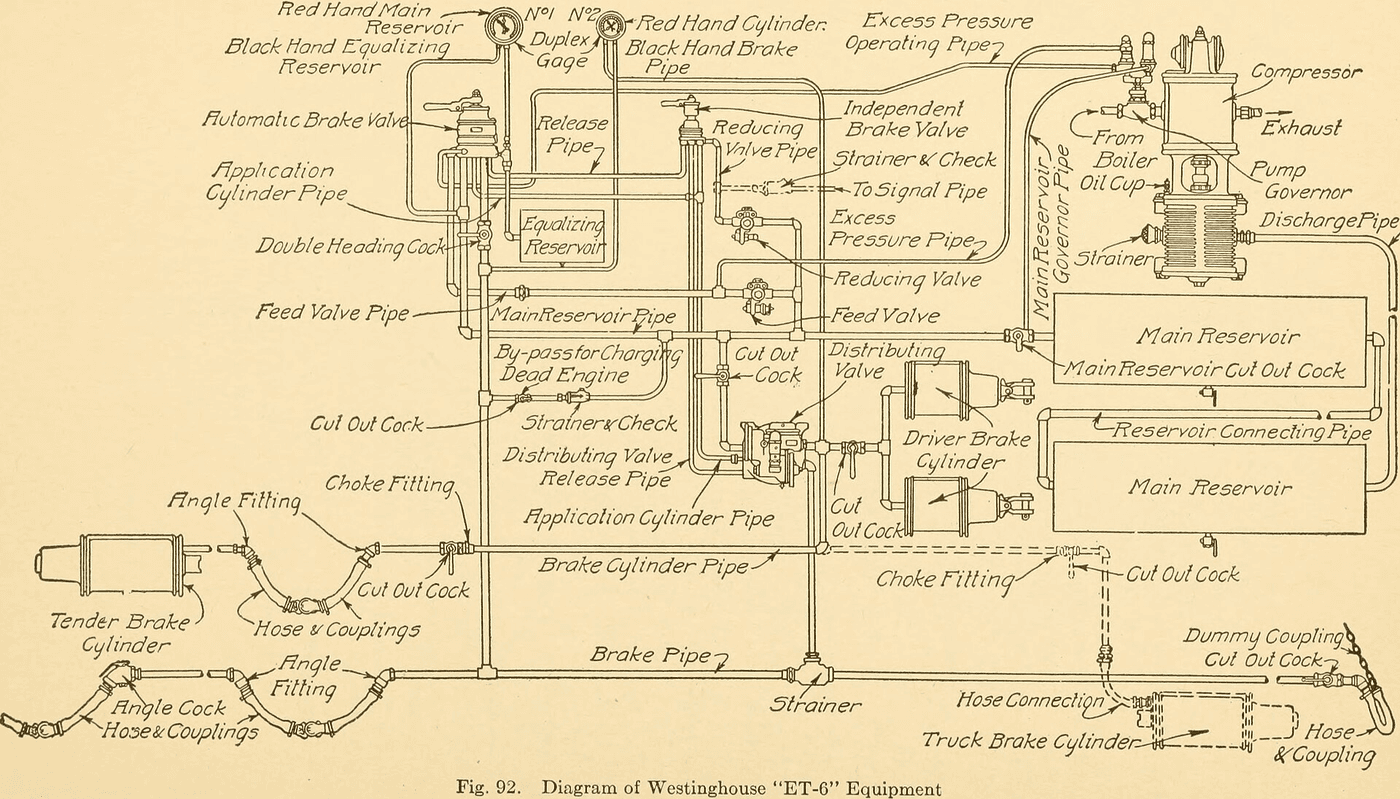
The wider family. Compare the Westinghouse air brake, which solved the same distribution problem for trains with compressed air and — crucially — made loss of pressure apply the brakes rather than release them. Road vehicles chose liquid for its incompressibility and compactness; heavy trucks chose air for that fail-safe behaviour. Both answers are still in service, and each is correct for its vehicle.
Ibikoresho
5- Umwanya
- 2 ibirundoUmwanya
- Umwanya
- 1 ikirundoUmwanya
- 300 mlUmwanya
Ibikoresho bikenewe
3- 1 vendor sell this, none ship to you yetUmwanya
Ibikoresho by'Ibishushanyo Bifitanye Isano
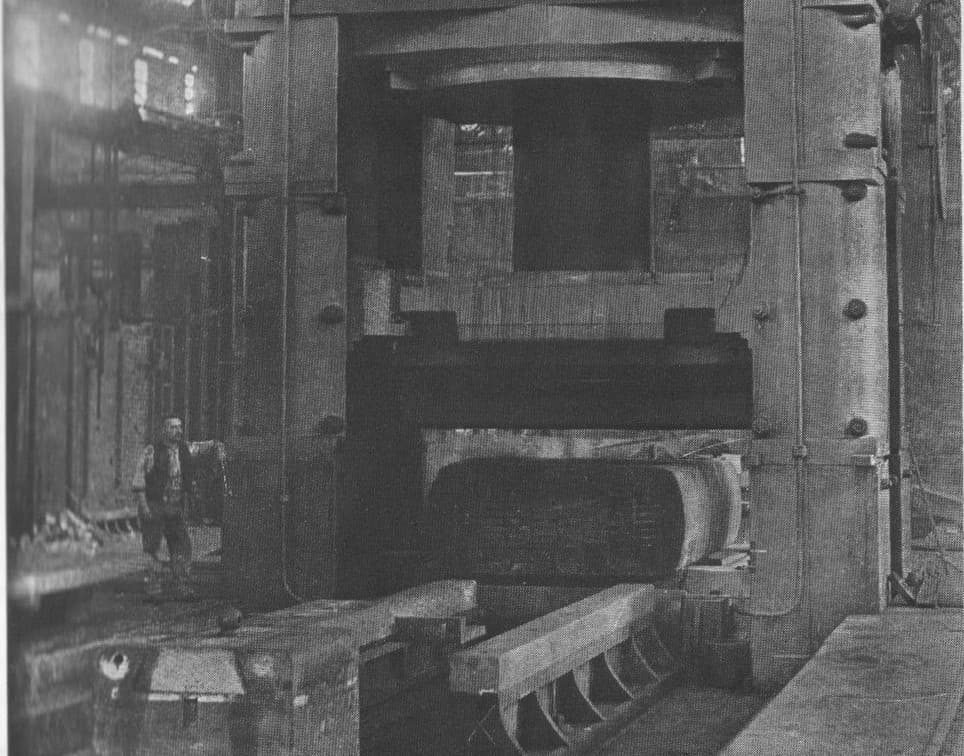
Blueprint zijyanye
Izi blueprint zisangira ubumenyi — uburyo, ibikoresho cyangwa amahame


CC0 Umurenge rusange
Iyi blueprint yasohowe munsi ya CC0. Ushobora gukoporora, guhindura, gukwirakwiza no gukoresha nta kwemererwa.
Shyigikira Umuremyi ugura ibicuruzwa binyuze muri Blueprint ye Komisiyo y'Umuremyi byashyizweho n'Abacuruzi, cyangwa kora verisiyo nshya y'iyi Blueprint ukayinjiza nk'isano muri Blueprint yawe kugira ngo musangire inyungu.