Ubufatanye
UBUHANZI
UBWIZA N'UBUZIMA
UBUKORIKORI
UMUCO N'AMATEKA
IMYIDAGADURO
IBIDUKIKIJE
IBIRIBWA N'IBINYOBWA
UBWUBATSI BUSUBIRA INYUMA
UBUMENYI
SIPORO
IKORANABUHANGA
IBYAMBARWA
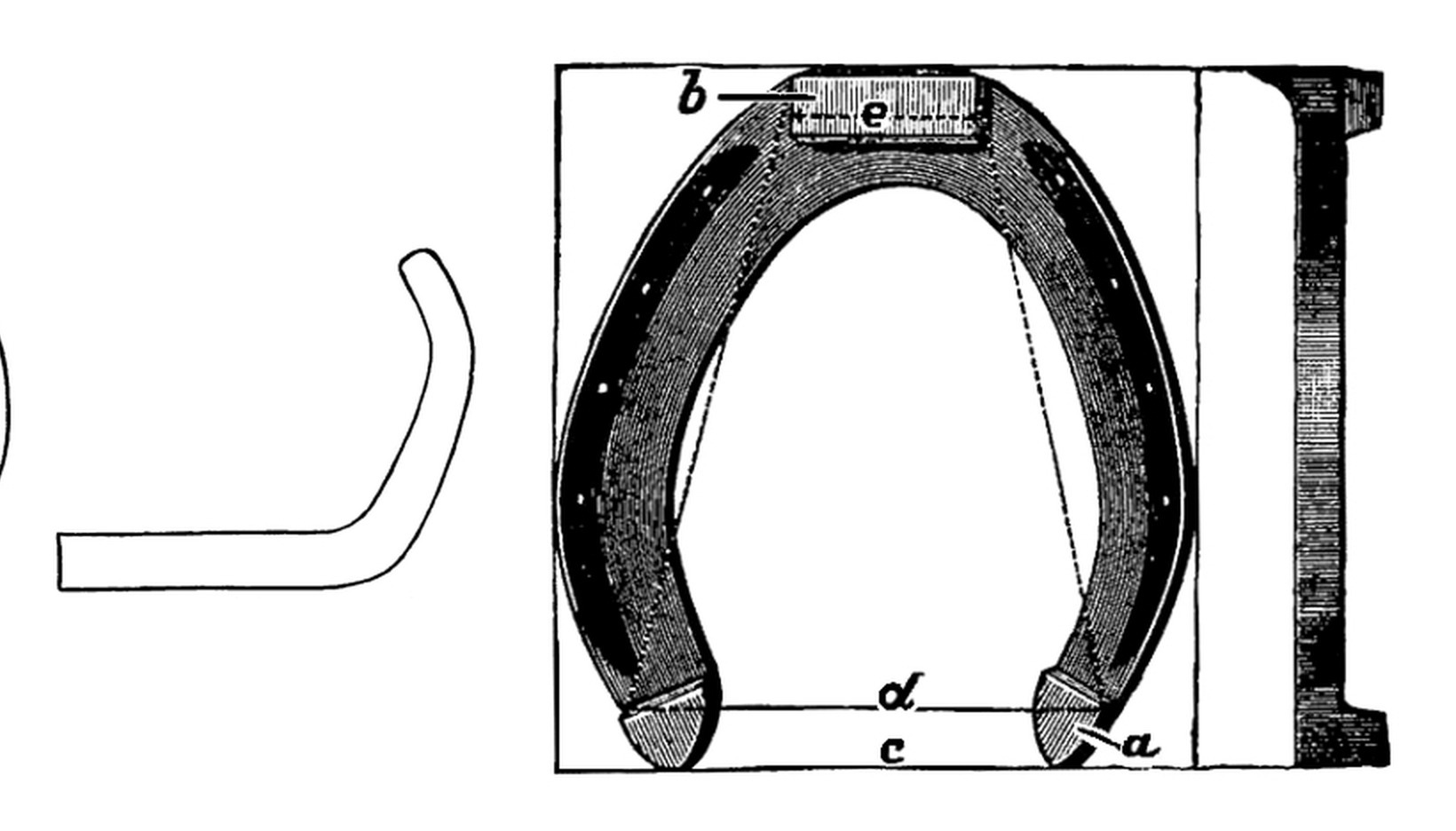


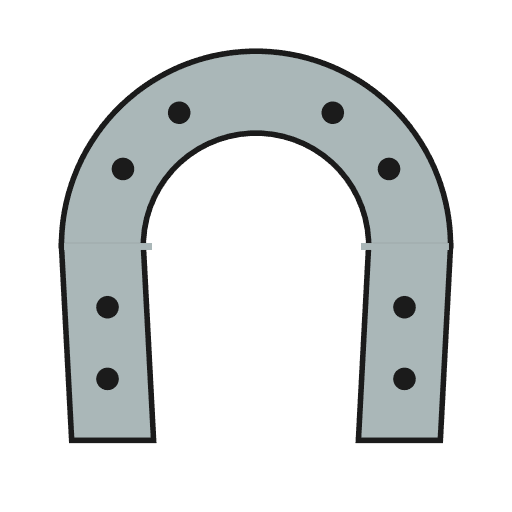
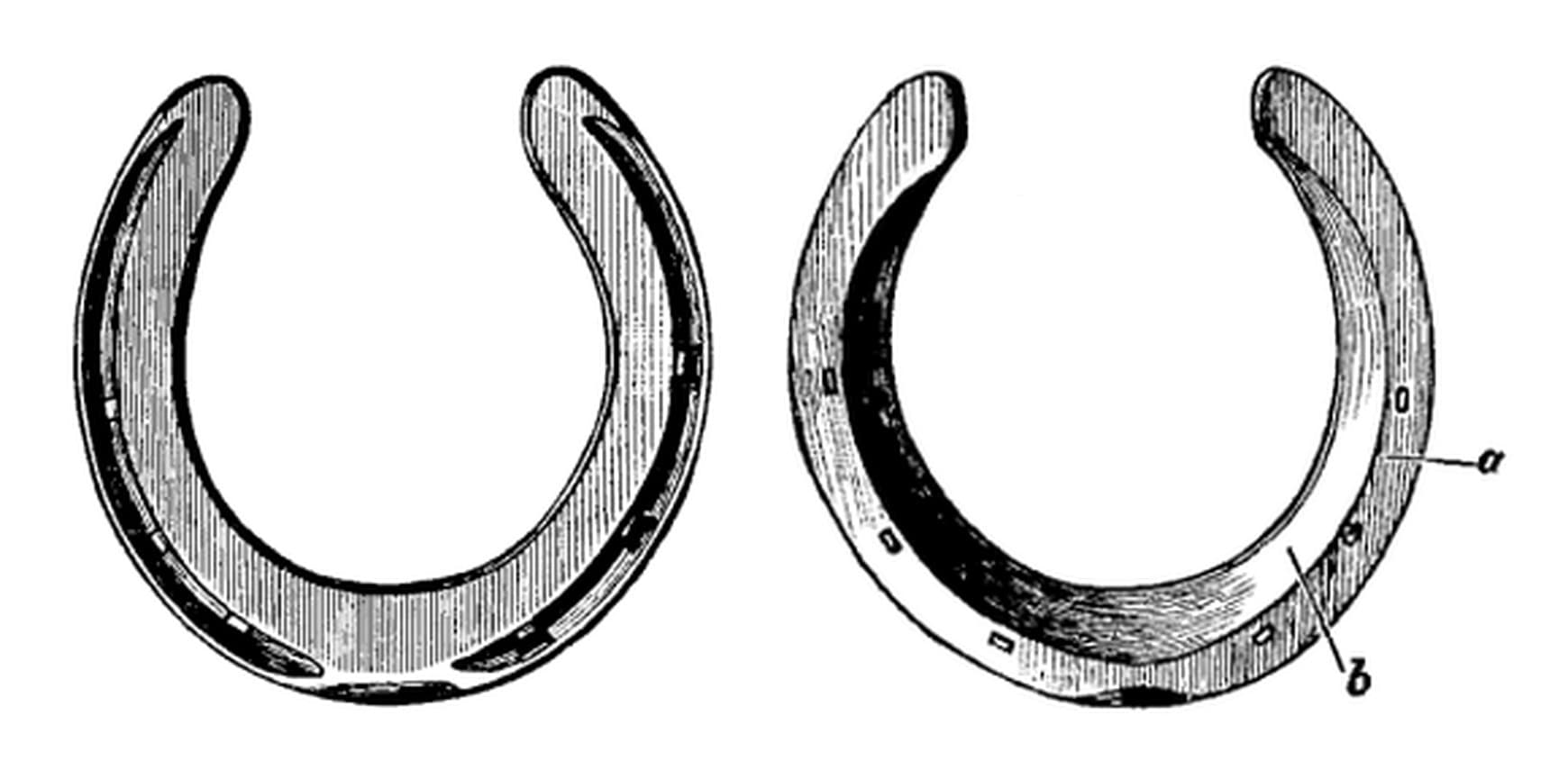
Hind Horseshoe: Round-Pointed Toe, No Seating, Nail Holes in the Front Two-Thirds (Lungwitz and Adams, Text-Book of Horseshoeing, 1913)
A flat hind horseshoe from Lungwitz and Adams, A Text-Book of Horseshoeing (1913). It is made "in like manner" as the front shoe, but the branches are bent to a different curve, giving a round-pointed toe, the hoof side is not concaved, and the nail holes run further back.
Fitting and nailing the shoe to the horse, calks and clips are not covered here.
Hagati
8-15 minutes a pair, once practised
Amabwiriza
1
1
Bar length and sizes
Bar length and sizes
Gupakira ikaye ya Jupyter…
2
2
Read Lungwitz and Adams
Read Lungwitz and Adams
"The hind shoe is made in like manner, but the branches are not bent in a circle but given that form shown in Fig. 106."
3
3
Measure and cut the bar
Measure and cut the bar
Measure the hoof from the point of the toe to the buttress and its greatest width; add them for the bar length. Trace the outline on stiff paper if you want to keep it. Cut the bar.
Ibikoresho by'iyi ntambwe:
 Umugozi w'icyuma cyacuzwe1 igice
Ibikoresho bikenewe:
 Umugozi wo Gupima
 Ikaramu ya penisile
 Impapuro ziremereye
 Uruganda rw'umucuzi
 Icyuma gikata ku ngoyi
 Amakoro y'Umucuzi
4
4
Bend the outer branch to the hind curve
Bend the outer branch to the hind curve
Heat the bar white-hot just beyond its middle and bend it over the sledge head on the anvil face with the turning hammer, as for the front shoe, but bend the branch to the flatter, angled curve of his Fig. 106, not to a circle. The outer branch is made first, the right shoe first in a pair. Draw out the end with the sledge.
Ibikoresho bikenewe:
Uruganda rw'umucuzi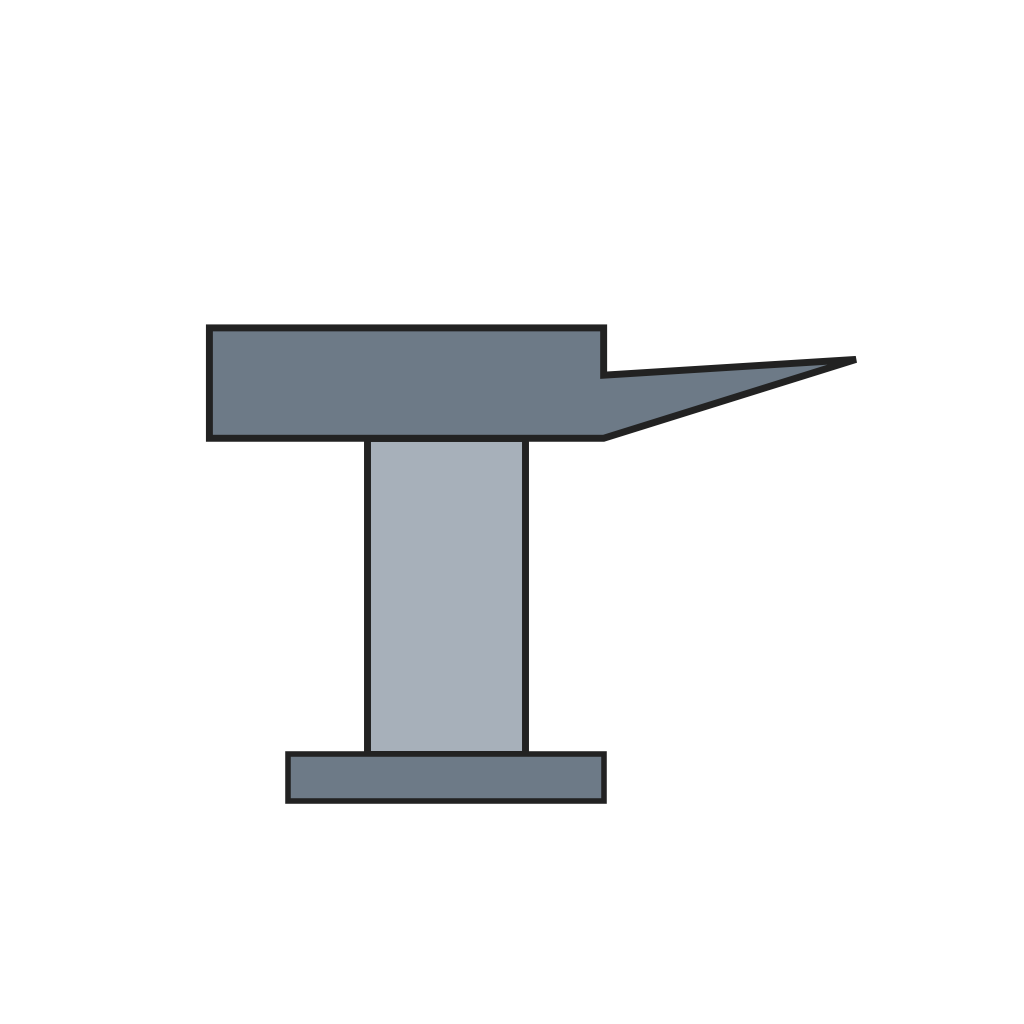 Ingoyi ntoya ifite umunwa
 Igikoresho cyo Gukurura Imitwaro
 Inyundo yo kuzengurutsaAmakoro y'Umucuzi
5
5
Bevel, flatten and shape
Bevel, flatten and shape
Bevel the branch on the horn, then flatten it. Bending the toe of a hind shoe backs up the inner edge and thins the outer, so hammer the shoe smooth and even. Shape it so the toe is round-pointed, "yet not too much so", as in his Fig. 116.
Ibikoresho bikenewe:
Ingoyi ntoya ifite umunwaInyundo yo kuzengurutsaAmakoro y'Umucuzi6
6
Round the inner edge and fuller
Round the inner edge and fuller
Concaving is not necessary: just round the inner edge of the web. Fuller the ground side as for the front shoe, to about two-thirds of the thickness.
Ibikoresho bikenewe:
Ingoyi ntoya ifite umunwa Fuller (icyuma cyo gucukura imirongo)Igikoresho cyo Gukurura ImitwaroInyundo yo kuzengurutsaAmakoro y'Umucuzi
7
7
Stamp the nail holes
Stamp the nail holes
Stamp and pritchel the nail holes in the front two-thirds of the shoe, none at the toe: usually one more than a front shoe, seldom more than eight. Set each as far from the outer edge as the wall is thick; on a hind hoof the wall is nearly as thick at the quarters as at the toe.
Ibikoresho bikenewe:
Ingoyi ntoya ifite umunwa Igitobora gishyushye
 Igikoresho cyo gutobora ibyuma by'ifarashiInyundo yo kuzengurutsaAmakoro y'Umucuzi
8
8
Make the second branch and finish
Make the second branch and finish
Make the inner branch the same way, turned to the left. Go over the outer edge on the horn and hammer the bearing surface smooth and level. Rough it out in two heats if you can.
Ibikoresho bikenewe:
Uruganda rw'umucuziIngoyi ntoya ifite umunwaInyundo yo kuzengurutsaFuller (icyuma cyo gucukura imirongo)Igitobora gishyushyeIgikoresho cyo gutobora ibyuma by'ifarashiAmakoro y'Umucuzi9
9
Troubleshooting
Troubleshooting
Hind shoe troubleshooting.
Flow
Loading...
10
10
History and honest limits
History and honest limits
From **A Text-Book of Horseshoeing**, by A. Lungwitz and John W. Adams, 11th edition, J. B. Lippincott, 1913 (Project Gutenberg 66786), chapter III F. His Fig. 116 shows a hind shoe with toe- and heel-calks; the calks and the toe-clip are not made here, as this chapter gives no method for forging heel-calks or drawing clips. Fitting and nailing are not covered. The metric figures are ours.
Ibikoresho
1- 1 igiceUmwanya
Ibikoresho bikenewe
12- 1 vendor sell this, none ship to you yetUmwanya
- 1 vendor sell this, none ship to you yetUmwanya
- Umwanya
- Umwanya
- Umwanya
- Umwanya
- Umwanya
- Umwanya
- Umwanya
Iki gishushanyo gikora
Blueprint zijyanye
Izi blueprint zisangira ubumenyi — uburyo, ibikoresho cyangwa amahame
CC0 Umurenge rusange
Iyi blueprint yasohowe munsi ya CC0. Ushobora gukoporora, guhindura, gukwirakwiza no gukoresha nta kwemererwa.
Shyigikira Umuremyi ugura ibicuruzwa binyuze muri Blueprint ye Komisiyo y'Umuremyi byashyizweho n'Abacuruzi, cyangwa kora verisiyo nshya y'iyi Blueprint ukayinjiza nk'isano muri Blueprint yawe kugira ngo musangire inyungu.