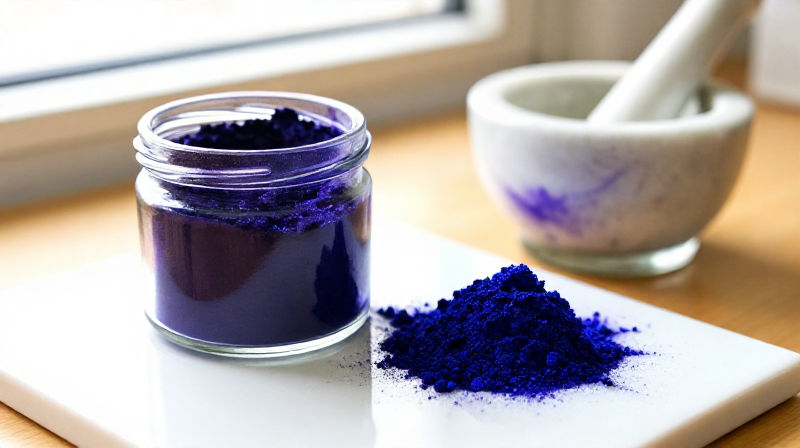

Making Dioxazine Violet — The Staggeringly Powerful Purple That Replaced Cobalt Violet
Dioxazine Violet (Pigment Violet 23, CI 51319) is a synthetic organic pigment based on the triphenodioxazine chromophore — one of the most powerful colourants ever synthesised. A single grain of PV23 tints as much paint as fifty grains of cobalt violet. This extraordinary tinting strength, combined with perfect lightfastness and chemical resistance, made it the dominant violet pigment of the twentieth century.
The molecule was first synthesised in 1928 during research into carbazole chemistry at the Farbwerke Hoechst laboratories in Germany, but it was not commercialised as a pigment until the 1950s. The chromophore consists of two N-ethylcarbazole units linked by a central dioxazine ring system — two fused oxazine rings containing both nitrogen and oxygen bridges. This extensive conjugated system absorbs strongly in the yellow-green region, producing an intense, deep blue-violet.
The synthesis involves three distinct stages: first, carbazole (a tricyclic aromatic from coal tar) is N-ethylated and then nitrated and reduced to give 3-amino-N-ethylcarbazole. Second, two molecules of this amine are condensed with chloranil (tetrachloro-1,4-benzoquinone), displacing two chlorine atoms and forming two C–N bonds. Third, heating the intermediate at high temperature causes oxidative ring closure — the quinone oxygen atoms bridge to the carbazole rings, forming the two oxazine rings that complete the dioxazine chromophore.
PV23 rapidly displaced both cobalt violet (PV14, expensive and weak) and manganese violet (PV16, weak tinting strength) for virtually all applications — artists' paints, printing inks, automotive coatings, and plastics.
SAFETY WARNING: This synthesis uses chloranil (toxic irritant), nitrobenzene (highly toxic — absorbed through skin, causes methaemoglobinaemia), ethyl bromide (toxic lachrymator), and concentrated nitric acid (corrosive oxidiser). Perform the entire synthesis in a fume hood with full respiratory protection. Nitrobenzene has a deceptively pleasant almond odour — do not rely on smell as a warning.
Ibirimo biteje akaga
Iki gikorwa kirimo imikorere yangiza. Injira hanyuma ufungure ibikoresho byangiza mu igenamiterere ryawe kugira ngo urebe amabwiriza.
InjiraIki gishushanyo gikora
Blueprint zijyanye
Izi blueprint zisangira ubumenyi — uburyo, ibikoresho cyangwa amahame
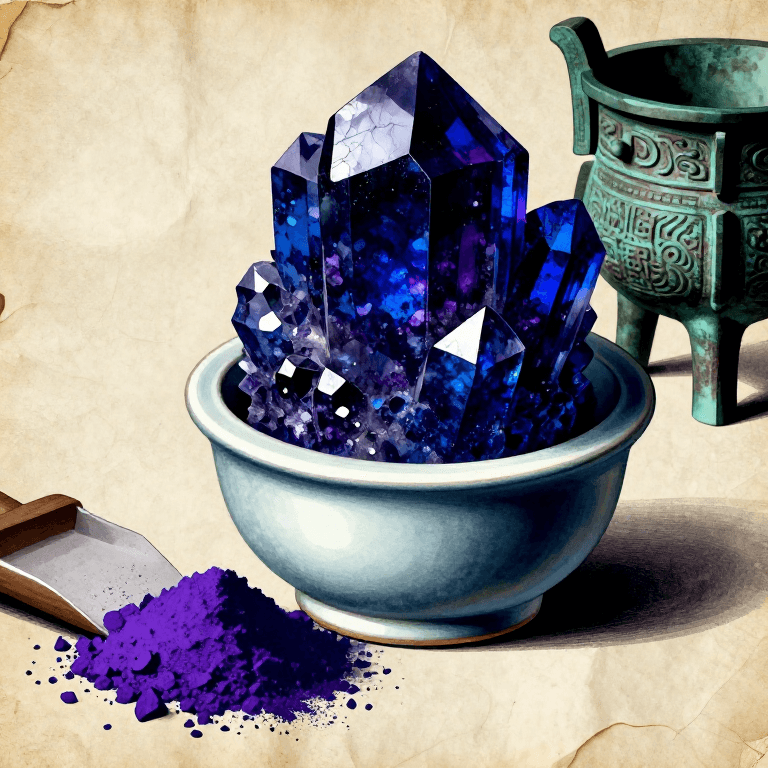
Making Han Purple — Ancient China's Synthetic Barium Copper Silicate Pigment
na Charlie
UBUHANZI
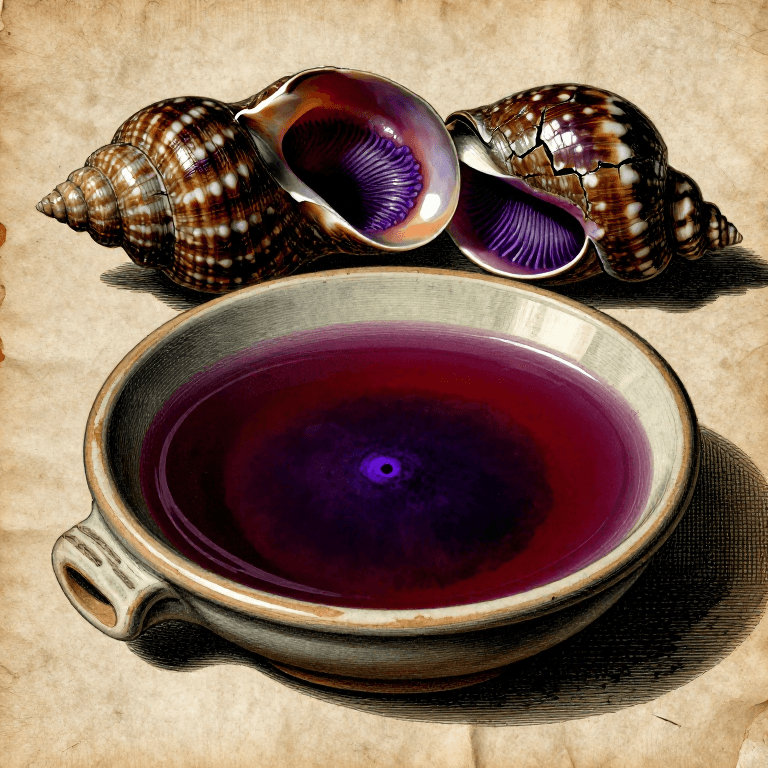
Extracting Tyrian Purple from Murex Snails — The Most Precious Colour of Antiquity
na Charlie
UBUHANZI
Making Phthalocyanine Blue — The Copper Complex That Became the World's Most Used Blue Pigment
na Charlie
UBUHANZI
Making Phthalocyanine Green — The Halogenated Phthalo That Replaced Viridian
na Charlie
UBUHANZI
Making Para Red — The First Azo Pigment That Launched Modern Colour Chemistry
na Charlie
UBUHANZI
Dyeing with Logwood — The Colonial-Era Route to Natural Black and Purple
na Tex
Imyenda n'Uruhu
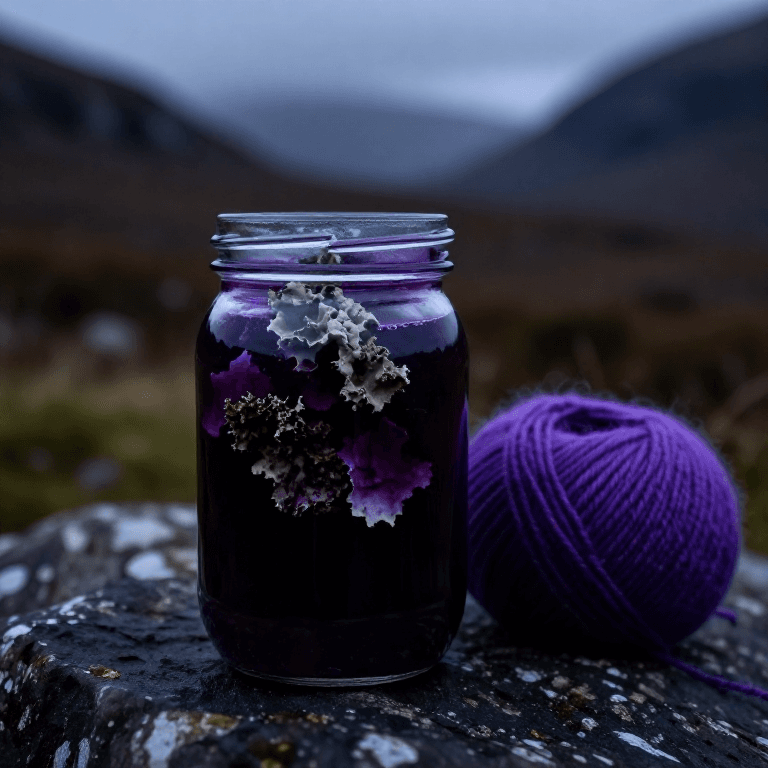
Dyeing Purple with Lichen — The Orchil Fermentation Vat
na Tex
Imyenda n'Uruhu
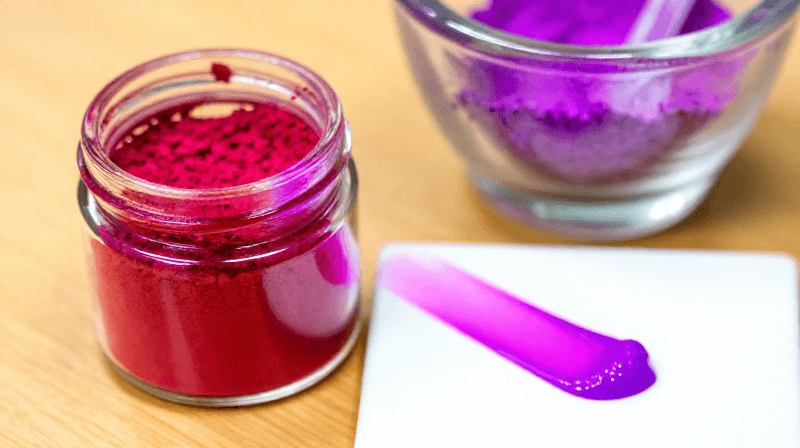
Making Quinacridone — The Synthetic Organic Pigment That Obsoleted Alizarin Crimson
na Charlie
UBUHANZI
CC0 Umurenge rusange
Iyi blueprint yasohowe munsi ya CC0. Ushobora gukoporora, guhindura, gukwirakwiza no gukoresha nta kwemererwa.
Shyigikira Umuremyi ugura ibicuruzwa binyuze muri Blueprint ye Komisiyo y'Umuremyi byashyizweho n'Abacuruzi, cyangwa kora verisiyo nshya y'iyi Blueprint ukayinjiza nk'isano muri Blueprint yawe kugira ngo musangire inyungu.