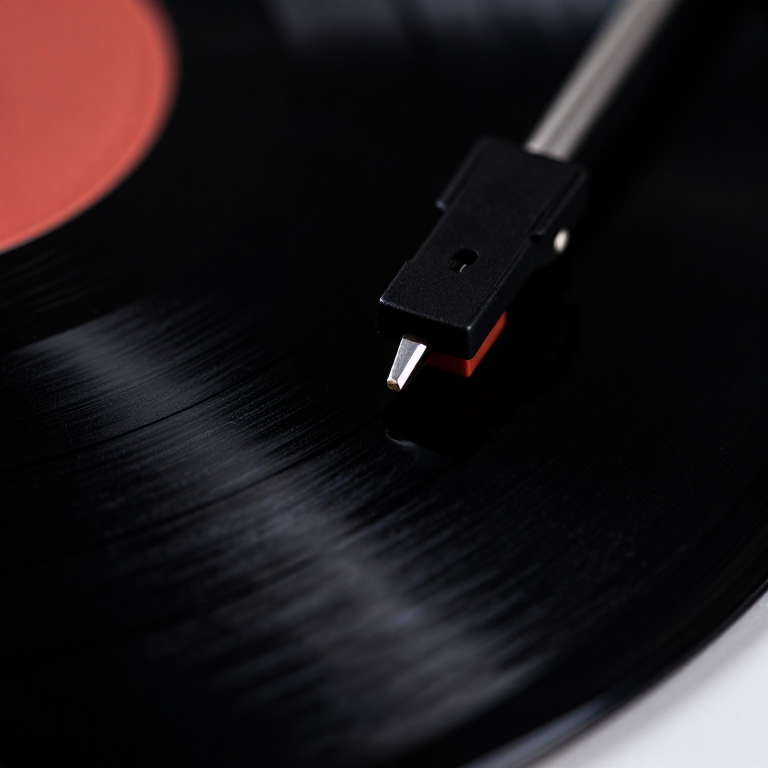


Microgroove LP
Amabwiriza
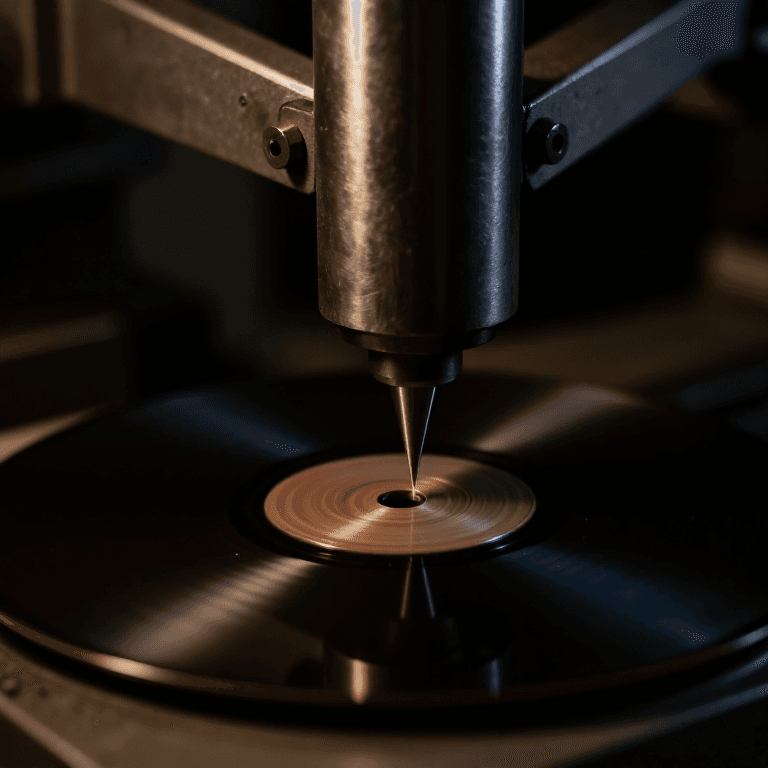
Compare a 78 groove with an LP groove under magnification
Compare a 78 groove with an LP groove under magnification
The dimensional change is the heart of it, so measure it.
- Examine a shellac 78 under a microscope or a strong loupe and estimate the groove width and pitch.
- Do the same with an LP.
- Count grooves per centimetre across the radius on each.
- Compute how much total groove length each disc carries.
The LP fits several times more groove into the same radius. That is where most of the extra playing time comes from — the slower speed contributes, but the finer groove pitch contributes more. And a finer groove demands a lighter, smaller stylus, which in turn demands a pickup that tracks at a fraction of the weight a 78 pickup used.
Note the stylus tip radii: a 78 needs about 65 microns, an LP about 25. Playing an LP with a 78 stylus rides the tip on the groove bottom and destroys the record in one pass — which is why the two formats needed different equipment as well as different discs.Ibikoresho by'iyi ntambwe:
 Urupapuro rw'Imirongo1 pad
Ibikoresho bikenewe:
 Ikigereranyo cya Digitale cy'Amasentimetero 6
 Ikigereranyo Gihuriweho
Understand why the material had to change
Understand why the material had to change
Shellac cannot carry a microgroove, for a specific and physical reason.
- Examine a shellac 78's surface closely and note the filler particles in the material.
- Compare with vinyl, which is homogeneous.
- Play a 78 and an LP and compare the character of the surface noise.
- Consider the particle size relative to each groove's dimensions.
Shellac is loaded with mineral filler whose particles are comparable in size to a microgroove. In a wide 78 groove those particles are small features; in a microgroove they are the same order as the signal itself, so the noise would swamp the music. Vinyl has no filler, so its surface can be smooth at the scale the finer groove requires.
Vinyl is also softer, which cuts both ways: it takes a finer groove and tolerates a light stylus, but it scratches easily and holds static that attracts dust. Every LP's handling ritual follows from the material choice made here.Ibikoresho bikenewe:
Ikigereranyo cya Digitale cy'Amasentimetero 6 Igipimo cya Digitale cy'Urwego rw'Ubushakashatsi
 Urupapuro rwa Akiriliki
Build the equalisation, and see why it is necessary
Build the equalisation, and see why it is necessary
A flat cut is impossible; the curve is not a tone control but a physical necessity.
- Consider a bass note cut at full level: the stylus must swing a long way sideways, so the groove is wide.
- Work out what happens to groove spacing if bass is cut at full amplitude — adjacent grooves collide.
- Now build a filter that reduces bass and boosts treble before cutting.
- Build the inverse filter for playback.
- Feed a swept tone through both in series and confirm the response is flat.
Bass is reduced to stop grooves overlapping; treble is boosted to lift it above surface noise. Playback applies the exact inverse, so the music comes out flat while the noise gets pushed down by the treble reduction. This is the same pre-emphasis idea that appears in FM radio and, in a more sophisticated form, in the Dolby system at the end of this batch.
The RIAA curve became the standard in the 1950s, and its existence is why a turntable cannot be plugged into a line input — the signal is deliberately wrong until the phono stage corrects it.Ibikoresho by'iyi ntambwe:
Urupapuro rw'Imirongo1 padIbikoresho bikenewe:
 Igikorera ibimenyetso cya DDS
 Osilosikopu ya DigitaleIgipimo cya Digitale cy'Urwego rw'Ubushakashatsi
 Agafuka k'ibibiko bya seramike
 Ikusanyirizo ry'Ibirwanya Amashanyarazi bya 1/4 W
Add variable groove pitch and gain more time still
Add variable groove pitch and gain more time still
The lathe can space grooves according to what is coming next.
- Consider a quiet passage: the groove barely deviates, so neighbouring grooves can sit close together.
- Consider a loud passage: the groove swings widely and needs room.
- Feed the audio to the lathe's pitch control through a delay, so it knows what is coming.
- Estimate the extra playing time gained over fixed pitch.
Ibikoresho bikenewe:
Osilosikopu ya DigitaleIkigereranyo cya Digitale cy'Amasentimetero 6 Isaha yo Guhagarika
A system, not an invention, and history
A system, not an invention, and history
Peter Goldmark and his team at Columbia introduced the LP in 1948. RCA responded in 1949 with the 45 rpm single — a smaller disc with a large centre hole for automatic changers — and the resulting format war settled into a division of labour that lasted forty years: LPs for albums, 45s for singles.
No single element makes an LP. Fine groove, slow speed, vinyl, standardised equalisation, lightweight pickup and variable pitch all had to arrive together, and any one missing spoils the result. A microgroove in shellac is unlistenable; vinyl at 78 rpm wastes the material's advantage; no equalisation and the grooves collide. It is a systems achievement in the same way electrical recording was in 1925, and Goldmark's contribution was integrating rather than inventing.
What it changed culturally. Twenty-five minutes a side is long enough for a symphony movement, a jazz set, or a coherent collection of songs — so the ALBUM becomes a form. The word previously meant a literal book of 78 sleeves; after 1948 it means a work conceived at that length. The format created the artistic unit.
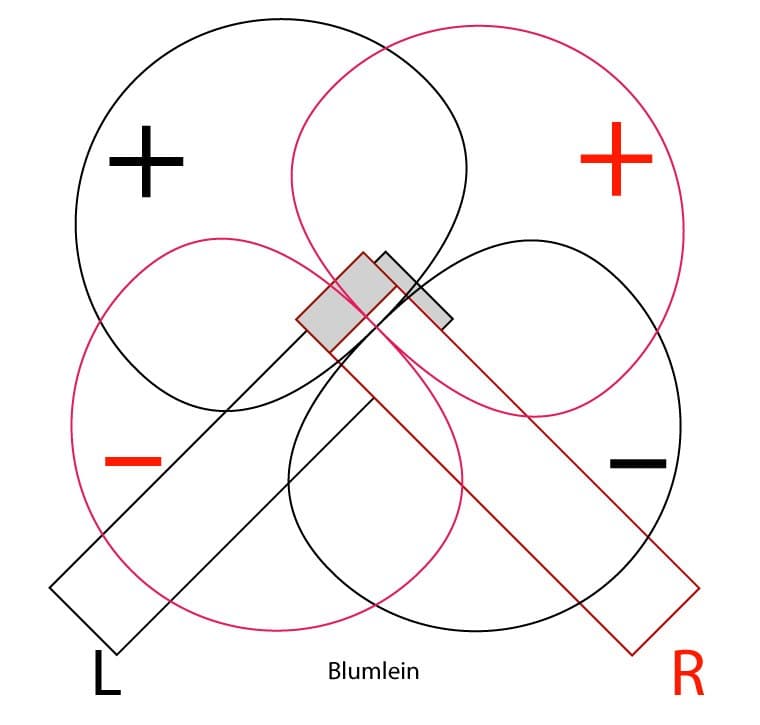
Its honest limits: playing time still varies with how loud the music is; inner grooves sound worse because the stylus traces them more slowly; the surface is vulnerable; and it is a mechanical contact medium, so every play wears the record slightly. Blumlein's stereo, patented seventeen years earlier, was finally applied to this format in 1958.
Ibikoresho
1- Umwanya
Ibikoresho bikenewe
9- Umwanya
- Umwanya
- 1 vendor sell this, none ship to you yetUmwanya
- Umwanya
Blueprint zijyanye
Izi blueprint zisangira ubumenyi — uburyo, ibikoresho cyangwa amahame


CC0 Umurenge rusange
Iyi blueprint yasohowe munsi ya CC0. Ushobora gukoporora, guhindura, gukwirakwiza no gukoresha nta kwemererwa.
Shyigikira Umuremyi ugura ibicuruzwa binyuze muri Blueprint ye Komisiyo y'Umuremyi byashyizweho n'Abacuruzi, cyangwa kora verisiyo nshya y'iyi Blueprint ukayinjiza nk'isano muri Blueprint yawe kugira ngo musangire inyungu.