Ubufatanye
UBUHANZI
UBWIZA N'UBUZIMA
UBUKORIKORI
UMUCO N'AMATEKA
IMYIDAGADURO
IBIDUKIKIJE
IBIRIBWA N'IBINYOBWA
UBWUBATSI BUSUBIRA INYUMA
UBUMENYI
SIPORO
IKORANABUHANGA
IBYAMBARWA


Plug Gauge: Machinery Steel Case-Hardened in Charred Leather (Markham, 1908)
A plug gauge checks the size of a hole. Hardened tool steel can creep in size for months, so some makers used machinery steel and case-hardened it instead.
E. R. Markham's Tool Making (1908) packs the turned gauge in charred leather in a box, keeps it red hot in the furnace 7 or 8 hours, lets it cool, reheats it in a tube to a low red and plunges it in raw linseed oil. No tempering is needed, and the gauge does not change as it ages. Grinding and lapping are as for any plug gauge.
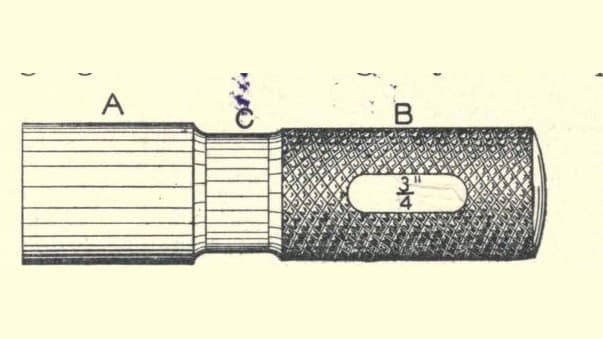
Mild steel stands for his machinery steel; the 3/4 in size is his Fig. 293.
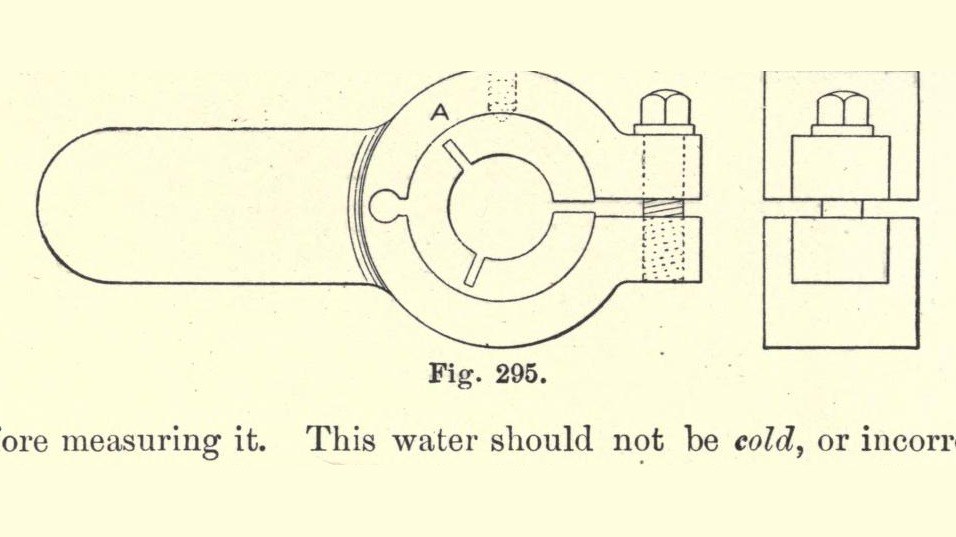
Source: E. R. Markham, Tool Making (American School of Correspondence, 1908), pp. 178-182. Picture: his Fig. 295, ring laps in a holder.
Hejuru
Two days
Amabwiriza
1
1
Read Markham
Read Markham
"When it reaches a low red heat, it should be plunged in a bath of raw linseed oil. It will not be necessary to draw the temper, and the danger of alteration as it ages is done away with."
2
2
Turn, knurl and stamp
Turn, knurl and stamp
Rough out the bar, allowing enough to turn off the decarbonised skin. Turn the handle (B in Fig. 293) to size and knurl it, and turn and finish the neck (C). Mill a flat spot in the middle of the handle and stamp on it the size of the gauge and the name or mark of the part it gauges (some shops stamp on C instead). Stamp before finishing any gauging surface, as driving stamps stretches the steel. Then turn the gauging end (A) .010 to .015 in over the finished size to allow for grinding.
Ibikoresho by'iyi ntambwe:
 Umutsi w'icyuma cyoroshye1 bar
Ibikoresho bikenewe:
 Imashini yo guhinguza icyuma
 Icyuma cyo kuca cy'itorero
 Igikoresho cyo gushushanya imirongo ku byuma
 Imashini ibaza icyuma
 Kashe z’inyuguti n’imibare z’icyuma
 Inyundo
 Mikorometero
 Amadarubindi y'umutekano
3
3
Pack and carburise
Pack and carburise
Pack the gauge in a box with charred leather all round it, as for pack hardening, close the box and run it in the furnace for 7 or 8 hours. Then, red hot, take the box out of the furnace and let it cool with the gauge inside. Do not quench straight from the box: Markham's second heat refines the grain, making it as compact as properly hardened tool steel.
Ibikoresho by'iyi ntambwe:
 Uruhu rwatwitswe rukaba amakara1 packing
Ibikoresho bikenewe:
 Agasanduku ko gukomeza ubuso
 Ifuru ya muffleAmadarubindi y'umutekano
4
4
Reheat and quench in oil
Reheat and quench in oil
Heat the gauge in an ordinary fire, enclosed in a piece of tube so the fire does not touch it. When it reaches a low red heat, plunge it into a bath of raw linseed oil. The temper need not be drawn.
Ibikoresho bikenewe:
 Iziko ryo Gucura
 Amavuta y'ubushuka atatunganyijweAmadarubindi y'umutekano
5
5
Grind
Grind
Grind on dead centres if you can (a worn lathe spindle copies its own error onto the work), with water running on the work to keep it cool; otherwise heat it as little as possible. Use a coarse wheel free from glaze to within .004 in of size, then a finer wheel to .001 in over. Always measure the gauge cold, since a gauge ground to size while warm will be small when it cools.
Ibikoresho bikenewe:
 Imashini isena ibintu by’uruzigaMikorometeroAmadarubindi y'umutekano
6
6
Lap to size
Lap to size
Make a lap: a piece of cast iron with a hole bored a trifle larger than the gauge, split, and closed by a screw (Fig. 294); for much gauge work, a holder with split ring laps held by a pointed screw (Fig. 295). Lap the gauge to finished size with flour emery mixed with oil. Lapping warms it too much to caliper, so cool it in a dish of water at the temperature of the room where it will be used (about 70 F), not cold water, before each measurement.
Ibikoresho bikenewe:
 Inkoni y'icyuma cyasuwe
 Ifu ya emery
 Amavuta y'imashini
 Igikombe cy'Ikirahure
 Amazi Yatunganyijwe
 Igipima Ubushyuhe cy'UbushakashatsiMikorometero
7
7
History and honest limits
History and honest limits
Markham notes that the creeping of hardened tool steel, put down to a rearrangement of its particles after hardening, led some manufacturers to use machinery steel for gauges. The case-hardened gauge needs no seasoning.
He calls the steel "machinery steel"; mild steel bar stands for it here. The size of the box and the furnace are not given; the 3/4 in size is his Fig. 293.
Ibikoresho
2- Umwanya
- 1 packingUmwanya
Ibikoresho bikenewe
19- Umwanya
- Umwanya
- Umwanya
- Umwanya
- Umwanya
- Umwanya
- Umwanya
- Umwanya
- Umwanya
- Umwanya
- Umwanya
- Umwanya
- Umwanya
- Umwanya
Iki gishushanyo gikora
Blueprint zijyanye
Izi blueprint zisangira ubumenyi — uburyo, ibikoresho cyangwa amahame
CC0 Umurenge rusange
Iyi blueprint yasohowe munsi ya CC0. Ushobora gukoporora, guhindura, gukwirakwiza no gukoresha nta kwemererwa.
Shyigikira Umuremyi ugura ibicuruzwa binyuze muri Blueprint ye Komisiyo y'Umuremyi byashyizweho n'Abacuruzi, cyangwa kora verisiyo nshya y'iyi Blueprint ukayinjiza nk'isano muri Blueprint yawe kugira ngo musangire inyungu.