UBUHANZI
UBWIZA N'UBUZIMA
UBUKORIKORI
UMUCO N'AMATEKA
IMYIDAGADURO
IBIDUKIKIJE
IBIRIBWA N'IBINYOBWA
UBWUBATSI BUSUBIRA INYUMA
UBUMENYI
SIPORO
IKORANABUHANGA
IBYAMBARWA
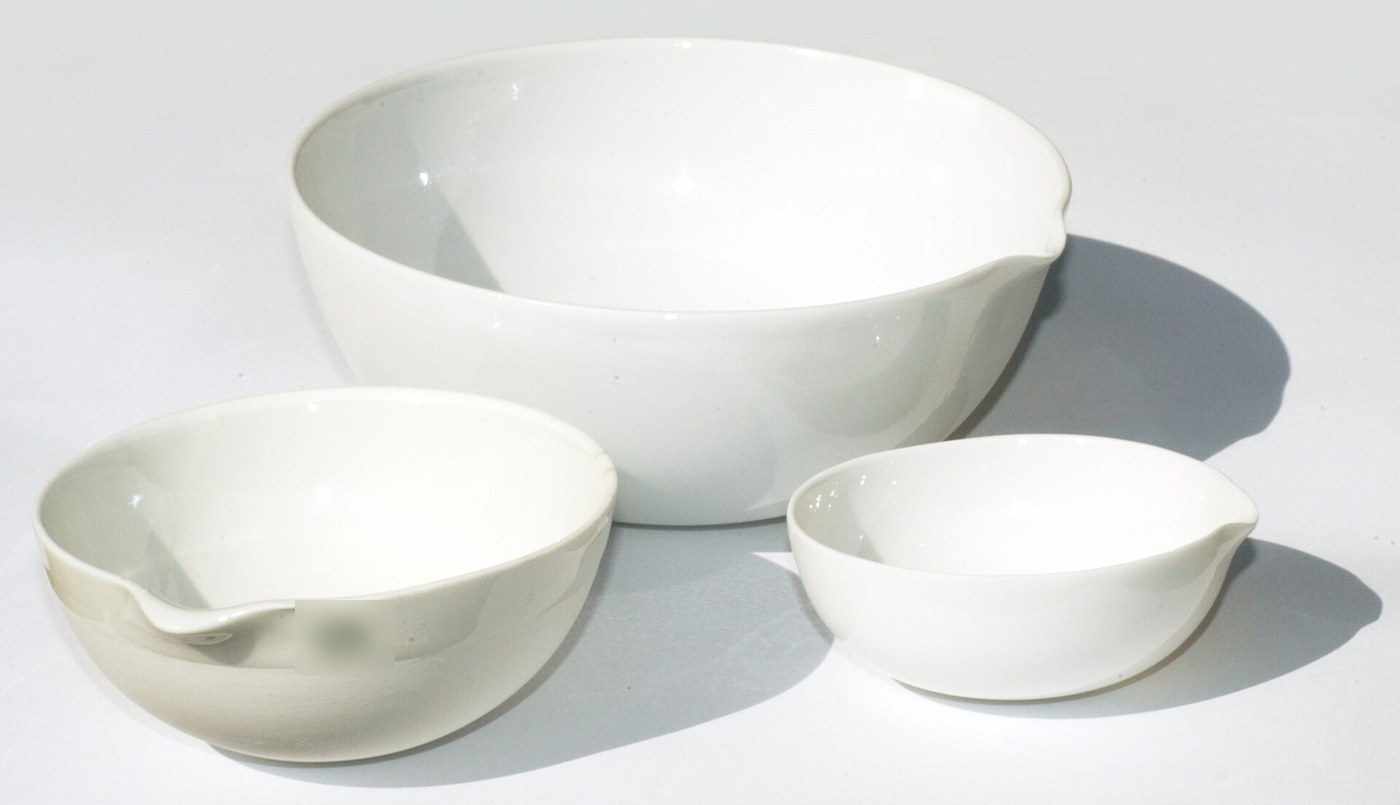

Porcelain Labware: Evaporating Dishes, Crucibles, Funnels and Streak Plates
Hard porcelain stands strong heat and most chemicals, so the laboratory's dishes, crucibles and filter funnels are made of it; left unglazed, its white biscuit is the streak plate for testing minerals. Form the pieces, give them a light first firing, dip them in ground-felspar glaze, and fire them hard in saggers, as Andrew Ure (1839) describes for Sèvres.
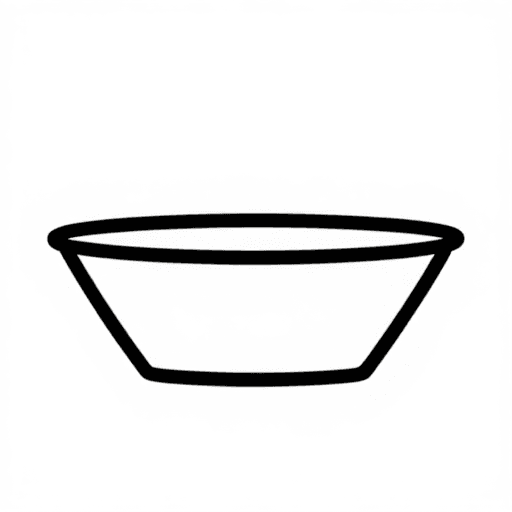
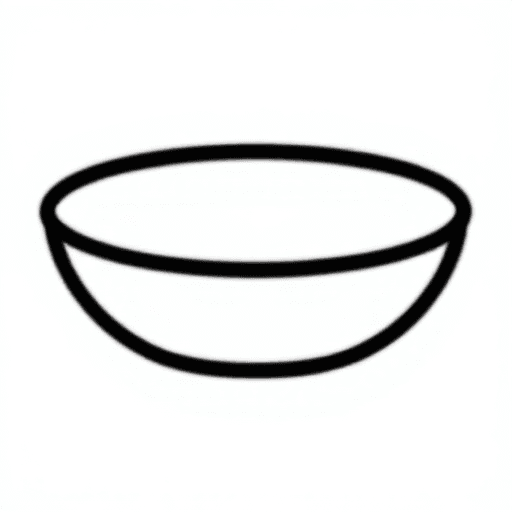
The picture: porcelain evaporating dishes in three sizes, glazed, with pouring lips.
Hejuru
Weeks with drying and two firings
Amabwiriza
1
1
Form the pieces
Form the pieces
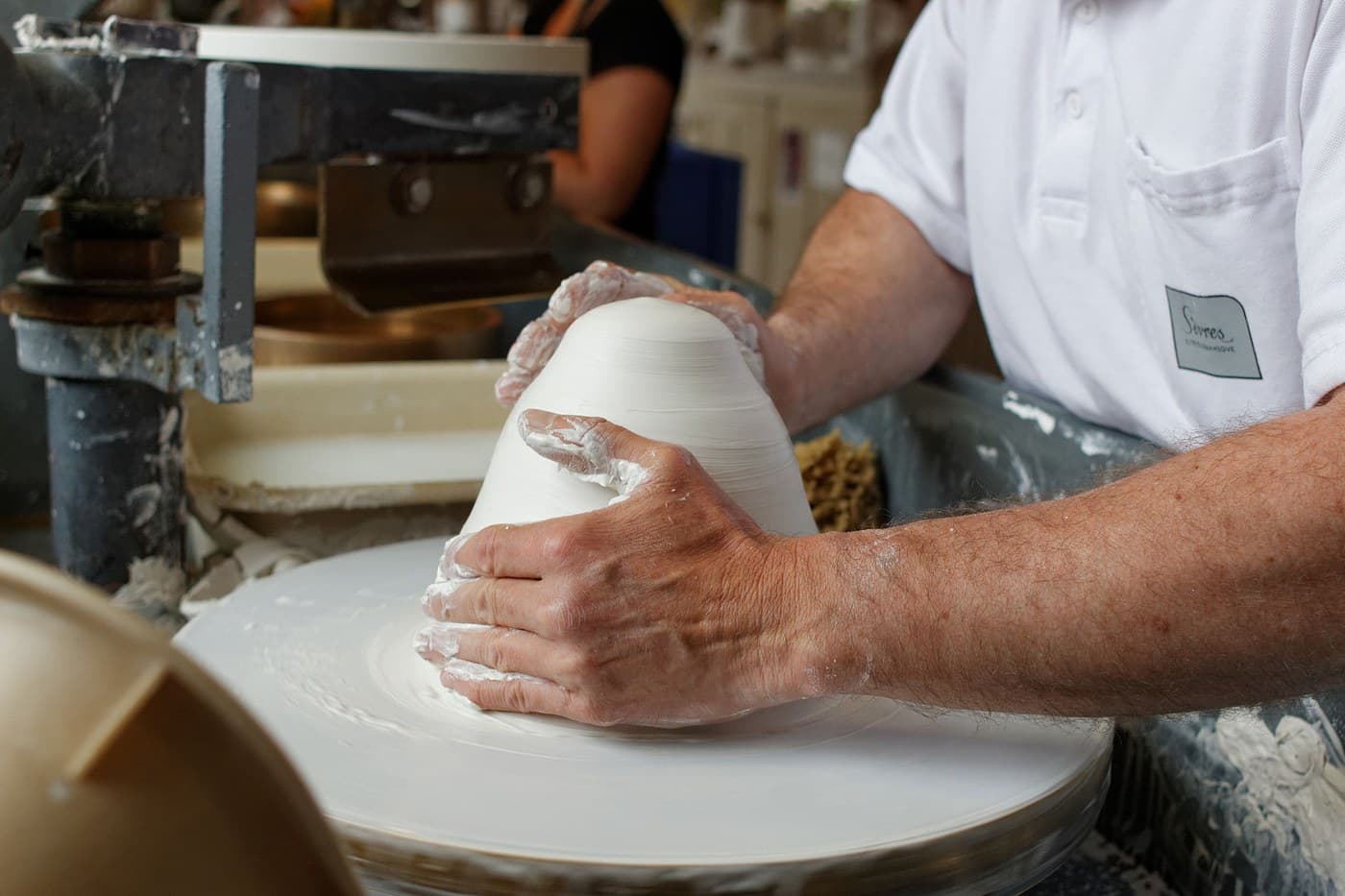
Throw shallow round dishes with a lip and small lidded crucibles on the wheel. For a Büchner funnel throw a cylinder with a flat floor, pierce the floor with many small holes and add a stem. Roll a slab and cut it into small tiles for streak plates.
Ibikoresho by'iyi ntambwe:
 Ibumba rya porukorene5 kg
Ibikoresho bikenewe:
 Uruziga rw'umubumbyi
 Igiti cyo gusingiya umutsima
 Umutwe w'ibikoresho by'ibumba
 Umurongo w'ipima
2
2
Dry very slowly
Dry very slowly
Ure: dry them very slowly; a little hurry spoils them.
3
3
Light first firing
Light first firing
Fire them gently so they keep their shape but become strong enough to handle and be dipped in water.
Ibikoresho by'iyi ntambwe:
 Inkwi1 as required
Ibikoresho bikenewe:
 Itanura
 Uturindantoki twihanganira ubushyuhe
4
4
Felspar glaze
Felspar glaze
Grind felspar very fine, stir it with water and a little vinegar to a thin pap. Dip each dish, crucible and funnel for an instant; the porous body draws the glaze on. Wipe the glaze off the feet. Leave the streak-plate tiles unglazed.
Ibikoresho by'iyi ntambwe:
 Igice cya feldispati0.5 kg
 Amazi2 litiro
 Inkarabyo0.05 litiro
Ibikoresho bikenewe:
 Isekuru ryo gusya
 Akayunguruzo Gafite Urukoma Ruto
 Igikonjo
 Agapfukamunwa k'Umukungugu
5
5
Set in saggers
Set in saggers
Set every piece in its own sagger on a flat, sand-dusted base so it cannot stick or sag out of shape; small pieces may share a base if they do not touch.
Ibikoresho by'iyi ntambwe:
 Umusenyi Muto1 kg
Ibikoresho bikenewe:
 Agasanduku k'ibumba ryihanganira umuriro
6
6
The hard firing
The hard firing
Raise the fire slowly for about 15 hours to a cherry red, then fire hard until the kiln glows white inside, drawing trial pieces to judge when the glaze is smooth. Cool slowly over days.
Ibikoresho by'iyi ntambwe:
Inkwi1 as requiredIbikoresho bikenewe:
ItanuraUturindantoki twihanganira ubushyuhe7
7
Ure's firing, hour by hour
Ure's firing, hour by hour
Gupakira ikaye ya Jupyter…
8
8
Limits
Limits
The firings, glaze and saggers are Ure's account of Sèvres; the forms of the four wares are ours. A full porcelain firing needs a kiln that reaches white heat.
Ibikoresho
6- Umwanya
- 1 as requiredUmwanya
- 0.5 kgUmwanya
- 2 litiroUmwanya
- 0.05 litiroUmwanya
- 1 kgUmwanya
Ibikoresho bikenewe
11- Umwanya
- Umwanya
- Umwanya
- Umwanya
- Umwanya
- Umwanya
- Umwanya
Iki gishushanyo gikora

Blueprint zijyanye
Izi blueprint zisangira ubumenyi — uburyo, ibikoresho cyangwa amahame
CC0 Umurenge rusange
Iyi blueprint yasohowe munsi ya CC0. Ushobora gukoporora, guhindura, gukwirakwiza no gukoresha nta kwemererwa.
Shyigikira Umuremyi ugura ibicuruzwa binyuze muri Blueprint ye Komisiyo y'Umuremyi byashyizweho n'Abacuruzi, cyangwa kora verisiyo nshya y'iyi Blueprint ukayinjiza nk'isano muri Blueprint yawe kugira ngo musangire inyungu.