UBUHANZI
UBWIZA N'UBUZIMA
UBUKORIKORI
UMUCO N'AMATEKA
IMYIDAGADURO
IBIDUKIKIJE
IBIRIBWA N'IBINYOBWA
UBWUBATSI BUSUBIRA INYUMA
UBUMENYI
SIPORO
IKORANABUHANGA
IBYAMBARWA
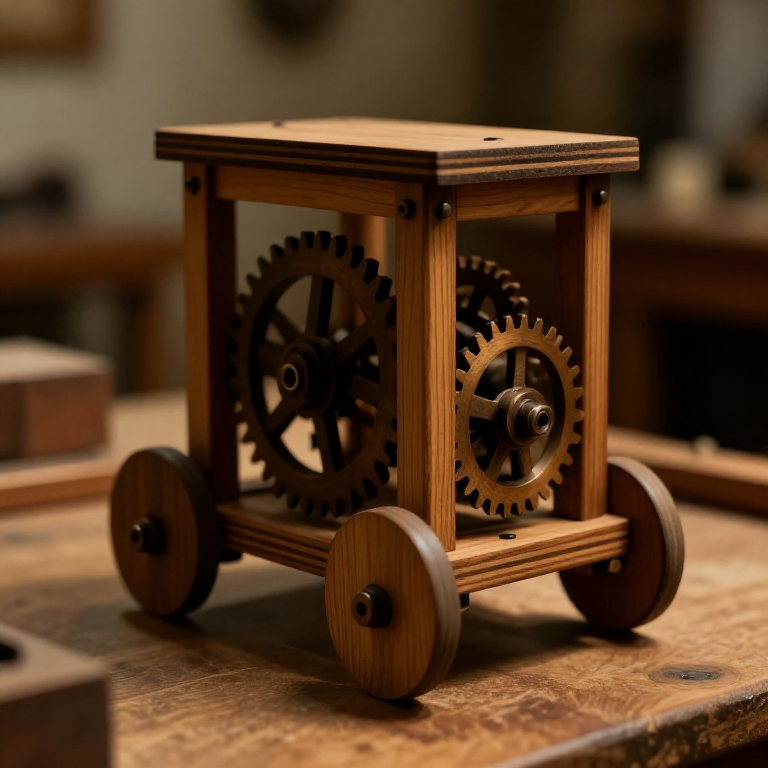


Building Leonardo da Vinci's Self-Propelled Cart — The First Programmable Robot
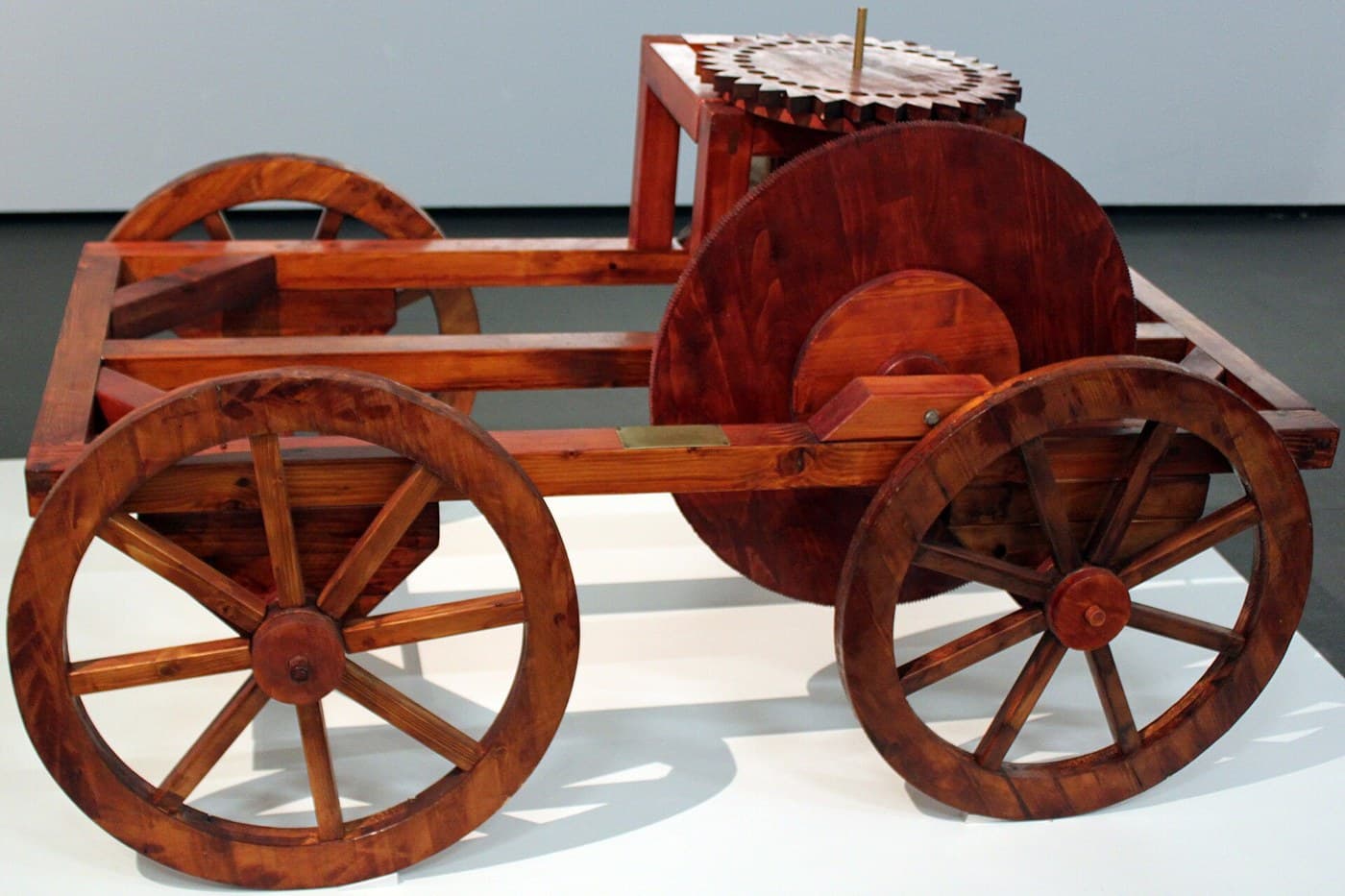
Around 1478 Leonardo da Vinci designed a cart that drives itself: no ox, no push, no rider. Coiled springs store the power, wooden gears carry it to the wheels, an escapement doles it out evenly, and pegs set into a control wheel steer the cart along a route decided in advance. It is spring power, gear reduction, escapement timing and programmable control in one machine — an ancestor of both the automobile and the robot. In 2004 a museum in Florence built it to his drawings and it ran exactly as designed. This blueprint reconstructs that remarkable machine.
Hejuru
30
Amabwiriza
1
1
Understand the machine
Understand the machine
Leonardo's cart carries its own power source and steers itself. Wound springs drive it, gears set the speed, an escapement keeps it steady, and pegs on a control wheel turn it left or right on cue. Often called the first robot, it was reconstructed in Florence in 2004 and ran just as he drew it.
2
2
Build the frame and wheels
Build the frame and wheels
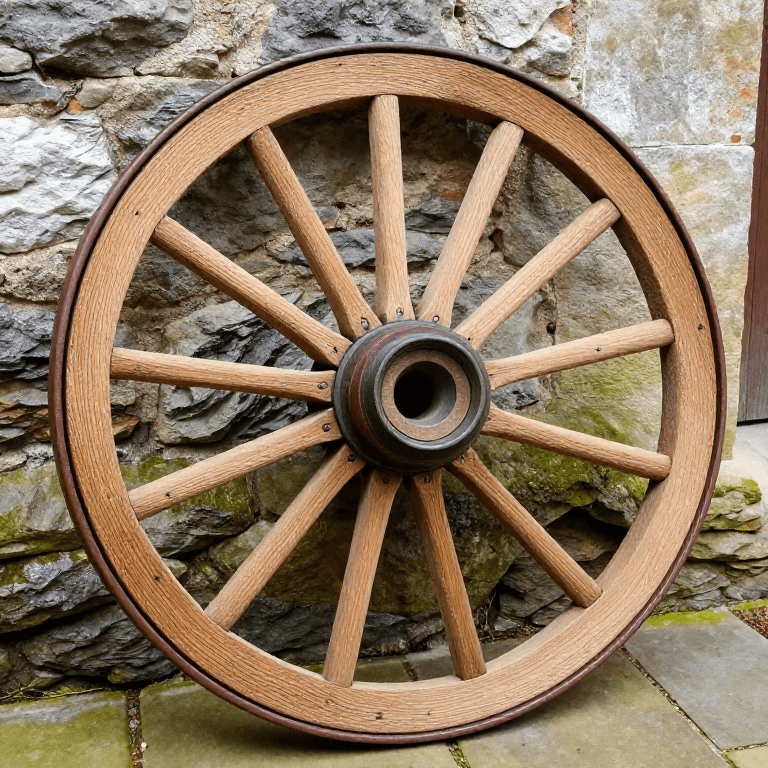
Build a low, sturdy wooden frame carrying an axle front and rear. Cut round wheels and mount them so they turn freely, and bore the axle bearings cleanly so there is little friction to waste the spring's energy.
Ibikoresho by'iyi ntambwe:
 Imbaho za beech3 ibice
Ibikoresho bikenewe:
 Umucumita w'Intoki
 Igikoresho cyo gutobora cy'intoki
3
3
Make the coiled springs
Make the coiled springs
The power comes from two coiled leaf springs set in drums beneath the frame. Winding them stores energy; as they slowly unwind they turn the drive. This clockwork-style spring drive — not a falling weight — is Leonardo's key idea.
Ibikoresho by'iyi ntambwe:
 Isipirinigi y'ibyapa by'icyuma2 ibice
Ibikoresho bikenewe:
 Inyundo y'Igiti
4
4
Cut and fit the wooden gears
Cut and fit the wooden gears
Cut cogged wooden gearwheels that take the drive from the spring drums and gear it down to the road wheels, so the stored energy is delivered at a slow, steady, useful speed instead of one violent burst.
Ibikoresho by'iyi ntambwe:
 Uruziga rufite amenyo rw'igiti4 ibice
Ibikoresho bikenewe:
 Igisongo cy'inguni
 Icyuma
5
5
Add the escapement
Add the escapement
Fit an escapement — the same regulating trick used in clocks — between the springs and the gears. It releases the spring's energy in small, even steps, keeping the cart's speed controlled rather than letting it bolt and stop.
Ibikoresho by'iyi ntambwe:
Uruziga rufite amenyo rw'igiti1 igiceIbikoresho bikenewe:
Icyuma6
6
Build the programmable steering
Build the programmable steering
Set removable pegs into a horizontal control wheel geared to the drive. As that wheel turns, each peg nudges the steering to a preset angle, so the cart follows a path you program in advance by where you place the pegs — turn the pegs, change the route.
Ibikoresho by'iyi ntambwe:
Imbaho za beech1 igice Umugozi wo guhambira5 metero
Ibikoresho bikenewe:
Igikoresho cyo gutobora cy'intoki7
7
Wind, set down, release
Wind, set down, release
Wind the springs to store energy, place the cart on the floor, and release the catch. It rolls away under its own power and steers itself left and right exactly as the pegs command, with no one touching it.
8
8
See why it was centuries ahead
See why it was centuries ahead
Spring power, gear reduction, escapement regulation and programmable control together in one device — roughly 400 years before the automobile and the programmable machine. The 2004 Florence reconstruction proved these were not fantasies: Leonardo's cart genuinely works.
Ibikoresho
4- 4 ibiceUmwanya
- Umwanya
- Umwanya
- 5 meteroUmwanya
Ibikoresho bikenewe
5- Umwanya
- Umwanya
- Umwanya
- Umwanya
Ibikoresho by'Ibishushanyo Bifitanye Isano

Blueprint zijyanye
Izi blueprint zisangira ubumenyi — uburyo, ibikoresho cyangwa amahame
CC0 Umurenge rusange
Iyi blueprint yasohowe munsi ya CC0. Ushobora gukoporora, guhindura, gukwirakwiza no gukoresha nta kwemererwa.
Shyigikira Umuremyi ugura ibicuruzwa binyuze muri Blueprint ye Komisiyo y'Umuremyi byashyizweho n'Abacuruzi, cyangwa kora verisiyo nshya y'iyi Blueprint ukayinjiza nk'isano muri Blueprint yawe kugira ngo musangire inyungu.