UBUHANZI
UBWIZA N'UBUZIMA
UBUKORIKORI
UMUCO N'AMATEKA
IMYIDAGADURO
IBIDUKIKIJE
IBIRIBWA N'IBINYOBWA
UBWUBATSI BUSUBIRA INYUMA
UBUMENYI
SIPORO
IKORANABUHANGA
IBYAMBARWA
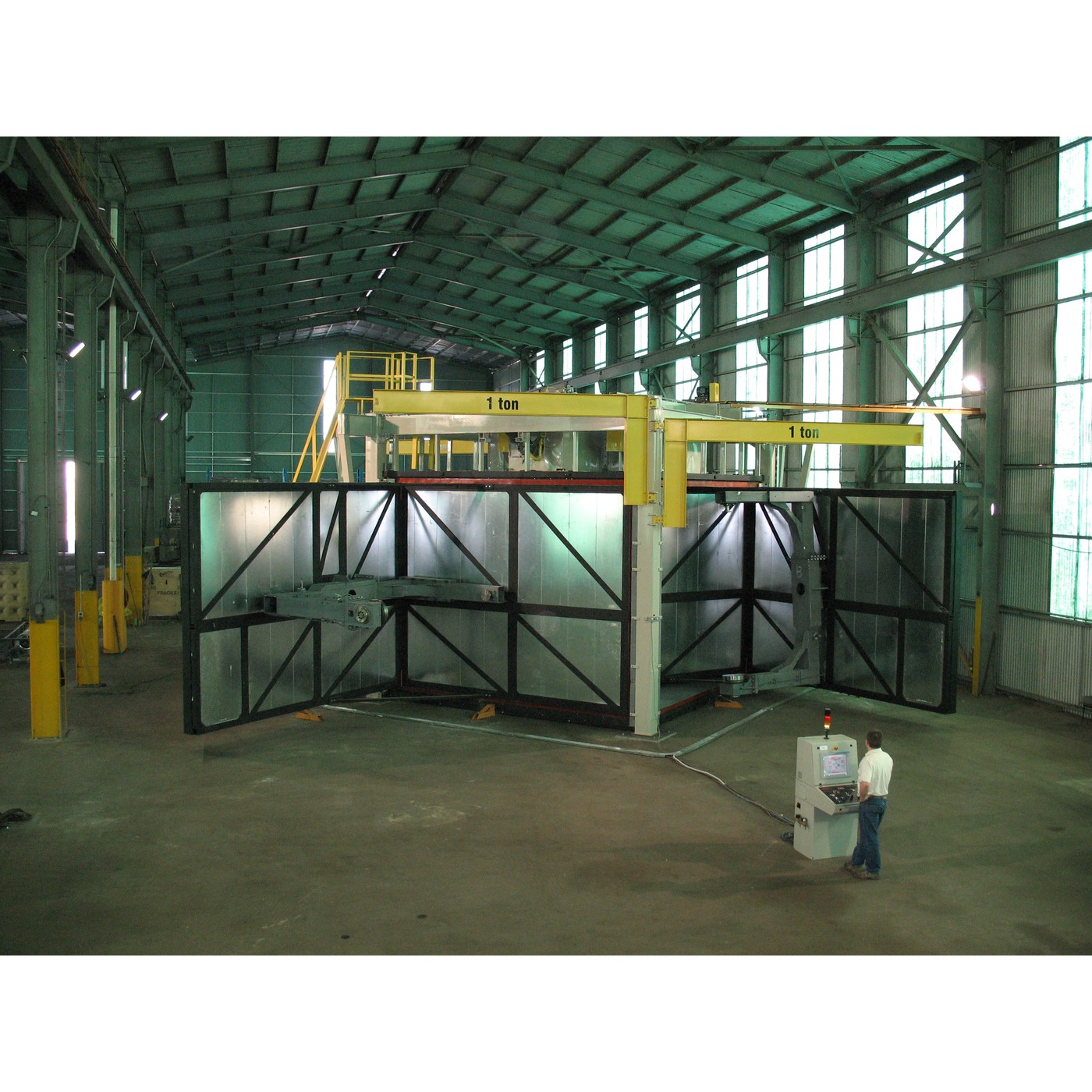


Rotational Moulding: No Pressure At All
Every other process in this batch pushes polymer somewhere: a screw rams it, air inflates it, a haul-off drags it. Rotational moulding pushes nothing. Powder is weighed into a cold mould, the mould is closed and tumbled about two axes inside an oven, and the powder melts and sticks to the inside surface wherever it touches.
Because there is no pressure, there is no clamping force, no core, no ejection system and no injection unit — so the tool can be cast aluminium or fabricated sheet and costs a small fraction of an injection mould. Water tanks, kayaks, road barriers, playground equipment and fuel tanks are made this way, seamless and stress-free.
The price is time. This rung works out both sides of that bargain, and makes a small part with an oven and a hand-turned frame.
Hagati
About 3 hours
Amabwiriza
1
1
Find the signature of a rotomoulded part
Find the signature of a rotomoulded part
Rotomoulded parts announce themselves once you know what to look for. Find a water butt, a kayak, a wheelie bin, a road barrier or a large planter and examine it.
- **No parting line worth the name** across the body, and **no gate**. There is a mould split, but nothing was injected anywhere.
- **Generous radii everywhere.** Powder will not flow into a sharp internal corner; it bridges. A rotomoulded part has no sharp corners at all, and a designer who draws one gets a thin spot.
- **The wall is thicker at the corners**, which is the exact opposite of rung 3's blow moulding. Nothing was stretched, so powder simply collected where it had more surface to sit against.
- **A slightly textured or matt inside surface**, and often a faint pebbling, because the last powder to melt never fully levelled.
- **No internal stress.** Squeeze it, cut it, drill it — it does not spring or craze the way an injection moulding does, because nothing was forced anywhere.
Cut a sample if you can, and measure the wall at a flat, a corner and a boss. Write the three numbers down; step 4's arithmetic predicts the flat one from the charge weight.
Ibikoresho bikenewe:
 Ikigereranyo cya Digitale cy'Amasentimetero 6
 Mikorometero
 Icyuma cy'Ubukorikori
 Mikorosikopu y'Ibarwa
 Umurongo w'ipima
 Amadarubindi Asobanutse yo Kwirinda
 Igitabo cya laboratwari (gifite kopi)
2
2
Rotomould something small
Rotomould something small
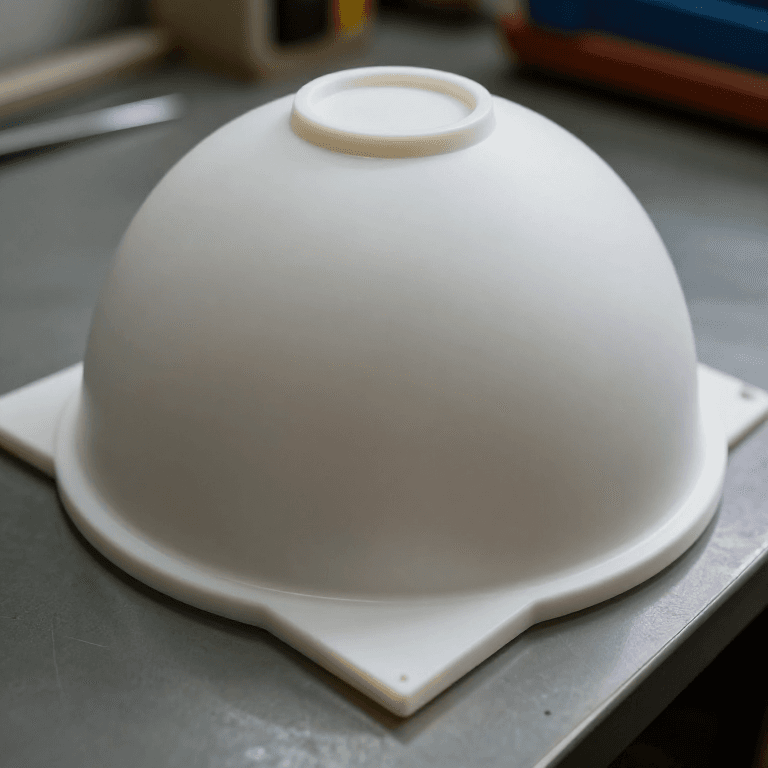
The process scales down honestly, and a small oven plus a hand-turned frame is enough to make a real part.
**The mould.** Two aluminium halves that clamp together — a simple sphere or a rounded box, 60–100 mm across — with a small vent hole so the air inside can expand and escape. Every rotomould has a vent; without one the pressure inside pushes the melt away from the wall and the part comes out thin and bubbled.
**The charge.** Weigh polyethylene powder into the mould. Step 4 gives the arithmetic; for a 80 mm sphere aiming at a 2 mm wall you want roughly 40 g. Use **powder**, not pellets: pellets do not melt evenly at these temperatures and leave a lumpy, porous wall. If you only have pellets, grind them cold.
**The rotation.** Two axes, slowly, at different speeds — a common ratio is about 4:1 between the major and minor axes, which is what stops the powder tracing the same path twice. A simple hand frame with two cranks is perfectly adequate for a small part, and turning it by hand for twenty minutes teaches you more about the process than any description.
**The heat.** Oven at about 250–280 °C for polyethylene, and the number that matters is the **internal air temperature** rather than the oven setting. Keep turning throughout. You are done when the inside surface has gone glossy — in a production machine an air probe reports this; on the bench, judge by time and then by the result.
**The cool.** Keep turning while it cools or the melt slumps to the bottom. Cool slowly with air; quenching a rotomoulded part warps it badly, because the wall is thick and the polymer is semi-crystalline.
An oven at 280 °C and a hot metal mould that must be handled while turning. Leather gloves rated for heat, a face shield, a stable frame, and ventilation — polyethylene above about 300 °C degrades and the fumes are genuinely harmful. Do not exceed the temperature and do not leave it unattended.
Ibikoresho by'iyi ntambwe:
 Ifu ya poliyetileni yo gukora mu buryo bwo kuzunguruka1 igice
Ibikoresho bikenewe:
 Ifuru nto yo ku meza
 Igipima Ubushyuhe cya Inifurarouje
 Ikipima ubushyuhe cy'ubwoko bwa K gifite modile ya MAX6675
 Iminzani ya Digitale
 Ifatiro ry'Ameza
 Icyuma Cyivumbura Gihagaze
 Amakariso (Ikariso ry'Intoki)
 Uturindantoki tw'uruhu tw'akazi
 Ingabo y'IsuraAmadarubindi Asobanutse yo Kwirinda
 Akabati k'umwotsi (gafite umuyoboro)
 Ikizimya umuriro
 Isaha yo GuhagarikaIgitabo cya laboratwari (gifite kopi)
 Urupapuro rwa aluminiyumu (6061-T6)
3
3
Make the three classic faults happen
Make the three classic faults happen
Three faults account for most of what goes wrong, and each has an unmistakable appearance. Produce all three deliberately and keep the samples.
**Bubbles (under-cooked).** Take the part out early. The wall is full of trapped air between partly-fused powder grains, and it looks like frozen foam in section. This is the commonest real fault: the powder melted and stuck but never coalesced. The fix is more time at temperature, not more temperature.
**Degradation (over-cooked).** Leave one in too long. The inside surface goes yellow or brown and the part becomes brittle; it may smell. Polyethylene oxidises from the inside surface outward because that is where the hot air is. Note that the outside can look perfect.
**Warping (cooled wrong).** Quench one in cold water. It will distort, and it will keep distorting for hours as stresses relax. Compare with one air-cooled slowly on the frame.
Section all three plus a good one, and look at the wall under the microscope. The good part has a uniform, dense, slightly glossy inner face. The under-cooked one is porous. The over-cooked one is discoloured at the inner face specifically.
Then break each one. Under-cooked parts fail at a fraction of the load because every bubble is a void, and this is the reason rotomoulding is judged on internal air temperature rather than on the clock.
Ibikoresho by'iyi ntambwe:
Ifu ya poliyetileni yo gukora mu buryo bwo kuzunguruka1 igiceIbikoresho bikenewe:
Ifuru nto yo ku mezaIgipima Ubushyuhe cya InifuraroujeIkipima ubushyuhe cy'ubwoko bwa K gifite modile ya MAX6675Mikorosikopu y'IbarwaIcyuma cy'Ubukorikori Igipima Imbaraga (Iminzani y'Umuzingo)Isaha yo GuhagarikaUturindantoki tw'uruhu tw'akaziIngabo y'IsuraAmadarubindi Asobanutse yo KwirindaAkabati k'umwotsi (gafite umuyoboro)Igitabo cya laboratwari (gifite kopi)
4
4
Charge weight, wall thickness and where the energy goes
Charge weight, wall thickness and where the energy goes
Gupakira ikaye ya Jupyter…
Ibikoresho bikenewe:
Iminzani ya Digitale5
5
History and context
History and context
**Attribution, stated honestly.** No patent is asserted here. Rotational moulding of hollow objects is very old — rotating a mould containing a liquid to coat its inside is how chocolate shells and hollow metal castings were already being made in the nineteenth century, and the catalogue's slip casting rung is the same idea in ceramics. The plastics version arrives with **polyethylene powder** in the 1950s, and the process was developed across the industry rather than by a single filing.
**What it is actually for.** Not speed, and not precision. Rotomoulding wins on three things nothing else offers together: **very low tool cost**, so short runs and large parts are affordable; **seamless, stress-free hollow parts** with no weld line and no ejection marks; and **uniform corners**, because powder collects rather than stretches. A 1,000 litre water tank is a rotomoulding because no other process could make one at all without joining pieces.
**The comparison worth holding.** Injection moulding puts the cost in the tool and almost none in the cycle. Rotational moulding puts almost none in the tool and all of it in the cycle. Step 4's energy split is why: most of the heat goes into the mould, and it all has to come out again before the part can be removed.
**Honest limits.** Cycle times of twenty minutes to an hour, so labour and energy per part are high. Tolerances are poor — plus or minus several per cent on wall — and wall thickness cannot be varied deliberately except by adding insulation to the mould. No sharp corners, no fine detail, no threads worth having. The polymer choice is narrow because the powder must sinter and flow at oven temperature without degrading, which in practice means polyethylene for the overwhelming majority of parts. And the process is genuinely hot and genuinely slow, which is why step 2 is written with as much space given to the gloves as to the powder.
Ibikoresho
1- Umwanya
Ibikoresho bikenewe
21- Umwanya
- Umwanya
- Umwanya
- Umwanya
- Igitabo cya laboratwari (gifite kopi)10% komisiyoUmwanya
- Umwanya
- Umwanya
- Umwanya
- Umwanya
- Umwanya
- Umwanya
- Umwanya
Blueprint zijyanye
Izi blueprint zisangira ubumenyi — uburyo, ibikoresho cyangwa amahame


CC0 Umurenge rusange
Iyi blueprint yasohowe munsi ya CC0. Ushobora gukoporora, guhindura, gukwirakwiza no gukoresha nta kwemererwa.
Shyigikira Umuremyi ugura ibicuruzwa binyuze muri Blueprint ye Komisiyo y'Umuremyi byashyizweho n'Abacuruzi, cyangwa kora verisiyo nshya y'iyi Blueprint ukayinjiza nk'isano muri Blueprint yawe kugira ngo musangire inyungu.