Ubufatanye
UBUHANZI
UBWIZA N'UBUZIMA
UBUKORIKORI
UMUCO N'AMATEKA
IMYIDAGADURO
IBIDUKIKIJE
IBIRIBWA N'IBINYOBWA
UBWUBATSI BUSUBIRA INYUMA
UBUMENYI
SIPORO
IKORANABUHANGA
IBYAMBARWA
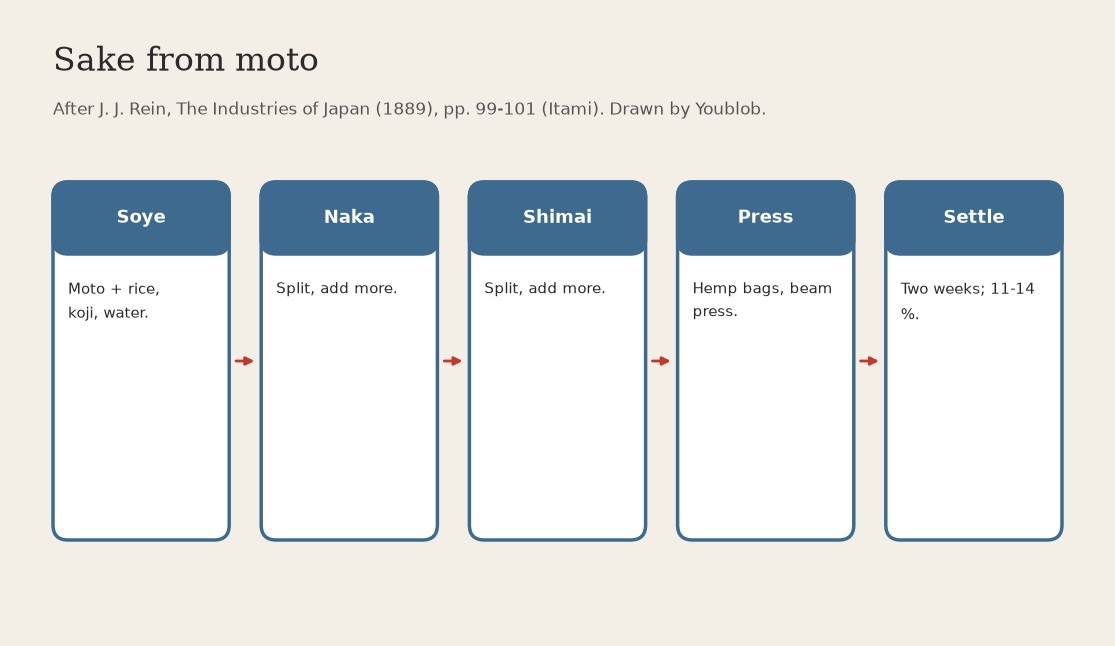


Sake from Moto: the Mash Built Up in Three Additions, Soye, Naka and Shimai, Pressed and Settled (Itami, after Rein 1889)
The brewers of Itami never put all the rice in at once. They fed the moto in three steps, roughly doubling the mash each time, so the yeast always stayed ahead of the sugar the koji made. Then they pressed the mash in a beam press and let the sake settle clear.
Result: sake of 11 to 14 % alcohol.
Source: J. J. Rein, The Industries of Japan (1889), pp. 99-101. The beam press is replaced by any press. Picture drawn by Youblob.
Hejuru
4 weeks
Amabwiriza
1
1
Soye: first addition
Soye: first addition
In a three-foot tub mix 1.30 koku steamed rice, 1.30 koku moto, 0.35 koku koji and 1.30 koku water (4.25 koku). Stir thoroughly every two hours for two or three days; it warms to about 20 C and smells pleasant and pungent. Ours: steam the rice over a pot.
Ibikoresho by'iyi ntambwe:
 Umuceri w'Abayapani w'utuntu tugufi1.3 koku
 Moto (umusemburo wo gutangira sake)1.3 koku
 Umuceri wa koji (Aspergillus oryzae)0.35 koku
 Amazi1.3 koku
Ibikoresho bikenewe:
 Ikibindi cy'imbaho
 Igiti kirekire cyo kuvuga
 Inkono Nini
 Igipima Ubushyuhe
2
2
Naka: second addition
Naka: second addition
Split the soye between two tubs and add 2.00 koku steamed rice, 0.65 koku koji and 2.90 koku water (9.80 koku, 4.90 per tub). Stir vigorously every other hour for one day.
Ibikoresho by'iyi ntambwe:
Umuceri w'Abayapani w'utuntu tugufi2 kokuUmuceri wa koji (Aspergillus oryzae)0.65 kokuAmazi2.9 kokuIbikoresho bikenewe:
Ikibindi cy'imbahoIgiti kirekire cyo kuvugaInkono Nini3
3
Shimai: last addition
Shimai: last addition
Split again into four tubs and add 3.30 koku steamed rice, 1.00 koku koji and 4.20 koku water (Rein prints the naka here as 9.90; total 18.40 koku). Treat as before; keep tubs no more than half full.
Ibikoresho by'iyi ntambwe:
Umuceri w'Abayapani w'utuntu tugufi3.3 kokuUmuceri wa koji (Aspergillus oryzae)1 kokuAmazi4.2 kokuIbikoresho bikenewe:
Ikibindi cy'imbahoIgiti kirekire cyo kuvugaInkono Nini4
4
Main fermentation
Main fermentation
After three days pour all four tubs into one big six-foot tub. A brisk fermentation follows and eases in two or three days; the scum settles and the liquor is strongly alcoholic.
Ibikoresho bikenewe:
Ikibindi cy'imbaho5
5
Press
Press
Fill close-woven hemp bags with the mash, lay them crosswise in a strong box and press. Rein's press is a beam lever weighted with 600-900 kg; ours: any wine press. Collect the turbid sake.
Ibikoresho bikenewe:
 Agafuka ka lino
 Imashini ikamura inzabibu
6
6
Settle and draw off
Settle and draw off
Let the sake stand quiet two weeks in a standing cask with two taps near the bottom, then draw it off clear by the upper tap. Store in barrels or closed tubs; heat it when warm weather comes to keep it.
Ibikoresho bikenewe:
 Igitebo cy'igiti
Ibikoresho
4- Umwanya
- Umwanya
- Umwanya
- 8.4 kokuUmwanya
Ibikoresho bikenewe
7- Umwanya
- Umwanya
- Umwanya
- Umwanya
- Umwanya
- Umwanya
- Umwanya
Iki gishushanyo gikora

Blueprint zijyanye
Izi blueprint zisangira ubumenyi — uburyo, ibikoresho cyangwa amahame

CC0 Umurenge rusange
Iyi blueprint yasohowe munsi ya CC0. Ushobora gukoporora, guhindura, gukwirakwiza no gukoresha nta kwemererwa.
Shyigikira Umuremyi ugura ibicuruzwa binyuze muri Blueprint ye Komisiyo y'Umuremyi byashyizweho n'Abacuruzi, cyangwa kora verisiyo nshya y'iyi Blueprint ukayinjiza nk'isano muri Blueprint yawe kugira ngo musangire inyungu.