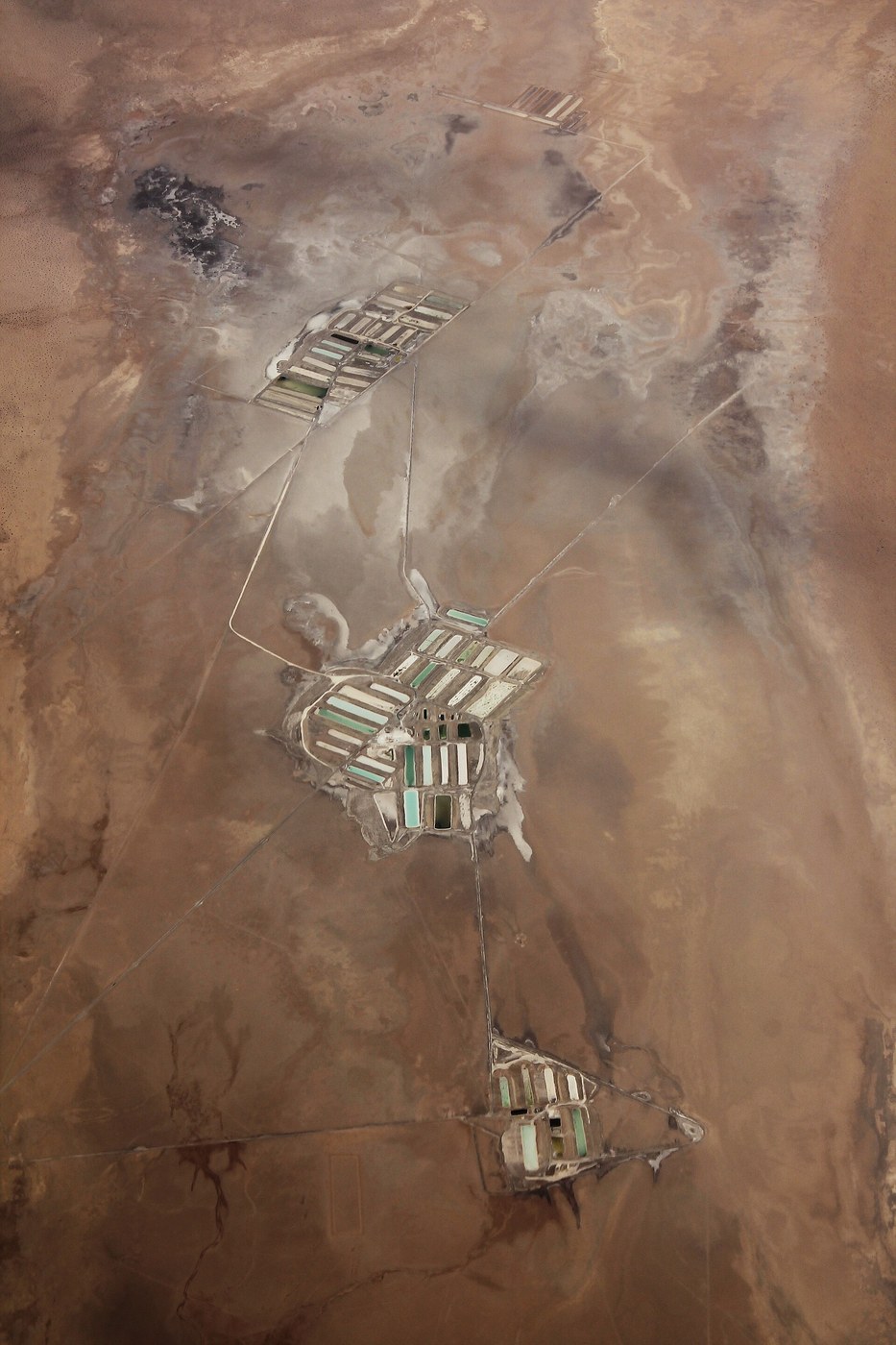


Salt Panning
Amabwiriza
Measure what you are starting with
Measure what you are starting with
Know the concentration before you try to concentrate it.
- Make a brine of known strength, or use real seawater.
- Weigh a measured volume, evaporate a small sample to dryness, and weigh the residue.
- Calculate the percentage by mass.
Ibikoresho by'iyi ntambwe:
 Umunyu w'inyanja munini200 g
Ibikoresho bikenewe:
 Iminzani ya Digitale yo mu Gikoni
 Isahani yo kumisha
Concentrate before you crystallise
Concentrate before you crystallise
Historic salterns never boiled seawater from full strength. They pre-concentrated it for free.
- Let a shallow tray of brine stand in warm air or sun until the volume has dropped substantially.
- Measure the concentration again.
- Only then move it to gentle heat.
Crystallise gently and watch the order
Crystallise gently and watch the order
Different salts drop out at different concentrations, and that is a tool.
- Heat the concentrated brine gently — do not boil hard.
- Watch for the first crystals forming as a skin at the surface.
- Skim them off as they form.
Ibikoresho bikenewe:
 Igipima Ubushyuhe Gisoma Ako Kanya
Make flakes, and then make grains
Make flakes, and then make grains
Crystal shape is set by how fast you drive the evaporation.
- Evaporate one batch very slowly and undisturbed.
- Evaporate a second with more heat and occasional stirring.
- Compare the crystals under magnification.
Ibikoresho by'iyi ntambwe:
 Lensi Yibumbatiye1 igice
History and context
History and context
Salt was the only practical way to preserve meat and fish for most of human history, which made it strategic rather than merely useful. Salt roads — the Via Salaria to Rome, the trans-Saharan routes trading salt for gold — existed because inland populations could not make their own.
It was taxed, and the taxes were hated. The French gabelle was among the most resented impositions of the ancien régime, with mandatory purchase quotas and vicious penalties for smuggling; it is repeatedly named among the grievances of 1789. In India, the British salt monopoly and tax on a substance everyone needed and could otherwise gather from the sea was the target Gandhi chose for the Salt March in 1930 — precisely because the injustice needed no explanation.
The northern fuel problem drove real invention. Where sun would not do the work, salt makers burned peat, coal and wood, and evaporated brine in lead or iron pans. In parts of the Netherlands and eastern England they burned salt-soaked peat and leached the ash — a method that stripped whole landscapes. Graduation towers, where brine trickles over huge stacks of blackthorn twigs to expose it to wind, were built to cut fuel use, and several still stand.
Today most salt is mined as rock salt or produced by solar evaporation in hot climates, and most of it never goes near food — chemical industry, particularly chlor-alkali production, consumes the majority. The Solvay process in this catalogue is one of the reasons.
Ibikoresho
2- Umwanya
- 1 igiceUmwanya
Ibikoresho bikenewe
3- Umwanya
Iki gishushanyo gikora



CC0 Umurenge rusange
Iyi blueprint yasohowe munsi ya CC0. Ushobora gukoporora, guhindura, gukwirakwiza no gukoresha nta kwemererwa.
Shyigikira Umuremyi ugura ibicuruzwa binyuze muri Blueprint ye Komisiyo y'Umuremyi byashyizweho n'Abacuruzi, cyangwa kora verisiyo nshya y'iyi Blueprint ukayinjiza nk'isano muri Blueprint yawe kugira ngo musangire inyungu.