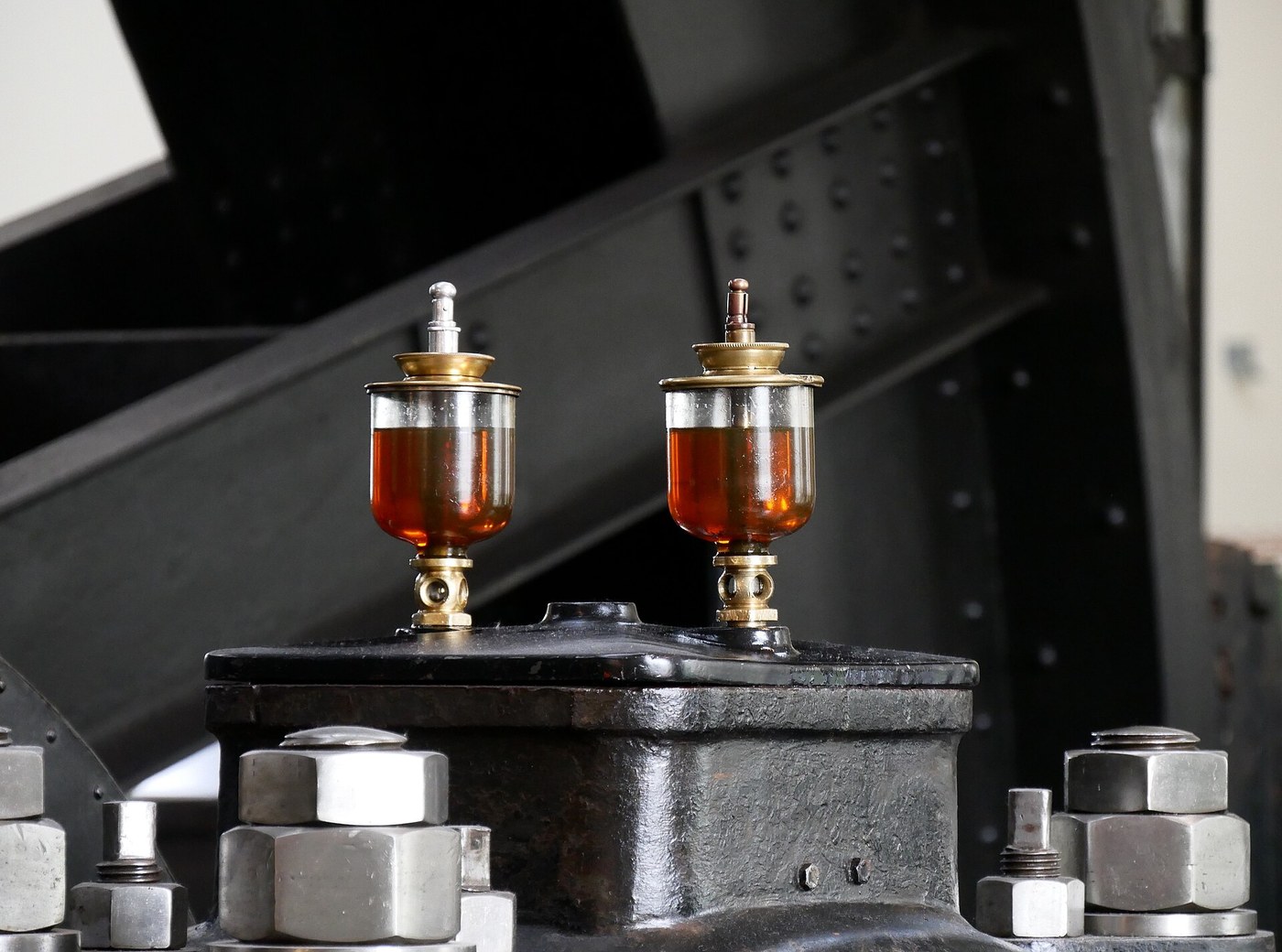


Sight-Feed Drip Oiler
Amabwiriza
Make the body and the sight chamber
Make the body and the sight chamber
Reservoir on top, sight glass below, delivery at the bottom.
- Turn a body from 30 mm brass or aluminium round bar, 60 mm long, bored through 10 mm.
- Fit a glass tube or a small clear jar as the sight chamber between the reservoir and the outlet.
- Seal both ends of the glass with rubber O-rings compressed by threaded collars — never by clamping glass directly against metal.
- Drill the outlet at the bottom, 4 mm.
Glass is sealed with elastomer, always. Metal clamped directly onto glass concentrates stress at a point and cracks it, usually days later rather than immediately. The O-ring spreads the load and absorbs the difference in thermal expansion — the same reason a car windscreen is bonded rather than bolted.
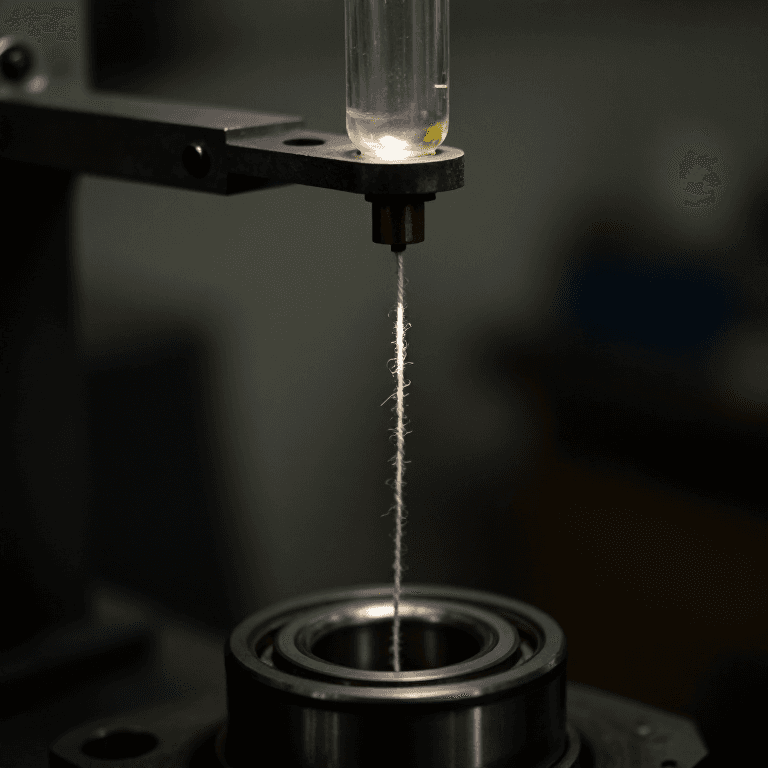
The sight chamber must have an air space. Drops only form and fall visibly if there is air for them to fall through; a chamber full of oil shows a continuous column and tells you nothing.Ibikoresho by'iyi ntambwe:
 Umurongo Uzengurutse w'Umuringa w'Umuhondo1 igice
 Icupa ry'Ikirahure Rifite Umufuniko1 igice
 Umwenda wa Musulini w'Ipamba1 metre
Ibikoresho bikenewe:
 Uburyo bw'Umucumita w'Ibyuma n'Ibyuma Byawo
 Ifatiro ry'Ameza
 Icyuma Cyivumbura Kidafite Insinga
 Ibyuma Byinshi byo Gucukura
 Amakariso Menshi
 Ikigereranyo cya Digitale cy'Amasentimetero 6
Cut the tapered needle — the rate control
Cut the tapered needle — the rate control
A long shallow taper is what makes fine adjustment possible.
- Turn or file a needle from 6 mm brass rod with a taper of about 5 degrees included, 20 mm long.
- Cut a matching seat in the body's outlet passage.
- Thread the needle's upper end M6 with a knurled knob.
- Fit an M6 hex nut as a lock so a setting stays put.
- Check the needle seats fully and shuts the flow off completely.
Why the taper must be shallow. With a long fine taper, a whole turn of the knob changes the annular opening only slightly, so the drip rate can be trimmed precisely. A steep taper goes from shut to flooding in a fraction of a turn and cannot be set at all. This is exactly the same reasoning as the sine bar's sensitivity — spread the adjustment over a long travel and each increment becomes controllable.
A needle valve is a rate control, NOT an on-off valve. Slamming a needle onto its seat to shut off damages both, which is why machinery with needle valves usually has a separate shut-off elsewhere.Ibikoresho by'iyi ntambwe:
Umurongo Uzengurutse w'Umuringa w'Umuhondo1 igice Umupira w'Impande Esheshatu2 ibice
 Uruziga Rurambuye2 ibice
Ibikoresho bikenewe:
Amakariso MenshiIfatiro ry'AmezaIcyuma Cyivumbura Kidafite InsingaIbyuma Byinshi byo GucukuraIkigereranyo cya Digitale cy'Amasentimetero 6 Imfunguzo Nyinshi z'Impande Esheshatu
Calibrate the knob against drip rate
Calibrate the knob against drip rate
Turn a vague adjuster into a settable instrument.
- Fill the reservoir and open the needle until drips just begin. Mark that knob position as zero.
- Open by a quarter turn, wait for it to settle, and count drips per minute.
- Repeat at half, three-quarters and one full turn.
- Engrave or mark the knob with the positions you measured.
Ibikoresho bikenewe:
 Isaha yo Guhagarika
 Igicukuzi cyo Gushyira IkimenyetsoIkigereranyo cya Digitale cy'Amasentimetero 6Amakariso Menshi
Test what changes the rate besides the knob
Test what changes the rate besides the knob
Find the disturbances a real installation has to live with.
- Set a steady three drips per minute and record it.
- Let the reservoir run down to a quarter full and count again.
- Warm the oil and count again.
- Tilt the whole oiler a few degrees and count again.
Ibikoresho bikenewe:
Isaha yo Guhagarika Ikigereranyo GihuriwehoIkigereranyo cya Digitale cy'Amasentimetero 6
Making the invisible visible, and history
Making the invisible visible, and history
Sight-feed oilers were the mark of a well-run engine room from the mid nineteenth century onward, and they appear on steam engines, machine tools and early motor vehicles. Their spread tracks a change in thinking: it is not enough for a machine to be lubricated, an operator must be able to CONFIRM it at a glance while it runs.
That idea is bigger than oil. The sight glass on a boiler, the flag on a mailbox, the indicator lamp, the pressure gauge on a fire extinguisher and the green light on a charger are all the same design move — surface an internal state so a human can check it without dismantling anything. Instruments that make the invisible visible are how machines became supervisable rather than merely operable.
Against its siblings: the wick is simpler, cheaper, has nothing to set and nothing to go wrong, and tells you nothing. The grease nipple delivers exactly when asked and nothing in between. The sight-feed oiler is the only one that is both adjustable AND self-reporting, at the cost of being the most complicated to make and the only one with a part that can crack.
Honest limits: it needs an operator who looks at it. Rate drifts with temperature and level. It only works in one orientation. And it feeds whether or not the machine is running — the more sophisticated versions add a linkage so the drip stops with the engine, which is one more step toward the pressurised systems that eventually replaced them entirely.
Ibikoresho
5- Umwanya
- Umwanya
- 1 metreUmwanya
- 2 ibiceUmwanya
- 2 ibiceUmwanya
Ibikoresho bikenewe
10- Umwanya
- 1 vendor sell this, none ship to you yetUmwanya
- Umwanya
- Umwanya
- Umwanya
- Umwanya
Blueprint zijyanye
Izi blueprint zisangira ubumenyi — uburyo, ibikoresho cyangwa amahame

CC0 Umurenge rusange
Iyi blueprint yasohowe munsi ya CC0. Ushobora gukoporora, guhindura, gukwirakwiza no gukoresha nta kwemererwa.
Shyigikira Umuremyi ugura ibicuruzwa binyuze muri Blueprint ye Komisiyo y'Umuremyi byashyizweho n'Abacuruzi, cyangwa kora verisiyo nshya y'iyi Blueprint ukayinjiza nk'isano muri Blueprint yawe kugira ngo musangire inyungu.