UBUHANZI
UBWIZA N'UBUZIMA
UBUKORIKORI
UMUCO N'AMATEKA
IMYIDAGADURO
IBIDUKIKIJE
IBIRIBWA N'IBINYOBWA
UBWUBATSI BUSUBIRA INYUMA
UBUMENYI
SIPORO
IKORANABUHANGA
IBYAMBARWA


Glass Wool
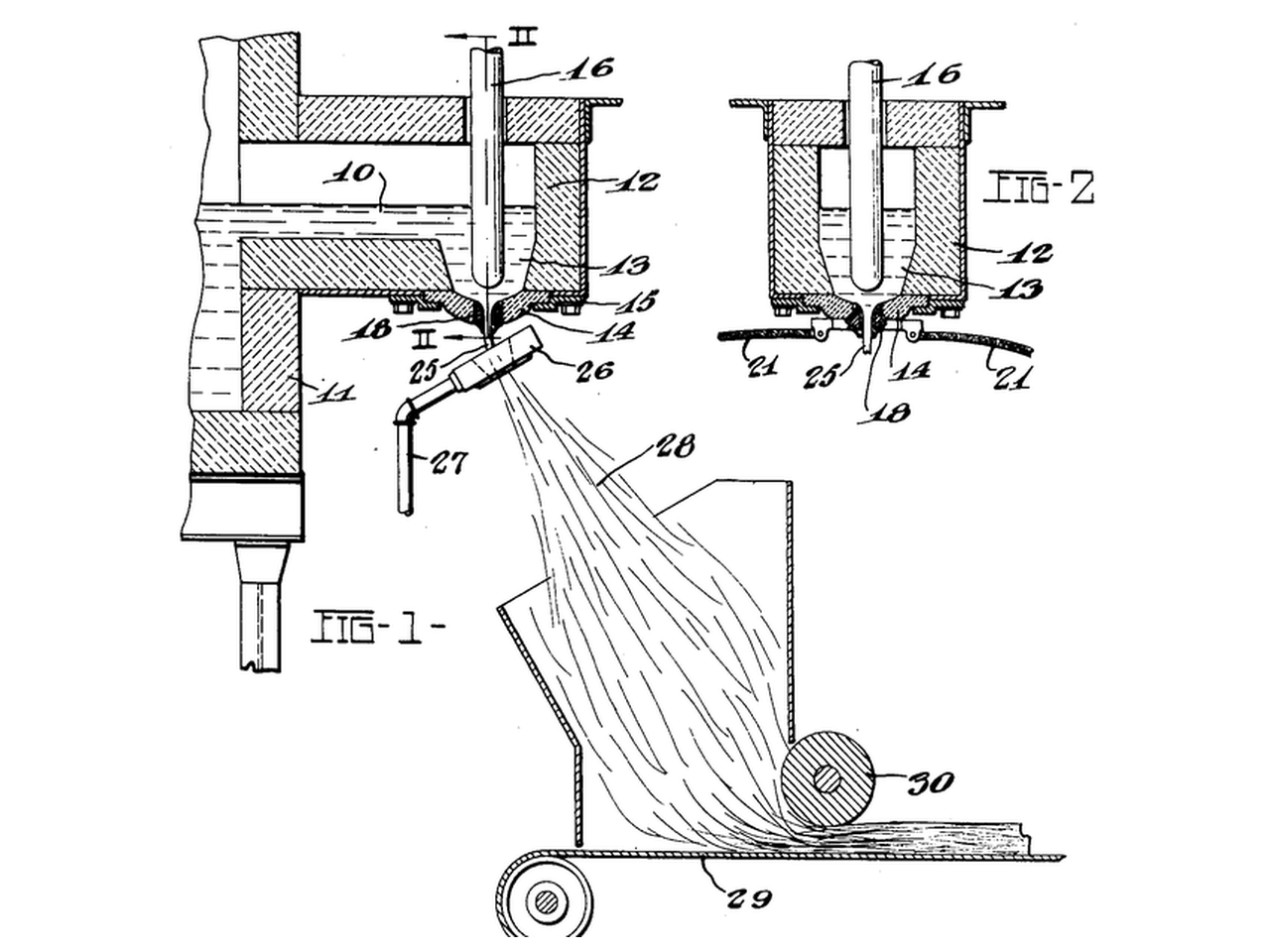
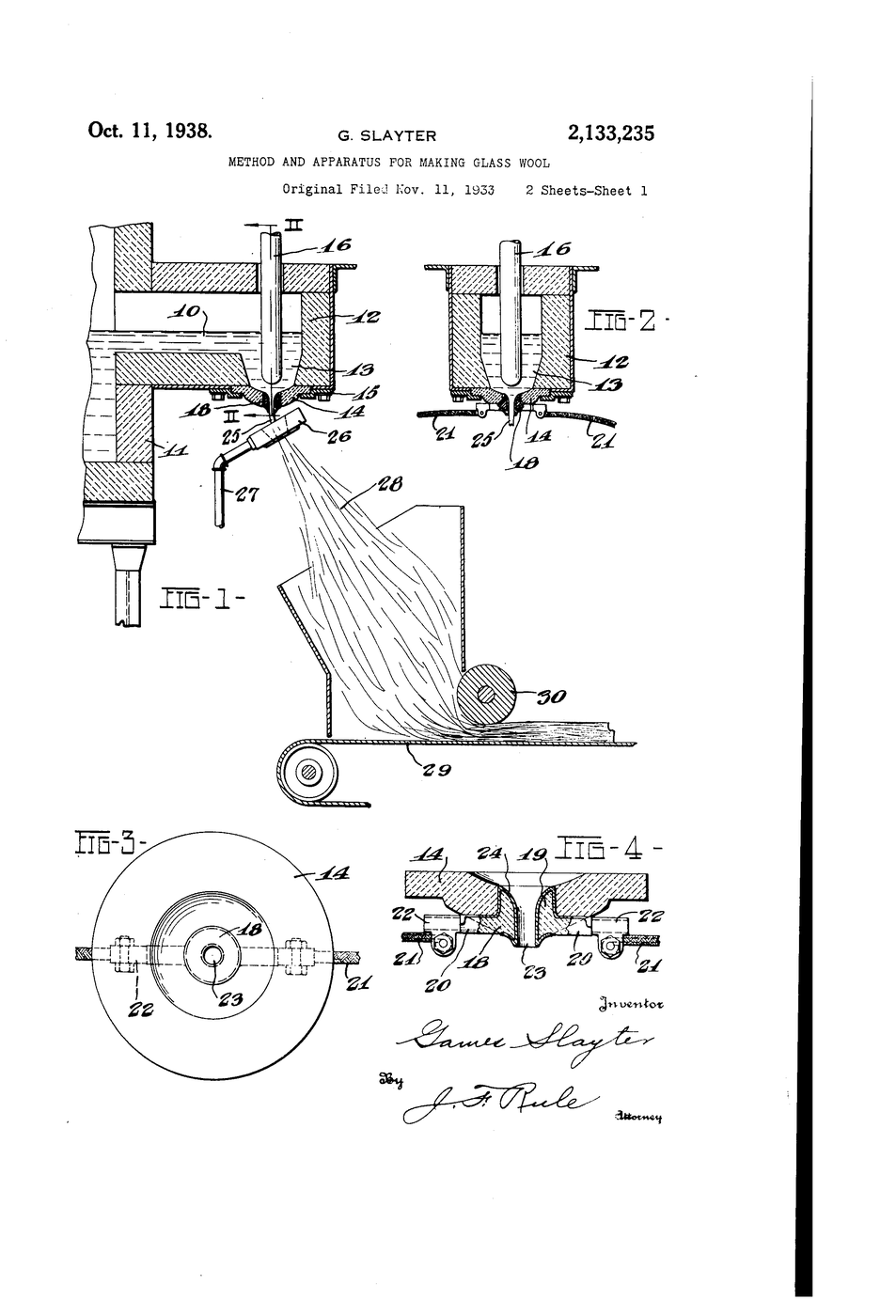
Glass wool was made before the 1930s by blowing steam at a falling thread of molten glass, but by the time the glass reached the blast it had cooled too far to draw really fine fibres. Games Slayter at Owens-Illinois brought the blast right up to the bushing the glass leaves the furnace through, while it was still at furnace heat.
**US 2,133,235**, "Method and apparatus for making glass wool", Slayter, assigned to Owens-Illinois, filed 11. November 1933, granted 11. October 1938. Its FIGURE 1 (the picture above) shows the furnace, the bushing, the steam blast and the wool piling onto a conveyor. The same work led to Owens-Corning Fiberglas in 1938.
**You measure what it is for**: three jars of hot water - bare, in glass wool, in cotton wool - logged by an Arduino, and the cooling curves turned into heat-loss figures.
Utangiye
2 hours
Amabwiriza
1
1
Wire the logger
Wire the logger
Probes' red to 5V, black to GND, data (yellow) together to D2, with a 4.7 kΩ resistor from D2 to 5V. Install the OneWire and DallasTemperature libraries. Warm each probe in your hand in turn to learn which index is which.
three_jar_cooling_logger.inocpp
Ibikoresho by'iyi ntambwe:
 Sensor y'ubushyuhe DS18B203 ibice
 Ikusanyirizo ry'Ibirwanya Amashanyarazi1 ibikoresho
 Umutwe w'insinga za Dupont (igabo-igore)1 ikirundo
Ibikoresho bikenewe:
 Arduino Uno R3
 Ikibaho cy'Ibizamini
 Umugozi wa USB-B
2
2
Prepare three jars
Prepare three jars
Drill a 7 mm hole in each of three identical lids. Push a probe through each so its tip sits mid-jar. Seal the hole with tape.
Ibikoresho by'iyi ntambwe:
 Icupa ry'Ikirahure Rifite Umufuniko3 ibice
Ibikoresho bikenewe:
 Icyuma Cyivumbura Kidafite Insinga
 Ibyuma Byinshi byo Gucukura
 Isheme yo gupfundikira
3
3
Wrap two of them
Wrap two of them
Gloves, long sleeves, mask, glasses. Put glass wool inside a plastic bag, then wrap jar 2 in it 30 mm thick all round and under, and tape. Wrap jar 3 the same way in cotton wool. Leave jar 1 bare.
Ibikoresho by'iyi ntambwe:
 Ipamba nywa amazi1 agapaki
Ibikoresho bikenewe:
 Uturindantoki tw'uruhu tw'akazi
 Agapfukamunwa k'Umukungugu
 Amadarubindi Asobanutse yo Kwirinda
 UmukasiIsheme yo gupfundikira
 Igitambaro cy'ubwoya bw'ikirahure gikumira ubushyuhe
 Utufuka twa pulasitiki
4
4
Fill and log
Fill and log
Boil water. Pour 500 ml into each jar, one after another, and close the lids. Start the serial monitor and log for 90 minutes. Note the room temperature.
Ibikoresho bikenewe:
 Ibirika by'amashanyarazi by'ikirahure
 Igipimo cy'ikirahure gifite imirongo
5
5
Fit the curves
Fit the curves
Gupakira ikaye ya Jupyter…
6
6
History & Context
History & Context
**What the patent specifies:** a steam blast applied at the bushing itself, so the glass stream is drawn while still at furnace temperature, giving very fine wool. **Modern build (derived):** commercial glass-wool insulation, handled wrapped.
Continuous glass filament for textiles and reinforcement followed from the same laboratory. Its limits: loose fibres irritate skin, eyes and lungs, so it is always handled covered, and like any fibrous insulation it loses most of its value when wet or compressed.
Ibikoresho
5- 3 ibiceUmwanya
- Umwanya
- 1 ikirundoUmwanya
- Umwanya
- 1 agapakiUmwanya
Ibikoresho bikenewe
14- 1 vendor sell this, none ship to you yetUmwanya
- 1 vendor sell this, none ship to you yetUmwanya
- 1 vendor sell this, none ship to you yetUmwanya
- 1 vendor sell this, none ship to you yetUmwanya
- Umwanya
- Umwanya
- Umwanya
- Umwanya
- Umwanya
Blueprint zijyanye
Izi blueprint zisangira ubumenyi — uburyo, ibikoresho cyangwa amahame
CC0 Umurenge rusange
Iyi blueprint yasohowe munsi ya CC0. Ushobora gukoporora, guhindura, gukwirakwiza no gukoresha nta kwemererwa.
Shyigikira Umuremyi ugura ibicuruzwa binyuze muri Blueprint ye Komisiyo y'Umuremyi byashyizweho n'Abacuruzi, cyangwa kora verisiyo nshya y'iyi Blueprint ukayinjiza nk'isano muri Blueprint yawe kugira ngo musangire inyungu.