UBUHANZI
UBWIZA N'UBUZIMA
UBUKORIKORI
UMUCO N'AMATEKA
IMYIDAGADURO
IBIDUKIKIJE
IBIRIBWA N'IBINYOBWA
UBWUBATSI BUSUBIRA INYUMA
UBUMENYI
SIPORO
IKORANABUHANGA
IBYAMBARWA
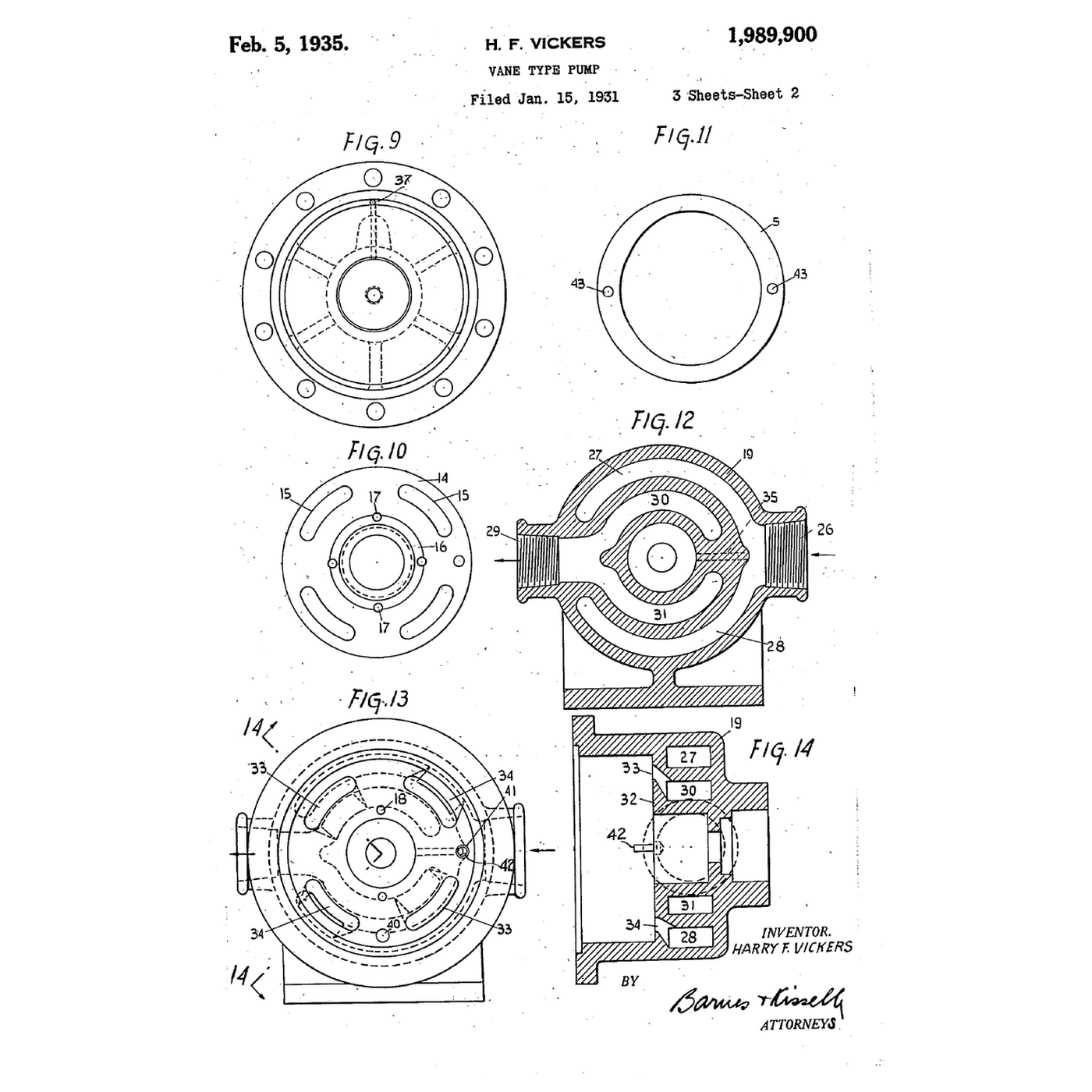


The Balanced Vane Pump: Two Pumps Facing Each Other in One Ring
Harry F. Vickers of Detroit opened his patent with a complaint: "Standard type gear pumps have been notably inefficient both volumetrically and mechanically with the result that they have presented a weak link in hydraulic systems." A plain vane pump was no better at high pressure, because its delivery pressure pushes the rotor hard against one side and wears out the bearings.
US 1,989,900, *Vane Type Pump*, filed 15 January 1931 and granted 5 February 1935, shapes the liner ring into two lobes so each vane cell fills and empties twice a revolution, through two pairs of ports diametrically opposite each other. The pressure pushes equally from both sides and the rotor floats.
This rung computes the side load that balancing removes and the displacement of a double-lobe ring, and prints a working model.
Hagati
About 5 hours
Amabwiriza
1
1
Side load, bearing life and displacement
Side load, bearing life and displacement
Gupakira ikaye ya Jupyter…
2
2
The unbalanced pump it starts from
The unbalanced pump it starts from
The single-lobe vane pump has its rotor off-centre in a round ring. The embedded blueprint builds one as a vacuum pump; the balanced pump doubles its lobes.
3
3
Read the balanced liner from the patent
Read the balanced liner from the patent
Vickers' drawings show a casing with "bilateral intake and exhaust passageways", a rotor carrying sliding vanes, and a **liner ring 5** which, in the patent's words, defines "the working chambers 6 and 7" at diametrically opposite portions. Sets of diametrically positioned ports in the flanges either side of the rotor register with those chambers, so each pair of inlets faces each other and so does each pair of outlets.
Because "the rotor element … may centralize itself" between balanced intake and exhaust ports, the pressure forces on it cancel, and the patent claims the pump keeps its high volumetric and mechanical efficiency "over a much longer period of time".
4
4
Print a two-lobe vane pump
Print a two-lobe vane pump
Draw a cam ring 10 mm thick whose bore runs between a 26.5 mm minor radius and a 29 mm major radius, twice round — minor, rise, major, fall, minor, rise, major, fall — with smooth blends. Draw a 26 mm-radius rotor with ten radial slots 2.1 mm wide for 2 mm vanes, bored for an 8 mm shaft.
Print both in PETG, and cut ten vanes from 2 mm acrylic sheet. Make the side plates from acrylic sheet: in the front plate cut two inlet ports, opposite each other, where the cells grow, and two outlet ports, opposite each other, where they shrink; join each pair to one hose barb. Seal with an O-ring round the ring.
Drive the shaft with a cordless drill, inlet in a jug of water, outlet into a graduated cylinder. Count revolutions with a tachometer, compare the water per revolution with the notebook, and feel for the side load by hand at the shaft with the outlet squeezed: the balanced model runs true where a single-lobe one leans.
Ibikoresho by'iyi ntambwe:
 Urupapuro rwa Akiriliki1 igice
 Agati k'icyuma gitunganyijwe1 igice
 Bearing y'utubumbe2 ibice
 Urutonde rw'inziga za O1 igice
 Ibitorezo by'imashini8 ibice
 Amazi2 litiro
Ibikoresho bikenewe:
 Imashini icapa 3D ikoresha umugozi (FDM)
 Fibere ya PETG
 Icyuma Cyivumbura Kidafite Insinga
 Igipimo cy'imizunguruko cya dijitali
 Igipimo cy'ikirahure gifite imirongo
 Icyombo cyo gupima
 Ikigereranyo cya Digitale cy'Amasentimetero 6
 Ikusanyirizo ry'urupapuro rwo kunoza
5
5
A vane pump losing pressure or making noise
A vane pump losing pressure or making noise
Vane pump faults and their usual causes.
Flow
Loading...
6
6
History and context
History and context
**Harry F. Vickers** of Detroit filed **US 1,989,900**, *Vane Type Pump*, on 15 January 1931; it was granted 5 February 1935. It is usually dated to his work of the mid-1920s. Balanced vane pumps with a replaceable cam ring are still made in the same pattern, and the double-lobe ring is the form the name 'balanced vane pump' refers to.
**Honest limits.** Balancing removes the radial pressure load, not the other wear: vane tips still rub the ring, and a vane pump suits clean oil and moderate pressures. The notebook's bearing figures are illustrative, and a fixed double-lobe ring cannot vary its displacement — variable vane pumps go back to a single, movable ring and accept the side load.
Ibikoresho
6- 1 igiceUmwanya
- 1 igiceUmwanya
- Umwanya
- 1 igiceUmwanya
- 8 ibiceUmwanya
- 2 litiroUmwanya
Ibikoresho bikenewe
8- Umwanya
- 1 vendor sell this, none ship to you yetUmwanya
- Umwanya
Blueprint zijyanye
Izi blueprint zisangira ubumenyi — uburyo, ibikoresho cyangwa amahame
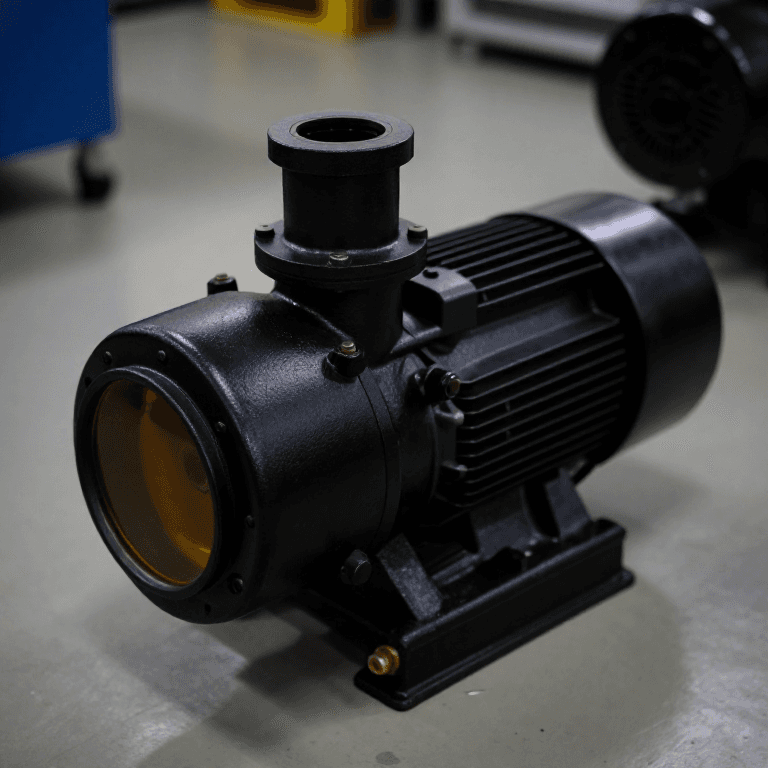
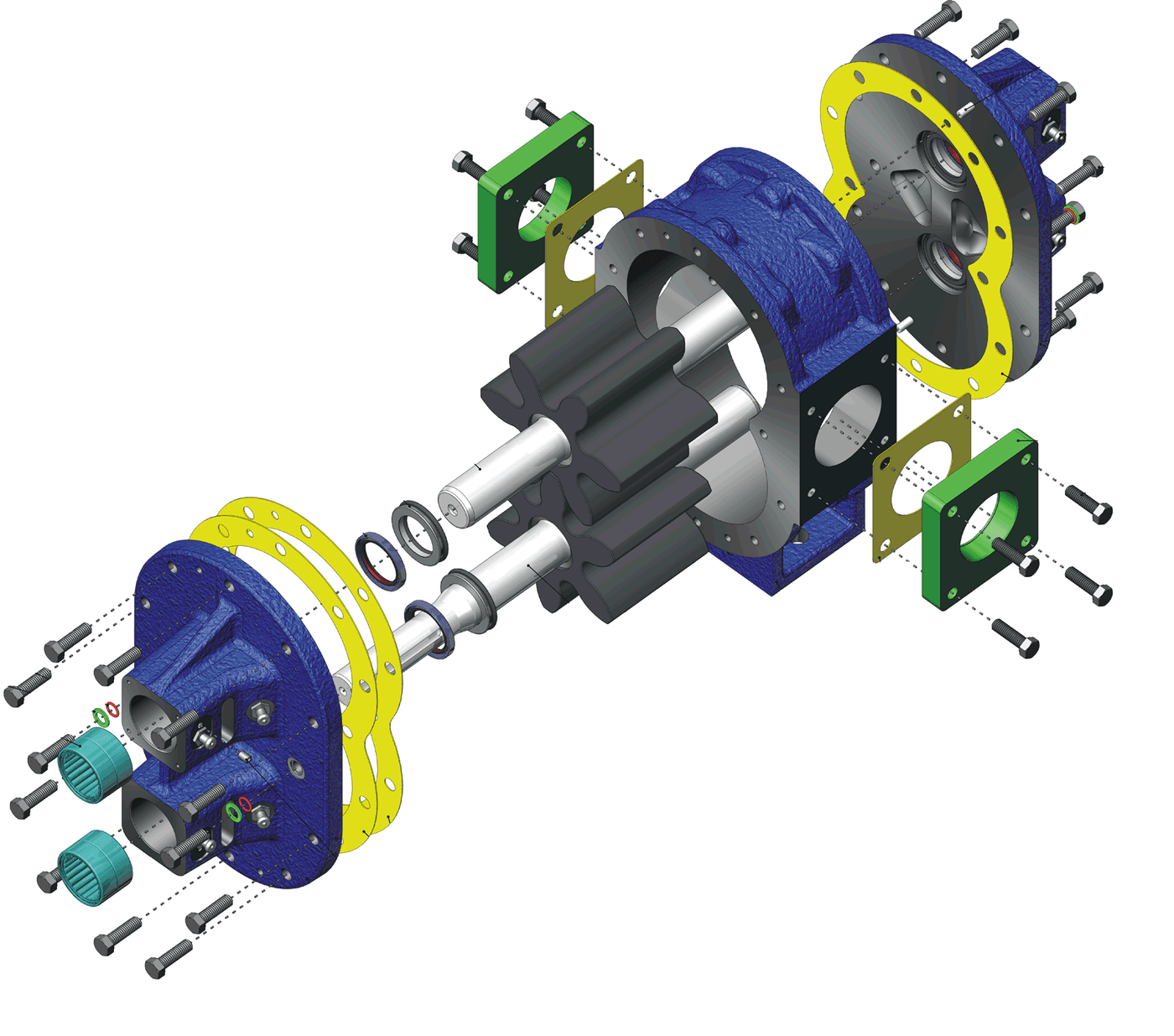


CC0 Umurenge rusange
Iyi blueprint yasohowe munsi ya CC0. Ushobora gukoporora, guhindura, gukwirakwiza no gukoresha nta kwemererwa.
Shyigikira Umuremyi ugura ibicuruzwa binyuze muri Blueprint ye Komisiyo y'Umuremyi byashyizweho n'Abacuruzi, cyangwa kora verisiyo nshya y'iyi Blueprint ukayinjiza nk'isano muri Blueprint yawe kugira ngo musangire inyungu.