UBUHANZI
UBWIZA N'UBUZIMA
UBUKORIKORI
UMUCO N'AMATEKA
IMYIDAGADURO
IBIDUKIKIJE
IBIRIBWA N'IBINYOBWA
UBWUBATSI BUSUBIRA INYUMA
UBUMENYI
SIPORO
IKORANABUHANGA
IBYAMBARWA
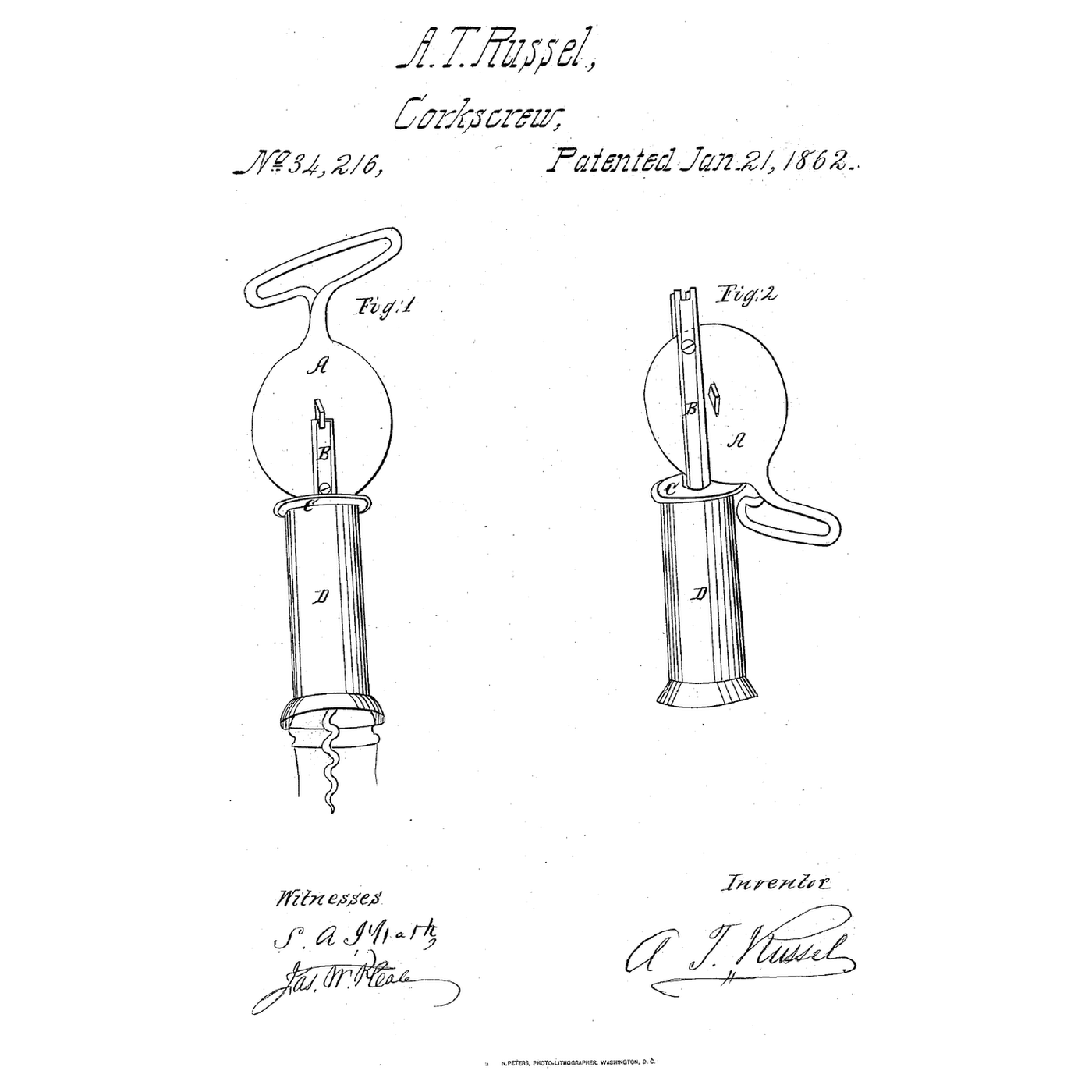


The Cam-Lever Corkscrew: Half a Turn of an Eccentric Lifts the Cork
Drawing a tight cork with a plain corkscrew takes a hard, steady pull with the bottle held between the knees.
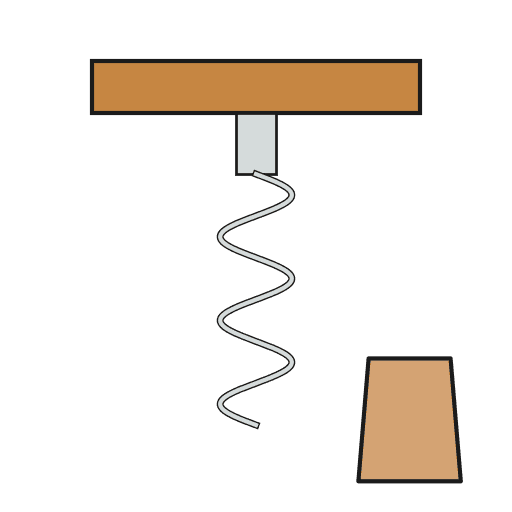
Abraham T. Russel of New York received US 34,216, dated 21 January 1862, for a "Machine for Raising or Drawing Corks from Bottles": a cylinder whose head carries a piston, with a corkscrew fixed to the piston's lower end and a cam or eccentric pinned through the piston's slit top. The cylinder stands on the bottle, the screw is turned into the cork by the handle, and "By a half or part revolution of cam or eccentric the piston is raised with the corkscrew."
This rung works out the average lift of the cam, with a work check, then makes the cylinder, piston and eccentric and draws corks with it.
Hejuru
About 5 hours
Amabwiriza
1
1
The eccentric's lift
The eccentric's lift
Gupakira ikaye ya Jupyter…
2
2
A corkscrew before it
A corkscrew before it
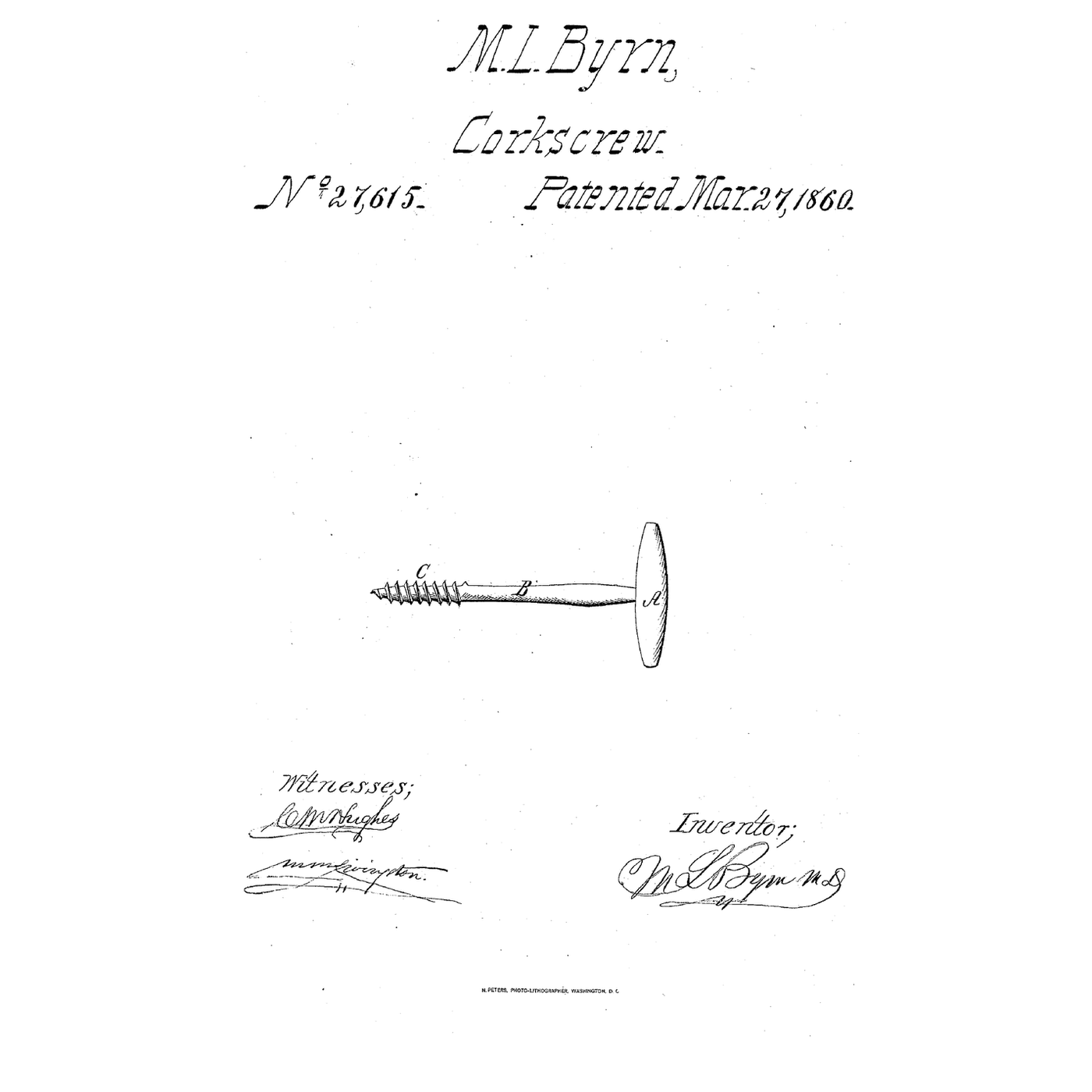
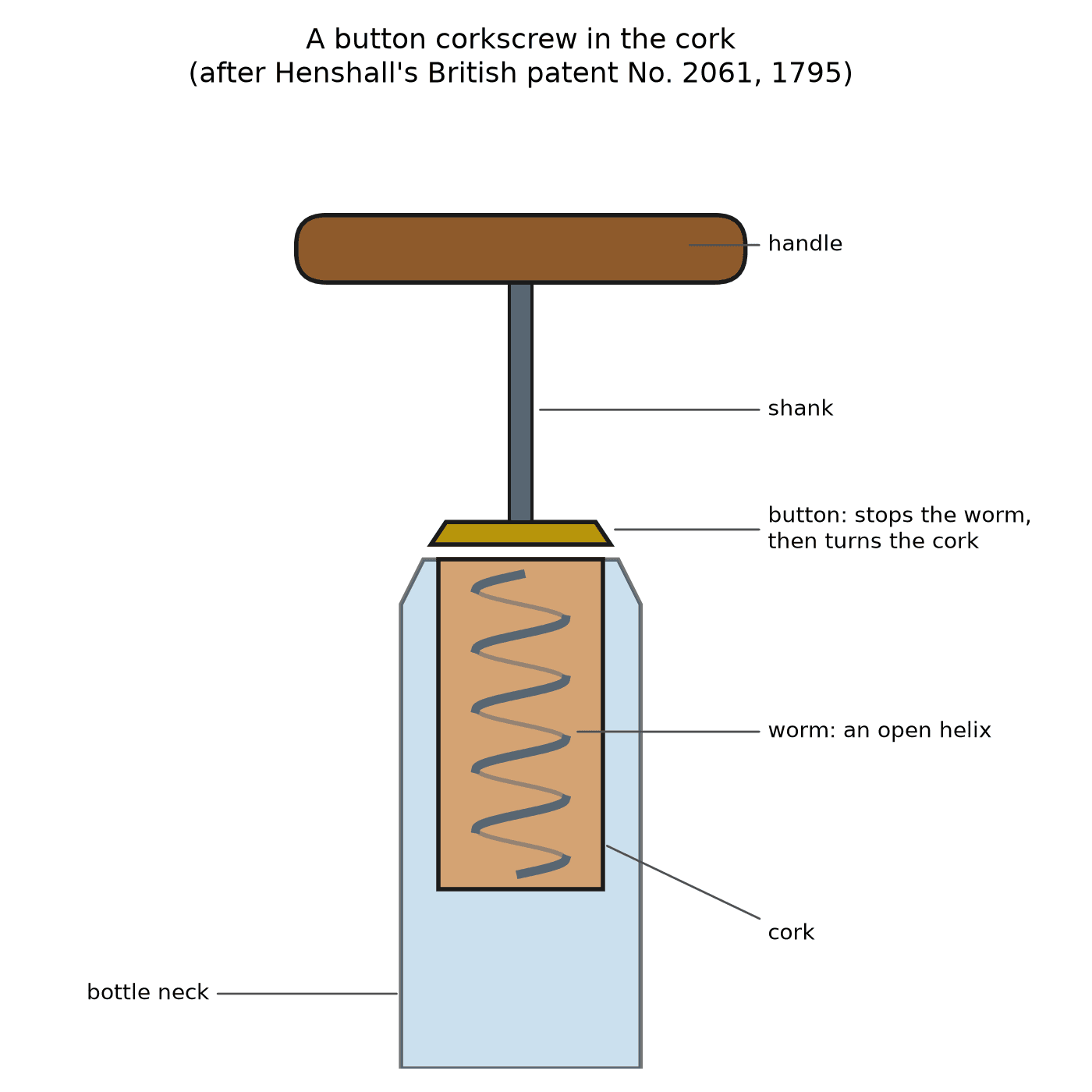
The embedded blueprint draws a cork with a strong screw and a T handle, by the arm's pull. Russel keeps a screw but lifts it with a cam, the cylinder bearing on the bottle.
3
3
Read US 34,216
Read US 34,216
"The machine is constructed of a cylinder with a head or cap through which passes a piston, to the lower end of which is secured a corkscrew. The upper end of the piston passes above the head or cap of the cylinder and is left free to turn and play up and down. To the upper part of piston is attached a cam or eccentric, which works through the upper part of said piston (being slit) resting on the cylinder head or cap, which is the bearing."
"It is operated by placing the lower end of the cylinder on the mouth of the bottle. The screw is then turned into the cork by the handle attached to the cam or eccentric, observing that the catch drops into the slots on the end of piston. The cam or eccentric is then turned with handle down, as in Fig. 2, which lifts or draws the cork out of the bottle."
4
4
Make the cam corkscrew and draw corks
Make the cam corkscrew and draw corks
**Cylinder.** Cut 12 cm of 30 mm aluminium tube and file its lower end to sit square on a bottle's mouth. Cut a hardwood disc to fit its top as the head, drill it for the piston and glue it in.
**Piston.** Cut 15 cm of 8 mm mild steel rod. Saw a 5 mm slit 3 cm deep into its top end and drill across the slit for the cam's pin.
**Screw.** Wind 2 mm steel wire into an open helix round a 6 mm rod, file its end to a point, and silver-solder its straight end into a hole drilled in the piston's lower end.
**Cam.** Cut a 5 mm disc of mild steel flat bar about 40 mm across, drill it 15 mm off centre for the pin, and rivet a flat-bar handle to its edge. Set it in the slit on a bolt, so its rim rests on the cylinder's head.
**Test.** Cork several bottles of water with the corking kit. Stand the cylinder on a bottle, turn the screw into the cork by the handle, then swing the handle down through half a turn, reading your push with the spring scale. Draw another cork with a plain corkscrew and the spring scale and compare.
Ibikoresho by'iyi ntambwe:
 Umuyoboro wa alumini0.12 metero
 Igihimba cy'Igiti Gikomeye1 igice
 Ikinyabutabire cy'Ibiti1 igice
 Umurongo Uzengurutse w'Icyuma Cyoroshye0.15 metero
 Insinga y'icyuma0.4 metero
 Isudire y'ifeza1 igice
 Umuti wo gusudira1 igice
 Umurongo ugororotse w'icyuma cyoroshye0.2 metero
 Icyegeranyo cy'inyuzi z'impande esheshatu1 igice
 Umupira w'Impande Esheshatu2 ibice
 Icupa ry'ikirahuri (risobanutse)4 ibice
 Ibipfundikizo by'ikorogo4 ibice
 Amazi3 litiro
Ibikoresho bikenewe:
 Umucumita w'Ibyuma
 Amakariso (Ikariso ry'Intoki)
 Ifatiro ry'Ameza
 Itara rya Propane
 Icyuma Cyivumbura Kidafite Insinga
 Ibyuma Byinshi byo Gucukura
 Inyundo
 Ikinyuranyo Gifite Impera Zizengurutse
 Agatsiko ko gufunga amacupa ya divayi
 Igipima Imbaraga (Iminzani y'Umuzingo)
 Amadarubindi Asobanutse yo Kwirinda
 Uturindantoki tw'uruhu tw'akazi
5
5
A cam corkscrew that jams, slips or lifts too little
A cam corkscrew that jams, slips or lifts too little
Cam-lever corkscrew troubleshooting.
Flow
Loading...
6
6
History and honest limits
History and honest limits
**Abraham T. Russel** of New York, New York, received US 34,216, dated 21 January 1862. His cam A worked in the slit top of the piston B, resting on the head C of the cylinder D, and a catch dropping into slots on the piston's end let the handle turn the screw in before the lift. His claim is the cam or eccentric and piston applied as leverage to corkscrews.
**Honest limits.** Aluminium tube, a steel rod and a flat-bar eccentric stand in for his made-up cylinder, piston and cam, and the catch is left out, so the pin turns the screw in. The notebook gives the average lift without friction; its forces and lengths are examples. Your drawn corks are the result.
Ibikoresho
13- 0.12 meteroUmwanya
- 1 igiceUmwanya
- 1 igiceUmwanya
- 0.15 meteroUmwanya
- 0.4 meteroUmwanya
- 1 igiceUmwanya
- 1 igiceUmwanya
- 0.2 meteroUmwanya
- Umwanya
- 2 ibiceUmwanya
- Umwanya
- 4 ibiceUmwanya
- 3 litiroUmwanya
Ibikoresho bikenewe
12- Umwanya
- Umwanya
- Umwanya
- 1 vendor sell this, none ship to you yetUmwanya
- Umwanya
- Umwanya
Iki gishushanyo gikora
Blueprint zijyanye
Izi blueprint zisangira ubumenyi — uburyo, ibikoresho cyangwa amahame


CC0 Umurenge rusange
Iyi blueprint yasohowe munsi ya CC0. Ushobora gukoporora, guhindura, gukwirakwiza no gukoresha nta kwemererwa.
Shyigikira Umuremyi ugura ibicuruzwa binyuze muri Blueprint ye Komisiyo y'Umuremyi byashyizweho n'Abacuruzi, cyangwa kora verisiyo nshya y'iyi Blueprint ukayinjiza nk'isano muri Blueprint yawe kugira ngo musangire inyungu.