UBUHANZI
UBWIZA N'UBUZIMA
UBUKORIKORI
UMUCO N'AMATEKA
IMYIDAGADURO
IBIDUKIKIJE
IBIRIBWA N'IBINYOBWA
UBWUBATSI BUSUBIRA INYUMA
UBUMENYI
SIPORO
IKORANABUHANGA
IBYAMBARWA
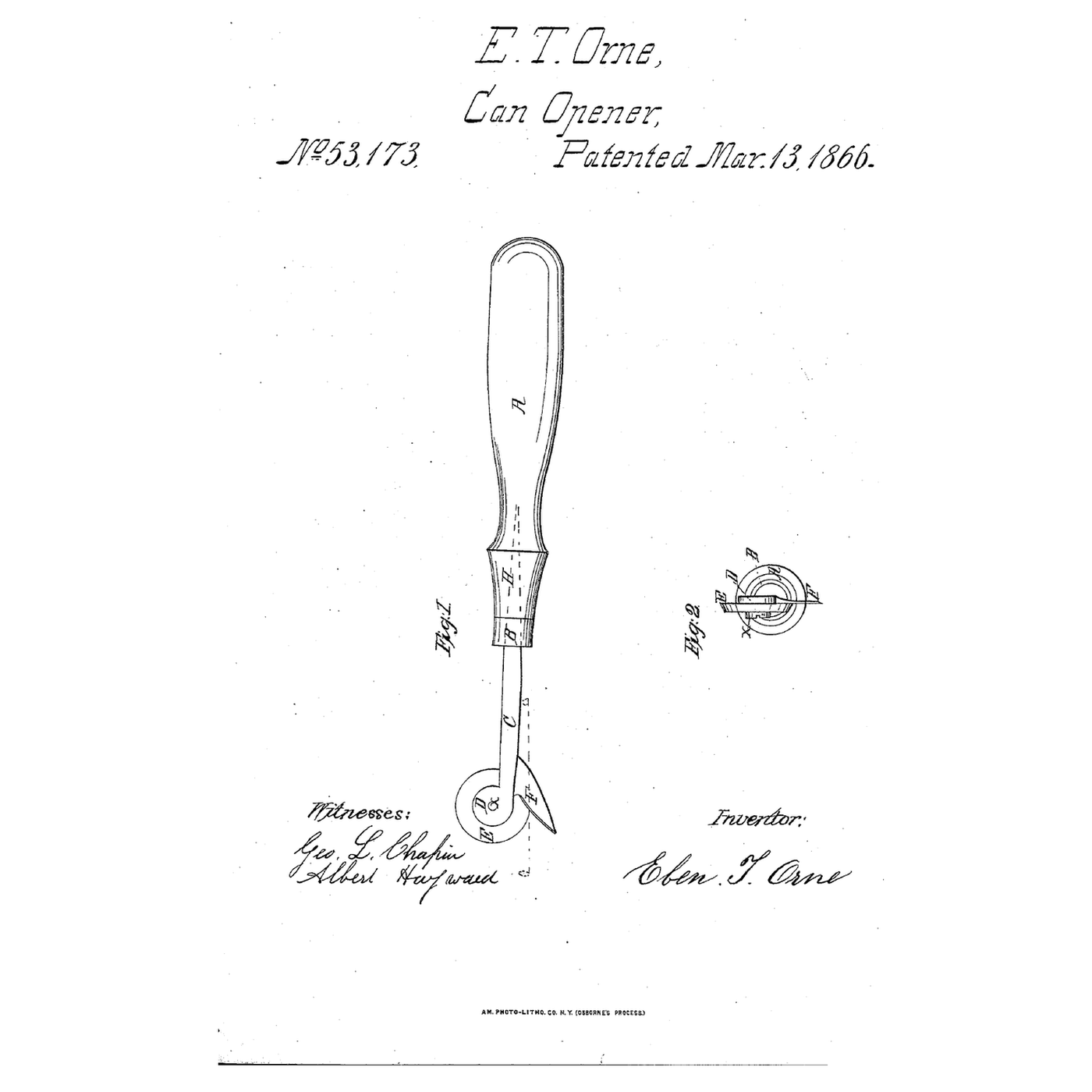


The Revolving Shear Can Opener: A Wheel and a Fixed Cutter That Cut Tin Like Shears
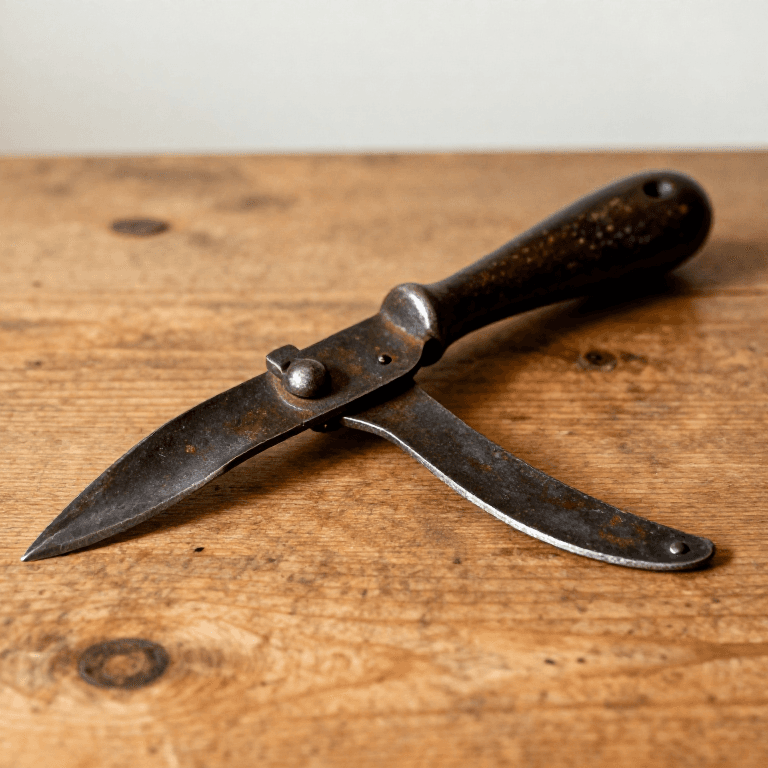
The forked can openers of the day tore the tin, took force, and could slip and cut the hand.
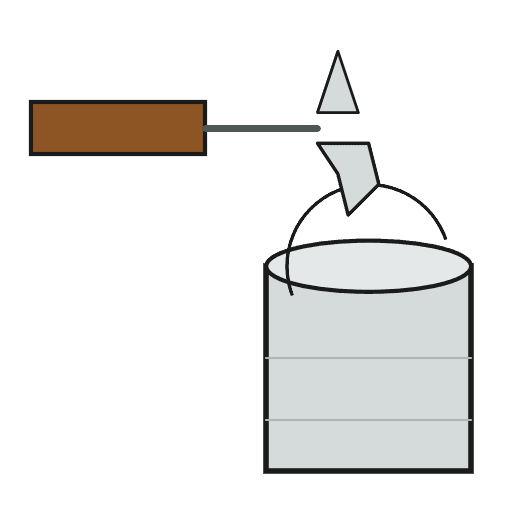
Eben T. Orne of Chicago received US 53,173, dated 13 March 1866, for "a convenient and substantial device for opening any metallic can commonly used for preserving fruits and meat, and for other purposes where an opening in thin metallic plates is required to be made", one "that cuts so easily as not to endanger the hand of the operator while cutting the can in any desired manner." The shaft is forged at its end into a stationary cutter with a shear point, and a sharp-edged shear wheel turns beside it on a screw like the screw of common shears; pushed forward, the wheel and cutter shear the tin between them.
This rung works out the shearing force, then forges the cutter from steel rod, fits a hardened shear wheel on a screw beside it, and opens a can with it.
Hejuru
About 5 hours
Amabwiriza
1
1
Shearing tin
Shearing tin
Gupakira ikaye ya Jupyter…
2
2
A can opener before it
A can opener before it
The embedded blueprint drives a blade into the lid and saws it round by hand. Orne cuts the tin between a fixed cutter and a revolving wheel, like shears.
3
3
Read US 53,173
Read US 53,173
"The outside of the shear E is beveled so as to form an edge which operates against the lower cutter, F, when cutting the metallic plate. This sharp-edged revolving shear E and cutter F obviate the necessity of levers, and also constitute a simple and effectual means for cutting openings in any kind of thin metallic plate."
"The handle A is grasped with one hand while the other holds the can, and the point of the cutter E is thrust through the plate of the can, so that the revolving shear E may strike the plate of the can, as shown by the line o o, referred to. Then force the can-opener forward in a manner to suit the form of the opening required in the can."
4
4
Forge the opener and open a can
Forge the opener and open a can
**Cutter.** Cut 15 cm of 8 mm steel rod. Heat one end and forge it flat, then file it to a pointed cutter F with a straight, square edge along one side. Just behind it, forge or file a small round flat as the plate D and drill it for an M4 screw.
**Shear wheel.** Grind a steel washer about 20 mm across to a bevelled edge on one face, as the shear E. Mount it on the plate with an M4 screw and lock nut so its flat face bears against the cutter's side and it turns freely, its edge meeting the cutter's edge as shear blades meet.
**Harden.** Heat the cutter's point and the wheel's edge cherry red, quench them, and temper them to a straw colour, as Orne tempered his cast steel.
**Handle.** Drive the rod's other end into a drilled hardwood handle with a ferrule of steel tube.
**Test.** Hold a can steady on the bench, thrust the point through the lid near its rim, and push the opener forward round the lid. Compare the cut edge with one made by stabbing and levering a knife.
Ibikoresho by'iyi ntambwe:
 Umurongo Uzengurutse w'Icyuma Cyoroshye0.15 metero
 Uruziga Rurambuye1 igice
 Ibitorezo by'imashini1 igice
 Umupira w'Impande Esheshatu1 igice
 Igiti gikomeye cy'imikondo1 igice
 Umuyoboro wa alumini0.02 metero
 Ikopo ry'icyuma2 ibice
Ibikoresho bikenewe:
 Umucumita w'Ibyuma
 Itara rya Propane
 Ingoyi
 Inyundo
 Ifatiro ry'Ameza
 Amakariso (Ikariso ry'Intoki)
 Imashini ihyeza yo ku meza
 Icyuma Cyivumbura Kidafite Insinga
 Ibyuma Byinshi byo Gucukura
 Ikusanyirizo ry'ibitorezi
 Uturindantoki twihanganira ubushyuhe
 Amadarubindi Asobanutse yo Kwirinda
5
5
An opener that tears, jams or slips
An opener that tears, jams or slips
Revolving shear can opener troubleshooting.
Flow
Loading...
6
6
History and honest limits
History and honest limits
**Eben T. Orne** of Chicago, Cook County, Illinois, received US 53,173, dated 13 March 1866. His shank C was driven into a common wooden handle A with a band B, the cutter F and plate D were forged out of the shaft, and the cutter and shear were cast steel, tempered in the usual manner for cutting metals. His claim is the sharp-edged revolving shear combined with the stationary cutter.
**Honest limits.** Forged mild steel rod, hardened only at the surface, and a ground washer stand in for his cast steel. The notebook's shear formula is an approximation; its strength, thicknesses and angles are examples. Your cut can is the result.
Ibikoresho
7- 0.15 meteroUmwanya
- 1 igiceUmwanya
- 1 igiceUmwanya
- 1 igiceUmwanya
- 1 igiceUmwanya
- 0.02 meteroUmwanya
- 2 ibiceUmwanya
Ibikoresho bikenewe
12- Umwanya
- Umwanya
- Umwanya
- Umwanya
- Umwanya
- Umwanya
- 1 vendor sell this, none ship to you yetUmwanya
- Umwanya
- Umwanya
Iki gishushanyo gikora
Blueprint zijyanye
Izi blueprint zisangira ubumenyi — uburyo, ibikoresho cyangwa amahame
CC0 Umurenge rusange
Iyi blueprint yasohowe munsi ya CC0. Ushobora gukoporora, guhindura, gukwirakwiza no gukoresha nta kwemererwa.
Shyigikira Umuremyi ugura ibicuruzwa binyuze muri Blueprint ye Komisiyo y'Umuremyi byashyizweho n'Abacuruzi, cyangwa kora verisiyo nshya y'iyi Blueprint ukayinjiza nk'isano muri Blueprint yawe kugira ngo musangire inyungu.